

Cardistry vs Diabolo
Side-by-side on feel, cost, and what your week needs to look like, so you can pick Cardistry or Diabolo with your real life in mind, not just the aesthetic.
Cardistry and Diabolo can feel similar on paper, but they ask for different weeks: Cardistry suits almost none, Diabolo suits light. The clearest personality split is restful / physical: restful for Cardistry, physical for Diabolo.
Cardistry
Flourish a deck of cards into hypnotic cuts, fans, and spins.
Flourishing playing cards into flowing cuts and fans for pure visual flair, just a deck in hand.
Diabolo
Spin the Chinese yo-yo on a string into flowing, flashy tricks.
Spin a Chinese yo-yo on a string between two sticks. Flashy tricks, fast to start.
Which is right for you?
Choose Cardistry if…
- Looks impressive almost immediately, with just a deck.
- Totally portable, a fidget that builds real skill.
- Meditative, repetitive flow once it clicks.
Choose Diabolo if…
- Spinning and throwing on day one, so the payoff is fast and flashy.
- A high, impressive trick ceiling.
- Cheap and portable circus fun.
Experience profile87% overlap
Restful
Physical
Indoors
Indoors
Solitary
Solitary
Creative
Creative
Technical
Instinctive
Hands-on
Hands-on
Relaxed
Relaxed
Cautious
Cautious
Patient
Patient
Performer
Performer
Minimalist
Minimalist
Studious
Studious
Low-kit
Low-kit
Analog
Analog
Objects
Objects
Practical fit
Shaded rows show where they differ.
Activity type
Only Cardistry
Only Diabolo
Before you commit
Cardistry
- Smooth advanced moves take a lot of repetition.
- You'll drop a lot of cards while learning.
- Decks wear out and need replacing.
Diabolo
- Needs open space, so indoor ceilings get in the way.
- Strings tangle and need re-learning to fix.
- Windy days outdoors make it tricky.
Starter gear
What you'll need
Essential kit only, what you actually buy on day one.

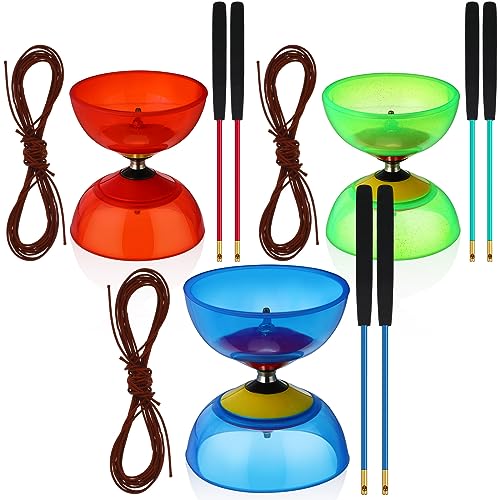
Amazon affiliate links, we earn a small commission at no extra cost to you.
Common questions
Should I pick Cardistry or Diabolo?
How different are Cardistry and Diabolo?
Which is easier for beginners: Cardistry or Diabolo?
Which costs more to start: Cardistry or Diabolo?
Next steps
Still undecided?
Take the quiz: we'll match you to the right hobby.