Archery for Beginners
A complete beginner's guide to archery — choosing your first bow, understanding the different styles, what gear you actually need, and how to build solid form before bad habits set in.
Archery is one of those rare hobbies where the gap between picking it up and feeling genuinely capable is measured in sessions, not months. The basics are learnable in an afternoon. The nuance — the stillness, the consistency, the mental discipline — takes years to fully own. That combination of quick reward and deep ceiling is exactly what makes it so hard to put down.
What Archery Actually Is
Archery is the practice of shooting arrows at a target using a bow. That sentence undersells it. What you're actually developing is a precise, repeatable chain of movements — stance, grip, draw, anchor, aim, release, follow-through — performed under enough physical tension that even small inconsistencies show up immediately downrange.
Most beginners shoot target archery: a fixed distance, a circular target, the goal being tight groups and high scores. But archery is a broad discipline. Field archery moves through woodland courses with varying distances. 3D archery places foam animal targets at unmarked distances, requiring distance estimation. Traditional archery strips the bow back to its elemental form. Bowhunting adds a real-world goal with strict ethical standards around accuracy.
All of these share the same foundation: form first, everything else second. A consistent shot process with modest equipment will outperform an inconsistent shot process with elite equipment every time. This is what separates archery from many other precision sports — the bottleneck is almost always the archer, not the gear.
Choosing Your Style
The bow you choose defines your technique, equipment path, and the community you'll connect with. There's no wrong choice, but each style asks something different of you.
Recurve
The bow used in the Olympics and the most widely taught style in clubs and ranges worldwide. The limbs curve away from the archer at the tips, storing more energy in a shorter bow. Recurve can be shot with a sight (target recurve) or without (barebow). Coaching and structured progression are most developed in this discipline. Start here unless you have a specific reason not to.
Compound
A system of cams and cables reduces draw weight at full draw (called let-off), letting you hold steady for longer. Inherently more accurate at longer distances than recurve. More moving parts mean more tuning, maintenance, and cost. Popular in field archery, 3D archery, and hunting. A great choice if your goal is accuracy at distance rather than traditional skill.
Longbow
A simple, single-curve bow with no arrow rest, no sight, no stabiliser. Shot instinctively, meaning distance and aim come from feel and repetition rather than mechanical reference points. Extraordinarily satisfying once consistent. The learning curve is steeper than recurve and plateau points come faster. Best approached after some foundational experience.
Barebow Recurve
A recurve bow shot without a sight, using the arrow tip or a string picture as an aiming reference. Shares a lot of technique with sighted recurve, so club infrastructure supports it. More forgiving than a longbow while preserving the instinctive feel many archers want.
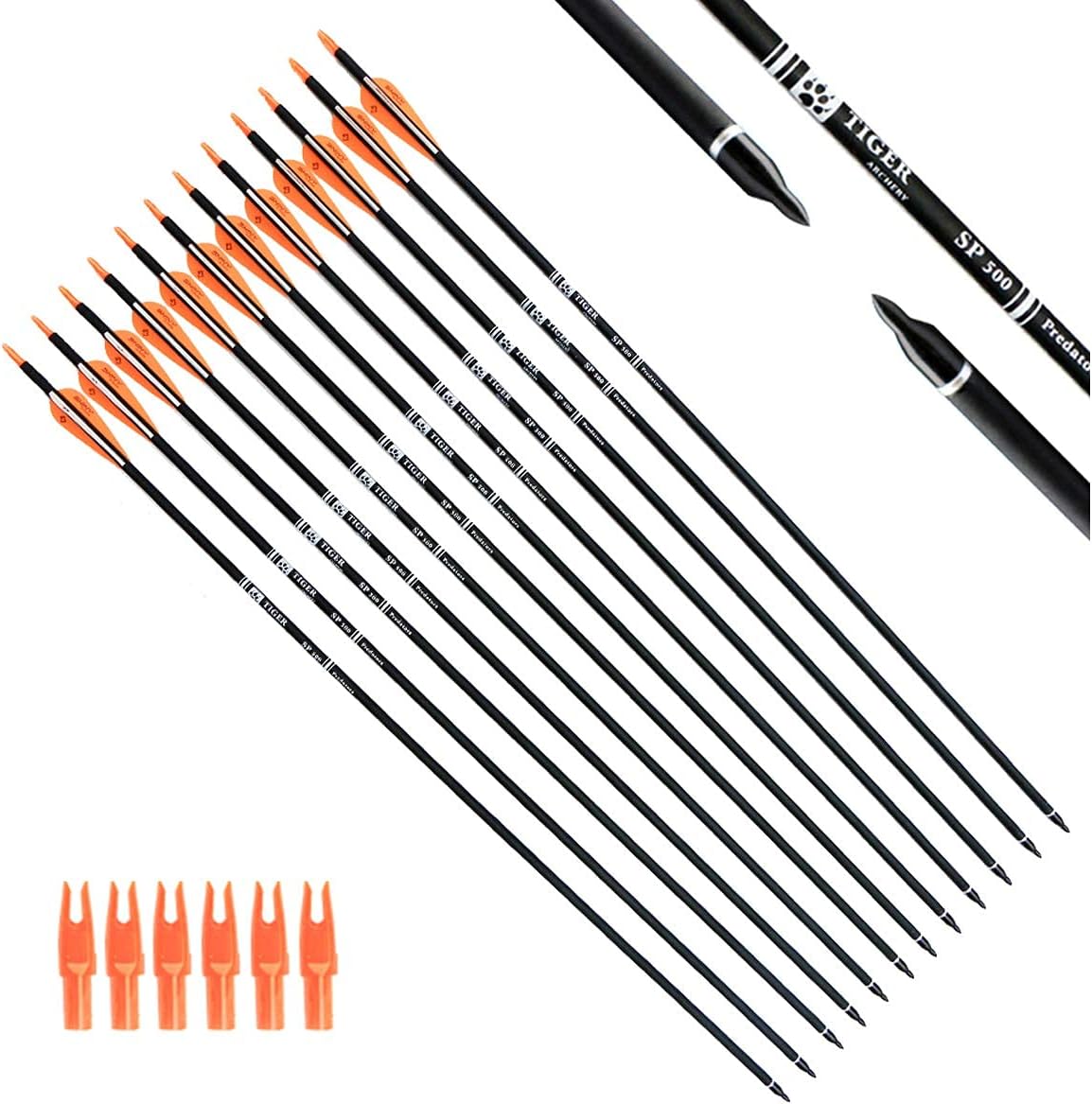
For most beginners, the Samick Sage or a club-branded equivalent takedown recurve at 24–26 lb is the standard starting point — widely available, compatible with standard limb upgrades, and forgiving enough to learn on without being limiting. Pair it with six aluminium arrows matched to your draw length, an arm guard, and a tab. Expect to spend $150–$250 all-in. Buy from an archery specialist rather than a general sporting goods store — they'll match your arrows to your setup rather than selling you whatever's on the shelf.
What You Need to Get Started
Most beginners are better served joining a club first and shooting borrowed equipment for a month before buying anything. You'll know your draw length, your preferred style, and your commitment level — all of which change what you should buy.
The non-negotiables — you need these before your first session. No upsell here, just what actually matters to get started safely.



Shooting Glove or Finger Tab


Worth it once you're committed. These items meaningfully improve your experience and are often bought within the first few months.

Interactive Buyer's Guide
Compare all tiers, track what you own, see your full budget.
Understanding Arrows
Arrows are the most important consumable in archery, and the most misunderstood by beginners. The wrong arrow for your bow and draw length will fly inconsistently regardless of how good your form is.
Arrow materials:
| Material | Cost | Best for | Notes |
|---|---|---|---|
| Aluminium | Low ($3–8/arrow) | Beginners, indoor target | Heavier, more durable against impacts with hard surfaces, easier to straighten if bent. The forgiving choice. |
| Carbon | Medium ($8–20/arrow) | Intermediate to advanced, outdoor | Lighter and faster, more consistent spine, won't bend — they either fly straight or shatter. Better choice once form is consistent. |
| Carbon/aluminium wrapped | High ($15–35/arrow) | Competition | Tight tolerances, minimal weight variation between shafts. Only relevant once you're shooting groups that would benefit from sub-millimetre consistency. |
| Wood | Low ($2–5/arrow) | Traditional/longbow | The authentic choice for traditional archery. Variable spine, not suited to high-poundage modern bows. Part of the aesthetic for many traditional archers. |
The Learning Progression
Archery skill builds in a specific order. Trying to rush any stage — particularly the transition from bare bow to sighted shooting or from light to heavy draw weight — tends to embed compensatory habits that take longer to unlearn than they would have taken to avoid.
Learn the shot sequence and shoot safely
Stance, grip, draw, anchor, aim, release, follow-through. Each element has a correct position. At this stage, consistency of process matters more than where arrows land. Shoot short distances (5–10m) and focus entirely on replicating the same motion. If you're at a club, take the introductory course — it exists for exactly this.
Tighten your groups and understand your errors
Consistent form produces consistent groups — even if those groups aren't centred yet. Consistent groups tell you that your error is systematic (a misaligned sight or anchor point) rather than random (collapsing form). Learn to read your groupings: arrows consistently left mean one thing, consistently low mean another. Sight adjustments come after groups tighten.
Extend to longer distances
Shooting at 30m and beyond exposes weaknesses in form that 18m forgives. Arrow flight becomes visible — you can watch a poorly-released arrow wobble downrange. Wind starts to matter. The mental side becomes more apparent: holding on aim for longer while maintaining draw tension is tiring in a way that short-distance shooting isn't.
Tune equipment and refine technique
Paper tuning, bare shaft tuning, button pressure adjustment, draw weight increases, clicker introduction. At this stage you're making small, deliberate changes and measuring their effect on groups. Many archers also start competing at this point — club leagues, regional rounds — which introduces the mental dimension of performance archery.
What to Expect Early On
String slap
The bowstring hitting your inner forearm is one of archery's most common beginner experiences. It means your bow arm elbow is rotating inward rather than sitting flat or rotated outward. An arm guard limits the damage while you correct the form issue. Once your elbow position is correct and consistent, string slap disappears entirely.
Groups that wander session to session
Your arrows might cluster well one session and scatter the next. This is normal early on and reflects the fact that your shot sequence isn't fully automatic yet. Fatigue, distraction, or a slightly different stance that day all introduce variation. Consistency of process is built through repetition — sessions where everything clicks will become the norm rather than the exception.
The gap between feeling good and shooting well
A release can feel perfect and produce a bad arrow. This is one of archery's most disorienting early experiences. The reason is usually that your body hasn't yet calibrated what 'correct' actually feels like. Video analysis and coaching resolve this faster than any amount of self-assessment. Trust the result over the feeling until your form is established.
Sore fingers and forearms
Drawing a bow uses muscles — specifically the back muscles between your shoulder blades — that most people don't train in daily life. The first several sessions will leave your draw-side back, forearm, and hand noticeably sore. This passes. A finger tab or glove reduces the string bite on your draw fingers significantly. Shooting fewer arrows in early sessions and building volume gradually prevents the most acute soreness.
Target panic (eventually)
Target panic — an involuntary flinch or premature release triggered by approaching the centre of the target — affects most archers at some point. It's more common than most people admit, and more treatable than most people fear. If it develops, address it early: blank bale shooting (shooting at a blank target from close range, ignoring score), back-tension release training, and working with a coach who has seen it before are all effective. Ignoring it embeds it.
Only draw your bow toward the target. Never nock an arrow off the shooting line. Wait for the all-clear before walking downrange to collect arrows. These three rules prevent virtually every archery accident.
Tips That Actually Help
Start lighter than you think you need
A bow that's too heavy to draw smoothly will force every bad habit in the book — leaning back, collapsing the draw arm, punching the trigger. Adults learning form should start at 20–28 lb. You'll feel underpowered and you'll shoot better for it. Draw weight is easy to increase once form is solid; it's very hard to fix form that was built around compensating for a too-heavy bow.
Your groups tell you where the error is
Arrows consistently low-left (for a right-handed archer) mean something specific. Arrows scattered randomly mean something else entirely. Learn to read your target rather than just counting score. The pattern your arrows make on the face is diagnostic data — use it. Most archery coaches will ask to see your target before they ask to watch you shoot.
Follow-through is part of the shot
The shot isn't over when the arrow leaves the bow. Your release hand should move back naturally toward your ear, your bow arm should hold up, and your eyes should stay on the target. Dropping the bow arm before the arrow clears the riser, or immediately looking to see where the arrow went, introduces movement into the shot at exactly the wrong moment. Hold your finish for two full seconds.
Shoot fewer arrows with more intention
Twenty focused arrows that you've thought through will develop your form faster than eighty arrows shot on autopilot. Take a breath between each arrow. Re-set your stance. Notice what changed. The archers who improve fastest are the ones who treat each arrow as a separate problem to solve, not a repetition to get through.
Record your form on video
You cannot feel what you look like. A phone propped on a bag or a nearby archer filming a quick clip will show you things no amount of self-assessment can reveal — whether your bow arm is dropping, whether your release hand is creeping forward before the shot, whether your head is tilting to meet the string rather than the string coming to you. Do this once a month at minimum.
Join a club, at least at the start
Clubs provide access to ranges you can't build at home, experienced archers who've seen every beginner mistake, equipment to try before you buy, and a community that stays consistent when motivation dips. Most clubs offer structured beginner courses that compress months of self-directed trial and error into a few sessions. The money is almost always well spent.
Don't chase the equipment rabbit hole too early
There is no shortage of archery gear to buy, and a great deal of it makes a real difference — eventually. In the first six months, the bottleneck is form, not equipment. A basic takedown recurve with matched arrows, a tab, and an arm guard is sufficient to develop solid, competition-viable technique. Buy better gear when your groups stop improving, not when you feel ready for an upgrade.
Common Questions Answered
- Do I need to join a club to start?
You don't need to, but it's strongly recommended for the first few months. Clubs provide safe range infrastructure, equipment to borrow before you buy, structured beginner courses, and experienced archers who've seen every form problem you'll encounter. Many people who start alone develop persistent technique issues that take longer to fix than they would have taken to avoid. After you have basic form dialled in, shooting independently (in your garden, a local field archery ground, or a range) becomes much more viable.
- What draw weight should a beginner start with?
For adults: 20–28 lb recurve. For children under 12: 10–16 lb. These weights feel light — they are. The goal at this stage is to develop form without fighting the bow. Draw weight is increased incrementally as form stabilises and back muscles strengthen. Most clubs and instructors will tell you the same thing: the archers who start too heavy are the ones with persistent technique problems six months in. You can always increase weight; bad habits built around compensating for a too-heavy bow are harder to undo.
- How do I know what arrows to buy?
You need to know your draw length first. Your draw length determines arrow length, which determines the minimum shaft length. Then you need your bow's draw weight at your draw length (not the stated peak weight) to select the correct spine. Most archery shops and clubs will help you with this selection when you buy. If buying online, use the manufacturer's spine chart and provide your draw length and bow draw weight — most reputable retailers provide selection guides. Never guess on arrow spine: the wrong choice produces inconsistent, unpredictable arrow flight.
- Is archery dangerous?
Archery has an excellent safety record when range rules are followed. The core rules are simple: only draw toward the target, never nock an arrow until you're on the shooting line, and never walk downrange until everyone has finished shooting and the all-clear is given. Clubs enforce these rules consistently and beginners are always briefed before they touch equipment. Home shooting requires proper backstop infrastructure — arrows carry significant energy and a missed target must be stopped by something substantial.
- How long until I'm shooting accurately?
Most people can shoot consistent groups (not necessarily centred, but consistent) within 4–8 sessions of structured practice. Centring those groups at 18m typically takes 1–3 months. Shooting comfortably at 30m and beyond takes 3–6 months of regular practice. 'Accurately' at competition level — maintaining high scores across a full round of 60–72 arrows under pressure — typically takes 1–2 years. The short answer is: you'll feel meaningfully capable much faster than you expect, and there's always more depth to find.
- Can I shoot in my garden?
Possibly, with the right setup. You need a proper backstop that will stop an arrow regardless of where it lands — a purpose-built archery bag target or foam block, ideally backed by something that will stop a pass-through. Check local regulations; in most places garden archery is legal but there are restrictions around arrows being visible from a public road or overlooking neighbouring property. Start at very short distances (5–10m) with a simple foam target until you're confident in your consistency.
- Recurve or compound — which should I start with?
Recurve for most beginners. The reasons are practical: clubs are structured around recurve teaching, coaching methodology is more developed, equipment is less expensive, and the technique transfers well if you later want to shoot barebow or traditional. Compound is the right first choice if your goal is specifically accuracy at longer distances (40m+), you have significant upper body limitations that benefit from let-off, or you're entering archery specifically for bowhunting. If you're not sure, shoot both at a club before buying.