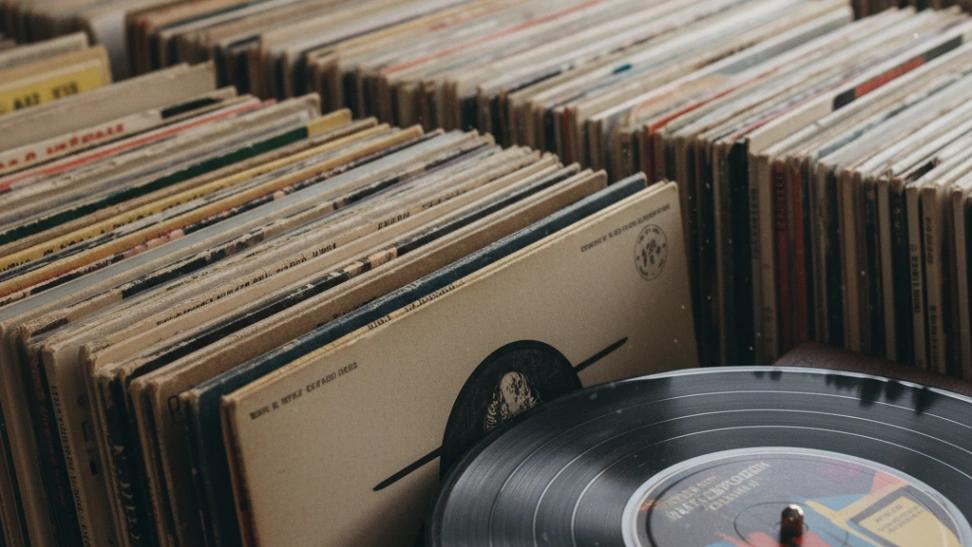
Vinyl record collecting is not nostalgia. It is the discipline of learning to identify, appraise, and curate physical objects in a market full of information asymmetry. The collector who understands pressings, grading, and provenance will consistently find things the uninformed buyer walks past — and avoid the traps that cost beginners real money.
Buy what you will listen to before you buy what you think will appreciate. A collection built around genuine love for the music is self-sustaining and develops naturally into sophistication. A collection built purely on investment logic often ends in neither enjoyment nor profit.
What Vinyl Collecting Actually Involves
Vinyl record collecting is part listening, part research, and part market navigation. At its surface it looks like buying records you like the music on. At depth it is an ongoing study of pressing matrices, label variants, country of origin, mastering chains, and the market forces that determine what a specific copy is worth relative to every other copy of the same title in existence.
Ways to Focus Your Collection
Collectors with a defined focus find underpriced material that generalists walk past. The earlier you develop a focus, the faster your expertise compounds.
Genre & Era Specialist
Deep knowledge of one genre (jazz, soul, krautrock, UK post-punk) lets you identify pressing variants, original labels, and undervalued titles that casual buyers miss. The knowledge compounds rapidly within a defined territory.
Artist Completionist
Building a complete discography — all pressings, all formats, all countries — for one artist or a handful. Produces very deep expertise within a narrow area. Excellent for learning grading and matrix reading intimately.
Label Collector
Collecting specific label pressings (Blue Note, Impulse!, Harvest, Factory) where the label identity and design history are themselves part of the collection. Requires detailed knowledge of label evolution across pressing runs.
Format Specialist
Collecting a specific physical format creates a coherent collection with its own internal logic. Singles collectors often develop exceptional knowledge of B-sides and regional pressings.
What Does It Cost to Start Collecting?
The setup cost is largely one-time. Ongoing costs depend entirely on how aggressively you collect — from a few pounds at a charity shop to hundreds per month at record fairs.
Proper playback and a small initial collection
- Entry turntable (AT-LP120X)$280–320
- Powered speakers or headphones$80–150
- Anti-static inner sleeves (50 pack)$15
- Outer poly sleeves (50 pack)$15
- Carbon fibre cleaning brush$15
- First 10–20 records$50–150
Quality playback and serious collecting infrastructure
- Better turntable (Pro-Ject or Rega entry)$450–600
- Phono stage (if needed)$50–150
- Wet record cleaning machine$120–200
- Kallax shelving unit$70–120
- Monthly record budget$50–150/month
Audiophile playback and a curated, focused collection
- Reference turntable (Rega Planar 3, Pro-Ject X2)$900–1,500
- Phono preamp (Sutherland, Graham Slee)$300–600
- Integrated amplifier$400–800
- Ultrasonic cleaner$500–800
- Monthly record budget$150–500+/month
The Playback Setup
Your turntable determines the quality of everything you hear and the safety of everything you play. A bad setup is not just sonically inferior — it physically damages records. Get this right before buying records in volume.
The non-negotiables — you need these before your first session. No upsell here, just what actually matters to get started safely.
Turntable
Direct drive, USB output, built-in phono preamp. The most recommended entry deck for a reason.
Speakers or Headphones
Self-amplified — no separate amp needed. Plug directly from phono pre into speakers.
Worth it once you're committed. These items meaningfully improve your experience and are often bought within the first few months.
Record Cleaning
Use before every play to remove surface dust. Non-negotiable maintenance step.
Storage
The industry standard for record storage. 12×12" cubbies, modular, affordable. Get more than you think you need.
Replace paper inners immediately. MoFi, Nagaoka, or generic polyethylene — all protect better than cardboard.
Protect covers from ring wear and dust. Resealable types make browsing easier.
The Collector's Progression
Most collectors pass through five stages over three to five years. The biggest mistake is over-investing in records before developing the knowledge to buy well.
Playback first, records second
Get a proper turntable before buying records in volume. Avoid built-in speaker suitcase decks — they damage records through poor tracking. Entry-level proper decks: Audio-Technica AT-LP120X, Rega Planar 1, or Pro-Ject Debut Carbon. Buy 10–20 records you love.
Cataloguing and learning to grade
Create a Discogs account and catalogue everything you own. Logging your collection forces you to identify the specific pressing, label variant, and country — the foundational skill of vinyl collecting. Learn the Goldmine grading scale before spending serious money.
Developing expertise in one area
Develop a specific focus: a genre, era, label, or artist. Collectors with a defined focus consistently find underpriced material that generalists walk past. You begin reading matrices, spotting original pressings from reissues by label details.
Buying and selling with intent
The collection is edited as well as grown. You sell duplicates and condition upgrades, buy deliberately toward specific gaps, and appraise new finds quickly and accurately. Authentication is becoming instinctive.
A curated collection with a point of view
Every record has earned its place. The collection reflects genuine expertise in your focus area and can be read as a document of taste and knowledge. You contribute to the information ecosystem: Discogs notes, forum posts, community grading discussions.
Condition Grading
The Goldmine Grading Standard is the internationally accepted system for describing vinyl condition. Every serious collector and dealer uses it. A record's grade is always stated as two components: vinyl grade and sleeve grade (e.g. VG+/VG). Learn this before spending serious money.
| Grade | Code | Vinyl condition | Sleeve | Value impact |
|---|---|---|---|---|
| Mint | M | Perfect, unplayed. Completely unmarked surface. | Perfectly flat, no creases, ring wear, or handling marks. | Maximum. Often 2–5× VG+ prices. |
| Near Mint | NM | Nearly perfect. Minimal signs of handling, plays silently. | Very slight corner wear or handling marks only. | High. The standard for serious collectors. |
| Very Good Plus | VG+ | Light surface marks visible under strong light. Plays with minimal noise. | Slight ring wear or light seam splits. Still presentable. | Good. The sweet spot for most buyers. |
| Very Good | VG | Visible marks. Some surface noise on quiet passages. Still enjoyable. | Visible ring wear, seam splits, writing possible. | Moderate. Around 50% of NM price typically. |
| Good | G | Heavy marks, significant surface noise. Plays through but distracting. | Heavily worn, split seams, writing, water damage possible. | Low. Filler or placeholder copies only. |
| Fair / Poor | F/P | Plays but skips, heavy noise, may be unlistenable. | Destroyed. | Negligible. Artwork or novelty only. |
Grade inflation is endemic. Most sellers grade generously — a record listed as NM by a casual seller is often VG+ by Goldmine standards, and VG+ listings frequently grade out at VG. Assume one grade lower than stated and price accordingly. When buying in person, always inspect under a strong light source before purchasing.
Where to Buy and Sell
Each source has a distinct character in terms of price, risk, selection, and the knowledge required to buy well from it. The right source depends on what you're trying to acquire.
Discogs
The global standard. 60+ million listings, seller ratings, and transparent sale history showing what records actually sell for — not just what they're listed for. The most reliable pricing reference for any release.
Charity shops
Highest potential upside. Staff rarely have pricing expertise, so underpriced rarities surface regularly. Requires the most visits for the least guaranteed return. The patient collector's source.
Record fairs
Dealers and collectors selling in person. You can inspect condition directly, negotiate face-to-face, and find things not listed online. Prices are often negotiable, especially near closing time.
Independent record stores
Curated stock, knowledgeable staff, and the pleasure of browsing. Prices are typically above Discogs for common titles but they often carry things not easily found online. Support them — they're infrastructure.
eBay
Large volume, but grading is unreliable and return rates are higher. Best used for very specific searches or when Discogs doesn't have what you're looking for. Seller feedback is your only protection.
Estate sales & house clearances
The most unpredictable source. Entire collections surface at once, often priced by people with no specialist knowledge. The single biggest finds tend to come from here — but you need to move fast and know what you're looking at.
How to Get Started
Set up your playback system first
Don't buy records until you have a proper turntable. Minimum: Audio-Technica AT-LP120X or Pro-Ject Debut Carbon, a phono preamp (often built-in), and a decent pair of speakers or headphones. The turntable is the most critical investment — a bad one damages everything you play on it.
Create a Discogs account immediately
Discogs is indispensable: it's your price reference, your catalogue database, your buying platform, and your selling platform. The first thing to do with any record you own is log it on Discogs — which forces you to identify the exact pressing, label variant, and country of origin. This is how you start learning.
Buy 10–20 records you love the music on
Before any strategy — genre focus, original pressings, investment logic — buy records that mean something to you. These are your listening foundation and your calibration tools. A collection without genuine love for the music becomes an obligation.
Learn the Goldmine grading scale
Memorise the grades and what they mean before spending serious money. VG+ is the sweet spot for most buyers — the standard that serious collectors trade at. Anything below VG is a placeholder. Always grade from the vinyl first, sleeve second.
Develop one focused area of expertise
Pick a genre, label, era, or artist and go deep. Read the discographies. Learn which pressings are original, which are reissues. Understand what the matrix code tells you. Focused collectors consistently outbuy generalists in charity shops and record fairs.
Start buying and selling on Discogs
Buy from sellers with 99%+ ratings. Start selling duplicates and condition upgrades — the selling side teaches you more about grading and pricing than buying alone ever will. Your collection improves fastest when you're both acquiring and editing.
Authentication & Common Pitfalls
Vinyl collecting has well-documented traps. Most are avoidable with a small amount of knowledge applied consistently.
Fake first pressings
High-value originals (Blue Note, early Beatles, rare soul) are counterfeited. Check matrix numbers, label printing quality, and vinyl weight against documented originals. Discogs matrix data and specialist forums are your verification tools.
Overstated condition
The most common deception — deliberate or not. VG listed as NM, VG+ with visible plays. Always inspect under a strong raking light before purchasing in person. For online purchases, buy from sellers with 99%+ feedback and explicit return policies.
Buying reissues at original prices
A 180g reissue of a classic album is not a rare original pressing, regardless of how it's described. Learn to read matrix codes and label variations before spending premium prices. The Discogs database is your primary reference.
Using a suitcase turntable
Built-in speaker turntables (Crosley, Victrola) use ceramic cartridges that apply excessive tracking force. They physically damage records over time. Even a $200 belt-drive deck with a proper cartridge is categorically better.
Using Discogs "lowest price" as value
The lowest listed price on Discogs is meaningless — it's just the most optimistic seller. Look at "Last Sold" prices in the marketplace statistics. That's what the market actually paid, which is the only number that matters.
Storing records incorrectly
Records stored horizontally warp under their own weight. Store vertically, ideally in a purpose-built crate or shelving unit. Keep away from heat sources and direct sunlight. Inner sleeves should be polyethylene or paper — never the original cardboard that came with the record.
Storage, Display & Care
Records stored and maintained correctly last indefinitely. The physical preservation of your collection is part of the practice.
Vertical shelving
Store all records upright, never stacked horizontally. Kallax shelving (IKEA) is the standard solution — the 12×12" cubbies hold records perfectly and are affordable at scale.
Anti-static inner sleeves
Replace original cardboard or paper inner sleeves with polyethylene or polypropylene anti-static sleeves. They protect the playing surface from abrasion and reduce static. Buy in bulk — they're cheap.
Outer poly sleeves
Clear polyethylene outer sleeves protect the cover from ring wear, dust, and moisture. Essential for anything you care about preserving. Use resealable types for easy access.
Record cleaning
A carbon fibre brush before every play removes surface dust. For deeper cleaning: a wet cleaning machine (Okki Nokki, Nitty Gritty) or ultrasonic cleaner is transformative on records that sound dirty.
Temperature & humidity
Avoid heat sources, direct sunlight, and extreme humidity. A consistently cool, dry room is ideal. Heat warps records; UV degrades covers; high humidity encourages mould on paper sleeves.
Discogs collection
Log everything on Discogs as you acquire it. This gives you an insurance record, a value tracker, and forces you to identify each pressing precisely — which is itself a collecting education.
What to Expect
Here's what typically happens when you start — and why it's useful information, not failure.
The first good find will hook you.
Pulling a near-mint original pressing from a charity shop crate for £2 that's worth £80 on Discogs creates an entirely different relationship with the hobby than any purchase does.
Storage becomes a real problem faster than you think.
A 100-record collection looks small until it needs shelving. Plan for expansion from the start — the Kallax system scales.
Condition is everything.
You'll quickly develop visceral reactions to visible groove wear and ring-worn covers. A beautiful original pressing in VG+ condition and a beat-up copy of the same record feel like fundamentally different objects.
The research is half the hobby.
Discogs rabbit holes — pressing variants, matrix codes, label evolution, comparative mastering quality — become genuinely absorbing. This is not a casual hobby for most people who stick with it.
Buying and selling creates the best education.
Listing records on Discogs, grading them honestly, watching what sells and what doesn't, dealing with buyer questions — this compresses years of learning into months.
Tips That Actually Help
Look at the "Last Sold" price, not the lowest listed
On Discogs, the lowest listed price is what an optimistic seller wants. The "Last Sold" price in Marketplace Statistics is what buyers actually paid. This is the only number that tells you what a record is worth. Buying or selling based on listed prices is how you get burned.
Grade under raking light
Surface marks invisible under normal lighting show clearly under a single strong light source held at a low angle to the record. Do this before every significant purchase in person, and photograph records in the same way when selling. Your buyers will trust you more and leave better feedback.
The matrix tells you what you're holding
The alphanumeric code stamped into the dead wax (the area between the grooves and the label) identifies the pressing plant, cutting engineer, and lacquer generation. Different pressings of the same album often sound dramatically different. Learning to read matrices turns any charity shop bin into a research exercise.
Log everything on Discogs as you go
Cataloguing after the fact is a huge and demoralising job. Add each record to your Discogs collection when you acquire it. This forces you to identify the exact pressing, gives you an insurance record, and shows you what your collection is actually worth at any point.
Clean before you play, not after
A dirty record played through a stylus grinds contamination into the groove walls. A carbon fibre brush before every play takes 10 seconds and preserves both the record and your stylus. For records bought second-hand, a full wet clean before the first play is worth every minute.
Develop a focus before you run out of shelf space
A collection of "things I liked the music of" fills quickly and becomes hard to curate. Develop a specific focus — a genre, label, era, or artist — before your third shelf. Focused collections grow more interesting and more valuable faster than eclectic ones at the same size.
Common Questions Answered
- Do records actually sound better than streaming?
On a good system, properly pressed and cleaned records often sound warmer and more three-dimensional than digital. The difference is most audible on original pressings mastered from the original analogue tapes. On a cheap turntable, records frequently sound worse than streaming. Playback quality matters enormously — more than the records themselves at the beginning.
- What turntable should a complete beginner buy?
The Audio-Technica AT-LP120X ($300) is the most recommended beginner deck: direct drive, USB output for recording, built-in phono preamp. The Pro-Ject Debut Carbon Evo ($450) is the step up if you're ready to spend slightly more for meaningfully better sound. Avoid the Crosley Cruiser and similar suitcase decks entirely — they damage records.
- Are original pressings always better than reissues?
Often sonically, not always. Original pressings were mastered from first-generation tapes, which generally gives them dynamic range and warmth that later reissues lack. But some modern reissues (especially from labels like Music on Vinyl and Analogue Productions) are excellent — and some original pressings were mastered carelessly. Research the specific pressing before assuming.
- How do I know if a record is original or a reissue?
Check the matrix code in the dead wax — the stamped code identifies the pressing plant and generation. Cross-reference on Discogs, which has documented pressing information for millions of releases. Label design also changes across pressings — learning the label chronology for the genres you collect is one of the core research skills.
- Is vinyl collecting a good investment?
For specific categories (certain Blue Note pressings, early UK punk, original soul 45s) values have appreciated significantly over decades. But treating the hobby as investment requires exactly the depth of knowledge that makes it a serious collector's pursuit — and even then, liquidity is limited. Collect because you love the music and the objects. Investment logic as the primary motivation usually ends badly.
- How should I clean records I've bought second-hand?
Light surface dust: carbon fibre brush, every play. Dirty second-hand records: wet clean with a record cleaning machine (Okki Nokki, Nitty Gritty) using a dedicated cleaning solution. Heavily contaminated records: ultrasonic cleaning. Never use a household cloth or water alone — the risk of pushing contamination deeper into the groove is real.
- What's a fair price to pay for records?
Check the Discogs Marketplace Statistics "Last Sold" price for your specific pressing in the grade you're looking at. That's the market price. In charity shops, almost anything is underpriced — the question becomes whether you know what you're looking at well enough to spot it. Record fair prices are negotiable, especially at the end of the day.