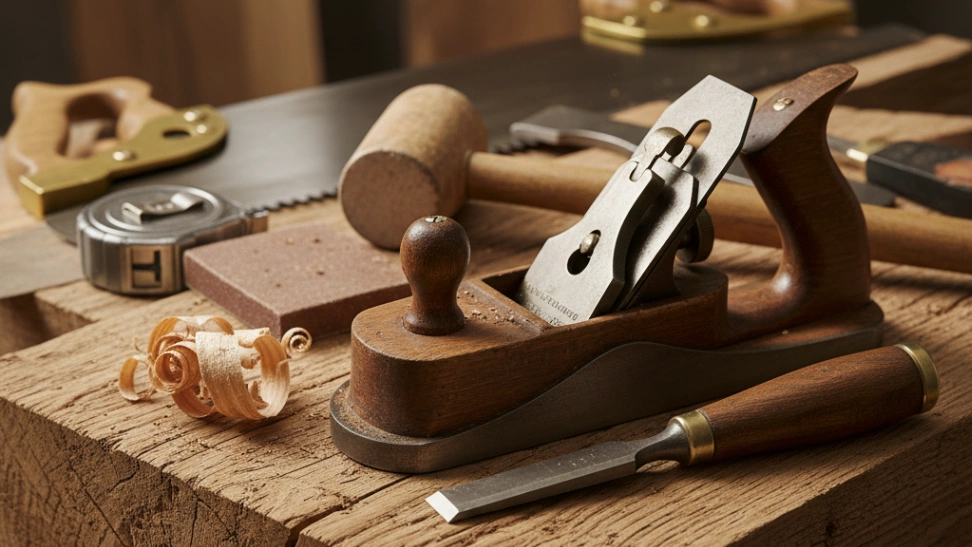
For the meticulous craftsperson who finds satisfaction in detailed work and the creation of musical sound.
Every hobby is defined by a set of core characteristics. Understanding these traits, from the energy it requires to the environment it thrives in, helps you find an activity that truly resonates with your personal style.
Primarily a solitary activity, but with communities available to share your results.
Offers a balance of calm focus and moments of light physical activity.
Best enjoyed in the comfort of your own home or a dedicated indoor space.
While there are some technical aspects, the primary focus is on creativity and self-expression.
Primarily a mental activity, but may have some light physical components.
You learn a useful skill, but the process is also a major part of the enjoyment.
Based on 24 community votes.
Your journey starts here. Follow these steps to get started with Luthierie (String Instrument Building).
Begin with a simpler instrument, like a ukulele or a basic acoustic guitar kit. This allows you to learn fundamental techniques without overwhelming complexity. Research different types of kits and their required skills.
Acquire a set of basic woodworking tools, specialized luthier tools (like chisels, planes, rulers, clamps), and quality wood suitable for instrument making. Don't forget safety gear like glasses and dust masks. Start with a few key items and expand as needed.
Obtain detailed blueprints or plans for your chosen instrument. Watch instructional videos and read books on woodworking and luthierie techniques. Understanding the joinery, bracing, and finishing processes is crucial.
Follow your plans meticulously, focusing on accurate cutting, shaping, and joining of wood pieces. Pay close attention to the neck joint, fretboard installation, and body assembly. Accuracy here directly impacts the instrument's playability.
Apply a finish that protects the wood and enhances its appearance. Once dry, carefully install frets, tune the instrument, and set the action (string height) for optimal playability. This stage requires delicate adjustments.
Slight errors in measuring and cutting wood can lead to ill-fitting parts, structural weakness, and poor playability. Double-check all measurements before cutting.
Using the wrong types of wood or wood that hasn't been properly seasoned can result in warping, cracking, and poor sound quality. Research the acoustic properties of different tonewoods.
Applying finishes too quickly or improperly can lead to an uneven appearance, finish checking, or a dull sound. Allow adequate drying time between coats.
Not sure about Luthierie (String Instrument Building)? Your next passion might be just a click away.
Expand your knowledge with related articles from our community blog.
We haven't published any articles specifically for Luthierie (String Instrument Building) yet. Why not write the first one?
Dive deeper with these community-recommended websites, guides, and forums.
A comprehensive source for luthier tools, parts, and a wealth of free instructional articles and videos.
Offers detailed plans, books, and guides for building various stringed instruments.
Numerous channels offer step-by-step tutorials, tool reviews, and insights from experienced luthiers.
Wood specifically chosen for its acoustic properties and its effect on the sound of a musical instrument.
Internal wooden struts glued to the underside of a soundboard (like a guitar's top) to strengthen it and shape its tonal response.
The long strip of wood on the neck of a stringed instrument onto which the frets are set.
The opening in the body of certain stringed instruments (like guitars and violins) that allows sound to resonate from the interior.
The height of the strings above the frets, which affects the instrument's playability and ease of bending strings.