Best Kalimba for Beginners (2026): The Notes Alternate Outward From the Middle
Pick up a kalimba expecting a piano and the layout makes no sense. The longest tine in the middle is the lowest note, and the scale climbs outward alternately — one note to the left, the next to the right. That is deliberate, it is why kalimba tab looks like nothing else, and it is why chords fall under your thumbs so easily.
HobbyStack may earn a commission from links on this page at no extra cost to you. Our picks are chosen on merit; the commission helps fund the research.
- 17 keys in C major is the standard. Start there and ignore everything else.
- Notes run outward from the centre, alternating left and right. The middle tine is the lowest.
- A single-row kalimba is diatonic. Double-row adds the semitones.
- It will arrive out of tune and drift. A free tuner app and the included hammer fix it.
- Hollow-body resonates and sustains. Flat-board is quieter and brighter.


The layout, and why it is not a keyboard
On a piano, pitch runs left to right. On a kalimba it runs outward from the centre.
The longest tine, in the middle, is the lowest note. The next note up is immediately to its left, the one after that to its right, then left again, alternating outward until you reach the shortest tines at both edges.
That sounds awkward and is the reason the instrument is so easy to start on. Because consecutive scale notes sit on opposite sides, a chord lands under both thumbs at once. Thirds are adjacent on the same side, so playing a C major triad is a single comfortable motion rather than a stretch.
It also explains the notation. Kalimba music is almost never written on a stave. It uses numbered tab — the tine numbers, with dots or lines above them for octaves — and most instruments ship with number stickers for the tines. You can play a tune within an hour of opening the box, which is most of why the instrument spread the way it did.
Standard tuning is C major, 17 keys. That gives you a little over two octaves and covers an enormous amount of popular music. Other tunings exist and they are a later problem.
You play with the thumbnails, not the pads. A short nail gives a clear bright attack; pads give a softer, duller sound. Some players use the flesh deliberately for a mellower tone.
Tuning, materials and the single-versus-double row question
It will arrive out of tune. Shipping, temperature and humidity all move the tines, and a kalimba is tuned by moving the tines themselves.
The method: tap the end of a tine with the included hammer. Tapping it so more of the tine extends past the bridge makes it longer and lower. Tapping it back in makes it shorter and higher. Work in tiny taps, checking against a free chromatic tuner app after each one, and expect the first full tune-up to take half an hour.
Then re-check it monthly. Tines drift, especially in a room whose humidity swings.
Body construction changes the sound more than the price does.
- Hollow-box kalimbas have a soundbox with a hole, so they resonate and sustain noticeably longer. Fuller, louder, rounder.
- Flat-board kalimbas are a solid plank. Quieter, brighter, more percussive, and they sound much better amplified because there is less boom to control.
Wood matters at the margin. Mahogany is the common entry wood and sounds warm. Rosewood and walnut are denser and give a clearer, more defined note with better sustain. The difference is real and it is smaller than the difference between hollow and flat.
Single row versus double row is the one genuine capability difference. A standard 17-key single row is diatonic: it plays C major and nothing else without retuning. A double-row instrument adds a second row of shorter tines carrying the semitones, which makes it chromatic and lets you play in other keys and handle accidentals. That is the reason to go to 21 keys, not the extra range.
 Best for starting out
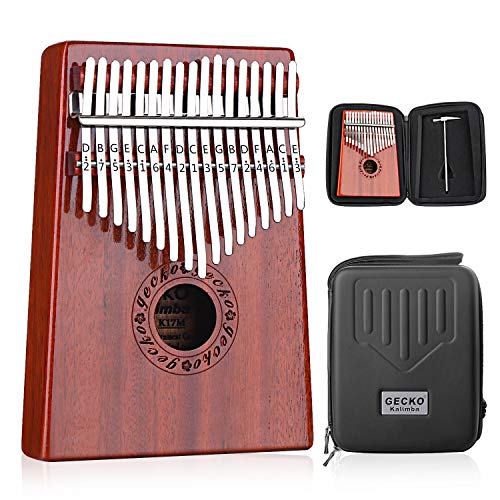
GECKO Kalimba 17 Keys Thumb Piano with Waterproof Protective Box, Tune Hammer and Study Instruction, Portable
Mahogany with ore steel tines and, more usefully, a hard EVA case that keeps moisture and oxidation off the tines between sessions, which is what actually kills cheap kalimbas. A tuning hammer and a printed learning booklet with a QR code come in the box, so there is nothing else to buy before you can play something. Mahogany is warm rather than defined, and it will need tuning out of the box.
What's good
- Hard EVA case protects the tines from moisture
- Tuning hammer and learning booklet included
- Mahogany gives a warm, forgiving tone
- Cheapest sensible entry point
What's not
- Mahogany is less defined than rosewood or walnut
- Arrives out of tune, like all of them
- Single row, so C major only
- Tines are the least refined here
 Best for most players
LingTing Kalimba 17 keys Thumb Piano Mbira Finger Piano Gift for Adult Beginners Professional(LT-K17A,wind whisperer)
African rosewood with adjustable carbon steel tines, from a maker that builds thumb pianos and ukuleles rather than sourcing generic ones. The denser wood is the point: notes come out clearer and sustain longer than on mahogany, which matters once you are playing more than single notes. The box includes an EVA case, a tuning hammer, a cloth, syllable stickers and a tuner, so it is genuinely complete.
What's good
- Rosewood gives clearer notes and longer sustain
- Adjustable carbon steel tines hold tune better
- Case, hammer, tuner, cloth and stickers included
- Built by an actual instrument maker
What's not
- Still a single row, so diatonic only
- A third more than the Gecko
- Grain varies, so yours will not match the photo
- Heavier in the hands than a flat board
 Best for playing in other keys
Hluru Kalimba Thumb Piano (21-keys Walnut wood)
Solid walnut with twenty-one keys arranged in two rows, and the second row is the reason to buy it. Those extra tines carry the chromatic semitones, which turns a one-key instrument into one that can handle accidentals and play in keys other than C. Naturally dried walnut gives a crisp, well-defined note. Carry bag, pick-up, tuner, sheet music and stickers are included. The second row takes real relearning.
What's good
- Double row adds the semitones, so it is chromatic
- Plays in keys other than C major
- Solid walnut is crisp and well defined
- Pick-up included for amplifying it
What's not
- The second row needs genuine relearning
- Overkill until you have outgrown C major
- More tines to keep in tune
- Dearest here
A new kalimba almost always arrives slightly out, and a kalimba that is slightly out sounds sour rather than obviously wrong, so beginners conclude the instrument is cheap. Download any free chromatic tuner, go tine by tine, and tap the hammer in tiny increments: out past the bridge lowers the note, back in raises it. Half an hour of this transforms how the thing sounds and it is the single highest-value thing you can do on day one.
Playing it, and keeping it alive
Hold it in both hands with the fingers curled round the back and the thumbs free over the tines. Most of the awkwardness beginners feel is gripping it too tightly, which damps the body and kills the sustain.
Use the nail edge, not the pad, for a clear attack. Keep the nails short and smooth, because a rough edge catches and buzzes.
Learn tab, not notation. Numbered tab maps directly to the tines and is how nearly all kalimba music is published. Trying to read a stave and convert it is a needless extra step.
Start with the thirds. Because scale notes alternate sides, the two tines next to each other on the same side are a third apart, which means simple two-note harmony is available immediately.
Buzzing is usually a loose tine or dirt at the bridge. Press the tine firmly against the bridge, check nothing is caught underneath, and tap it very slightly to reseat it.
Keep it out of damp and direct sun. Wood moves, and a kalimba that has sat on a sunny windowsill will not hold tune. Store it in its case.
Wipe the tines after playing. Finger oils rust steel tines over months, and rusted tines sound dead and leave marks on your thumbs.
Before you buy
17 keys in C major unless you have a specific reason not to.
Hollow-box for sustain, flat-board if you plan to amplify it.
Check a tuning hammer is included. You will need it on day one.
Double row only if you already know you need semitones.
A hard case matters more than the wood at this price.
Kalimba questions
Why are the kalimba notes in that order?
How many keys should a beginner get?
How do you tune a kalimba?
What is the difference between single and double row?
The LingTing 17-key rosewood is the one to buy: denser wood for clearer notes and longer sustain, adjustable carbon steel tines, and a complete kit in the box. The Gecko is a genuinely fine first instrument and its hard case is worth having whichever you choose. Go to the 21-key walnut Hluru only once C major is actually limiting you. Then spend half an hour tuning it before you judge it.
Ready to actually do it?
The first kalimba quest takes an evening, and it tells you whether the gear was worth it better than any review can.
Start KalimbaThe HobbyStack editorial team researches each guide using practitioner communities, published resources, and direct input from active hobbyists. Every guide is reviewed for accuracy before publication and updated when practices change.
About our editorial process →More gear guides
All guides
Best Beginner Harmonica (2026): 3 Honest Picks
Here is the honest truth most gear guides skip: the harmonica is one of the cheapest instruments to start, and the thing that actually matters is not spending more, it is not buying a toy. A real 10-hole diatonic harmonica in the key of C from a known brand is airtight, stays in tune, and lets you bend notes, which is the whole point. The cheap no-name harp and the giant multi-key gift set fight you the entire way, drift out of tune within a week, and make you feel like you have no talent when the truth is the instrument is the problem. So this guide is not about which expensive harp to buy, it is about getting one honest, well-made harmonica in the right key so you actually enjoy learning. Key of C is the standard beginner key, nearly every lesson, song, and YouTube tutorial is in C, so start there. All three picks are proper 10-hole diatonics in C with plastic combs, and even the dearest one here is cheap. Here are three good ones, and honest advice on how little you need to spend.

Best Beginner Ukulele (2026): Soprano, Concert, and Tenor Picks
The great thing about the ukulele is that a good beginner one is cheap and genuinely easy to start on. The main decision is not budget, it is size: soprano, concert, or tenor. They are all tuned the same and played the same, they just differ in body size, which changes the tone and how much room your fingers have. All three picks here are from Kala, the brand most teachers point beginners toward, so you get a properly set-up instrument that stays in tune rather than a toy that fights you.

Best Footbag (2026): Panel Count Decides Whether It Stalls or Bounces
A two-panel sand bag and a thirty-two-panel bag are barely the same object. The first is soft, dead, and sits still on your foot. The second is round, lively, and will bounce off. Panel count and fill decide which tricks are even possible, and almost nobody mentions it when you buy your first one.

Best Weighted Hula Hoops for Beginners (2026)
The trick to hula hooping as an adult is not skill, it is the hoop. The tiny light hoops from childhood fall straight down; a bigger, weighted hoop turns slowly enough to actually keep up. Here are three beginner hoops, from a simple weighted one to a heavier ACU Hoop.

Best Cardistry Cards (2026): A Deck Is a Consumable, Not a Purchase
A cardistry deck has a working life measured in weeks, not years. The coating wears, the edges soften, the cards start to clump, and fans that opened cleanly on Monday will not by Friday. Which means the single most useful thing a beginner can know is to buy cheap decks in bulk and stop treating any one of them as precious.

Best Bone Folder (2026): Real Bone Burnishes, Plastic Just Presses
A bone folder does two jobs that sound like one. It creases paper, which anything stiff can do, and it burnishes — polishing a fold so the fibres lie down and the crease becomes sharp and permanent. Real bone burnishes. Plastic mostly just presses, and on some papers it leaves a shine you cannot remove.