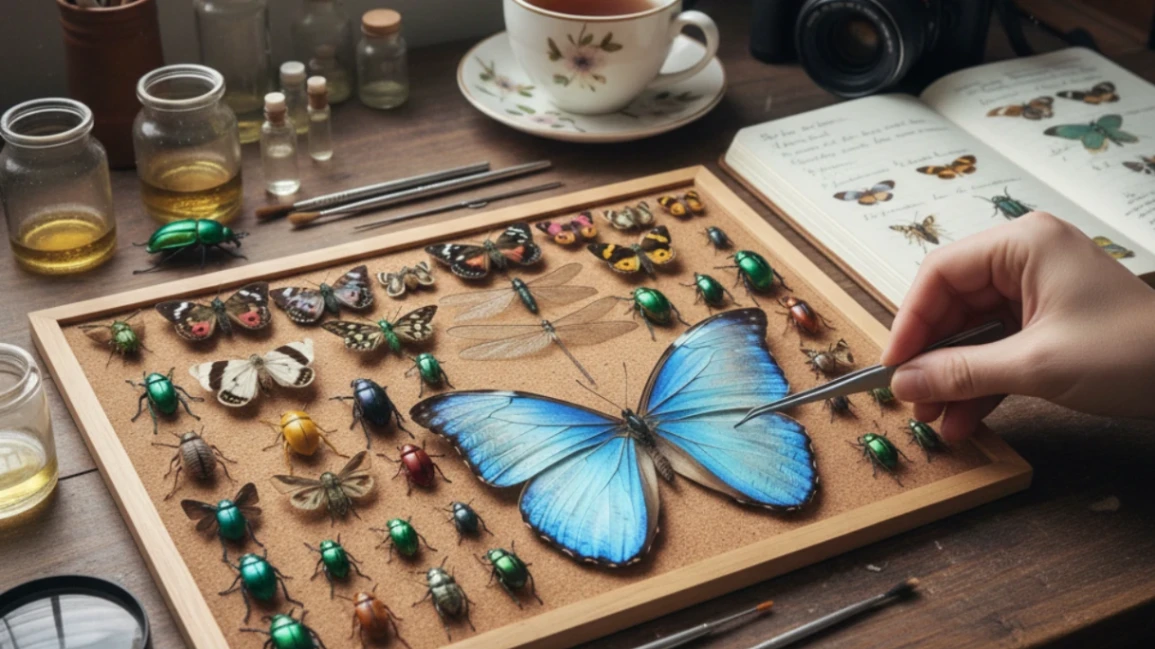
Study and collection of insects, exploring their diversity and behavior.
Amateur entomology is the hands-on study and collection of insects, offering a window into a world teeming with incredible biodiversity. It’s about more than just bugs; it’s about understanding ecosystems, appreciating intricate life cycles, and contributing to scientific knowledge. This hobby appeals to the curious mind that enjoys detailed observation, patient fieldwork, and the satisfaction of identifying and cataloging tiny creatures. Whether you're meticulously pinning specimens for a collection or observing live insects in their natural habitats, amateur entomology fosters a deep connection with the natural world and its smallest inhabitants. It requires a blend of scientific rigor and a sense of wonder, turning every excursion into a potential discovery. This is a pursuit for those who find fascination in the miniature marvels that often go unnoticed.
For the observant individual who finds wonder in the intricate details of the natural world and enjoys patient fieldwork.
Your journey starts here. Follow these steps to get started with Amateur Entomology.
Begin by obtaining a field guide specific to your local area. For example, the 'Peterson Field Guide to Insects of North America' is a great starting point. This will help you identify common species you encounter without needing advanced equipment. Focus on learning to identify a few common families like butterflies, beetles, or ants first. You can find digital versions or purchase a physical copy from major booksellers like Amazon: https://www.amazon.com/Peterson-Field-Guide-Insects-America/dp/0547238272
Acquire essential tools for observation and collection. A good sweep net, collection jars with airtight lids, a magnifying glass or hand lens, and a small notebook with a pencil are crucial for initial field excursions. Consider a comfortable field vest with plenty of pockets for storage.
Familiarize yourself with ethical collection practices and specimen preservation. Learn how to humanely collect insects, such as using a killing jar with ethyl acetate (ensure proper ventilation and safety precautions), and then how to properly pin and label specimens for study or display. Resources like university extension websites often provide detailed guides on this.
Connect with other amateur entomologists. Many local natural history museums or universities have amateur societies or clubs that organize field trips, workshops, and identification sessions. This is invaluable for learning from experienced individuals and gaining access to resources.
Our top picks for core tools to get you started.
Recommended items to enhance your experience.
As an Amazon Associate, HobbyStack may earn from qualifying purchases. Prices are estimates.
Collecting too many specimens, especially of rare or common species without a clear purpose, can harm local populations and is ethically questionable. Always collect with a purpose and adhere to local regulations.
Insects are fragile. Without proper preservation techniques (pinning, drying, or using ethanol), specimens can degrade quickly, become moldy, or be damaged by pests like dermestid beetles, rendering them useless for study.
Relying solely on visual similarity without using detailed keys or consulting experts can lead to significant identification errors. Double-check your identifications, especially for scientifically valuable specimens.
A hobby's core characteristics, based on community votes.
21% Solo
You tend to prefer your own company but are open to occasional, low-pressure social activities.
5% Calm
You appreciate a balance of calm focus and moments of light, engaging activity.
27% Outdoors
You enjoy being outside and are drawn to hobbies that get you into the fresh air.
16% Technical
You tend to prefer structured activities but enjoy a little creative flair.
6% Physical
You enjoy a solid mix of both mental engagement and physical coordination.
Based on 16 total trait votes.
If you like Amateur Entomology, you might also enjoy these related hobbies.
Dive deeper with these community-recommended websites, guides, and forums.
The ESA offers resources, publications, and information on entomology, including sections for students and citizen scientists.
A community-driven website for identifying and documenting insects and other arthropods of North America. Excellent for beginners.
A citizen science platform where you can upload photos of organisms, get identifications, and contribute to biodiversity data.
The study of the form and structure of insects, including external features like wings, legs, and antennae.
The science of classifying and naming organisms, including insects, often involving hierarchical ranks like order, family, genus, and species.
Insects that undergo complete metamorphosis (egg, larva, pupa, adult), such as butterflies, beetles, and flies.
Insects that undergo incomplete metamorphosis (egg, nymph, adult), such as grasshoppers, true bugs, and dragonflies.
An individual organism or part of an organism collected and preserved for scientific study.
This hobby's profile is shaped by the community. See what's most popular and cast your own vote to refine its identity.
The community strongly defines Amateur Entomology by aspects of the Science & Exploration category.
Many users also associate Amateur Entomology with Collecting & Curation.
A number of users see a connection between this hobby and Outdoor & Adventure.
A number of users see a connection between this hobby and Visual Arts & Design.
A number of users see a connection between this hobby and Crafts & Making.
Study and collection of insects, exploring their diversity and behavior.
Amateur entomology is the hands-on study and collection of insects, offering a window into a world teeming with incredible biodiversity. It’s about more than just bugs; it’s about understanding ecosystems, appreciating intricate life cycles, and contributing to scientific knowledge. This hobby appeals to the curious mind that enjoys detailed observation, patient fieldwork, and the satisfaction of identifying and cataloging tiny creatures. Whether you're meticulously pinning specimens for a collection or observing live insects in their natural habitats, amateur entomology fosters a deep connection with the natural world and its smallest inhabitants. It requires a blend of scientific rigor and a sense of wonder, turning every excursion into a potential discovery. This is a pursuit for those who find fascination in the miniature marvels that often go unnoticed.
For the observant individual who finds wonder in the intricate details of the natural world and enjoys patient fieldwork.
Your journey starts here. Follow these steps to get started with Amateur Entomology.
Begin by obtaining a field guide specific to your local area. For example, the 'Peterson Field Guide to Insects of North America' is a great starting point. This will help you identify common species you encounter without needing advanced equipment. Focus on learning to identify a few common families like butterflies, beetles, or ants first. You can find digital versions or purchase a physical copy from major booksellers like Amazon: https://www.amazon.com/Peterson-Field-Guide-Insects-America/dp/0547238272
Acquire essential tools for observation and collection. A good sweep net, collection jars with airtight lids, a magnifying glass or hand lens, and a small notebook with a pencil are crucial for initial field excursions. Consider a comfortable field vest with plenty of pockets for storage.
Familiarize yourself with ethical collection practices and specimen preservation. Learn how to humanely collect insects, such as using a killing jar with ethyl acetate (ensure proper ventilation and safety precautions), and then how to properly pin and label specimens for study or display. Resources like university extension websites often provide detailed guides on this.
Connect with other amateur entomologists. Many local natural history museums or universities have amateur societies or clubs that organize field trips, workshops, and identification sessions. This is invaluable for learning from experienced individuals and gaining access to resources.
Our top picks for core tools to get you started.
Recommended items to enhance your experience.
As an Amazon Associate, HobbyStack may earn from qualifying purchases. Prices are estimates.
Collecting too many specimens, especially of rare or common species without a clear purpose, can harm local populations and is ethically questionable. Always collect with a purpose and adhere to local regulations.
Insects are fragile. Without proper preservation techniques (pinning, drying, or using ethanol), specimens can degrade quickly, become moldy, or be damaged by pests like dermestid beetles, rendering them useless for study.
Relying solely on visual similarity without using detailed keys or consulting experts can lead to significant identification errors. Double-check your identifications, especially for scientifically valuable specimens.
A hobby's core characteristics, based on community votes.
21% Solo
You tend to prefer your own company but are open to occasional, low-pressure social activities.
5% Calm
You appreciate a balance of calm focus and moments of light, engaging activity.
27% Outdoors
You enjoy being outside and are drawn to hobbies that get you into the fresh air.
16% Technical
You tend to prefer structured activities but enjoy a little creative flair.
6% Physical
You enjoy a solid mix of both mental engagement and physical coordination.
Based on 16 total trait votes.
If you like Amateur Entomology, you might also enjoy these related hobbies.
Dive deeper with these community-recommended websites, guides, and forums.
The ESA offers resources, publications, and information on entomology, including sections for students and citizen scientists.
A community-driven website for identifying and documenting insects and other arthropods of North America. Excellent for beginners.
A citizen science platform where you can upload photos of organisms, get identifications, and contribute to biodiversity data.
The study of the form and structure of insects, including external features like wings, legs, and antennae.
The science of classifying and naming organisms, including insects, often involving hierarchical ranks like order, family, genus, and species.
Insects that undergo complete metamorphosis (egg, larva, pupa, adult), such as butterflies, beetles, and flies.
Insects that undergo incomplete metamorphosis (egg, nymph, adult), such as grasshoppers, true bugs, and dragonflies.
An individual organism or part of an organism collected and preserved for scientific study.
This hobby's profile is shaped by the community. See what's most popular and cast your own vote to refine its identity.
The community strongly defines Amateur Entomology by aspects of the Science & Exploration category.
Many users also associate Amateur Entomology with Collecting & Curation.
A number of users see a connection between this hobby and Outdoor & Adventure.
A number of users see a connection between this hobby and Visual Arts & Design.
A number of users see a connection between this hobby and Crafts & Making.