Best Beginner Drum Kits: Electronic vs Acoustic and What to Buy First
For most beginners the real decision is not which kit: it is electronic or acoustic, and that usually comes down to how much noise your home can take. Here are the three kits worth buying, how we chose them, and what to expect once you start playing.
HobbyStack may earn a commission from links on this page at no extra cost to you. Our picks are chosen on merit; the commission helps fund the research.
- For most beginners — especially in apartments — an electronic kit with mesh heads is the right call: silent practice with headphones, no tuning, less space.
- The Alesis Nitro Max is the default first kit and superb value; the Command Mesh SE adds bigger pads and a better module.
- Mesh heads, not rubber pads. Mesh feels far closer to a real drum, rebounds better, and is quieter to the room.
- Buy an acoustic kit (like a Pearl Roadshow) only if you have a space where genuine volume is not a problem.
- Budget for a throne, sticks, and headphones too — they are not optional, and cheap kits rarely include good ones.
 Alesis Nitro Max KitMost first-time drummers$449Check price
 Our pickAlesis Command Mesh SE KitA kit to grow into$799Check price
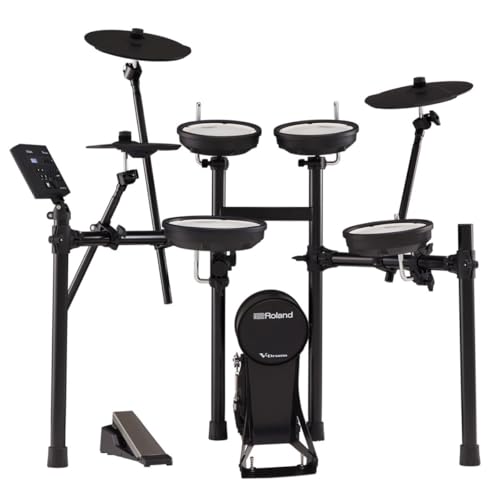 Roland TD-07KVSerious commitment$1000Check price
Electronic or acoustic? Start with the noise
This is the decision that shapes everything else. An acoustic kit sounds and feels best and is what you will eventually play in a band — but it is loud, takes real space, and needs tuning. An electronic kit lets you practise silently with headphones at any hour, takes less floor space, never needs tuning, and comes loaded with kits, a metronome, and play-along tracks.
For the overwhelming majority of beginners — anyone in an apartment, a shared house, or with neighbours — an electronic kit is the realistic choice, because the kit you can actually play at 10pm is the one you will improve on. Choose acoustic only if you genuinely have a garage, basement, or detached space where volume is a non-issue.
How we picked
We weighed every kit against the three things that actually decide whether a beginner sticks with drumming. Feel: mesh heads (not rubber) and a responsive snare and hi-hat, because realistic rebound is what builds real technique. Quiet-ability: can you play it at any hour without a fight — the single biggest predictor of practice consistency. Room to grow: a module with a proper metronome and headphone out, and pads you will not outgrow in six months. We deliberately ignored headline "number of sounds" — no beginner needs 600 kits — and we assumed you will add a throne, sticks, and headphones, since most kits skimp on those.
 Best first kit
Alesis Nitro Max Kit
The kit that put quality electronic drumming at a beginner price, and still the one most people should start on. All-mesh pads give a realistic feel and quiet-to-the-room practice, the module carries everything you need to learn — 40 kits, a metronome, and built-in play-along tracks — and the box includes the rack, cabling, sticks, and a drum key so you are playing the day it arrives. The 8" snare is small and there is no throne or headphones included, but as a way to find out whether drumming is for you, nothing beats the value.
What's good
- Outstanding value for an all-mesh kit
- Genuinely quiet — practise any hour with headphones
- Everything to start in the box (rack, sticks, module)
- Easy, well-documented setup
What's not
- Small 8" single-zone snare pad
- Throne and headphones not included
- Module sounds are basic vs pricier kits
 Best all-rounder
Alesis Command Mesh SE Kit
The sweet spot if your budget stretches a little past entry level. The bigger 10" dual-zone mesh snare and larger toms feel noticeably more like a real kit, which matters more than any spec sheet once you are practising daily. The module carries hundreds of sounds plus USB-MIDI, so you can record into a computer or trigger software drums as you progress, and the build quality will see you comfortably past the beginner stage. It costs more than the Nitro Mesh and is still an electronic feel rather than a true acoustic — but it is the smart "buy once" choice.
What's good
- Larger 10" dual-zone mesh snare feels more natural
- USB-MIDI for recording and software drums
- Roomier, more realistic pad layout
- Headroom to grow well past the basics
What's not
- Noticeably pricier than the Nitro Mesh
- Still an electronic feel, not a true acoustic
- Throne and headphones still extra
 Best long-term kit
Roland TD-07KV V-Drums
The kit you buy when you already know you are committed. The acclaimed TD-17 module and upgraded pads — a 12" mesh snare and a floating, acoustic-stand-mounted hi-hat — deliver a feel and dynamic response close enough to real drums that it carries you for years, not months. The nuance it reads from your playing (ghost notes, rim work, hi-hat splash) is what separates it from beginner kits, and it doubles as a serious practice and recording tool. It is a real investment and overkill for a casual try, but for anyone serious from day one it is the last kit you will need for a long time.
What's good
- Class-leading feel and dynamic response
- Floating hi-hat plays like the real thing
- 12" mesh snare reads nuanced playing
- Will last well beyond the beginner stage
What's not
- A significant investment
- More kit than a casual beginner needs
- Still requires a throne and headphones
If you have a space where volume genuinely is not a problem, a complete acoustic kit like the Pearl Roadshow (with hardware and cymbals included) is a fantastic first acoustic set. Just be honest about the noise — an acoustic kit at full volume carries through walls, and the kit you can only play occasionally is the one you stop improving on.
What to expect when you start
The first week is humbling and addictive in equal measure: you will play a recognisable beat within an hour, but holding it steady while your four limbs each do something different is harder than it looks. Plan to spend real time with the metronome at slow tempos — this is where timing is built, and rushing it is the most common beginner mistake. Within a month a basic rock beat becomes automatic and you can play along to simple songs. Two things trip people up early: skipping the throne (a chair wrecks your posture and back) and skipping hearing protection (yes, even on headphones — keep the volume sane). Set the kit up somewhere you will actually walk past and play, budget for sticks, a throne, and headphones from the start, and the habit will take care of the rest.
Before you buy
Decide electronic vs acoustic by your noise situation first — it dictates everything else.
Insist on mesh heads on an electronic kit; avoid all-rubber pads.
Budget separately for a throne, a good pair of headphones, and spare sticks.
A 10" or larger snare pad feels far more natural than an 8" one.
You do not need hundreds of sounds — prioritise feel and a solid metronome.
Beginner kits compete on sound counts — "600 sounds!", "70 kits!" — and it is almost meaningless. You will use a handful of kits and never miss the rest. What you will feel every single day is the snare and hi-hat response, the mesh-head rebound, and whether the module has a usable metronome. Buy on feel, not on a spec you will never exhaust.
Drum kit questions
Should a beginner get an electronic or acoustic drum kit?
What is the best beginner drum kit?
Why mesh heads instead of rubber pads?
What else do I need besides the kit?
How much should a beginner spend on a drum kit?
Are electronic drums quiet enough for an apartment?
Let your noise situation decide: in any shared or apartment space, buy an electronic mesh kit and practise freely with headphones. The Alesis Nitro Max is the value pick almost everyone should start with; the Command Mesh SE is the buy-once upgrade; the Roland TD-07KV is for the already-committed. Whatever you choose, budget for a throne, headphones, and spare sticks too — and get the metronome going from day one.
Ready to actually do it?
The first drums quest takes an evening, and it tells you whether the gear was worth it better than any review can.
Start DrumsThe HobbyStack editorial team researches each guide against manufacturer specifications, published resources and practitioner sources. Every product is checked for availability and described against its current listing before publication, and prices are re-checked when guides are updated.
About our editorial process →More gear guides
All guides
Best Drum Practice Pads for Beginners
A practice pad is where most of your real progress happens: quietly, anywhere, building the hands that the kit can't teach as efficiently. Here are three, how we chose them, and what to expect from daily pad practice.

Best Drum Thrones for Beginners
A throne is not a chair: where you sit sets your posture, reach, and how long you can play without back pain. Beginners skip it and regret it. Here are three thrones worth sitting on, how we chose them, and what to expect.

Best Drumsticks for Beginners: Size, Weight, Wood & Tip (5A, 7A, 5B)
Drumsticks are cheap and personal, the size you hold changes how the kit feels and sounds. Almost every beginner should start with a 5A, then explore. Here are three pairs worth gripping, how we chose them, and what to expect.

Best Earplugs for Drummers: Protect Your Hearing Without Killing the Sound
Drummers sit inside the loudest instrument in the room, and hearing damage is permanent. Musician earplugs lower the volume evenly so the music stays clear: they're cheap, essential, and you should wear them from session one. Here are three, how we chose them, and what to expect.

Best Headphones for Electronic Drums
On an electronic kit, your headphones are your sound: and on an acoustic kit, isolation headphones let you hear a metronome over the noise. Either way, get closed-back. Here are three worth wearing, how we chose them, and what to expect.

Best Twirling Baton (2026): Length Is Measured Against Your Arm
A baton is sized to the twirler, not to a category. Hold your arm out straight and the baton should reach from the centre of your chest to the tip of your middle finger. Too long and it catches your shoulder on a horizontal roll; too short and the balance is wrong for every release you try.