Best Yo-Yos for Beginners (2026)
The one thing that makes learning a yo-yo click is starting with a responsive one that comes back with a tug. Get that and you learn the throw and basic tricks fast; start with a pro unresponsive yo-yo and it just sleeps at the bottom of the string and frustrates you. Here are three, from a $14 responsive plastic to a metal you grow into.
HobbyStack may earn a commission from links on this page at no extra cost to you. Our picks are chosen on merit; the commission helps fund the research.
- Start responsive, not unresponsive. A responsive yo-yo returns to your hand with a small tug, so you can learn the throw, the sleeper, and basic tricks. Pro 'unresponsive' yo-yos only come back with a bind, a technique you learn later, so they just frustrate a beginner.
- Our pick: the MagicYOYO N11 (~$22). A metal yo-yo that plays responsive or unresponsive depending on the setup, so you learn responsive now and switch to unresponsive tricks later without buying a second yo-yo. The one that grows with you.
- Budget: the MagicYOYO K2 (~$14). A wide, responsive plastic that is the ideal first throw. Light, forgiving, and cheap enough that dinging it while you learn does not hurt.
- For string tricks: the Yoyo King Ghost (~$35). A bi-metal, fully unresponsive throw with long spin time for the flowy string tricks you graduate to. Buy it once you can bind.
- Skip: the classic narrow 'looping' shapes for learning string tricks (the wide 'butterfly' shape catches the string far better), and cheap fixed-axle yo-yos if you want real spin time.
 Our pickMAGICYOYO N11 Metal Yoyo (Responsive + Unresponsive)Best for most beginners$20Check price
 MAGICYOYO K2 Responsive YoyoCheapest real yo-yo$14Check price
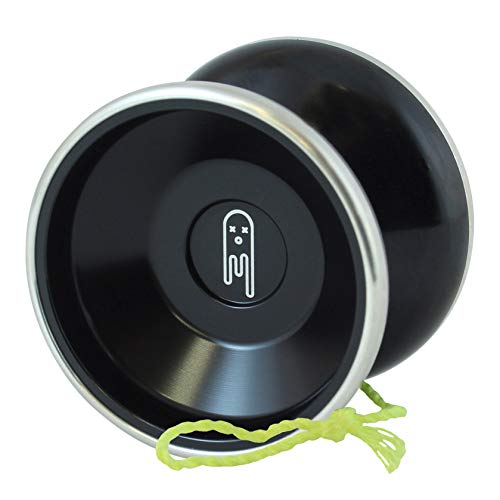 Yoyo King Ghost Bi-Metal YoyoFor real string tricks$35Check price
Responsive vs unresponsive — the one thing to get right
Every yo-yo decision for a beginner comes down to this, and it is not obvious from the listings.
- Responsive means the yo-yo climbs back up the string when you give it a small tug. This is what you want to learn on. You can throw a "sleeper" (a spinning yo-yo at the end of the string), do basic tricks, and just tug it back. It is intuitive and rewarding from minute one.
- Unresponsive means it does not come back on a tug, no matter how hard you yank. To return it you do a "bind" — a specific move that catches the string in the gap. Unresponsive yo-yos are what pros use for long, flowy string tricks, because the free-spinning bearing gives huge spin time. But handed to a beginner, an unresponsive yo-yo just sleeps at the bottom and feels broken.
So: learn on a responsive yo-yo, then move to unresponsive once you can bind. The clever middle path is a yo-yo that does both by swapping the bearing or response pads, so you learn responsive and convert the same throw to unresponsive later.
Shape matters too. A wide "butterfly" shape (flared out like an hourglass) catches the string on the tricks you will actually want to learn. The classic narrow "imperial" shape is built for looping and is much harder to land string tricks on. For modern tricks, buy a butterfly shape.
 Best for most beginners
MAGICYOYO N11 Metal Yoyo (Responsive + Unresponsive)
The smartest single yo-yo to buy, because you do not have to buy a second. The MagicYOYO N11 is a metal, butterfly-shaped throw that plays responsive with the setup it ships in, then converts to a fully unresponsive trick yo-yo when you are ready to bind. That means it carries you all the way from your very first sleeper to real string tricks on one throw. The metal build gives it more rim weight and longer spin than a plastic, and at around $22 it is barely more than a good plastic. For a beginner who wants room to grow, this is the one.
What's good
- Plays responsive now, unresponsive later — one throw for the whole journey
- Metal build spins longer and more stably than plastic
- Butterfly shape catches the string for tricks
- Grows from first sleeper to real string tricks
What's not
- Metal dings floors and toes if dropped
- Slightly heavier feel than a plastic starter
 Cheapest real yo-yo
MAGICYOYO K2 Responsive Yoyo
The ideal cheap first throw. The MagicYOYO K2 is a wide, butterfly-shaped responsive plastic — exactly what a beginner should learn on. It comes back with a tug, so you can nail the throw, the sleeper, and your first tricks without fighting a bind, and the wide shape catches the string for trick attempts. Being light plastic, it is forgiving on the hands and, at around $14, cheap enough that the inevitable drops onto the floor do not sting. It is not a long-spinning metal player, but as the throw you actually learn on, it does everything right.
What's good
- Wide, responsive butterfly — the right shape and feel to learn on
- Comes back with a tug, no bind required
- Light and forgiving while your throws are rough
- Cheap enough that drops do not hurt
What's not
- Plastic spins shorter than a metal
- You will want an upgrade once you can bind
 For real string tricks
Yoyo King Ghost Bi-Metal Yoyo
The throw for when you can bind and want to actually fly. The Yoyo King Ghost is bi-metal — a metal body with weighted rings on the rim — which puts the mass where it matters for long, stable spins, exactly what the flowy, multi-element string tricks you graduate to demand. It is fully unresponsive, so it will not come back on a tug (you bind it), and the ball-bearing axle gives serious spin time to string together combos. It is a genuine player's yo-yo, not a toy, and more than a total beginner needs, but it is the one to grow into once the bind clicks.
What's good
- Bi-metal rim weight for long, stable spins
- Fully unresponsive for advanced string tricks
- Ball-bearing axle strings long combos together
- A real player's throw you keep as you improve
What's not
- Unresponsive — needs a bind, so not for day one
- Premium price and a metal that dents on drops
The single thing that separates 'yo-yos are fun' from 'this yo-yo is broken' is the bind — the move that returns an unresponsive yo-yo. It takes about ten minutes to learn from any free tutorial once you can throw a straight sleeper. Learn it on a responsive or do-both yo-yo first, and an unresponsive throw suddenly makes sense. Buy a pure unresponsive yo-yo like the Ghost only after the bind clicks.
Before you buy
Get a butterfly shape, not an imperial. The flared, hourglass butterfly shape catches the string for tricks; the narrow imperial is for looping and much harder to learn tricks on.
Learn the throw, then the sleeper, then the bind. A hard, straight throw that 'sleeps' at the bottom is the foundation of every trick. Nail that before chasing anything fancy.
Size the string. The yo-yo should hang to about your belly button with your hand at your side. Shorten a too-long string with a knot; replacement polyester strings wear out and cost pennies.
Fix the string tension. If the yo-yo tilts or the string feels too tight or loose, adjust the tension (there are quick tricks for it). Wildly off tension makes everything feel wrong.
Expect to ding it. Beginners drop yo-yos constantly, which is why a cheap plastic is the smart first throw and you save the metal for when your throws are cleaner.
Common questions about beginner yo-yos
What kind of yo-yo should a beginner get?
What is the difference between responsive and unresponsive?
What is a bind?
Plastic or metal for a first yo-yo?
Why won't my yo-yo come back?
Do I need special string?
Ready to actually do it?
The first yo-yoing quest takes an evening, and it tells you whether the gear was worth it better than any review can.
Start Yo-yoingThe HobbyStack editorial team researches each guide against manufacturer specifications, published resources and practitioner sources. Every product is checked for availability and described against its current listing before publication, and prices are re-checked when guides are updated.
About our editorial process →More gear guides
All guides
Best Yo-Yo String (2026): The Cheapest Thing That Changes How It Plays
String is the part of a yo-yo nobody thinks about and the part that decides whether tricks work. It costs pennies, it wears out in hours of play, and a stretched, fraying string is behind most of the sudden inability to land something you had yesterday. Changing it is the cheapest fix in the hobby.

Best Juggling Balls for Beginners (2026): 3 Honest Picks
Here is the good news that juggling gear pages tend to bury: you do not need anything fancy to learn, and the right tool is also one of the cheapest. Soft beanbag balls, the kind that land with a dull thud and stay put instead of bouncing or rolling under the sofa, are genuinely the best way to learn to juggle. You are going to drop a lot early on, everyone does, and a ball that rolls away turns every single drop into a chase across the room. Beanbags do not roll. That one quality matters more than brand, colour, or price. You do not need stage balls, LED balls, or anything a professional uses, those come much later, if ever. All three picks here are soft, three-ball beanbag sets in the 90 to 130 gram range that most jugglers settle on, and the ladder is simple: a cheap, soft set to start, a quality all-purpose set that most people should just buy, or a durable pro-grade set that gets nicer with use and lasts for years. Here are three good ones, and honest advice on how little you actually need to spend.

Best Kendamas for Beginners (2026)
A kendama is a wooden ball-and-cup skill toy, and the one that makes it click for a beginner has a slightly tacky paint that grips the ball so it does not slide off the cups. A cheap glossy one is genuinely harder to learn on. Here are three, from a trusted starter to a premium competition kendama.
Best Playing Cards for Card Magic (2026): 3 Honest Picks
Here is the honest truth most gear guides skip: a standard deck of Bicycle cards, the kind you can buy for about four dollars at any supermarket, is genuinely all you need to learn almost every card trick worth knowing. Nearly every card magician alive learned on exactly that deck, and most still perform with it. The sleights, the moves, the classics in every beginner book all assume an ordinary deck of cards, not a special one. So this is not a guide about buying your way to better magic, because you cannot, the skill is entirely in your hands. It is a guide to three good decks and the honest, small differences between them: a cheap standard Bicycle to start and stick with, a classic magician's paper deck that fans and springs a touch more smoothly once your hands know what they are doing, and a premium deck that feels lovely and looks the part but does nothing your first deck cannot. One thing up front: these are all real decks you also just play cards with, not gimmick or trick decks. You do not need those to learn card magic. Here are three good ones, and honest advice on whether to bother going past the first.
Best Diabolo for Beginners (2026): Bearings Change What You Can Learn
A bearing diabolo holds its spin almost indefinitely, which sounds like pure upside and is a real trade. Spin is what keeps a diabolo stable, so bearings make tricks much easier to hold together. They also remove the one thing that forces a beginner to learn a clean, powerful acceleration.

Best Microphone for Singing (2026): 3 Picks from USB to Studio
The right first vocal microphone depends less on brand than on two questions: how will you plug it in, and how treated is your room? A USB microphone plugs straight into your computer and is the simplest, cheapest start. An XLR microphone sounds better and lasts a lifetime but needs an audio interface to run it. And for a normal, untreated room, a dynamic microphone (which ignores room echo) is far more forgiving than a sensitive studio condenser. Here are three excellent vocal mics, from a versatile plug-and-play starter to a studio-grade classic, and the honest advice on which suits your setup.