Best Guitar Capos for Beginners: Quick-Change, Clamp, and Tuning Stability
A capo clamps across the fretboard to raise your guitar’s pitch, letting you play songs in new keys using the easy open chords you already know. It is a small, cheap tool that unlocks a huge amount of music. Here are three, how we chose them, and what to expect.
HobbyStack may earn a commission from links on this page at no extra cost to you. Our picks are chosen on merit; the commission helps fund the research.
- A capo raises the guitar’s pitch so you can play in different keys with familiar open chords.
- Trigger/quick-change capos (Kyser) are fastest to move one-handed; screw/clamp capos (Shubb) offer fine tension control.
- Too much capo pressure pulls strings sharp — apply just enough to stop buzzing.
- Place the capo just behind the fret (not on top of it) for clean, buzz-free notes.
- A capo is one of the cheapest tools that unlocks the most songs for a beginner.
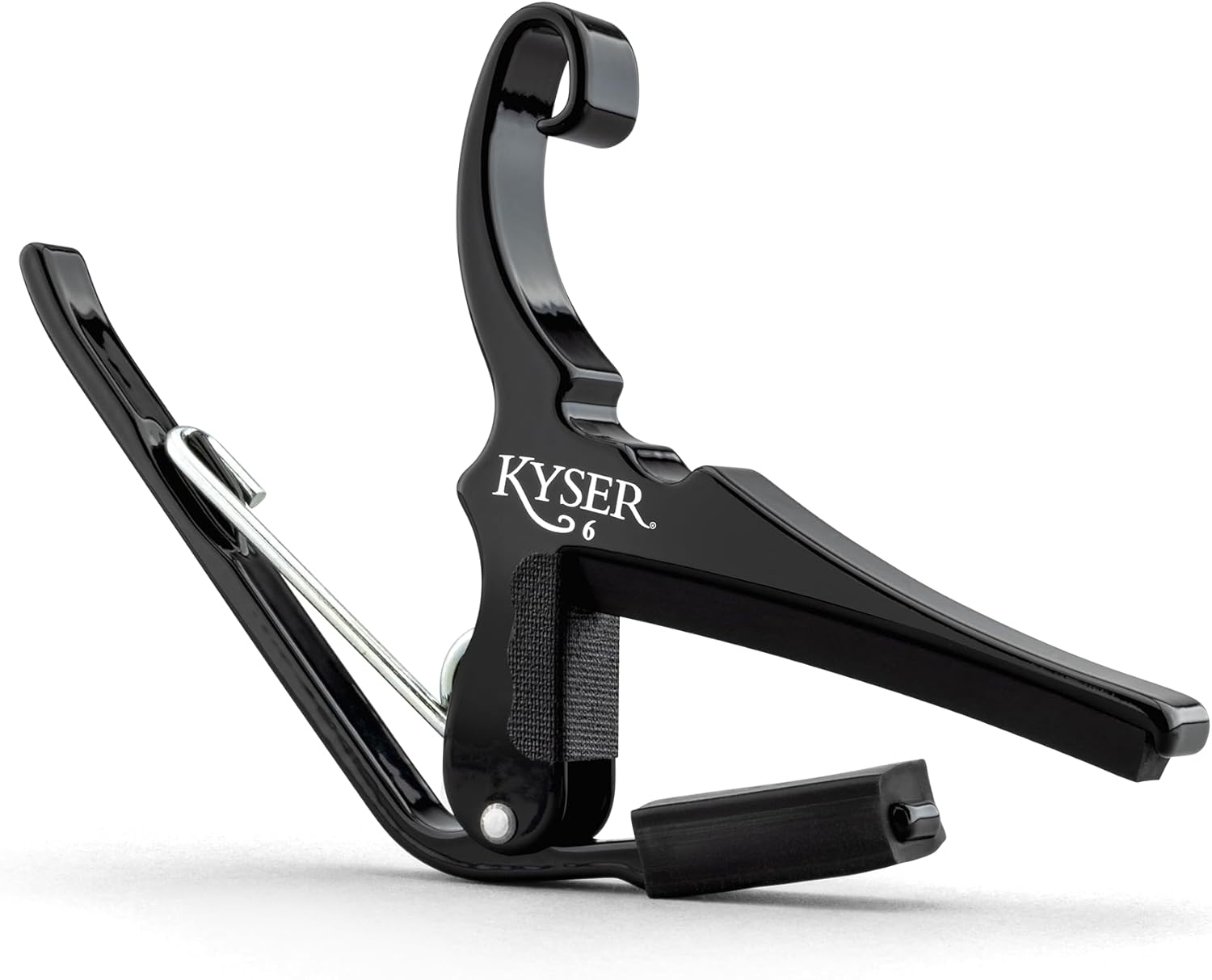 Kyser Quick-Change CapoFast one-hand changes$25Check price
 Our pickShubb C1 CapoTuning stability$25Check price
 G7th Performance 3 Capo (ART)Best tuning + feel$70Check price
What a capo does (and why beginners love it)
A capo clamps across all the strings at a chosen fret, effectively shortening them so the whole guitar sounds higher. The magic for a beginner is that you can keep playing the easy open-chord shapes you already know (G, C, D, Em…) but in a different key — to match a singer’s voice, play along with a recording, or get the bright, ringing sound of open chords higher up the neck.
Countless popular songs are played with a capo, and many “hard” songs become easy once you clamp on at the right fret. For a few dollars, it dramatically expands what you can play.
How we picked
We rated capos on the things that decide whether one helps or frustrates a beginner. Tuning stability: the big one — a capo that applies even, controllable pressure keeps the guitar in tune, where a too-tight clamp pulls strings sharp. Ease of use: how quickly you can clamp and move it, one-handed where possible. Clean fretting: a design and pad that press the strings cleanly without buzz when placed correctly. Build quality and grip for the price. We picked the fast trigger favourite, an adjustable-tension screw capo for the best everyday tuning, and a premium capo that combines one-handed speed with adaptive even pressure.
 Best quick-change
Kyser Quick-Change Capo
The fast, popular favourite you see everywhere. The Kyser Quick-Change clamps on and moves with one hand in a single second — squeeze, position, release — and parks neatly on your headstock between songs so you never lose it. Made in the USA from durable aluminium, it is built to last and just works. The spring tension is fixed rather than adjustable, which can pull strings slightly sharp on some guitars and means it is a touch bulkier than a screw capo, but for sheer convenience and reliability at a fair price, it is the one most beginners reach for.
What's good
- Instant one-handed changes
- Durable, made-in-USA build
- Parks on the headstock
- Just works, reliably
What's not
- Fixed spring tension can pull strings sharp
- Bulkier than a screw capo
- No tension adjustment
 Best all-rounder
Shubb C1 Capo
The tuning-friendly choice, and the all-round pick for most players. The Shubb C1 uses a patented locking lever over an adjustable screw, so you set just enough tension for clean, buzz-free notes and get exactly the same pressure every time — which keeps your guitar far more in tune than a fixed-tension spring capo. Its low profile stays out of your fretting hand’s way, and the build is solid and long-lasting. It is a touch slower to move than a trigger capo and takes two hands to reposition, but if you have ever fought a capo pulling your tuning sharp, this is the fix.
What's good
- Adjustable tension keeps you in tune
- Low profile, out of the way
- Solid, repeatable clamping
- Built to last
What's not
- Slightly slower to move than a trigger
- Two-handed to reposition
- Set-up tension takes a moment to learn
 Best premium capo
G7th Performance 3 Capo (ART)
The best-feeling capo, combining the strengths of both other types. The G7th Performance 3 squeezes on one-handed like a trigger capo for speed, but holds with infinitely variable tension like a screw capo — so you get convenience and tuning control together. Its standout ART (Adaptive Radius Technology) pad flexes to match the curve of your fretboard and spreads pressure evenly across all the strings, giving outstanding tuning stability and a clean, buzz-free clamp on any guitar. It is the priciest option here and more capo than a casual player strictly needs, but it genuinely plays and tunes better than the rest.
What's good
- One-handed and tension-adjustable
- Adaptive pad for great tuning stability
- Sleek, low-profile design
- Works cleanly on any fretboard
What's not
- The priciest option here
- More capo than a casual player needs
- Premium price for a small item
Two habits prevent the capo’s common headaches: clamp it just behind the fret (not on top of the metal fret, which buzzes; not too far back, which mutes), and re-check your tuning after fitting it. Too much pressure pulls strings sharp, so a tension-adjustable capo (Shubb or G7th) makes staying in tune much easier.
What to expect
The first time you use a capo, it feels like a cheat code: songs that sounded impossible suddenly fall under your fingers using chords you already know, and you can match a song to your singing voice by sliding it up or down a fret. The main thing to get right is placement and tension — clamp it just behind the fret and use only enough pressure to stop buzzing, then re-check your tuning, because over-tightening pulls the strings sharp (this is where an adjustable capo earns its keep). Expect to re-tune slightly after clamping on, especially with a fixed-tension trigger capo. Beyond that it just works: keep it parked on your headstock so it’s always to hand, and you’ll find yourself reaching for it constantly as you learn more songs.
Before you buy
Place the capo just behind the fret for clean, buzz-free notes.
Use only enough tension to stop buzzing — too much pulls strings sharp.
Trigger capos are fastest; screw/adaptive capos tune more reliably.
Re-check tuning every time you fit or move the capo.
Park a trigger capo on the headstock so you never lose it.
A common beginner confusion: the capo changes the key the song sounds in, but you still play the same chord shapes relative to the capo (a “G shape” behind a capo on the 2nd fret sounds like an A). You don’t need to learn new shapes — that’s the whole point. If a tutorial says “capo 3, play these shapes,” put the capo on the 3rd fret and treat it as your new nut.
Guitar capo questions
What does a guitar capo do?
What kind of capo should a beginner buy?
Why does my guitar go out of tune with a capo?
Where exactly do I put the capo?
Do I need a capo as a beginner?
Do I play different chords when using a capo?
A capo is a cheap tool that unlocks a huge amount of music by letting you play easy open chords in any key. The Kyser Quick-Change is the fast, one-handed favourite; the Shubb C1 adds adjustable tension for better tuning; the G7th Performance 3 combines one-handed speed with the best tuning stability. Place it just behind the fret, use light tension, and re-check your tuning.
Ready to actually do it?
The first playing guitar quest takes an evening, and it tells you whether the gear was worth it better than any review can.
Start Playing GuitarThe HobbyStack editorial team researches each guide against manufacturer specifications, published resources and practitioner sources. Every product is checked for availability and described against its current listing before publication, and prices are re-checked when guides are updated.
About our editorial process →More gear guides
All guides
Best Acoustic Guitar Strings for Beginners: Gauge, Coating, and Tone
Fresh strings transform how a guitar sounds and feels: and beginners often play far too long on old, dead ones. Light-gauge strings are easier on new fingers, and coated strings last longer. Here is what to put on your acoustic, how we chose, and what to expect.

Best Beginner Acoustic Guitar 2026: Yamaha FG800 vs Fender CD-60S vs Taylor GS Mini
The first acoustic guitar makes or breaks whether you stick with the instrument. Spend $80 and you'll quit in 6 months. Spend $230 and you'll be playing in 5 years. Here are the three acoustics worth buying as a beginner.

Best Beginner Electric Guitars: The Yamaha Pacifica and Its Rivals
A good beginner electric is easy to play, stays in tune, and is versatile enough for any style, and you do not need to spend much to get one. The Yamaha Pacifica is the runaway favourite. Here are three, how we chose them, and what to expect.

Best Beginner Guitar Amps: From Practice Amp to Modeling Powerhouse
An electric guitar needs an amp to make a sound, but the right beginner amp does far more than get loud. Modern modeling amps pack dozens of tones and effects into a small box. Here are three worth plugging into, how we chose them, and what to expect.
Best Guitar Cables for Beginners: Length, Quality, and Noise
A guitar cable seems like an afterthought until a cheap one fails mid-song or hums with noise. A good instrument cable is reliable, quiet, and lasts years. Here is what to buy, how we chose, and what to expect, and why you do not need to spend a fortune.

Best Guitar Picks for Beginners: Gauge, Material, and What to Try
Picks are cheap, tiny, and weirdly important, the gauge you hold changes how easily you strum and how your guitar sounds. Buy a variety, find your favourite, then stock up. Here is where to start, how we chose, and what to expect.