Best Ski Helmet for Beginners (2026): Fit, MIPS and When to Replace It
A ski helmet is the one piece of kit where the cheap option and the expensive option protect you to the same certified standard. What the money buys is fit, comfort, ventilation and rotational-impact technology — and of those, fit is the one that actually changes how well it works. A helmet that moves on your head is doing a fraction of its job.
HobbyStack may earn a commission from links on this page at no extra cost to you. Our picks are chosen on merit; the commission helps fund the research.
- Fit matters more than price. A loose helmet rotates on impact instead of absorbing it.
- Every helmet sold for skiing meets a certified standard. The cheap one is not "less safe" in a straight impact.
- MIPS is a low-friction liner that lets the shell rotate slightly, reducing rotational forces to the brain.
- It should sit level, one to two fingers above your eyebrows, and not move when you shake your head.
- Replace it after any real impact, even if it looks fine. Foam crushes once.
 OutdoorMaster Kelvin IIFirst season$46Check price
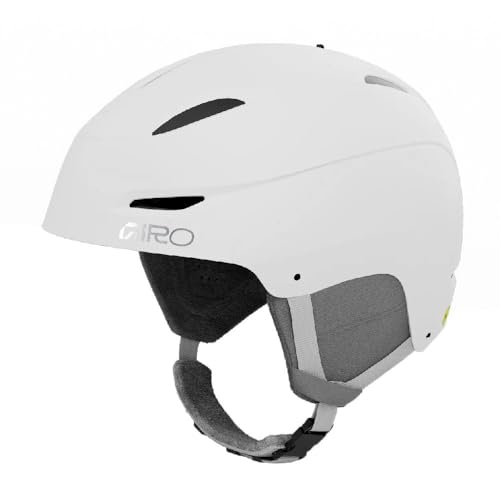 Our pickGiro Ceva MIPSMost people$109Check price
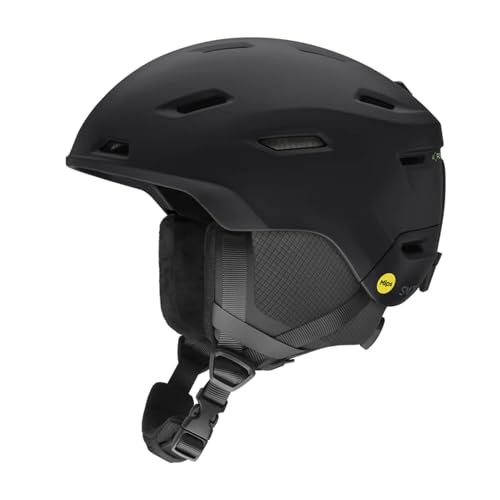 Smith Descend MIPSFull seasons$160Check price
Fitting one properly, which is most of the safety
A helmet works by crushing on impact and spreading the force. It can only do that if it is actually on your head in the right place when you land.
Level, not tipped back. The front rim should sit about one to two fingers' width above your eyebrows. Tipped back looks casual and leaves your forehead exposed, which is where a lot of impacts land.
No movement. Do it up, then shake your head firmly side to side and nod. The helmet should move your scalp with it, not slide independently. Most helmets have a dial at the back — snug it until there is no play but no pressure point.
Goggles under the front lip, no gap. A gap between goggle and helmet is cold, and it means the two are not sitting together properly.
Try it with your goggles. Some helmet and goggle combinations simply do not sit well together, and you will not discover that from the box.
What MIPS actually does
A straight impact drives force into the skull, and helmet foam handles that. But most real falls are angled, and an angled impact makes the head rotate suddenly — which is a common mechanism for concussion and worse.
MIPS is a thin low-friction layer between the liner and the shell. It lets the shell slide a few millimetres relative to your head during an impact, so some of that rotational energy is absorbed by the slip rather than transmitted to your brain.
It is not magic and it is not a certification requirement. But it addresses a real mechanism that ordinary foam does not, it adds only a small amount to the price, and there is no meaningful downside beyond a few grams. If you are choosing between two helmets that fit equally well, take the one with it.
Other brands have equivalent systems under different names. The principle is the same.
 Best for a first season
OutdoorMaster Kelvin Ski Helmet
A certified helmet at a price that removes any excuse for skiing without one, and that is the real argument for it — the gap between this and no helmet is enormous, while the gap between this and a helmet costing three times more is comfort rather than certification. It has a dial fit system, removable ear pads and enough venting for most conditions. What you give up is MIPS, a slightly heavier shell, and vents that are simpler to adjust with gloves on. For a first season, or for someone skiing a week a year, it is entirely sensible. If you already know you will ski regularly, spend the extra on the mid pick and get the rotational protection.
What's good
- Certified — the standard is the standard
- Dial fit system at a very low price
- Removable, washable ear pads
- No reason to ski bare-headed at this price
What's not
- No MIPS or equivalent
- Heavier than pricier shells
- Vents are fiddly with gloves
- Padding compresses sooner
 Best for most people
Giro Ceva MIPS Ski Helmet
The sensible amount to spend, and the point at which you stop giving anything up. MIPS for rotational impacts, a well-judged fit system that holds without pressure points, and vents you can actually open and close wearing gloves — which sounds trivial until you are overheating on a climb and freezing on the descent. The padding is comfortable enough for full days and the shell is noticeably lighter than the budget helmet, which you feel by the afternoon. It is more than twice the price of the entry option. If you ski more than a few days a year, that buys real comfort and a genuine safety feature rather than a badge.
What's good
- MIPS rotational protection
- Vents adjustable with gloves on
- Comfortable for full days
- Lighter than the budget shell
What's not
- More than twice the entry price
- Fewer size options than premium lines
- Ear pads muffle more than some
- Colours sell out early in the season
 Best for full seasons
SMITH Descend MIPS Helmet
Everything the mid pick does, refined. The fit system is more precise, so it is easier to get genuinely no movement without any hot spot, and the liner and ear pads are more comfortable over consecutive full days — which is the difference that matters if you ski weeks rather than days. Venting is better managed and the shell is lighter again. It does not protect you to a higher certified standard than the others; nothing does, because the standard is the standard. Buy it if you ski a lot and want a helmet you forget you are wearing, not because you expect it to be safer than the Giro in a crash.
What's good
- Most precise fit adjustment
- Most comfortable over consecutive days
- Excellent venting management
- Light
What's not
- No higher certified protection than cheaper helmets
- Most expensive here
- Overkill for a week a year
- Replacement pads are pricey
Helmet foam protects by crushing, and it only crushes once. After a significant impact the foam is compressed even where the shell looks perfect, and it will not absorb the next one properly. Replace it. The same applies if you drop it hard onto a hard floor — and it is why buying a used helmet is a bad idea, because you cannot know its history.
Renting versus buying
Rental helmets are certified and they are fine for a first day. Two reasons to buy your own fairly quickly.
Fit. Rental fits whatever is on the shelf in roughly your size, and fit is the thing that determines whether a helmet does its job. Your own helmet is dialled to your head.
History. You do not know whether a rental helmet has been dropped or crashed in. Foam that has already crushed looks identical to foam that has not.
Given a certified helmet costs less than three days of lift passes, buying one is an easy call after the first trip.
Before you buy
Try it with your own goggles — some combinations simply do not sit together.
Shake your head hard. If the helmet slides independently, it is too loose.
One to two fingers above the eyebrows, level, not tipped back.
Take MIPS if two helmets fit equally well. It costs little and addresses a real mechanism.
Never buy used. You cannot see crushed foam.
Ski helmet questions
Is an expensive ski helmet safer?
Do I need MIPS?
How should a ski helmet fit?
When should I replace a ski helmet?
Buy the helmet that fits properly, then worry about the price. The Giro Ceva MIPS is the one for most people — rotational protection, vents you can work with gloves on, and comfortable for a full day. The OutdoorMaster Kelvin II is a certified helmet at a price that removes any excuse, and fine for a first season. The Smith Descend is worth it if you ski weeks rather than days. And replace any helmet after a real impact, however fine it looks.
Ready to actually do it?
The first skiing quest takes an evening, and it tells you whether the gear was worth it better than any review can.
Start SkiingThe HobbyStack editorial team researches each guide against manufacturer specifications, published resources and practitioner sources. Every product is checked for availability and described against its current listing before publication, and prices are re-checked when guides are updated.
About our editorial process →More gear guides
All guides
Best Beginner Ski Boots (2026): 3 Comfortable, Forgiving Picks
Ski boots matter more than skis for a beginner, and the thing that matters most is fit, not the brand or the flex number. You want a soft, forgiving flex and a boot that is snug but not painful, because a boot that fits badly ruins the whole day. Here are three good beginner boots, from a soft and roomy starter to a moldable boot you can grow into, plus how to get the size right.

Best Ski Gloves (2026): Waterproof, Warm, and Still Able to Buckle a Boot
Cold hands end a ski day earlier than tired legs do, and the usual response is to buy the thickest glove available. That is the wrong lever. Warmth comes from dry insulation and a cuff that seals, and a glove so bulky you cannot buckle a boot or hold a pole properly ends up coming off, which is when hands actually get cold.

Best Snowboard Goggles for Beginners (2026): 3 Real Picks
Goggles are not optional on a snowboard: wind, glare, cold, and blowing snow make riding without them miserable and unsafe, and unlike sunglasses they seal to your face and stay put. The good news is you do not need to spend much. Any decent pair blocks UV and wind; what more money buys is better anti-fog, optics that read terrain in flat light, and quick lens swaps for changing conditions. Here are three good ones, plus the one spec that actually matters.

Best Snowboard Helmet for Beginners (2026): 3 Real Picks
A helmet is the one piece of snowboard gear you should never skip and never buy used, and the good news is a solid one is cheap. Any certified snow helmet protects your head in a standard impact; what more money buys is MIPS rotational protection, better fit, venting, and warmth. Most beginners are well served by an inexpensive certified helmet. Here are three good ones across the range, plus what actually matters when you choose.

Best Beginner Kayak (2026): 3 Stable Sit-On-Tops to Start Paddling
For a first kayak, the easy answer is a sit-on-top: you sit on top of it rather than inside, so it feels stable, it will not fill with water, and if you do tip over you can just climb back on. What matters most for a beginner is stability, weight (can you carry it and get it on your car), and a comfortable seat. Here are three good ones, from a paddle-included starter to a supremely comfy do-it-all boat.

Best Kayak PFD (Life Jacket) for Beginners (2026): 3 Real Picks
A PFD, or personal flotation device, is the one piece of kayaking gear you never skip, and for paddling you want a specific kind: a US Coast Guard-approved Type III paddling vest cut short and high so it doesn't jam against your kayak's seat back or trap your arms. Any approved vest keeps you afloat; what more money buys is ventilation, better arm freedom, and pockets. The most important thing is simply that you wear it, every time, so it has to be comfortable enough that you actually do. Here are three good ones across the range, plus what actually matters when you choose.