A complete guide to growing miniature trees — species selection, soil, styling, seasonal care, and the patience the practice genuinely demands.
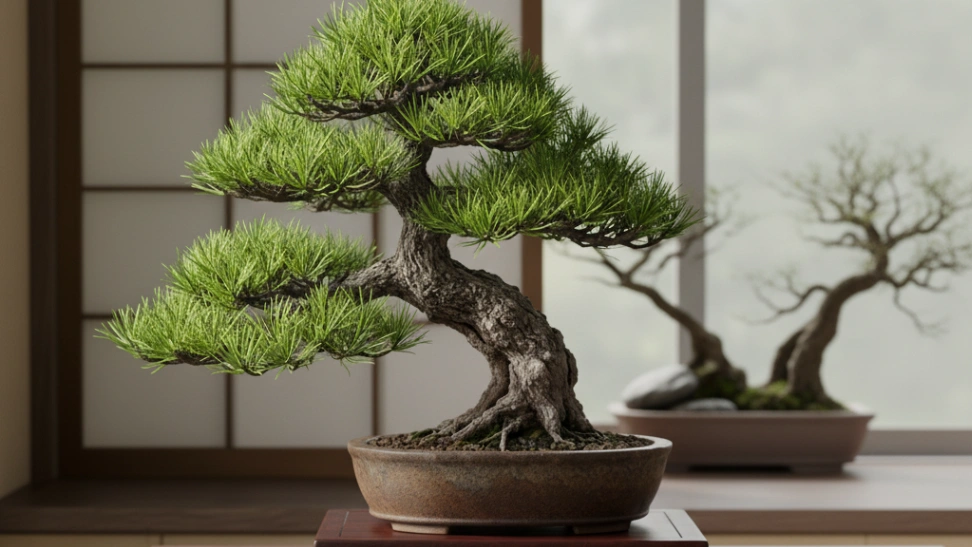
Bonsai is not a type of tree. It is a practice applied to trees — the art of cultivating a living plant in a container in a way that evokes the character of a full-sized tree in nature. What makes it unlike any other hobby is the timescale. The tree you begin working with today will still be developing in twenty years. That relationship with time is either the most compelling thing about bonsai or the thing that makes it the wrong hobby for you. Most people who stay with it say it is the most compelling thing they have ever encountered.
What Bonsai Actually Is
The word bonsai is Japanese, derived from the Chinese penjing, and means roughly "planted in a container." The practice itself originated in China over a thousand years ago and was refined into the art form recognised today through centuries of Japanese cultivation. At its core, bonsai is horticulture shaped by aesthetic intention — the grower uses pruning, wiring, and careful management of roots and soil to develop a tree that is both genuinely alive and deliberately composed as a visual object.
The most important thing a beginner needs to understand is that bonsai trees are not houseplants. They are outdoor trees grown in small containers. Most species used for bonsai are temperate trees that require seasonal change, including winter dormancy, to remain healthy. Keeping them indoors permanently in a centrally heated room is the most common reason beginners lose their first trees. Understanding the outdoor requirements of your chosen species before you acquire it prevents this entirely.
Bonsai sits at the intersection of horticulture, sculpture, and philosophy. The aesthetic principles that guide bonsai styling — asymmetry, the suggestion of age, negative space, the evocation of nature rather than its literal reproduction — connect to broader Japanese aesthetic concepts including wabi-sabi, the beauty found in imperfection and impermanence. Engaging with those ideas deepens the practice considerably for people who find them interesting, though the horticulture alone is a complete and absorbing pursuit.
Styles and Forms to Understand
Classical bonsai is organised into named styles that describe the angle and movement of the trunk. Understanding these is not mandatory for a beginner, but it gives you a vocabulary for discussing what you are observing in trees and what you are aiming for in your own work.
Chokkan — Formal Upright
A straight, tapering trunk with branches arranged symmetrically. The most structured and classical of all bonsai styles, and one of the most difficult to execute convincingly because the symmetry demands precision at every stage of development. Rarely found in nature except in trees growing in ideal, undisturbed conditions.
Moyogi — Informal Upright
A trunk that curves and moves but ultimately grows upright. The most common style in both nature and bonsai practice. The movement of the trunk gives the tree character and a sense of having responded to its environment over time. By far the most forgiving style for beginners and the one most nursery stock trees naturally suit.
Shakan — Slanting
The trunk grows at a significant angle, suggesting a tree shaped by prevailing wind or growing on a hillside. The roots on the windward side are often visible and exaggerated to suggest anchorage. Easier to develop than formal upright because slight irregularities in the trunk read as natural rather than as errors.
Kengai and Han-Kengai — Cascade and Semi-Cascade
The trunk grows downward, with the apex falling below the level of the pot rim in full cascade or level with it in semi-cascade. Evokes trees growing from cliff faces above water. Requires tall pots for display and more careful watering management than upright styles. Visually dramatic when well executed.
Literati — Bunjin
A tall, slender, minimalist style with sparse branching high on the trunk. Takes its name from the Chinese literati painters whose brushwork it resembles. Among the most contemplative and philosophically considered styles in bonsai, and one of the most difficult to make convincing because the minimal elements leave nowhere to hide poor technique.
Buy a pre-trained nursery tree in the informal upright style rather than attempting to style raw material in your first year. A tree that already has movement and basic branch structure teaches you how a developed bonsai works before you attempt to create that structure yourself. Spend the first year learning its care requirements before any significant styling work.
Tools and Supplies You Will Need
Bonsai tools are specialised and the quality difference between cheap and good is more pronounced than in most hobbies. Poor quality concave cutters crush rather than cut cleanly, and a clean cut heals in weeks while a crushed one takes months and leaves a larger scar. That said, a beginner does not need a full tool roll. Here is what actually matters at the start:
The non-negotiables — you need these before your first session. No upsell here, just what actually matters to get started safely.


Bonsai Pruning Shears

Bonsai Wire Cutter
Bonsai Root Hook
Bonsai Potting Trowel
Bonsai Watering Can
Worth it once you're committed. These items meaningfully improve your experience and are often bought within the first few months.


Japanese tools from makers including Masakuni, Kaneshin, and Yoshiaki are the benchmark for quality and are worth buying once rather than replacing cheap tools repeatedly. For a beginner on a budget, Tinyroots and Bonsai Boy carry mid-range tools that perform well without the premium price of top Japanese makes.
Species selection is the most consequential decision a beginner makes. Here is a practical overview of the most accessible species for new practitioners:
| Species | Position | Difficulty | Best For | Key Requirement |
|---|---|---|---|---|
| Juniper | Outdoor, full sun | Beginner | First bonsai, classic styling | Never keep indoors; needs full sun |
| Japanese Maple | Outdoor, partial shade | Beginner to intermediate | Autumn colour, fine ramification | Protect from frost when potted |
| Trident Maple | Outdoor, full sun | Beginner | Fast development, strong root flare | Vigorous grower; needs regular pruning |
| Ficus | Indoor, bright light | Beginner | Indoor bonsai in temperate climates | Consistent warmth; no cold draughts |
| Chinese Elm | Outdoor or indoor | Beginner | Versatile, forgiving, good ramification | Semi-evergreen; drops leaves in cold |
| Scots Pine | Outdoor, full sun | Intermediate | Naturalistic, rugged styling | Needs specific pruning technique |
Interactive Buyer's Guide
Compare all tiers, track what you own, see your full budget.
How to Get Started Step by Step
Choose a species suited to your climate
A tree that is not suited to your climate will struggle regardless of your technique. Temperate species like juniper, Japanese maple, and hornbeam need cold winters. Tropical species like ficus and jade need warmth year round. Matching species to environment is the most consequential first decision in bonsai.
Keep it outside unless the species requires otherwise
Most bonsai trees are outdoor plants. They need direct sunlight, natural temperature fluctuation, rain, and winter dormancy. A tree kept indoors in low light and centrally heated air deteriorates slowly and dies suddenly. Determine your species' requirements and place it accordingly from day one.
Learn to water correctly before anything else
Bonsai soil drains fast by design and dries out quickly, especially in summer. Check your tree daily. Water thoroughly when the top layer of soil approaches dryness, allowing water to flow freely from the drainage holes. Both overwatering into permanent dampness and allowing the rootball to completely dry out will kill a tree faster than any other mistake.
Do not repot in the first year
A newly acquired tree needs time to establish in your conditions before being subjected to repotting stress. Observe it through a full growing season first. Repot only when the tree is healthy, growing vigorously, and the roots are visibly circling the base of the pot. Repotting a weak or stressed tree accelerates its decline.
Prune to develop structure, not to tidy
Every cut on a bonsai should serve a design purpose. Removing a branch because it looks untidy without understanding what you are trying to achieve with the overall tree produces a smaller but not better result. Study the tree before cutting, identify its best features, and make only the cuts that reveal or strengthen them.
Feed regularly through the growing season
Bonsai trees are growing in a very small volume of soil that depletes quickly. A balanced fertiliser applied every two to four weeks from spring through early autumn replenishes nutrients that watering washes through the fast-draining soil. Trees that are not fed develop weak, pale foliage and poor ramification over time.
What to Expect in Your First Year
Here's what typically happens when you start — and why it's useful information, not failure.
Very little will happen visibly.
Bonsai development is measured in years and decades, not weeks. A tree that looks identical in December to how it looked in March has not failed — it has done exactly what a healthy dormant tree does. Expecting rapid visible transformation in the first year leads to interventions that the tree does not need and cannot benefit from.
Watering will feel like guesswork at first.
The relationship between soil moisture, pot size, species, season, and weather is genuinely complex and only becomes intuitive through daily observation over many months. Checking the tree every day, without necessarily watering every day, builds that intuition faster than any other approach.
You will want to wire and prune before the tree is ready.
The urge to style a young or newly acquired tree is almost universal in beginners and almost universally premature. A tree needs to be healthy, well established, and growing vigorously before significant styling work will serve it. Styling a stressed tree compounds its problems. Waiting until the tree clearly wants to grow is the correct approach.
You will likely lose a tree.
Even experienced bonsai growers lose trees periodically. Beginners lose them more frequently, usually to watering errors or incorrect placement. Losing a tree is not a reason to leave the hobby. It is information about what that species needs that you did not have before, and it makes the next tree more likely to survive.
The tree will begin to feel like a relationship.
Checking a bonsai every day, watching it respond to seasons, noticing new growth and adjusting care accordingly — this daily engagement creates an attachment to the tree that is different from other hobbies. Most bonsai practitioners describe their trees not as objects they own but as living projects they are participating in. That shift in perspective usually arrives quietly in the first year.
Beginner Tips That Actually Help
The most important tool is your eyes
Experienced bonsai growers spend far more time looking at their trees than working on them. Observation before action is the foundational discipline of the practice. Study the tree from every angle before picking up a tool. Understand what each branch contributes to the overall composition, where the tree has energy and where it does not, what the nebari (surface roots) reveals about its age and character. The cut that improves the tree emerges from that kind of looking. The cut that harms it usually comes from impatience.
Use free-draining soil, not garden soil or potting compost
Standard potting compost retains too much moisture for bonsai containers and compacts over time, suffocating roots. Bonsai soil mixes are composed primarily of inorganic materials including akadama, pumice, and lava rock that drain immediately and allow air to reach roots. Using the wrong soil is one of the slower ways to kill a bonsai — the tree declines over months rather than weeks, which makes the cause harder to identify. A species-appropriate free-draining mix from the start avoids this entirely.
Join a local bonsai club in your first year
Bonsai clubs exist in most cities and many smaller towns. They provide access to experienced practitioners who can look at your specific tree, in your specific conditions, and give advice that no book or website can match in relevance. Workshops run by club members offer hands-on instruction at a fraction of the cost of individual lessons. The community aspect of bonsai is consistently cited by practitioners as one of the most rewarding dimensions of the hobby.
Photograph your tree regularly from the same angle
Progress in bonsai is so slow that it is essentially invisible without a photographic record. A monthly photograph from the same position and angle, maintained over several years, produces a document of development that reveals just how much has changed. It is also invaluable for making styling decisions — seeing the tree as a flat image rather than a three-dimensional object in front of you changes your perception of its composition in useful ways.
Repot into the right sized pot, not a smaller one
A common misconception is that bonsai trees should always be moved into smaller containers. The pot size should match the development stage of the tree. During the development phase, a larger training pot allows the tree to grow more vigorously and develop the trunk thickness, ramification, and root structure that will eventually make it a convincing bonsai. Moving a developing tree into a small display pot too early stunts the development that makes a bonsai interesting.
Study trees in nature, not just other bonsai
The reference for good bonsai is a full-sized tree shaped by decades of wind, drought, snow, and growth. Studying how old trees actually grow — where taper comes from, how roots grip the ground, the way dead wood contrasts with living foliage — provides a visual library that informs every styling decision. Practitioners who study only other bonsai tend to imitate bonsai conventions. Practitioners who study trees in nature develop an original eye. Worth reading for this perspective includes John Naka's Bonsai Techniques and the work of Masahiko Kimura, whose naturalistic approach transformed modern bonsai aesthetics.
Common Questions Answered
- How long does it take to grow a bonsai?
That depends entirely on what you mean by grow. A nursery tree can be shaped into a recognisable bonsai in a single session. A tree with genuine character — convincing taper, fine ramification, aged bark, a developed nebari — takes a minimum of ten years and more commonly twenty to thirty. Most bonsai displayed in major exhibitions have been in development for longer than many of their viewers have been alive. This is not discouraging if you understand it correctly: you are not waiting for the tree to be finished. You are participating in its ongoing development, and that participation is the practice itself.
- Can bonsai trees be kept indoors?
Tropical and subtropical species can be kept indoors year round provided they receive sufficient light and consistent warmth. Ficus, jade, and fukien tea are the species most commonly grown successfully as indoor bonsai in temperate climates. Temperate species including juniper, maple, pine, and elm require outdoor conditions including winter dormancy and should not be kept permanently indoors. The single most common cause of bonsai death among beginners is keeping an outdoor species inside indefinitely.
- How often do bonsai trees need watering?
There is no fixed schedule. Watering frequency depends on species, pot size, soil composition, season, weather, and where the tree is positioned. In summer, a small pot in full sun may need watering twice daily. In winter dormancy, the same tree may need watering only once a week. The correct approach is to check daily and water when the soil approaches dryness rather than following a calendar. This daily checking, maintained consistently, is the core discipline of bonsai care.
- Is bonsai harmful to trees?
No. A well-cared-for bonsai lives as long as or longer than its counterpart growing in open ground, because it receives attentive individual care that trees in nature do not. Many bonsai in Japan are centuries old and have outlasted multiple generations of caretakers. The practice does restrict the tree's size, but size restriction through root and canopy management does not harm a healthy tree. What harms bonsai trees is incorrect care — wrong placement, wrong soil, insufficient water — not the practice itself.
- What is the difference between bonsai and penjing?
Penjing is the older Chinese practice from which Japanese bonsai developed. Both involve cultivating miniaturised trees in containers, but they differ in aesthetic philosophy. Penjing often incorporates rocks, figures, and landscapes into a single composition, placing the tree in a suggested natural scene. Bonsai, particularly in the Japanese tradition, tends toward the singular tree as the sole subject, with the pot, display surface, and accent plants serving a supporting role. Both traditions are practiced today and both have produced extraordinary work.
- Is bonsai an expensive hobby to get into?
It scales to any budget at the entry level. A nursery juniper, a bag of bonsai soil, a pair of scissors, and a length of wire represent a legitimate starting point for under $40. The costs that accumulate over time are quality tools, good pots, and in some cases more developed source material. A serious practitioner with a collection of trees in development and display will spend meaningfully over years. But the fundamental practice — one tree, carefully observed and worked over time — costs very little and produces deep engagement with the hobby from the first season.