A complete guide to working with clay — techniques, tools, firing options, and what nobody tells you before your first session at the wheel.
Pottery is one of the few hobbies where your hands are the primary tool. There is no app, no shortcut, and no way to rush the process — and that is exactly why people love it. A lump of clay becomes a bowl, a mug, a sculpture. The learning curve is real but the tactile satisfaction is immediate, even when your first pot collapses. This guide tells you what to expect and how to get started without wasting money on the wrong things.
What Pottery Actually Involves
Pottery is the craft of forming objects from clay and hardening them through heat. At its simplest, it means shaping raw clay by hand and firing it in a kiln to create functional or decorative objects. At its most involved, it encompasses throwing on a wheel, hand-building complex forms, applying glazes, and understanding the chemistry of different firing temperatures.
The process has two fundamental stages. First you form the clay while it is wet and workable. Then you fire it, which drives out all moisture and transforms the clay permanently into ceramic. Everything between those two stages — drying, trimming, decorating, glazing — is where most of the craft lives.
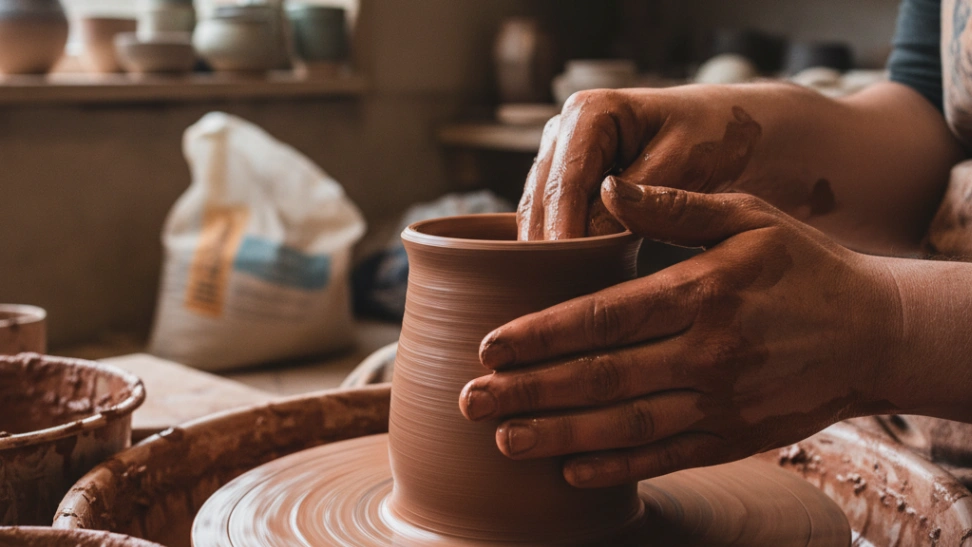
What surprises most beginners is how physical it is. Centering clay on a wheel requires upper body strength and precise control at the same time. Hand-building requires patience and an eye for form. Both reward consistent practice more than natural talent. The people who get good at pottery are the ones who show up regularly, not necessarily the ones who seem gifted on day one.
Types of Pottery to Explore
[object Object],[object Object],[object Object],[object Object]
Take a community studio class before buying any equipment. Most studios offer 6 to 8 week beginner courses for $150 to $300 that include clay, kiln access, and instruction. This is the cheapest way to find out whether you love wheel throwing, hand building, or both before committing to a home setup.
Basic Gear You'll Need
How to Get Started Step by Step
Take a beginner class first
A 6 to 8 week studio course teaches you centering, pulling, and trimming under supervision. Trying to learn wheel throwing from YouTube alone wastes months.
Choose your forming method
Wheel throwing and hand building require different tools and setups. Decide which appeals to you before buying anything. Both are valid entry points.
Start with the right clay body
Stoneware is the best beginner clay. It is forgiving, fires reliably, and works for both functional and decorative pieces. Avoid porcelain until you have solid basics.
Learn to wedge clay properly
Wedging removes air bubbles before throwing or hand building. Air pockets cause pieces to explode in the kiln. This is a non-negotiable foundational skill.
Understand the drying process
Clay must dry slowly and evenly to avoid cracking. Cover work with plastic between sessions. Rushing the drying stage ruins more beginner pieces than any forming mistake.
Arrange kiln access before you start
Without a kiln, your work stays unfired clay forever. Community studios, local potters, and ceramic schools often offer kiln rental. Sort this out before your first session.
What to Expect in Your First Session
Here's what typically happens when you start — and why it's useful information, not failure.
Centering is harder than it looks.
Watching an instructor center 5 lbs of clay in ten seconds and then doing it yourself are two very different experiences. Most beginners take several sessions before they can center reliably. This is the fundamental skill everything else depends on.
Your first pots will collapse or be lopsided.
This is not failure, it is the process. Every working potter has a mental archive of early disasters. What matters is developing feel for how the clay responds to pressure.
Clay gets everywhere.
Your hands, forearms, clothes, and the surrounding area will be covered in clay within minutes. Wear clothes you do not care about and expect to wipe down surfaces afterward.
The tactile experience is immediately satisfying.
Even before you make anything useful, there is something genuinely pleasurable about working wet clay with your hands. Most people find the first session absorbing in a way they did not anticipate.
Your arms will be tired.
Centering uses muscles you do not normally engage. Expect mild forearm fatigue after a two-hour session until your body adapts.
Beginner Tips That Actually Help
Keep your clay at consistent moisture
Clay that is too dry cracks when you try to form it. Clay that is too wet collapses under its own weight. Learning to read the moisture state of your clay and adjust it by adding small amounts of water or letting it dry slightly is a foundational skill that develops faster than you expect.
Pull walls in sections, not all at once
Beginners try to pull the full height of a cylinder in one movement and end up with thin, unstable walls. Pull in three or four passes, working from the base upward each time. Thicker walls at the base, thinner toward the rim, is the structure you are aiming for.
Reclaim your failed clay
Unfired clay that has not been contaminated with plaster can be recycled indefinitely. Slake failed pieces in water, let them dry to workable consistency on a plaster bat or absorbent surface, and wedge them back into shape. Clay is not consumable in the way most craft materials are.
Take notes on your glazes
Glazes look nothing like their fired results when applied wet. Keep a notebook recording which glazes you used, how thick you applied them, and what the results looked like after firing. Without notes, recreating a glaze result you loved is nearly impossible.
Join a studio community
Pottery is a genuinely social craft. Studio members share techniques, troubleshoot problems, and often develop a collective knowledge base that accelerates individual learning significantly. The informal knowledge exchanged in a shared studio is worth more than most books or online courses.
Let pieces dry between sessions
Do not try to add handles, trim, or attach pieces when the clay is still too soft. Leather-hard clay (firm but still slightly cool to the touch) is the right stage for most of these operations. Patience in the drying stages prevents a large proportion of beginner failures.
Common Questions Answered
- Do I need a wheel to do pottery?
No. Hand building produces equally valid work and is accessible without any powered equipment. Many professional potters work exclusively by hand. A wheel is one tool among several, not a requirement for the craft.
- Can I fire pottery in a regular oven?
No. Standard kitchen ovens only reach around 500°F, which is not enough to fire clay. Proper ceramic firing requires temperatures of 1800°F to 2300°F depending on the clay body. Air-dry clay products exist that harden without firing, but they are not true ceramics and are not suitable for functional food-safe ware.
- How long does it take to make a finished piece?
From throwing to finished glaze firing, a simple mug takes roughly two to three weeks when you account for drying time, bisque firing, glazing, and glaze firing. The actual hands-on time might be two to three hours total, but pottery cannot be rushed through its drying and firing stages. This is part of what makes it a meditative practice rather than a quick-turnaround craft.
- What is the difference between earthenware, stoneware, and porcelain?
These are three different clay bodies that fire at different temperatures to different results. Earthenware fires at lower temperatures, remains porous unless glazed, and is what terracotta is made from. Stoneware fires at higher temperatures, is denser and more durable, and is the most common studio clay. Porcelain fires at the highest temperatures, produces the whitest and most translucent results, and is the most technically demanding to work with. Start with stoneware.
- Is pottery a good hobby for someone with no art background?
Yes. Pottery rewards practice and patience more than prior artistic skill. Most of what you learn is physical and tactile rather than drawn from visual art knowledge. Many people who struggled with drawing or painting find pottery immediately more accessible because the feedback is in your hands rather than your eyes.
- Can I sell pottery I make as a beginner?
Technically yes, but practically you should wait until you have consistent control over your forms and a reliable glazing process. Functional ware sold for food and drink use needs to be properly fired with food-safe glazes. Most potters spend at least a year developing before they sell work, and that timeline is realistic rather than pessimistic.