Best Beginner Gardening Pruners 2026: Fiskars vs Felco F-2 vs Felco F-8
Hand pruners are the most-used tool in any garden: deadheading, harvesting vegetables, shaping shrubs, cutting back perennials. The right pair makes clean cuts without crushing stems (which invites disease); the wrong pair bruises more than it cuts. Here are three options: a reliable budget shear, the Swiss-made professional standard, and Felco's ergonomic model for gardeners with hand fatigue.
HobbyStack may earn a commission from links on this page at no extra cost to you. Our picks are chosen on merit; the commission helps fund the research.
- Use bypass pruners, not anvil pruners. Bypass blades cross like scissors and make clean cuts. Anvil blades crush stems against a flat plate — damaging plant tissue and inviting disease. All three picks here are bypass pruners.
- Our pick: Felco F-2 (~$65). The benchmark hand pruner: Swiss-made, fully replaceable parts, sap groove, and comfortable enough for hours of use. Gardeners buy one pair and keep it for decades.
- Budget pick: Fiskars Bypass Shears (~$22). Stainless blades, non-stick coating, spring-action return, and a decent cut for the price. The right starter shear before you know how much you'll use them.
- Ergonomic pick: Felco F-8 (~$95). Felco's F-2 equivalent with an angled blade head — reduces wrist rotation on repeat cuts. The right upgrade for gardeners who develop hand or wrist fatigue.
- Keep your pruners clean and sharp. A sharp blade cuts cleanly; a dull blade tears. Wipe blades after each use, oil the pivot, and sharpen or replace blades annually.
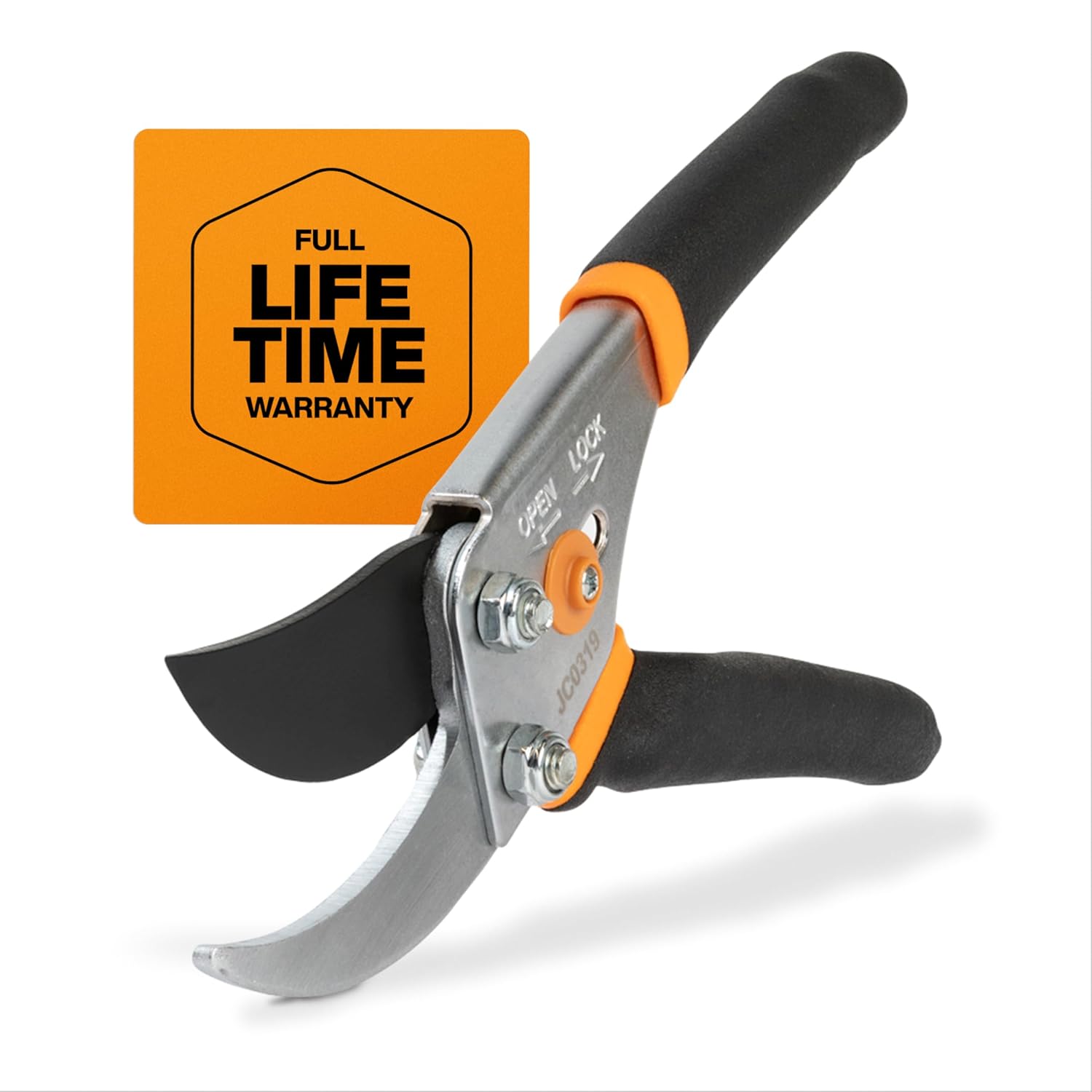 Fiskars Bypass Pruning Shears$135/8" cut · stainless · non-stick coatingNew gardeners and light pruning
 Felco F-2 Classic Hand PrunerPick$761" cut · Swiss steel · fully replaceable partsMost gardeners
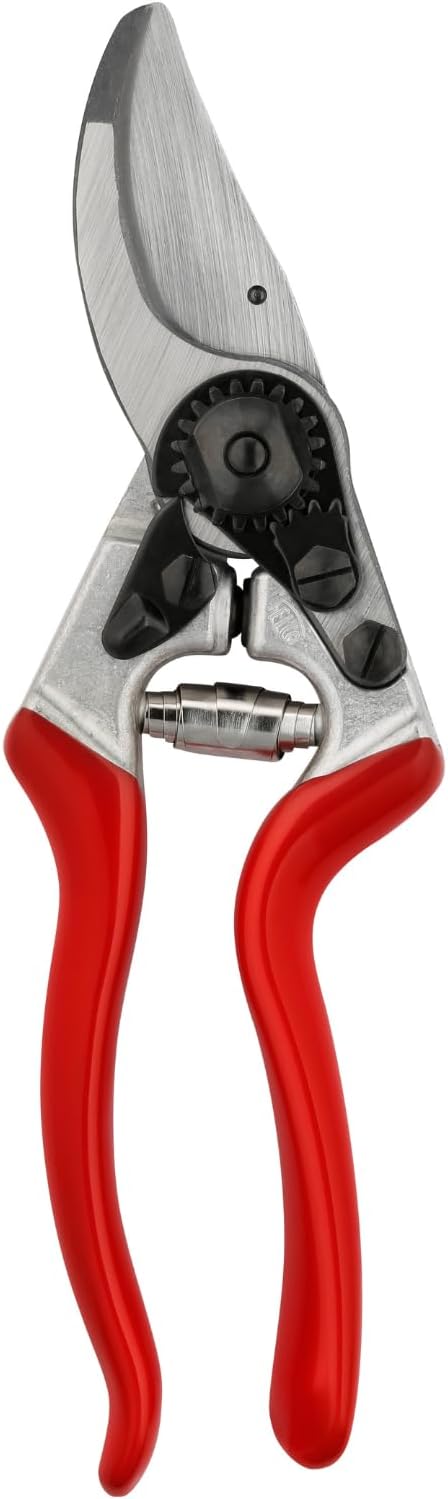 Felco F-8 Ergonomic Hand Pruner$651" cut · angled blade · ergonomic rotating handleGardeners with hand or wrist fatigue
Bypass vs anvil: the most important choice
Before picking a brand, pick the right type. Bypass pruners have two curved blades that cross each other — the cutting blade passes alongside (bypasses) the counter blade, making a clean, scissor-style cut. Anvil pruners have one sharpened blade that closes against a flat metal plate. The anvil action is stronger but crushes the stem — acceptable for dead wood, damaging for live stems. Plant cells at the cut site get damaged, and damaged tissue is where fungal infections and disease enter. For all live pruning — roses, perennials, vegetable plants, soft shrubs — use bypass pruners. All three picks here are bypass.
How we picked
We filtered on: blade steel (hardened steel holds an edge longer; Swiss steel as used by Felco is the benchmark for quality), replaceable parts (pruners you can sharpen, replace blades, and rebuild are more economical long-term than disposable), comfort (rubber grip inserts reduce hand fatigue during extended sessions; spring-action return reduces grip effort), sap groove (a groove alongside the blade prevents sap from gluing the blades together mid-cut), size and hand fit (most pruners are designed for medium adult hands — Felco offers left-handed models and sizing options), and price-to-longevity (cheap pruners dull quickly; Felco pruners with replacement blades outlast five sets of budget shears).
 Best under $25
Fiskars Bypass Pruning Shears
The Fiskars Bypass Pruning Shears are the right starting point for a gardener who doesn't yet know how intensively they'll use hand pruners. At $22, they're a real bypass pruner with stainless blades, a non-stick coating that reduces sap adhesion, and a spring-action return that opens the handle after each squeeze — meaningfully reducing hand fatigue on longer sessions. The soft grip handle is comfortable for most adult hands. The main limitation vs Felco is that Fiskars blades aren't replaceable — when they dull (typically after a few seasons of regular use), you replace the whole tool. For occasional pruning or first-season gardeners, this isn't a dealbreaker. For daily kitchen garden harvesting or serious rose pruning, the Felco F-2 is worth the extra cost.
What's good
- $22 — the lowest cost entry into real bypass pruners
- Non-stick coating reduces sap buildup and blade friction
- Spring-action return reduces hand fatigue on extended sessions
- Stainless steel blade holds edge well for light to moderate use
- Safety lock prevents accidental opening in storage
What's not
- Blade not replaceable — discard and replace when dull
- Lighter build vs Felco — less confident on thick stems near the 5/8" capacity limit
- Rubber grip can harden and crack over time in hot climates
 Best for most gardeners
Felco F-2 Classic Hand Pruner
The Felco F-2 is the hand pruner most professional gardeners, horticulturists, and nursery staff carry for a simple reason: it's the best balance of cutting performance, comfort, and longevity available. The Swiss-made hardened steel blade holds a sharp edge significantly longer than Fiskars stainless, and when it does dull, you replace the blade alone (Felco replacement blades cost $15–20) rather than the entire tool. The sap groove alongside the blade prevents sticky buildup from gluing the blades mid-session. The nut-and-bolt pivot assembly lets you replace every component — blade, spring, bumper, handle — turning one $65 purchase into a tool that lasts decades. The cutting action is smooth and confident at the full 1-inch cutting capacity. Felco sizes pruners by hand size; the F-2 is their medium-hand default and fits most adults.
What's good
- Swiss-made hardened steel blade: holds edge significantly longer than budget shears
- Fully replaceable parts: blade, spring, bumper, handle — tool lasts indefinitely
- Sap groove prevents blade from sticking during heavy pruning sessions
- Wire cutting notch near blade base for clean wire cuts without damaging the main edge
- 1-inch cutting capacity — handles most shrub branches cleanly
What's not
- $65 — 3x the Fiskars, though cost-per-year is lower with blade replacements
- Right-hand only (Felco makes F-9 for left-handed gardeners)
- Requires periodic cleaning and oiling to maintain performance
 Best ergonomic pick
Felco F-8 Ergonomic Hand Pruner
The Felco F-8 uses the same hardened Swiss steel blade and fully replaceable construction as the F-2, with two ergonomic modifications: an angled blade head and a rotating lower handle. The angled head means your wrist stays in a more neutral position on each cut — instead of rotating your forearm to bring the blade to the stem, you approach from a more natural angle. The rotating lower handle spins slightly as the blades close, distributing grip force across the full palm and reducing the friction-point blistering that comes with hundreds of cuts in a session. The difference from the F-2 is negligible for occasional gardeners; it's significant for anyone doing 100+ cuts per session or who develops wrist fatigue or RSI symptoms from repetitive pruning.
What's good
- Angled blade head reduces wrist rotation on each cut — keeps wrist in neutral position
- Rotating lower handle distributes grip force, reducing blister and fatigue on long sessions
- Same Swiss steel blade and replaceable-parts construction as the F-2
- Right choice for gardeners with wrist pain, arthritis, or RSI
- Blade and parts interchangeable with other Felco models
What's not
- $95 — 45% more than the F-2 for ergonomic benefits only casual gardeners won't notice
- Rotating handle adds a mechanical component that requires occasional lubrication
- Slightly heavier than F-2 due to additional handle mechanism
Sap dries hard and gums up blade pivot mechanisms. After every gardening session: wipe blades with a cloth dampened with rubbing alcohol or WD-40 to dissolve sap, then apply a drop of light machine oil to the pivot point. This takes 60 seconds and is the single habit that most extends pruner life and cutting quality. Dull blades tear stems and should be sharpened with a pruner sharpening stone or replaced annually on Felco models.
Before you buy
Cut at an angle on roses and woody stems — a 45° cut directs water away from the wound and reduces rotting at the cut site.
Never use hand pruners on branches over their rated capacity. On stems larger than 1 inch, use loppers. Forcing pruners on too-thick branches damages the blade and stresses the joint.
Disinfect blades between plants when pruning diseased growth. A quick wipe with diluted bleach (1 part bleach to 9 parts water) prevents transferring fungal or bacterial infections between plants.
When buying Felco, purchase a replacement blade pack at the same time. Blades are available in any garden center and cost $15–20. Sharpen once a season; replace every 2–3 years depending on use.
Carry your pruners in a holster (most garden supply shops sell hip holsters for $10–15). Pruners on a hip are always accessible and can't get lost in a garden bed.
Common questions about gardening pruners
Bypass vs anvil pruners — which should I buy?
Are Felco pruners worth the price?
What size pruner do I need?
How do I sharpen hand pruners?
How do I store pruners between seasons?
The Felco F-2 is the pruner most serious gardeners recommend — Swiss blades that hold a sharp edge, replaceable parts that make it a lifetime tool, and a cutting feel that budget shears don't match. Start with the Fiskars if you're uncertain how much pruning you'll actually do. Upgrade to the Felco F-8 if you garden intensively and develop wrist or hand fatigue.
Ready to actually do it?
The first gardening quest takes an evening, and it tells you whether the gear was worth it better than any review can.
Start GardeningThe HobbyStack editorial team researches each guide using practitioner communities, published resources, and direct input from active hobbyists. Every guide is reviewed for accuracy before publication and updated when practices change.
About our editorial process →More gear guides
All guides
Best Garden Hose (2026): Why Cheap Hoses Kink and Good Ones Do Not
A garden hose is a thing nobody thinks about until theirs kinks behind them for the fourth time in one watering. The difference between a hose that does that and one that does not is entirely material and construction, both of which are printed on the packaging and both of which most people ignore in favour of length and price.

Best Beginner Fishing Rod and Reel Combo 2026: Spinning Setups That Just Work
For your first setup, a matched spinning rod-and-reel combo is the right call: it's pre-balanced, forgiving to cast, and gets you fishing without choosing parts you don't understand yet. Here are three combos that punch above their price, from a near-indestructible classic to a saltwater-ready upgrade.
Best Fishing Pliers (2026): Braid Destroys Ordinary Cutters
Braided line is woven from the same fibre used in body armour, and it does not cut so much as fray under a normal blade. A pair of pliers that handles mono perfectly well will chew braid into a fuzzy mess, and the fix is a specific material rather than a sharper edge.

Best Tackle Box for Beginners (2026): 3 Real Picks
A tackle box is where all your lures, hooks, and terminal tackle live, and how you store it shapes how easily you fish. The real question isn't which box is 'best' but how much tackle you carry and how you get to the water: a simple tray box is perfect if you fish from one spot, a backpack is better if you hike or bank-hop, and a modular system is the answer once your collection grows. The key thing to understand is the standard that runs through all of them, the 3700 utility box, which lets you scale storage without starting over. Here are three good options across the range, plus how to choose.

Best Grow Containers (2026): Air Pruning, Depth and How Often You Water
A plant in a plastic pot eventually runs its roots into the wall and starts going round in circles, and it keeps circling until the whole rootball is a knot that can no longer feed it. A fabric pot stops that from happening, using nothing more complicated than air.

Best Bee Suit for Beginners (2026): Bees Sting Straight Through Thin Cotton
A bee sting is about two millimetres of sting, which is more than enough to reach skin through a single layer of cotton pulled tight over a shoulder or a knee. Beekeepers get stung through their suits constantly, and it is almost always where the fabric was touching them.