Best Bike Lights for Beginners (2026): 3 Real Picks
Bike lights do two different jobs, and knowing which you need is the whole decision. A 'be seen' light is a bright blinker that makes cars notice you on lit streets; a 'see the road' light throws a real beam so you can ride on dark, unlit roads and trails. Both should be USB rechargeable and easy to move between bikes. Most commuters need be-seen; anyone riding beyond streetlights needs to actually see. Here are three good options across the range, plus how to pick the brightness that matches where you ride.
HobbyStack may earn a commission from links on this page at no extra cost to you. Our picks are chosen on merit; the commission helps fund the research.
- Decide 'be seen' vs 'see the road' first. Blinkers make cars notice you on lit streets; a real beam lets you ride unlit roads.
- Always run a front white and a rear red. It's the legal and safe minimum, day or night.
- Lumens tell the story: ~100 to be seen, 400+ to actually see the road, 800-1000+ for dark trails.
- Get USB-rechargeable with a quick mount. Batteries you swap and tool-free mounts you move between bikes.
 Ascher USB Rechargeable Bike Light SetBeing seen on lit streets, for the least money$17Check price
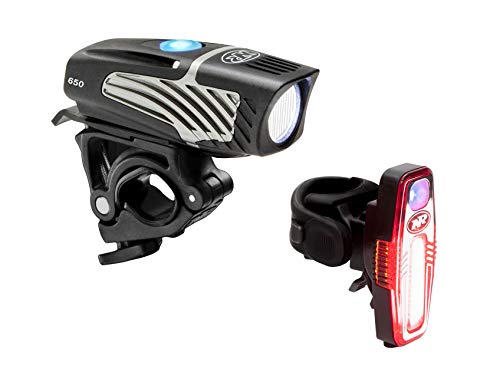 Our pickNiteRider Lumina Micro Sabre Light ComboSeeing the road and being seen, from a trusted brand$68Check price
 NiteRider Lumina Boost 1000 HeadlightRiding truly dark roads and trails at speed$59Check price
The reason brightness numbers confuse beginners is that 'bike light' covers two very different tools. On lit city streets, your goal is to be seen, so a modest, punchy blinker (roughly 100 lumens up front, plus a bright rear) does the job: it grabs a driver's attention without needing to illuminate anything. But the moment you ride where there are no streetlights, a dark road, a park path, a trail, you need to actually see the surface, and that takes a real beam, 400 lumens as a floor and 800 to 1000-plus if it's truly dark, with a shaped optic so the light lands on the road rather than blinding oncoming traffic. Running both a white front and a red rear light is the non-negotiable minimum in either case, legally in most places and practically everywhere, because side and rear visibility is where most cyclist-car conflicts happen. After that, the details that matter are USB charging (so you're never buying batteries), a claimed runtime that covers your ride on a useful mode, and a mount you can move between bikes without tools.
So choose by where you ride, and always run front and rear. If you commute on lit streets and mainly need drivers to see you, an affordable be-seen set with a white front blinker and a red rear covers you for the least money, and it's small enough to leave on the bike. If you sometimes ride beyond streetlights, on a dark road home, an unlit path, the odd trail, a headlight that throws a real beam (600-plus lumens) plus a matched tail light is the one most riders should own: bright enough to see by, from a brand whose runtime claims you can trust. And if you regularly ride truly dark roads or trails, a 1000-lumen headlight lights the surface far enough ahead to ride at speed with confidence. Whichever you pick, USB-rechargeable and a quick mount make it something you'll actually keep charged and use.
 Best budget start
Ascher USB Rechargeable Bike Light Set
The affordable way to make sure drivers see you, front and rear. This Ascher set includes a white front light and a red rear, both USB rechargeable, with stretchy silicone straps that mount to almost any bar or seatpost in seconds and pop off just as fast so you can take them inside to charge or to stop theft. It's a be-seen set, bright enough to make you obvious to traffic on lit streets with several flashing and steady modes, rather than a light that illuminates a dark road. For commuting, riding around town, or adding daytime running lights for safety, it's genuinely all most riders need, and it costs about the price of a fast-food meal. The catch is simply that it won't light an unlit road or trail, that takes a real beam. But for visibility on lit streets, it's the cheapest sensible way to ride safely front and rear.
What's good
- White front and red rear, both USB rechargeable
- Tool-free silicone mounts, move between bikes
- Several flash and steady modes to be seen
- Costs about the price of a fast-food meal
What's not
- Be-seen only, won't light a dark road
- Modest runtime on the brightest modes
 Best for most people
NiteRider Lumina Micro Sabre Light Combo
The light set most riders should own, because it does both jobs and comes from a brand whose numbers you can trust. The NiteRider Lumina Micro Sabre combo pairs a 650-lumen headlight with a matched rear light, and that 650 lumens is the threshold where a headlight stops being just a blinker and starts actually lighting the road ahead, enough to ride a dark road home or an unlit path with confidence, while a shaped beam keeps the light on the surface. NiteRider is a long-standing lighting brand, so the claimed runtimes and brightness are honest, which matters when you're depending on a light to get home. It USB charges and hard-mounts securely to the bar. It costs more than a be-seen set and is more than a pure streetlight commuter needs, but for anyone who occasionally rides beyond streetlights, it's the sweet spot of real usable light, reliability, and price. For most riders, this is the one to buy.
What's good
- 650-lumen headlight actually lights the road
- Matched rear light, both USB rechargeable
- Trusted brand: honest runtime and brightness
- Shaped beam stays on the road, not in eyes
What's not
- Costs more than a be-seen set
- More light than a pure streetlight commuter needs
 Best for dark roads
NiteRider Lumina Boost 1000 Headlight
The headlight for riding where there's no ambient light at all, and riding at speed. The NiteRider Lumina Boost 1000 puts out up to 1000 lumens, which lights the road or trail far enough ahead that you can ride confidently in true darkness, on unlit country roads, gravel, or singletrack, where the 650-lumen light would leave you wanting more reach. It has multiple modes so you can dial brightness down to save battery on lit sections and boost it when the road goes black, USB charging, and a secure handlebar mount, all from a brand known for durable, honest lights. Pair it with a good rear light and you're set for any night ride. The trade-offs are cost and that it's more headlight than a streetlight commuter needs, plus the brightest mode drains the battery faster. But if you regularly ride dark roads or trails, the extra reach is the difference between cautious and confident. Mostly on lit streets? The Micro Sabre combo is plenty.
What's good
- 1000 lumens lights truly dark roads and trails
- Multiple modes to balance brightness and runtime
- Reliable brand, secure mount, USB charge
- Enough reach to ride at speed in the dark
What's not
- Headlight only, pair with a rear light
- More than a lit-street commuter needs
White in front, red in the back, every ride, day or night. It's the legal minimum in most places and the practical minimum everywhere, because being seen from behind and the side is where most car-bike conflicts happen. Daytime running lights (flashing) genuinely reduce crashes too. If a headlight comes alone, pair it with a bright rear light before you ride after dark.
Before you buy
Decide be-seen vs see-the-road first: lit streets need ~100 lumens, unlit roads need 400+.
Always run a white front and red rear light, even in daylight.
Get USB-rechargeable, and check the runtime on the mode you'll actually use.
Choose a tool-free mount so you can move lights between bikes and take them in to charge.
Common questions
How many lumens do I need for a bike light?
Do I need a light in the daytime?
What's the difference between a 'be seen' and a 'see the road' light?
Are USB rechargeable bike lights better than battery ones?
For most riders, the NiteRider Lumina Micro Sabre combo is the set to buy: 650 lumens actually lights the road, it comes with a matched rear light, and the brand's runtime claims are honest. The Ascher set is all you need if you only ride lit streets and want to be seen for the least money, and the 1000-lumen Boost is the pick for truly dark roads and trails. Whatever you choose, always run a white front and a red rear.
Ready to actually do it?
The first cycling quest takes an evening, and it tells you whether the gear was worth it better than any review can.
Start CyclingThe HobbyStack editorial team researches each guide against manufacturer specifications, published resources and practitioner sources. Every product is checked for availability and described against its current listing before publication, and prices are re-checked when guides are updated.
About our editorial process →More gear guides
All guides
Best Beginner Bike Helmets (2026): 3 Safe Picks
A helmet is the one piece of cycling gear you should never skip, and the good news is a great one doesn't cost much. The thing to look for is MIPS, a liner that helps with the angled hits that cause most head injuries. All three picks below have it, from a cheap first lid to a lighter, better-vented upgrade.
Best Beginner Road Bike (2026): 3 Real Picks You Can Actually Buy Online
A good first road bike is less about the brand on the frame and more about a few basics: a light aluminum frame, a Shimano drivetrain that shifts cleanly, and a fit that suits you. Quality road bikes are surprisingly scarce and pricey on Amazon, so it pays to skip the no-name bargains and stick to real brands. Here are three you can genuinely buy, from an affordable Schwinn to a carbon-fork Tommaso to grow into.

Best Running Hydration 2026: Handheld vs Vest (Nathan & Salomon)
Once your runs stretch past an hour, carrying water stops being optional, but how you carry it depends almost entirely on how long you run. A handheld flask covers the daily training run most people do; a vest is what you want when you start going long or hit the trail. Here's how to choose, and why belts have fallen out of favor.

Best Running Shoes for Beginners (2026): Cushioning, Fit and the Gait Myth
Running shoes are sold on technology and bought on hope. The evidence that matching a shoe to your gait prevents injury is far weaker than shop advice implies, while the two things that reliably matter — a shoe that fits properly and one you find comfortable — get treated as afterthoughts. Start there and you will spend less and enjoy it more.

Best Running Watch for Beginners 2026: Garmin Forerunner 55 vs 265 vs 965
A GPS running watch gives you accurate pace and distance at a glance, the one piece of running tech that genuinely changes your training. They're all Garmin Forerunners here (the series owns running), and the only real question is how much watch you need: the essentials, the training metrics, or the maps. For most new runners, the cheapest does everything.

Best Beginner Tennis Racket (2026): 3 Picks for Every Budget
The right beginner racket is the one that forgives your mishits while you learn to find the sweet spot. That means a lighter frame, a bigger head, and an open string pattern: here are three that get it right, from a no-brainer first racket to one you can grow into for years.