Best Footbag (2026): Panel Count Decides Whether It Stalls or Bounces
A two-panel sand bag and a thirty-two-panel bag are barely the same object. The first is soft, dead, and sits still on your foot. The second is round, lively, and will bounce off. Panel count and fill decide which tricks are even possible, and almost nobody mentions it when you buy your first one.
HobbyStack may earn a commission from links on this page at no extra cost to you. Our picks are chosen on merit; the commission helps fund the research.
- Fewer panels means softer and deader, which is what you want for stalls.
- More panels means rounder and livelier, which suits kicking and juggling.
- Sand is the classic fill. Plastic pellets are more consistent and handle damp better.
- Start with a soft, heavy bag. A bouncy bag punishes beginners.
- Knitted bags grab the foot. Suede and synthetic panels are more predictable.


Panels, and why the number is the spec
A footbag is panels of fabric stitched into a sphere around a fill. How many panels determines how round it is and how it behaves.
Two panels. Barely a sphere. Flat-sided, soft, and it collapses slightly when it lands. That collapse is the point: it deadens on contact and sits on the foot instead of rebounding. This is the bag to learn stalls on.
Six to fourteen panels. The middle ground. Round enough to kick predictably, soft enough to stall with some technique. Most general-purpose bags live here.
Thirty-two panels and up. Nearly perfectly spherical, with a tight stitched surface and much more structure. These are built for freestyle, where you want the bag to come off the foot cleanly and travel exactly where you aimed it. They also rebound hard, which makes them unforgiving while you are learning.
So the counterintuitive advice: a beginner wants fewer panels and more weight. A heavy, soft, deadening bag gives you time, sits where it lands, and does not ping away across the garden on a mistimed touch. A light, lively 32-panel bag makes a beginner look much worse than they are.
Weight follows the same logic. Heavier bags, roughly 50 to 60 grams, fall predictably and resist wind. Lighter bags hang longer and drift, which experienced players exploit and beginners fight.
Fill, fabric and the two different games
Fill decides the feel.
- Sand is the classic, and it is the heaviest and deadest. It conforms to the foot and stays put. It also leaks slowly through stitching over years, and a damp sand bag is a heavy clumping mess.
- Plastic pellets are the modern standard for quality bags. More consistent in size, they do not absorb water, and they give a slightly livelier feel than sand without becoming bouncy.
- Millet or beans appear in cheap bags. They feel good initially and they rot if they get wet.
Fabric matters almost as much. Knitted bags, the crocheted ones most people picture, have an open textured surface that genuinely grabs the shoe and makes stalls easier. They also stretch out of shape and let fill escape eventually. Suede and synthetic panels are more durable, more predictable, and slide a little more.
Then there are two distinct activities sharing the equipment.
Circle kicking is the social version: a group, a bag, keeping it up cooperatively. Any bag works and a heavy soft one works best.
Freestyle footbag is the sport: individual tricks, stalls, delays, and routines, with real competitive structure. It wants a round, high-panel-count bag and a flat-soled shoe.
Shoes matter more than you expect. A flat, wide sole with a raised instep area gives you a platform to stall on. Running shoes with an aggressive sole and a narrow upper make stalls far harder.
 Best for learning stalls
Phizli Footbag - 2 Panel Sand Filled Foot Bag
Two panels and a sand fill, which is the softest and deadest combination there is, and that is exactly what makes it the right first bag. It collapses slightly on contact and sits on the foot rather than rebounding, which gives a beginner the time to learn a stall at all. For the price of a coffee it is almost disposable. It is also the least round bag here, so kicking it accurately is harder.
What's good
- Softest and deadest, so stalls are learnable
- Sand fill gives useful weight and sits still
- Costs almost nothing
- Conforms to the shoe on contact
What's not
- Two panels means it is barely spherical
- Hard to kick accurately
- Sand clumps badly if it gets damp
- Fill leaks through stitching over years
 Best for groups and schools
KENDINIX Hand-Made Knitted Footbag Sack, 6PCS Hacky 2.0 Sack
Six hand-knitted sacks, which is the right purchase if more than one person is involved, and circle kicking is how most people actually play. The knitted surface is the useful part: an open texture grabs the shoe and makes stalls noticeably easier than a smooth panel does. Cheap enough per bag to lose a few. Knitted bags stretch out of shape over time and will eventually start shedding fill at the seams.
What's good
- Six bags, so a group can all play
- Knitted surface grabs the shoe for easier stalls
- Classic look and feel most people expect
- Low enough cost per bag to lose some
What's not
- Knit stretches out of shape with use
- Starts shedding fill at the seams eventually
- Less predictable to kick than panelled bags
- Quality varies between individual bags
 Best for most beginners
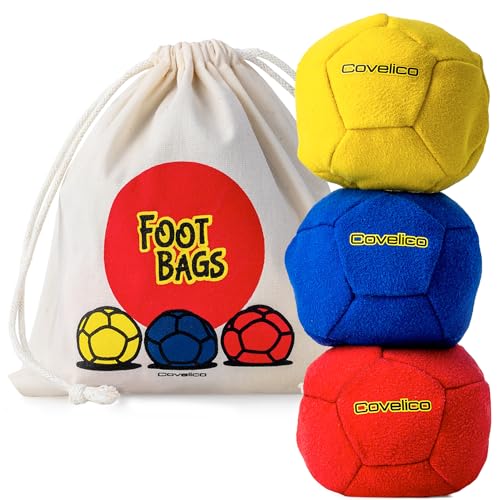
Covelico Footbag 3 Pack with Carry Bag and Quick-Start Guide for Beginners
Three bags with a carry bag and a quick-start guide, and the reason this is the pick is that three bags lets you find out what you actually like without three separate orders. Different bags in a set generally differ in feel, so you can compare a softer one against a livelier one on the same afternoon. The guide covers the first stalls and kicks. It is three times the price of a single bag, which is the trade.
What's good
- Three bags lets you compare feels directly
- Quick-start guide covers the first stalls
- Carry bag keeps them dry and together
- Enough bags to play with a friend
What's not
- Three times the cost of a single bag
- You will prefer one and ignore the others
- Not a high-panel freestyle bag
- Guide is basic once you progress
A stall needs a flat platform on the inside of the foot, and most running shoes do not have one: aggressive outsoles, narrow uppers and a lot of curve make the bag squirt away. Flat-soled skate shoes or court shoes are what footbag players wear, and switching from running trainers to flat shoes improves a beginner more than any bag upgrade. Freestyle players use specific footbag shoes with a built-up instep.
The first few sessions
Start with the inside stall. Bag resting on the flat inside of the foot, ankle turned up, knee out. It is the foundation of everything and it is where the soft heavy bag earns its place.
Toss from hand to foot, not foot to foot. Drop the bag onto the stalling surface from a few inches so you can work on the platform before you work on the timing.
Relax the ankle on contact. The instinct is to stiffen, which makes the bag bounce. Letting the foot drop very slightly as the bag lands absorbs it, and that absorption is the whole trick.
Keep it below the knee. The classic rule, and the point of the game, is that hands are not used. Working low keeps it controllable.
Play in a circle with other people. Circle kicking is cooperative and that is why it spread. Keeping it up as a group is more fun than solo practice and more forgiving.
Dry it out if it gets wet. Sand and millet fills both suffer badly from damp, and a bag left wet in a bag can be ruined.
Expect to be bad for a fortnight. The stall is genuinely unintuitive and almost everyone can do it within two weeks of short daily sessions.
Before you buy
Fewer panels and more weight for learning. Higher panel counts later.
Plastic pellet fill if you can get it, sand if not.
Knitted surfaces grab the shoe and make stalls easier.
Buy a multi-pack. One bag in a group is not a game.
Wear flat-soled shoes. It matters more than the bag.
Footbag questions
Does the number of panels matter?
What fill should a footbag have?
Why can I not stall the bag on my foot?
Is hacky sack the same as footbag?
The Covelico three-pack is the sensible buy, because having three bags of different feel on day one tells you what you like far faster than three separate orders would. Take the two-panel sand bag if you want the cheapest possible route to learning a stall, since soft and heavy is genuinely the right first bag. Get the knitted six-pack if a group is involved. Then change your shoes.
Ready to actually do it?
The first hacky sack quest takes an evening, and it tells you whether the gear was worth it better than any review can.
Start Hacky SackThe HobbyStack editorial team researches each guide using practitioner communities, published resources, and direct input from active hobbyists. Every guide is reviewed for accuracy before publication and updated when practices change.
About our editorial process →More gear guides
All guides
Best Weighted Hula Hoops for Beginners (2026)
The trick to hula hooping as an adult is not skill, it is the hoop. The tiny light hoops from childhood fall straight down; a bigger, weighted hoop turns slowly enough to actually keep up. Here are three beginner hoops, from a simple weighted one to a heavier ACU Hoop.

Best Beginner Ukulele (2026): Soprano, Concert, and Tenor Picks
The great thing about the ukulele is that a good beginner one is cheap and genuinely easy to start on. The main decision is not budget, it is size: soprano, concert, or tenor. They are all tuned the same and played the same, they just differ in body size, which changes the tone and how much room your fingers have. All three picks here are from Kala, the brand most teachers point beginners toward, so you get a properly set-up instrument that stays in tune rather than a toy that fights you.

Best Beginner Harmonica (2026): 3 Honest Picks
Here is the honest truth most gear guides skip: the harmonica is one of the cheapest instruments to start, and the thing that actually matters is not spending more, it is not buying a toy. A real 10-hole diatonic harmonica in the key of C from a known brand is airtight, stays in tune, and lets you bend notes, which is the whole point. The cheap no-name harp and the giant multi-key gift set fight you the entire way, drift out of tune within a week, and make you feel like you have no talent when the truth is the instrument is the problem. So this guide is not about which expensive harp to buy, it is about getting one honest, well-made harmonica in the right key so you actually enjoy learning. Key of C is the standard beginner key, nearly every lesson, song, and YouTube tutorial is in C, so start there. All three picks are proper 10-hole diatonics in C with plastic combs, and even the dearest one here is cheap. Here are three good ones, and honest advice on how little you need to spend.
Best Diabolo for Beginners (2026): Bearings Change What You Can Learn
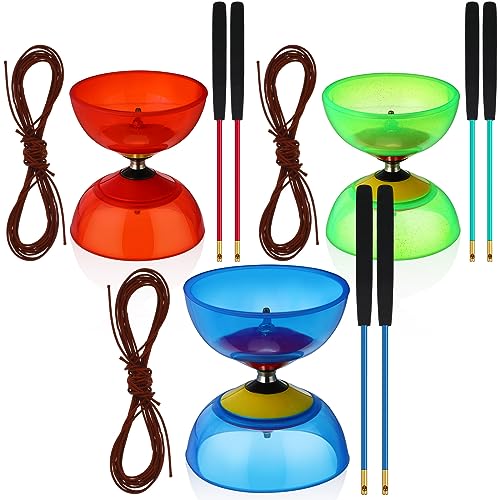
A bearing diabolo holds its spin almost indefinitely, which sounds like pure upside and is a real trade. Spin is what keeps a diabolo stable, so bearings make tricks much easier to hold together. They also remove the one thing that forces a beginner to learn a clean, powerful acceleration.

Best Kendamas for Beginners (2026)
A kendama is a wooden ball-and-cup skill toy, and the one that makes it click for a beginner has a slightly tacky paint that grips the ball so it does not slide off the cups. A cheap glossy one is genuinely harder to learn on. Here are three, from a trusted starter to a premium competition kendama.

Best Aida Cloth (2026): The Count Is Stitches Per Inch, Not Thread Thickness
Count is the number of stitches that fit in an inch, so a higher count makes a smaller finished piece from exactly the same pattern. Stitch a design on 18 count instead of 14 and it comes out around a fifth smaller, which is how people end up with a finished piece that will not fit the frame they bought.