Best Voice Recorder for Actors (2026): Hearing Yourself Is the Whole Point
Actors improve fastest by hearing themselves, because the performance you feel giving is not the performance that arrives. A recorder makes that gap visible — the rushed line, the dropped ending, the habit you did not know you had. What surprises most people is that the room you record in matters more to the result than the device you record with.
HobbyStack may earn a commission from links on this page at no extra cost to you. Our picks are chosen on merit; the commission helps fund the research.
- Any recorder is better than none. The point is hearing yourself, not audio fidelity.
- The room does more damage than the microphone. Hard parallel surfaces make everything sound thin and boxy.
- A phone is genuinely fine to start. Buy a recorder when you want to stop juggling storage and notifications.
- 32-bit float recording makes clipping essentially impossible — useful if you shout.
- Record the same speech weekly. Progress is invisible day to day and obvious across a month.
 EVISTR 64GB Voice RecorderJust capturing takes$36Check price
 Our pickSony ICD-PX370Most actors$67Check price
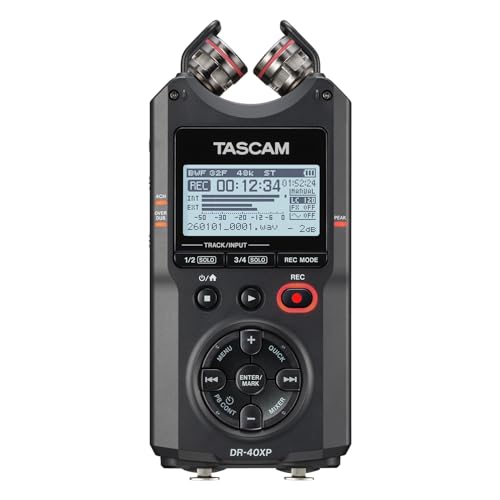 Tascam DR-40XPSelf-taping and audition reels$258Check price
Why the room beats the microphone
Put a good microphone in a bad room and you get a bad recording. The reverse is far less true, which is why professional studios spend more on acoustics than on microphones.
The problem is parallel hard surfaces. Sound bounces between them, arrives at the mic a few milliseconds after the direct sound, and the two combine into a boxy, hollow tone. Bathrooms and empty rooms are the worst offenders; a room with a bed, curtains and a carpet is already much better.
The cheap fix is soft things. Record in a room with soft furnishings, stand away from walls and out of corners, and if you are serious, hang a duvet behind and to the sides of you. A wardrobe full of clothes is a genuinely good recording booth and costs nothing.
And get closer to the mic than feels natural. A closer source means more direct sound relative to reflections, which is the same thing as a better room.
What 32-bit float actually solves
Traditional digital recording has a hard ceiling. Go above it and the waveform is clipped flat — an ugly distortion that cannot be undone, which is why engineers set levels carefully and still get caught out when an actor suddenly shouts.
32-bit float recording stores audio with enormous headroom, so a signal that would have clipped is captured intact and can be brought back down afterwards. In practice it means you can record a whisper and a scream in the same take without adjusting anything.
For an actor that is genuinely relevant, because performance dynamics are the point rather than a nuisance.
It is not magic. It does not improve the microphone, fix a bad room, or rescue a recording that was too quiet to begin with in a noisy environment. But it removes an entire category of ruined take, and if you work with big dynamic range it is the feature worth paying for.
 Best for just capturing takes
64GB Digital Voice Recorder
A straightforward recorder with a lot of storage, and its virtue is that it does one thing and does not interrupt. No notifications, no calls arriving mid-take, no fighting your phone for space — you press record and it records. Voice activation is genuinely useful for rehearsal, since it starts when you speak rather than leaving you an hour of silence to scrub through. Audio quality is adequate rather than good: fine for hearing your timing, your habits and your breath, which is what you are actually listening for. It is not a device to record an audition reel on, and the built-in mics pick up handling noise if you hold it. Prop it on something.
What's good
- Does one thing without interrupting
- Voice activation skips the silence
- Plenty of storage for months of rehearsal
- Cheap enough not to think about
What's not
- Audio quality adequate, not good
- Handling noise if held
- Not for audition recordings
- Basic controls and screen
 Best for most actors
Sony ICD-PX370 Mono Digital Voice Recorder
The recorder that quietly does everything an actor needs without asking anything of you. Clean, honest audio from the built-in mics — good enough that you hear the performance rather than the device — and a built-in USB connector that folds out of the body, so getting files onto a computer needs no cable to lose. Battery life is long enough that you stop thinking about it, and the controls are usable without looking, which matters when you are mid-scene. It will not compete with a proper field recorder for a paid audition, and there is no external mic input worth the name. For hearing yourself work, week after week, this is the right amount to spend.
What's good
- Clean, honest audio from built-in mics
- Fold-out USB — no cable needed
- Long battery life
- Controls usable without looking
What's not
- Not a professional audition recorder
- No meaningful external mic input
- Plastic build
- Limited manual level control
 Best for self-taping
TASCAM DR-40XP 4-Channel 32-Bit Float Portable Handheld Field
A proper field recorder, and the reason an actor would want one is self-taping — audition recordings where the audio quality is part of what is being judged. It takes external microphones on XLR inputs, so you can put a decent mic close to you rather than relying on built-ins across a room, which is the single biggest improvement available in home recording. 32-bit float means a take is not ruined when a quiet line becomes a shout. Four channels lets you record a scene partner separately. It is many times the price of the Sony, it is a larger thing to set up, and none of it helps if you are only listening back to rehearsals. Buy it when audio is being judged.
What's good
- XLR inputs for a proper external mic
- 32-bit float — clipping is not a risk
- Four channels for scene partners
- Genuinely professional output
What's not
- Many times the price of the Sony
- More to set up than to just press record
- Pointless for rehearsal review alone
- Needs a mic and stand to be worth it
Pick one monologue and record it weekly without listening back to the previous one first. Progress in performance is invisible day to day and startlingly obvious across a month — and comparing two versions of the same text isolates what actually changed, in a way that recording different pieces never does.
Listening usefully rather than wincing
Most people hate hearing their own voice, partly because you normally hear yourself through bone conduction and the recording is what everyone else has always heard. That reaction fades with exposure.
More usefully, listen with a specific question rather than generally, because a general listen mostly produces self-criticism and no information.
One pass for pace — where do you rush, where do you sit? One for ends of lines, which is where energy most often drops away. One for breath, since audible gasps usually mean the phrasing is wrong rather than the lungs. One for variety, listening only to pitch and volume.
Four focused passes tell you more than ten unfocused ones, and they give you something to change rather than a feeling about yourself.
Before you buy
Try your phone first. If you are already recording regularly, then buy a recorder.
Fix the room before upgrading the mic — soft furnishings, away from walls.
Get closer to the mic than feels natural.
Only buy XLR and 32-bit float if you are self-taping for real auditions.
Listen with one question at a time.
Voice recorder questions
Can I just use my phone to record myself acting?
Does the microphone or the room matter more?
What is 32-bit float recording?
Why do I hate the sound of my own voice?
Start with your phone, fix the room, and get closer to the mic — that is most of the improvement available. The Sony ICD-PX370 is the right buy when you want something that just records without interrupting you, with a fold-out USB and battery life you forget about. The EVISTR is fine if all you want is voice-activated rehearsal capture. Only step up to the Tascam if you are self-taping auditions where the audio itself is being judged.
Ready to actually do it?
The first acting quest takes an evening, and it tells you whether the gear was worth it better than any review can.
Start ActingThe HobbyStack editorial team researches each guide against manufacturer specifications, published resources and practitioner sources. Every product is checked for availability and described against its current listing before publication, and prices are re-checked when guides are updated.
About our editorial process →More gear guides
All guides
Best Men's Ballroom Dance Shoes (2026): The Sole Is the Point
Turning in street shoes means your foot grips the floor while your body keeps rotating, and something has to absorb that difference. It is your knee. A suede sole lets the foot pivot instead, which is why dance shoes exist and why the sole matters more than anything else about them.

Best Hot Glue Gun for Cosplay (2026): High Temperature Melts EVA Foam
Most buying guides assume the most powerful option is the best one. Cosplay inverts that. EVA foam, the material most armour is built from, deforms and melts at the temperature an industrial glue gun runs at, so the 220 watt professional gun is the wrong tool for the job people most often buy it for.

Best Rotary Tool for Beginners (2026): 3 Dremel Kits for Crafts and Cosplay
A rotary tool is the little handheld workhorse that sands, grinds, cuts, engraves, and polishes almost any material, which is why it is a staple for cosplay, model-making, jewelry, and general crafting. For a first one the honest advice is simple: buy a real Dremel. The cheap copies wobble, overheat, and lose power under load, while a genuine Dremel is smooth, holds its speed, and takes the huge range of accessories you will actually want. The three here climb Dremel's own lineup, from a capable entry kit to the flagship.

Best Twirling Baton (2026): Length Is Measured Against Your Arm
A baton is sized to the twirler, not to a category. Hold your arm out straight and the baton should reach from the centre of your chest to the tip of your middle finger. Too long and it catches your shoulder on a horizontal roll; too short and the balance is wrong for every release you try.
Best Playing Cards for Card Magic (2026): 3 Honest Picks
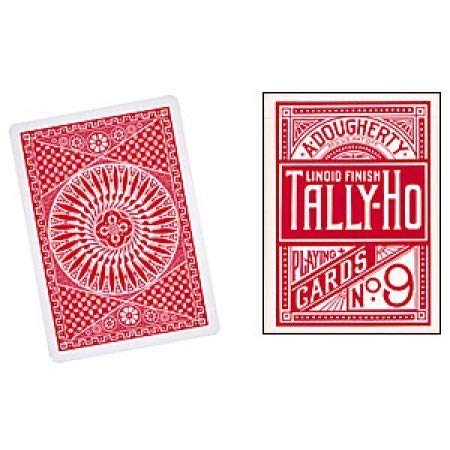
Here is the honest truth most gear guides skip: a standard deck of Bicycle cards, the kind you can buy for about four dollars at any supermarket, is genuinely all you need to learn almost every card trick worth knowing. Nearly every card magician alive learned on exactly that deck, and most still perform with it. The sleights, the moves, the classics in every beginner book all assume an ordinary deck of cards, not a special one. So this is not a guide about buying your way to better magic, because you cannot, the skill is entirely in your hands. It is a guide to three good decks and the honest, small differences between them: a cheap standard Bicycle to start and stick with, a classic magician's paper deck that fans and springs a touch more smoothly once your hands know what they are doing, and a premium deck that feels lovely and looks the part but does nothing your first deck cannot. One thing up front: these are all real decks you also just play cards with, not gimmick or trick decks. You do not need those to learn card magic. Here are three good ones, and honest advice on whether to bother going past the first.

Best Pottery Tool Set (2026): Six of the Twelve Do Nearly Everything
Open a twelve-piece pottery set and six tools will do nearly all your work: the wire cutter, a wooden rib, a metal rib, a loop trimming tool, a sponge and a needle tool. The rest get picked up once, found to duplicate something, and left in the canister for years.