Performance ›
Ballroom Dancing
Ballroom Dancing
The further from centre, the more strongly this hobby leans that way. Your quiz answers are scored against exactly these fifteen.
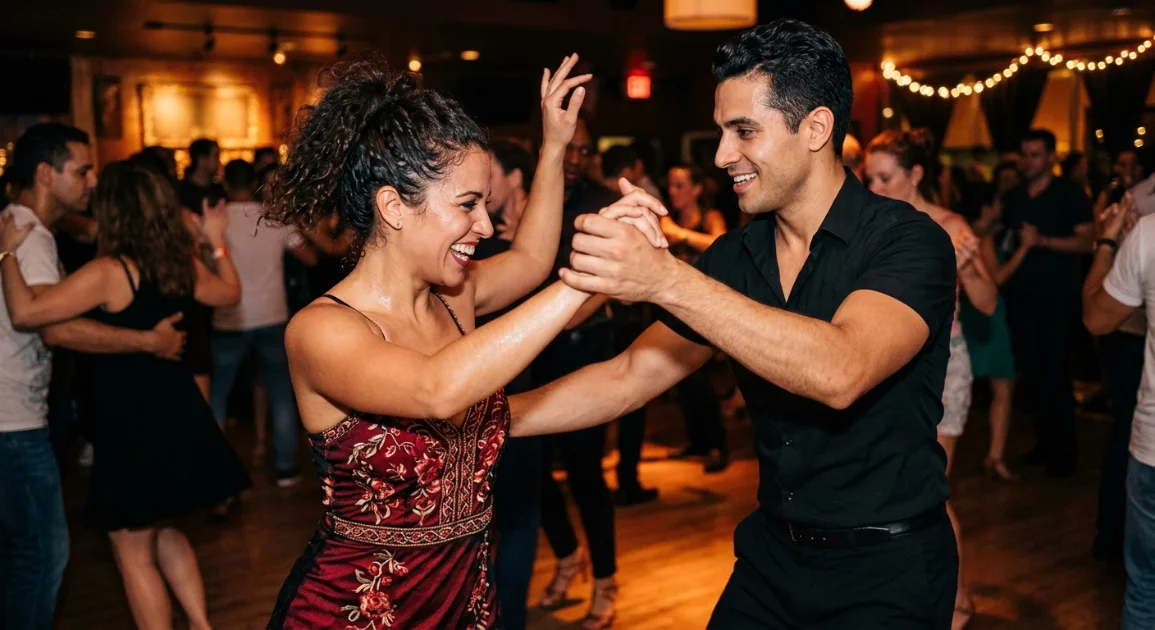
Dancing waltz, foxtrot, quickstep and Latin styles with a partner, socially or competitively. Classes rarely require you to bring one.
This weekendTime to first win
A few hoursA session
Mostly indoorsWhere
Step 1: Find a class that rotates partners.
Is it you?
What you need3 things
The honest floor, taking the cheapest option in each$215
How we make money: if you buy through one of these we take a small cut, and the price is the same either way. The cheapest option that works is always listed first.
The path15 quests
ASetting up2 things to sort, in any order
- Find a class that rotates partners
- Wear something with a smooth sole
BThen the quests
- Take a beginner ballroom class
- Waltz around the whole floor without counting out loud
- Dance the basic with a partner
More on Ballroom Dancing
Everything else we have written about it. Free to read, no account needed.
Guides
Browse all guidesWhat to buy1
From the blog3
Best Hobbies for ENFJs: What Genuinely Fits the ProtagonistIf you are an ENFJ, you have probably read a few "hobbies for your personality type" lists and found them warm but weightless. They tell you that you like people. You knew that. What they miss is the specific way an ENFJ gets restless: a hobby that keeps you at arm's length from other people will quietly drain you no matter how good you get at it, and a hobby with no one to lift, connect, or grow alongside will start to feel a little pointless even when it is objectively fun. You do not just want company while you do a thing. You want the thing itself to move people, gather them, or help them become more than they were. This is the honest version of the list: the hobbies that genuinely fit that mind, whether or not they are the obvious ones, and one uncomfortable recommendation at the end that most ENFJs need more than any of them.Best Hobbies for ESFJs: What Actually Fits the Way You Love PeopleIf you are an ESFJ, most hobby lists get you wrong in the same small way, and it matters. They hand you a solo craft and a quiet evening and call it self-care, as if the goal were to get away from everyone. But you are not looking to get away. You are happiest when there are people in the room, when the food is going out, when someone leaves saying that was so lovely, we should do it again. The right hobby for you is not a way to be alone with your thoughts. It is a way to bring people together and care for them, with your hands and your warmth, in a way that feels like you. So here is the honest version, built around how you actually love people rather than around the assumption that a hobby is something you do by yourself.Best Hobbies for ESFPs: What Genuinely Fits the EntertainerIf you are an ESFP, you do not have a hobby problem, you have a sitting-still problem. You have probably read a few of these lists and quietly rolled your eyes, because they all seem written for someone who wants to spend a rainy Sunday alone with a puzzle, and that person is not you. You come alive in a room full of people, with music going and something happening right now. A hobby that is quiet, solo, slow, and mostly in your head is not relaxing to you, it is a slow leak of everything that makes you feel alive. So here is the honest version. The right hobbies for you are loud, physical, social, and real, the kind you can feel in your body and share with people in the same second. They let you perform, move, make something you can taste or wear or dance to, and be fully in the moment where you already live. Let's find the ones that actually fit.
Learn it with a course
 Udemy
UdemyRecommended course
Ballroom Dancing Lessons for Seniors
Start on UdemyAffiliate link
Same shape of evening, different thing to hold at the end. Or follow a tag sideways.