Best Binoculars for Astronomy (2026): Start Here, Not With a Telescope
The standard advice in astronomy is to buy binoculars before a telescope, and it is right. A cheap telescope is usually a wobbly mount holding a small lens, and it shows you less than a decent pair of binoculars while being far harder to point. Binoculars are also the thing you keep using afterwards — even people with serious telescopes reach for them first.
HobbyStack may earn a commission from links on this page at no extra cost to you. Our picks are chosen on merit; the commission helps fund the research.
- 10x50 is the sweet spot: ten times magnification, 50mm lenses, still hand-holdable.
- The second number is what matters most. Bigger front lenses gather more light, and light is the whole game at night.
- Above about 10x you cannot hold them steady. 15x70 binoculars need a tripod, and that is not optional.
- Porro prism beats roof prism at this price — better light transmission for the money.
- Skip anything advertising huge zoom ranges. Zoom binoculars are dim and soft at both ends.
 Bushnell Falcon 10x50First pair$47Check price
 Our pickCelestron Outland X 10x50Most people$140Check price
 Celestron SkyMaster Pro 15x70Deep sky, on a tripod$279Check price
What 10x50 actually means
Every pair of binoculars is described by two numbers. 10x50 means ten times magnification and 50mm front lenses.
The first number is magnification. More is not better: it magnifies the shake in your hands as well as the sky, and past about 10x an unsupported view wobbles enough to hide the detail you bought the magnification for.
The second number is the diameter of the front lenses in millimetres, and at night it is the one that counts. Bigger lenses collect more light, and more light is what turns a faint smudge into something with structure. A 50mm lens gathers roughly twice as much light as a 35mm one.
Divide the second by the first and you get the exit pupil — the width of the beam of light leaving the eyepiece. 50 ÷ 10 = 5mm, which is a good match for a typical adult eye in the dark. Much smaller and the view looks dim; much larger and you are wasting light your eye cannot take in.
Why not a telescope first
A telescope at binocular money is nearly always a compromised instrument on an inadequate mount, and the mount is what ruins it. At high magnification every touch sets the image shaking for several seconds, so finding anything becomes an exercise in patience most beginners abandon.
Binoculars sidestep that entirely. Both eyes, a wide field, the image the right way up, and you point them by looking. The Moon's craters along the terminator, the four bright moons of Jupiter, the Pleiades, the Andromeda galaxy and a great sweep of the Milky Way are all comfortably within reach of a 10x50.
Buy the telescope later, when you know which parts of the sky you actually want to look at more closely.
 Best first pair
Bushnell Falcon 10x50 Wide-Angle Binoculars
A long-standing budget standard in exactly the right specification, and cheap enough that buying it is barely a decision. Porro prism construction, which is the older offset-barrel shape and is optically more efficient per pound than the straight-through roof prism design — at this price a Porro pair will be noticeably brighter than a roof prism pair costing the same. The optics are not sharp corner to corner and the coatings are basic, so bright stars can show some colour fringing. None of that stops you seeing Jupiter's moons on the first clear night. If you are not sure astronomy will stick, start here and spend the difference on a dark-sky drive.
What's good
- Correct 10x50 specification
- Porro prisms: bright for the price
- Cheap enough to risk
- Light enough to hold steady
What's not
- Soft towards the edges of the field
- Basic coatings, some colour fringing
- Not waterproof
- Strap and case are an afterthought
 Best for most people
Celestron - Outland X 10x50 Binoculars
The same sensible 10x50 specification with the build quality that makes a pair worth keeping. Multi-coated optics give a brighter, higher-contrast view than the budget pair — the difference is most obvious on faint objects, which is precisely where astronomy lives. Waterproof and nitrogen-purged, which matters more than it sounds: binoculars used at night sit out in falling temperatures and dew, and a sealed pair will not fog internally or grow fungus over years of that. Twist-up eyecups work properly with glasses. This is the pair to buy if you already know you want to look at the sky regularly, and it will still be good in twenty years.
What's good
- Multi-coated optics — brighter, better contrast
- Waterproof and nitrogen-purged against dew
- Comfortable eye relief for glasses
- Built to last decades
What's not
- Three times the budget pair
- Heavier for long sessions
- Still 10x, so still a hand-held limit
- Case is basic for the money
 Best for deep sky, on a tripod
Celestron 72030 SkyMaster Pro 15 x 70 Porro Prism Binoculars
A genuinely different instrument rather than a better version of the others. 70mm lenses gather about twice the light of a 50mm pair, which is what opens up faint deep-sky objects — nebulae and distant clusters that a 10x50 only hints at. But 15x magnification and this much glass cannot be hand-held: the view shakes too much to be usable, and these weigh enough to tire your arms in minutes. A tripod is not an accessory here, it is a requirement, and you should budget for one at the same time. Buy this as a second pair once you know you want to hunt faint objects, not as a first pair.
What's good
- 70mm lenses reach genuinely faint objects
- Excellent for clusters and nebulae
- Tripod adaptable as standard
- Sharp, well-corrected optics
What's not
- Unusable hand-held — a tripod is mandatory
- Heavy
- Narrower field of view than 10x50
- The wrong first purchase
Bracing your elbows on a car roof, a fence or a wall does more for what you can see than spending twice as much on glass. A steady 10x50 shows more detail than a shaky one, every time. A reclining garden chair is the cheapest genuine upgrade in astronomy — it takes your arms out of the equation and stops your neck aching.
What you can actually see
With a 10x50 from an ordinary suburban garden: the Moon in real detail, especially along the terminator where the shadows are long. Jupiter as a small disc with up to four moons as points of light, visibly moving night to night. Venus showing phases. The Pleiades resolved into dozens of stars rather than a smudge. The Orion Nebula as a distinct glow. Andromeda as an oval patch — genuinely another galaxy, from your garden.
What you will not see: planetary surface detail, Saturn's rings as rings (they show as an odd elongation), or colour in nebulae. Those need a telescope, and knowing that in advance is what stops the disappointment.
Before you buy
Default to 10x50 unless you already know you want a tripod.
The second number matters most at night — do not trade aperture for magnification.
Avoid zoom binoculars. They are dim and soft through the range.
Porro prisms give more brightness per pound than roof prisms at this price.
Budget for a tripod if you buy anything above 10x.
Astronomy binocular questions
What size binoculars are best for astronomy?
Should I buy binoculars or a telescope first?
Can I hold 15x70 binoculars by hand?
What can I actually see with 10x50 binoculars?
Buy 10x50 binoculars before you buy a telescope. The Celestron Outland X is the pair to own if you know you want to keep looking up — multi-coated, waterproof, and good for decades. The Bushnell Falcon is the right way to find out cheaply. The SkyMaster Pro 15x70 is a second pair for faint deep-sky objects and needs a tripod, not a first purchase. And whatever you buy, lean on something.
Ready to actually do it?
The first astronomy quest takes an evening, and it tells you whether the gear was worth it better than any review can.
Start AstronomyThe HobbyStack editorial team researches each guide against manufacturer specifications, published resources and practitioner sources. Every product is checked for availability and described against its current listing before publication, and prices are re-checked when guides are updated.
About our editorial process →More gear guides
All guides
Best Beginner Telescope 2026: 3 Honest Picks for First-Time Buyers
Orion Telescopes shut down in 2025, so half the 'best telescope' guides online are stale. Here's a fresh take on the three telescopes worth buying as a beginner in 2026, including the one that lets your phone do the hardest part for you.

Best Telescope Eyepieces for Beginners (2026): 3 Real Picks
Almost every beginner telescope ships with one or two cheap eyepieces, and upgrading them is the single biggest improvement you can make without buying a new scope. The eyepiece decides your magnification, how wide a view you get, and how comfortable it is to actually look through, and the bundled ones are usually the part the manufacturer saved money on. One thing to understand first: magnification is not a number you should chase. It comes from your telescope's focal length divided by the eyepiece's, and going too high just gives you a big, dim, blurry image. Here is what to buy and why.
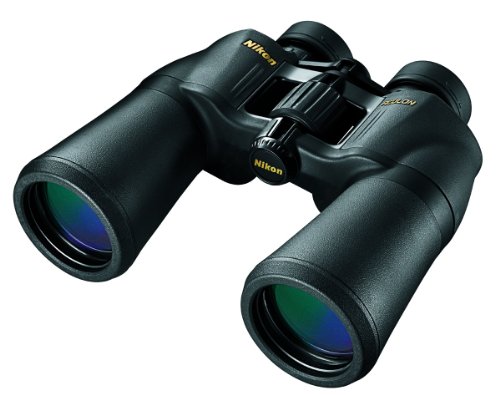
Best Binoculars for Stargazing 2026: Nikon Aculon vs Celestron Cometron vs SkyMaster
You don't need a telescope to start stargazing: for most beginners, a good pair of binoculars is the smarter first buy. Here are three honest picks for the night sky, from a forgiving budget pair to a deep-sky aperture monster, with the two numbers that actually decide which is right for you.
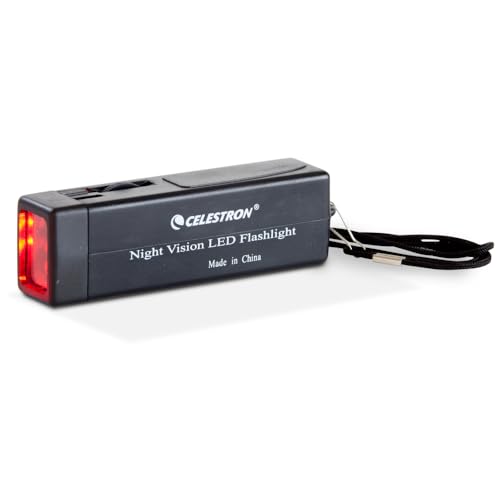
Best Red Light for Stargazing (2026): Protecting 30 Minutes of Night Vision
Dark adaptation takes about thirty minutes and one careless glance at a phone screen to undo. That is the entire argument for a red light: not that red is magic, but that your eyes recover from it far faster than from white. Almost every stargazing session that "was not very good" was actually a session where someone kept checking their phone.

Best Binoculars for Birdwatching (2026): Why 8x42 Is the Sweet Spot
For birdwatching, one pair of numbers matters more than any brand: 8x42. That is 8x magnification (easy to hold steady, with a wide view to find birds) and a 42mm lens (bright enough for shade and dawn). Get that spec and you are most of the way there. Here are three good 8x42 binoculars, from a superb-value first pair to premium glass you grow into.

Best Beginner Fishing Rod and Reel Combo 2026: Spinning Setups That Just Work
For your first setup, a matched spinning rod-and-reel combo is the right call: it's pre-balanced, forgiving to cast, and gets you fishing without choosing parts you don't understand yet. Here are three combos that punch above their price, from a near-indestructible classic to a saltwater-ready upgrade.