Best Bonsai Soil (2026): Potting Compost Is What Kills Most Beginner Trees
Bonsai soil is barely soil. Pick up a handful of a good mix and it is gravel, fired clay and porous rock, with almost nothing you would recognise as compost. That looks wrong to anyone who grows houseplants, and it is the single biggest reason beginner trees die.
HobbyStack may earn a commission from links on this page at no extra cost to you. Our picks are chosen on merit; the commission helps fund the research.
- Bonsai soil is mostly inorganic grit. Compost holds water and suffocates roots in a shallow pot.
- Water should run straight through and out of the drainage holes within seconds.
- Particle size matters as much as material. Fines clog the gaps that hold air.
- Akadama is fired Japanese clay that darkens when wet, so the pot tells you when to water.
- Free-draining soil means watering more often, not less. That is the trade.
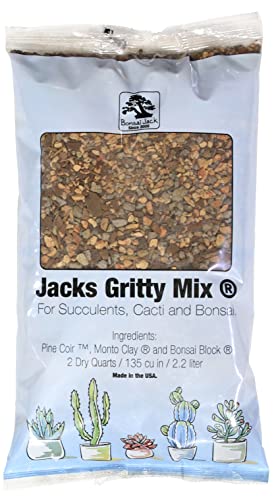 Bonsai Jack Gritty MixA first tree$16Check price
 Our pickTinyroots All PurposeMost trees$19Check price
 NOHOBE Hard AkadamaMixing your own$22Check price
Why grit and not compost
A bonsai pot is a few centimetres deep. That shallowness changes the physics of the soil inside it.
In a deep pot, gravity pulls water down and away from the top. In a shallow one there is not enough depth for that to happen, so a perched water table forms: a saturated layer sitting at the bottom that simply will not drain. Fill a bonsai pot with potting compost and a large fraction of the root space is permanently waterlogged.
Roots need oxygen as much as water. Waterlogged roots suffocate, then rot, and root rot in a bonsai is usually fatal by the time anything shows above the soil.
So bonsai soil is built the other way round. Hard angular particles roughly 2 to 6mm across stack loosely and leave large air gaps between them. Water passes through the gaps and drains away in seconds, leaving each particle damp and every gap full of air.
The individual grains still hold water, which is the clever part. Akadama and pumice are porous, so they act as thousands of tiny reservoirs the roots can draw on, without any of them blocking the airways.
Fines are the enemy. Dust and particles under about 1mm fall into the gaps and fill them, which is why good mixes are sifted and why cheap ones stop draining after a season.
The components, and what each one does
Most mixes are built from three or four ingredients in varying ratios.
Akadama is a fired clay mined in Japan. It holds water and nutrients well, and it has one genuinely useful trick: it darkens visibly when wet, so the surface of the pot tells you at a glance whether the tree needs water. It breaks down over a few years, which is a maintenance cost and also a signal that it is time to repot.
Pumice is porous volcanic rock. It holds water without breaking down, and it stays structurally sound for far longer than akadama.
Lava rock is sharper and holds less water. It adds structure and keeps the mix open, and roots grip its rough surface well.
Pine bark or coir is the small organic fraction some mixes include, typically well under a third. It holds nutrients and buffers the mix. Too much and you are back to compost.
Ratios follow the tree. Conifers and pines want it sharper and drier, so more pumice and lava. Deciduous trees and tropicals take more akadama and a little organic. Which is exactly why some people buy the components separately rather than a blend.
Rinse before use. Even sifted bags carry dust, and a rinse through a colander removes the fines that would otherwise clog the mix.
 Best for a first tree
Bonsai Jack Succulent, Cactus and Bonsai Soil
A ready-to-use gritty mix that drains extremely fast, which is the safest place for a beginner to be. Almost everyone new to bonsai overwaters, and a mix like this makes that mistake very difficult to commit. Suits cacti and succulents as well, so a bag does not go to waste. The trade is real though: it dries out quickly, so a tree in this on a hot windowsill can genuinely need water twice a day.
What's good
- Drains so fast that overwatering is hard
- Ready to use with no mixing or sifting
- Works for succulents and cacti too
- Cheapest way into proper inorganic soil
What's not
- Dries out fast, so it needs frequent watering
- Holds fewer nutrients than an akadama blend
- Not tuned to any particular species
- Too sharp for moisture-loving trees
 Best for most trees
Bonsai Soil Mix by Tinyroots
A blend put together for bonsai specifically rather than for succulents, which is the difference that matters. It balances water retention against drainage instead of pushing all the way toward fast, so it suits deciduous and tropical trees that would struggle in a pure gritty mix. Screened and ready to use straight from the bag, with a pH suited to bonsai. Being a fixed blend, you cannot tune it toward a pine or a maple.
What's good
- Formulated for bonsai rather than succulents
- Balances retention against drainage
- Screened and ready to use from the bag
- Suits deciduous and tropical trees
What's not
- Fixed ratio, so no tuning per species
- Holds more water than conifers want
- Dearer than the gritty mix
- Organic fraction breaks down over time
 Best for mixing your own
NOHOBE 5lb Hard Akadama Bonsai Soil 1/8-1/4 inch Small Grain
Pure hard akadama in a small 1/8 to 1/4 inch grain, which is a component rather than a finished soil, and that is the point. Once you know whether a tree wants sharper or wetter, buying akadama, pumice and lava separately lets you mix to it instead of accepting a blend. Hard-fired grades hold their shape far longer than soft ones. It darkens when wet, so the pot tells you when to water.
What's good
- Darkens when wet, so the pot shows when to water
- Hard-fired grade holds structure for years
- Lets you tune the mix per species
- The traditional Japanese standard
What's not
- A component, not a soil — needs mixing
- Wrong on its own for most trees
- Breaks down eventually and needs repotting
- Five pounds is not much soil by volume
People switch to a proper bonsai mix, keep their old watering routine, and lose the tree to drought instead of rot. A shallow pot of inorganic grit in summer sun can need water every day and sometimes twice. Check by pushing a finger or a wooden skewer into the surface rather than by the calendar, and water until it runs freely out of the drainage holes. Akadama makes this easy because it darkens when damp.
Repotting, which is when soil actually matters
Soil is changed at repotting, not topped up. You lift the tree, comb out the old soil from the roots, trim them, and set it back into fresh mix. That is the moment the soil choice takes effect.
Timing is by species and season. Most deciduous trees go in early spring as the buds swell but before they open. Conifers are usually later. Repotting a tree in leaf, in summer, is a good way to lose it.
Do not repot and prune hard in the same season. Both are large demands on stored energy, and a tree recovering from one will not tolerate the other.
Work the soil in. After positioning the tree, use a chopstick to push mix into the gaps between roots so there are no air pockets. Pockets dry out and the roots in them die back.
Water immediately and thoroughly, until it runs clear from the drainage holes. That settles the mix and washes out any remaining dust.
Then keep it sheltered for a few weeks. A freshly repotted tree has a reduced root system and cannot support itself in full sun or wind.
Before you buy
Never use standard potting compost in a bonsai pot.
Look for sifted mixes with particles roughly 2 to 6mm and no dust.
Sharper and drier for conifers, a little more akadama for deciduous.
Rinse the bag through a colander before use to remove fines.
Plan to water more often, not less.
Bonsai soil questions
Can I use normal potting compost for bonsai?
What is akadama and do I need it?
How often do I water a tree in bonsai soil?
Why does particle size matter?
The Tinyroots all-purpose blend is the sensible default: mixed for bonsai rather than succulents, balanced between holding water and draining it, and ready to use straight from the bag. Take the Bonsai Jack gritty mix for a first tree, since its very fast drainage makes overwatering hard to manage. Buy pure akadama once you know what a particular tree wants and would rather mix to it. And whichever you use, water more often than feels right.
Ready to actually do it?
The first bonsai quest takes an evening, and it tells you whether the gear was worth it better than any review can.
Start BonsaiThe HobbyStack editorial team researches each guide against manufacturer specifications, published resources and practitioner sources. Every product is checked for availability and described against its current listing before publication, and prices are re-checked when guides are updated.
About our editorial process →More gear guides
All guides
Best Beginner Bonsai Concave Cutter 2026: Stainless, Forged Alloy & KAKURI Made-in-Japan
The concave cutter is the tool that makes bonsai look like bonsai, it removes a branch with a hollow bite so the wound heals flush with the trunk instead of leaving a stub. Here are three beginner-friendly picks you can actually buy on Amazon, from an $18 stainless cutter to learn on to a Made-in-Japan KAKURI, plus when you actually need one.

Best Beginner Bonsai Shears 2026: Brussel's, Wazakura & Yasugi-Steel Picks
Bonsai pruning shears are the most-used tool in the hobby, you'll reach for them every time you touch a tree, so they're the one worth getting right first. Here are three genuinely good beginner picks you can actually buy on Amazon: a ~$20 pair from a trusted US nursery to learn on, a Made-in-Japan everyday pair, and a buy-it-once Yasugi-steel tool, plus how to choose the size and steel.
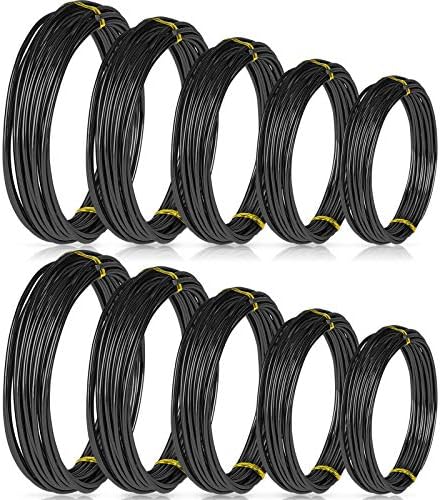
Best Beginner Bonsai Wire 2026: Aluminium Sets vs Wazakura Made-in-Japan Copper
Bonsai wire is how you actually shape a tree: you coil it around a branch, bend the branch where you want it, and the wire holds the new position until the wood sets. The one real decision is aluminium vs copper. Here are three picks you can buy on Amazon, two aluminium sets and a Made-in-Japan copper, and which to buy first.

Best Beginner Bonsai Wire Cutters 2026: Tinyroots vs KAKURI (Made in Japan)
Bonsai wire cutters do one job ordinary cutters can't, their narrow head snips training wire flush against a branch without nicking the bark. Here are three picks you can actually buy on Amazon, from a budget alloy cutter to a Made-in-Japan KAKURI, plus why you always cut wire off rather than unwind it.
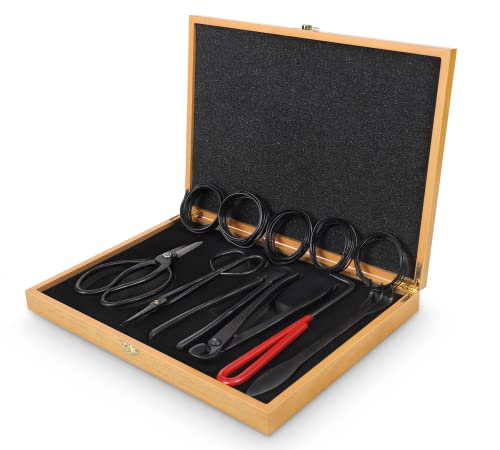
Best Bonsai Tool Kit for Beginners (2026): Starter to Japanese-Made
A bonsai tool kit bundles the few tools that actually shape a tree: sharp scissors for trimming, a concave cutter for removing branches cleanly, and wire plus a wire cutter for training. A kit gets you all of it in one box so you can start pruning properly instead of hacking at your tree with kitchen scissors. Here are three good ones, from a cheap complete starter set to a small set of superb Japanese-made tools.

Best Aquarium Algae Scraper (2026): The Wrong Blade Ruins an Acrylic Tank
A steel blade on glass takes algae off and leaves nothing behind. The same blade on an acrylic tank cuts a permanent scratch on the first pass, and there is no undoing it. Which tank you own decides this purchase before anything else does.