Best Aquarium Algae Scraper (2026): The Wrong Blade Ruins an Acrylic Tank
A steel blade on glass takes algae off and leaves nothing behind. The same blade on an acrylic tank cuts a permanent scratch on the first pass, and there is no undoing it. Which tank you own decides this purchase before anything else does.
HobbyStack may earn a commission from links on this page at no extra cost to you. Our picks are chosen on merit; the commission helps fund the research.
- Glass takes a steel blade. Acrylic does not, ever. Check before you scrape.
- Most scratches come from a grain of sand caught under the pad, not the blade.
- Magnetic cleaners let you work without putting arms in the tank.
- A floating magnet is worth paying for. A sinking one lands in your substrate.
- Keep separate pads for different tanks. Algae and pests move on equipment.
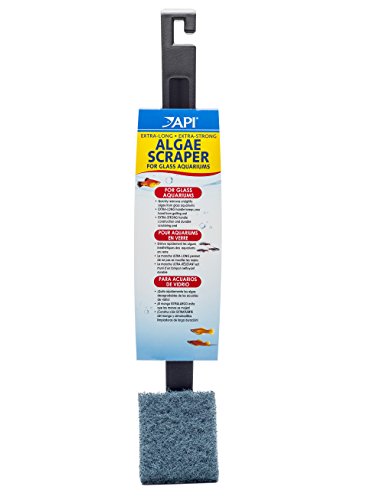 API Algae ScraperSmall glass tanks$9Check price
 Our pickFLIPPER FloatMost tanks$50Check price
 FLIPPER EDGEBigger displays$90Check price
Glass or acrylic, and why it decides everything
Glass is hard. A stainless blade scrapes coralline and hard algae off it without leaving a mark, which is why the standard tool for a stubborn glass tank is a razor blade on a stick.
Acrylic is a soft plastic. It scratches under a fingernail, let alone a steel edge, and the scratches are permanent, cloudy and impossible to ignore once they catch the light. Acrylic needs plastic blades and soft pads, and nothing harder.
The API scraper here says so explicitly on its own packaging: for glass aquariums only, not for acrylic, plexiglass, or any other surface. People still use them on acrylic and then wonder what happened.
Both FLIPPER models here ship with two blades, stainless for glass and ABS plastic for acrylic, which removes the risk of grabbing the wrong tool.
Then the real cause of scratches, which is neither blade. It is a grain of sand picked up at the substrate line and dragged up the pane. It happens to careful people on glass tanks with soft pads, and it is why every good magnetic cleaner is designed to keep a small gap or to shed grit. The FLIPPER Float uses three contact points to hold a consistent gap for exactly this reason.
So the habit matters more than the tool: never start a pass at the sand line, and check the pad before every clean.
Hand scrapers versus magnets
Hand scrapers are a pad or blade on a long handle. Cheap, simple, nothing to break, and they reach into corners a magnet cannot. The handle keeps your arm out of the water, which matters more than comfort: skin oils, soap residue and hand lotion all end up in the tank otherwise.
They are also slow on a big pane, and awkward on the far side of a tank you cannot reach across.
Magnetic cleaners are two halves. The inner half sits against the glass inside the tank, the outer half holds it there through the pane, and you move the outer one. Nothing goes in the water and a large pane takes seconds.
The things to check on a magnet:
- Glass thickness rating. Both FLIPPERs here handle up to 1/2 inch. Too thick and the halves separate constantly.
- Does it float? A magnet that separates and sinks lands in your substrate, kicks up a cloud, and has to be fished out by hand. Both models here float to the surface instead, which is worth the difference on its own.
- Blade access. Being able to switch between scrubbing and scraping without reaching into the water is the whole appeal of the FLIPPER design.
- Magnet strength. Rare earth magnets hold better on thick glass, at the cost of pinched fingers if you let the halves snap together.
 Best for small glass tanks
API Algae Scraper for Glass Aquariums 1-Count Container
An extra-long handle with a scrubbing pad on the end, which is all a small glass tank actually needs. The length keeps your hand and arm out of the water, so skin oils and soap residue stay out too, and it reaches into corners that a magnet cannot follow. Glass only, stated plainly on the packaging, and using it on acrylic will scratch permanently. Slow going on a large pane.
What's good
- Costs a fraction of a magnetic cleaner
- Long handle keeps your arm out of the water
- Reaches corners a magnet cannot follow
- Nothing to break or lose
What's not
- Glass only — will scratch acrylic permanently
- Slow on a large pane
- Awkward on the far side of a wide tank
- Pad picks up grit that then scratches
 Best for most tanks
FLIPPER Float Standard Magnetic Aquarium Cleaner
A magnetic cleaner that flips between a scrubbing pad and a blade without you reaching into the water, which is most of why people buy it. It ships with a stainless blade for glass and an ABS one for acrylic, so it suits either tank. Three contact points hold a consistent gap against the pane to reduce trapped sand, and the inner half floats to the surface if it detaches rather than dropping into your substrate.
What's good
- Flip between scrub and scrape without wet hands
- Stainless and ABS blades for glass or acrylic
- Floats if detached instead of sinking into sand
- Three contact points reduce trapped grit
What's not
- Rated to 1/2 inch glass, no thicker
- Cannot reach tight corners like a hand tool
- Over five times the API scraper
- Blades need replacing periodically
 Best for bigger displays
FLIPPER EDGE Standard Limited Edition Clownfish Magnetic
The same flip design with rare earth magnets, which grip harder and give more precise control across a large pane where a weaker magnet starts slipping. Dual blades again cover glass or acrylic. The low-profile body is the practical gain on an aquascape, since it slides past rocks and planting closer to the layout than a bulkier cleaner will. Still rated to half-inch glass, so it is grip rather than reach that improves.
What's good
- Rare earth magnets grip and track better
- Low profile slides past hardscape and planting
- Dual blades for glass or acrylic
- Floats to the surface if it detaches
What's not
- Same 1/2 inch glass limit as the Float
- Strong magnets pinch fingers if they snap together
- Nearly double the Float for a modest gain
- Overkill on a small tank
The commonest scratch in aquarium keeping is not caused by the blade. It is a single grain of sand that the pad picks up at the substrate and then drags the length of the pane. Start each pass at the top and work down, stop an inch or two above the substrate, and check the pad before every clean. On acrylic this rule matters twice as much, because there is no polishing out what it leaves.
Algae is a symptom, not the problem
Scraping treats what you can see. It is worth knowing what is feeding it.
Too much light is the usual cause. Eight hours a day is plenty for most planted tanks, and direct sun on the tank will beat any amount of scrubbing. A timer fixes more algae than any tool.
Excess nutrients come from overfeeding and from not changing enough water. Feed what the fish clear in a couple of minutes, and keep to a regular water change schedule.
Imbalance in a planted tank shows up as algae because healthy plants outcompete it. A tank with struggling plants and strong light is an algae farm.
Clean-up crew help. Nerite snails, otocinclus and amano shrimp graze algae continuously and reach places you will not. They are a supplement to scraping rather than a replacement.
Keep tools per tank. Pads and blades move algae spores, snails and disease between tanks readily. If you run more than one, label them and keep them apart.
Rinse in tap water, never soap. Soap residue on a pad goes straight into the tank the next time you use it, and it does not take much.
Before you buy
Check whether your tank is glass or acrylic first. It rules out half the tools.
Confirm the magnet is rated for your glass thickness.
Buy a floating magnet. A sinking one ends up in the substrate.
Look for both blade types included if you might change tanks.
Keep separate tools for separate tanks.
Algae scraper questions
Can I use a steel blade on an acrylic tank?
What actually causes scratches in aquarium glass?
Are magnetic cleaners worth it over a hand scraper?
How do I stop algae coming back so fast?
The FLIPPER Float is the one to buy for most tanks: it flips between scrubbing and scraping without wet hands, it carries blades for both glass and acrylic, and it floats to the surface instead of dropping into your substrate. The API scraper is genuinely enough for a small glass tank and costs almost nothing. Step up to the EDGE for a large display where magnet grip starts to matter. And check whether your tank is acrylic first.
Ready to actually do it?
The first aquascaping quest takes an evening, and it tells you whether the gear was worth it better than any review can.
Start AquascapingThe HobbyStack editorial team researches each guide against manufacturer specifications, published resources and practitioner sources. Every product is checked for availability and described against its current listing before publication, and prices are re-checked when guides are updated.
About our editorial process →More gear guides
All guides
Best Aquascaping Scissors for Beginners (2026): Long Curved Stainless, Compared
Trimming is most of aquascaping, and ordinary scissors do it badly: too short to reach the substrate, they rust, and they crush stems so they rot. A long curved stainless pair makes clean cuts that heal. Here is what to buy for $9 to $15.

Best Aquarium Filter for Beginners 2026: Sponge vs HOB vs Canister
A filter is the lungs of an aquarium: it keeps the water clear and, more importantly, houses the bacteria that keep your fish alive. The first decision is the type, and it's driven by your tank size: a sponge filter for small tanks, a hang-on-back for most beginner tanks, or a canister for big and planted ones. Here are three picks across that divide.

Best Aquarium Heater (2026): The One Component That Fails Dangerously
Every other piece of aquarium equipment fails by stopping. A heater can fail by staying on, and a stuck-on heater will cook a tank of fish in a day. That is why the interesting question is not which heater warms water — they all do — but which one fails safely and lets you check that it is telling the truth.

Best Aquarium Water Test Kit (2026): The 5-in-1 Strips Do Not Test Ammonia
The thing that kills fish in a new tank is invisible, has no smell, and is not on the strip most beginners buy. Ammonia is what a cycling tank produces first and what does the damage, and the popular 5-in-1 strips test five things that are not it. Knowing that before you buy is most of the value of this page.

Best Beginner Aquarium Starter Kit 2026: 3 Picks Reviewed
The starter kit is the foundation of your first tank: the tank, hood, light, filter, and heater all in one box. Picking the right one is the difference between a stable tank you enjoy and a stressful project you abandon by month three.

Best Beginner Bonsai Concave Cutter 2026: Stainless, Forged Alloy & KAKURI Made-in-Japan
The concave cutter is the tool that makes bonsai look like bonsai, it removes a branch with a hollow bite so the wound heals flush with the trunk instead of leaving a stub. Here are three beginner-friendly picks you can actually buy on Amazon, from an $18 stainless cutter to learn on to a Made-in-Japan KAKURI, plus when you actually need one.