Best Candle Pouring Pitcher (2026): The Spout Is the Whole Tool
Everything else in candle making tolerates improvisation. The pour does not. You are moving hot liquid wax into a narrow-mouthed jar around a centred wick, and a pot without a proper spout dribbles down the outside, floods the wick and leaves you cleaning wax off a worktop instead of making candles.
HobbyStack may earn a commission from links on this page at no extra cost to you. Our picks are chosen on merit; the commission helps fund the research.
- A narrow dripless spout is the feature. Capacity is secondary.
- Melt in a water bath, never on direct heat. Wax has a flash point.
- Pour temperature is set by the wax, and it matters more than melt temperature.
- Keep the pitcher for wax only. It never goes back to food use.
- Two pitchers let you pour a second scent without cleaning between.


Why the spout decides it
A pouring pitcher does one job: deliver wax into a container without getting any of it anywhere else.
The things that make that work:
A narrow, tapered spout. It gives you a thin controlled stream you can aim beside the wick rather than onto it. A wide pot lip produces a sheet of wax that catches the jar rim and runs down the outside.
A dripless lip. A properly formed spout breaks the stream cleanly when you stop pouring. A poor one leaves a trailing dribble, and wax cools fast enough that the dribble sets on the outside of your jar.
A long handle, well away from the heat. You are holding a container of liquid at well over 60°C, and a handle that conducts is how you jerk and spill.
Capacity in wax weight, not volume. The EricX here is rated at 4 pounds, which is a useful way to express it since recipes are weighed. As a rough guide, a pound of wax fills roughly two 8oz jars.
Then the heating method, which matters for safety. Wax is melted in a water bath — the pitcher stands in a saucepan of simmering water. That caps the temperature at around 100°C and heats evenly.
Never melt wax on direct heat. Soy and paraffin both have flash points, and a pitcher directly on a hob can overshoot into the range where wax ignites. It also scorches the wax, which discolours it and ruins the scent. A water bath removes the whole problem, which is why every pitcher is shaped to stand in a pan.
Temperature, and the faults it causes
Two temperatures matter and people conflate them.
Melt temperature is how hot you take the wax to liquefy it fully, typically around 80 to 85°C for soy.
Pour temperature is how hot it is when it goes in the jar, and it is lower — often 50 to 60°C for soy. This is the number that determines how the candle looks.
Fragrance goes in between, at the temperature the wax manufacturer specifies, usually around 80°C, so the oil binds properly. Added too cool and it does not incorporate; added too hot and it flashes off.
The faults map onto temperature almost one to one:
- Poured too hot — wet spots where the wax pulls away from the glass, sinkholes in the middle as it contracts, and a rough frosted top on soy
- Poured too cool — lumpy uneven surface, poor adhesion to the jar, and visible pour lines
- Cooled too fast — cracking and sinkholes. Cover loosely and leave it somewhere draught-free
A thermometer is not optional. Guessing at pour temperature is the single biggest reason first candles look homemade.
Keep a second pour back. A small amount of reserved wax lets you top up a sinkhole once the candle has set, which is far easier than trying to prevent every one.
And keep the pitcher for wax. Wax residue is effectively impossible to remove completely, fragrance oils are not food-safe, and dye stains. A pitcher used for candles stays a candle pitcher.
 Best for starting out
Candle Making Pouring Pot, 32oz Stainless Steel Wax Melting Pot
A 32-ounce stainless pot with a pouring spout, which covers the two things that actually matter at the lowest price: a stream you can aim, and a shape that stands in a water bath. Thirty-two ounces is enough for a batch of two or three medium jars, so you are not pouring in stages. The spout is less refined than the EricX, so expect a little more dribble, and the handle sits closer to the heat.
What's good
- Stainless and shaped to stand in a water bath
- 32oz handles two or three medium jars
- Spout gives an aimable stream
- Cheapest sensible option
What's not
- Spout dribbles more than a dripless design
- Handle sits closer to the heat
- Capacity quoted in volume, not wax weight
- Thinner gauge than the EricX
 Best for most makers
EricX Light Candle Making Pouring Pot, 4 pounds, Dripless Pouring Spout & Heat-resisting Handle Designed Wax Melting Pot, Aluminum Construction Candle Making Pitcher
Four pounds of wax capacity with a genuinely dripless spout, and the spout is why this is the pick: it breaks the stream cleanly when you stop, so you are not scraping set wax off the outside of a finished jar. Capacity quoted in wax weight is the useful way round, since recipes are weighed rather than measured. A heat-resistant handle keeps your hand away from a pot of liquid above 60°C.
What's good
- Dripless spout breaks the stream cleanly
- Capacity in wax weight, which matches recipes
- Heat-resistant handle well clear of the pot
- 4 lb covers a decent batch in one pour
What's not
- Nearly twice the CasaCulina
- Single pitcher, so scent changes mean cleaning
- Large for a single small candle
- Still needs a thermometer bought separately
 Best for multiple scents
2PCS Candle Making Pouring Pot With Long Spoons, Wax Melting Measuring Cups, Stainless Steel Pitcher With Dripless Spout (600ml, 900ml)
Two pots with long stirring spoons, and the second pot is the actual reason to buy it. Fragrance oil is effectively impossible to remove from stainless completely, so a single pitcher means either cleaning thoroughly between scents or accepting that your second batch carries a trace of the first. Two pots removes that, and the long spoons reach the bottom without your knuckles over hot wax. Each pot is smaller than the EricX.
What's good
- Two pots means no scent carryover between batches
- Long spoons keep hands clear of hot wax
- Lets you prepare a second pour while one sets
- Good value for two vessels
What's not
- Each pot is smaller than the single EricX
- Spouts are less refined than a dripless design
- Two pots to store and keep wax-only
- Generic brand with variable finish
Soy and paraffin both have a flash point, and a pitcher sitting directly on a hob can overshoot into the temperature range where wax ignites. It also scorches the wax, which discolours it and destroys the fragrance. Stand the pitcher in a saucepan of simmering water instead, which caps the temperature around 100°C and heats evenly. Keep a lid nearby, and never use water on a wax fire.
Pouring a candle that looks right
Warm the jars. Cold glass chills the wax where it touches, which causes wet spots and poor adhesion. A few minutes somewhere warm, or a brief pass with a heat gun, makes a visible difference.
Centre and secure the wick. A wick clip or a couple of chopsticks across the rim. A wick that drifts off centre while the wax sets gives a candle that burns unevenly for its whole life.
Pour steadily, beside the wick, not onto it. One continuous pour rather than stages, since stopping and restarting leaves visible lines.
Leave it alone. Moving a setting candle causes sinkholes and cracks. Somewhere draught-free, loosely covered, undisturbed until fully set.
Then cure it. Soy candles need roughly one to two weeks before the fragrance throws properly. Burning one the next day is why people conclude their scent was too weak.
Trim the wick to about 5mm before the first burn, and before every burn after.
Burn long enough to reach the edges. A first burn that does not melt the full diameter sets a tunnel the candle will follow forever, which is the commonest candle fault there is.
Before you buy
Judge it on the spout. A narrow dripless lip is the whole tool.
Check the capacity is quoted in wax weight if you can.
Make sure it stands in a saucepan for a water bath.
Buy a thermometer at the same time. Pour temperature matters.
Two pitchers if you work with more than one fragrance.
Pouring pitcher questions
Can I melt wax directly on the hob?
What temperature should I pour at?
Can I use the pitcher for food afterwards?
Why does my candle have a hole in the middle?
The EricX is the one to buy. The dripless spout is the whole point of the tool, capacity quoted in wax weight matches how recipes are written, and the handle keeps your hand clear of four pounds of hot liquid. The CasaCulina does the job for half as much if you can live with a little dribble. Take the two-pack if you work with more than one fragrance. Buy a thermometer too.
Ready to actually do it?
The first candle making quest takes an evening, and it tells you whether the gear was worth it better than any review can.
Start Candle MakingThe HobbyStack editorial team researches each guide using practitioner communities, published resources, and direct input from active hobbyists. Every guide is reviewed for accuracy before publication and updated when practices change.
About our editorial process →More gear guides
All guides
Best Candle Fragrance Oils (2026): Why Essential Oils Are Not the Answer
The most common disappointment in candle making is a candle that smells wonderful cold and of nothing at all when lit. Almost always the cause is one of three things: the wrong kind of oil, too little of it, or not enough patience before burning. None of them are obvious, and shops sell essential oils next to fragrance oils as though they were interchangeable.

Best Candle Making Kit for Beginners (2026): 3 Picks
A soy candle starter kit is one box with everything you need to pour your first candles: wax, wicks, fragrance, a pouring pitcher, and jars or tins. The spec that actually matters for a beginner is soy wax (not paraffin or a "blend"), because it melts at a low temperature, pours easily, and is very forgiving when you get the amount or timing a little wrong.

Best Macrame Cord (2026): Single Strand Combs Out, Three-Ply Does Not
Cord comes in three constructions and they behave completely differently at the one moment that matters most: whether you can comb the ends out into soft fringe. Single strand combs beautifully. Three-ply gives you a crinkled, curly fringe instead. Braided will not comb at all. Buy the wrong one for your project and the finish is decided for you.

Best Macrame Kit for Beginners (2026): 3 Picks for Your First Knots
A macrame kit gives you the cord, the rings and dowels, and (crucially) a guide, so you can knot your first plant hanger or wall hanging without buying anything separately. The cord is the heart of it: soft 3mm cotton is the beginner standard. Here are three good ones, from a single-project starter to a big multi-project kit with a project book.
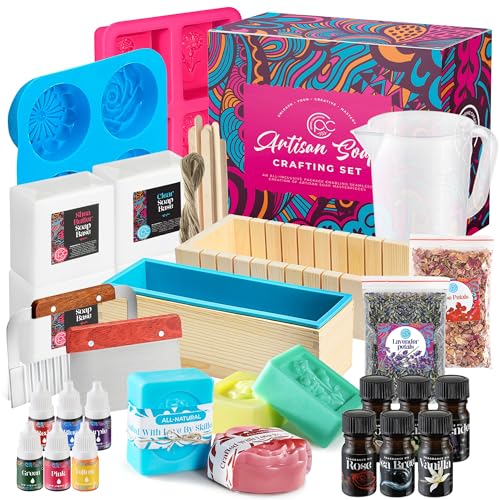
Best Soap Making Kit for Beginners (2026): 3 Melt-and-Pour Picks
The easiest way to start making soap is a melt-and-pour kit, which skips the lye and safety hazards of traditional soap making entirely: you melt a ready-made base, add colour and scent, and pour it into molds. A kit bundles the base, molds, colourants, and fragrance so you can make your first bars in an afternoon. Here are three good ones, from a simple starter to a deluxe box.

Best Soap Carving Knife (2026): Sharp Enough to Slice, Not Crush
Soap is softer than wood and less forgiving of a dull blade. A sharp knife parts it cleanly; a blunt one compresses and tears, leaving a crumbling edge no amount of care recovers. Wood carving knives are the right tool, and the difference between a good session and a frustrating one is almost entirely the edge.