Best Embroidery Scissors (2026): Sharp All the Way to the Tip
Embroidery scissors do one job that ordinary scissors cannot: cut a single thread flush against the fabric without nicking it. That needs blades sharp right to the very point, meeting cleanly with no gap. It is a surprisingly demanding specification, and it is why a good small pair costs more than a large pair of household scissors.
HobbyStack may earn a commission from links on this page at no extra cost to you. Our picks are chosen on merit; the commission helps fund the research.
- The tip is the tool. Blades must be sharp and meet cleanly at the very point, not just along the edge.
- Small is the point. 3.5 to 4 inches gives control; bigger scissors cannot get close to the work.
- Double-curved blades lift the tip away from the fabric — the safest way to cut inside a hoop.
- Micro-tip scissors are the versatile everyday choice and cost very little.
- Never cut paper, tape or wire with them. The tip is the first thing to go.
 Havel's Double-Curved 3.5"Cutting inside a hoop$18Check price
 Our pickFiskars 5" Micro-TipMost people$16Check price
 Gingher 4" Embroidery ScissorsKeeping forever$29Check price
Why the tip is the whole specification
With large scissors you cut using the middle of the blade, where the leverage is. Embroidery work is the opposite: you are placing the very point of the blade against a single strand of thread, a millimetre from fabric you must not touch.
That needs two things most scissors do not have. The blades must be sharp right to the point rather than only along the edge, and they must meet cleanly at the tip with no gap — a pair that crosses slightly or leaves a hair's gap will fold a thread rather than cut it, over and over.
This is why the tips are the first thing to check on any pair, and why cutting anything abrasive with them is so damaging: you can dull the last two millimetres and lose almost all the value while the rest of the blade is still perfect.
It is also why sharpening embroidery scissors is a specialist job. A general sharpener will grind the edge and leave the tip geometry wrong.
Straight, curved and double-curved
Straight scissors are the default and the most versatile. They suit trimming threads, cutting floss to length, and general work where you can approach from above.
Curved blades bend gently upward, so the tip lifts away from the surface. That makes it much easier to snip a thread lying flat against fabric without the lower blade pressing into it.
Double-curved blades bend twice — up at the shank and again near the tip — which lifts your whole hand clear of the work. They exist specifically for cutting inside a hoop or a machine embroidery frame, where a straight pair forces you to tilt your hand awkwardly and risks the blade catching the fabric.
They look strange and feel odd for about ten minutes, and then the reason for them becomes obvious. If most of your work happens in a hoop, they are worth having as a second pair.
 Best inside a hoop
Havel's Double-Curved Embroidery Scissors 3.5"
Double-curved blades that lift your whole hand clear of the fabric, which is the specific problem they exist to solve — snipping a thread flush inside a hoop with straight scissors means tilting your wrist and hoping the lower blade does not press into the ground fabric. With these the tip approaches from above and the rest of the tool stays out of the way. The points are extremely fine, so they get right in against the stitch. They feel peculiar for the first few minutes and they are genuinely awkward for ordinary tasks like cutting floss to length, which is why most people own them alongside a straight pair rather than instead of one. Not a first and only pair.
What's good
- Hand stays clear of the work
- Extremely fine points get flush to the stitch
- The right tool for hoop and machine work
- Reasonably priced for what they do
What's not
- Awkward for general cutting
- Odd feel until you adjust
- Really a second pair, not a first
- Fine tips bend if dropped
 Best for most people
Fiskars 5-Inch Micro-Tip Scissors
Fine-pointed straight scissors that do everything a beginner needs and cost about the same as a skein of decent floss. The micro tips are genuinely sharp to the point, which is the specification that matters — they cut a single strand cleanly rather than folding it — and the blades are short enough to control precisely. Comfortable handles that suit larger hands better than the tiny stork-style scissors people are often given. They are stamped rather than forged, so when the tips eventually dull you replace rather than sharpen them, and there is no curve to help inside a hoop. For general embroidery, thread trimming and floss cutting, this is the right amount to spend.
What's good
- Genuinely sharp to the point
- Short blades give real control
- Handles suit larger hands
- Cheap enough to replace without regret
What's not
- Stamped — not sharpenable
- Straight blades are awkward inside a hoop
- Plastic handles feel basic
- Tips will dull eventually
 Best to keep forever
Gingher 4-Inch Embroidery Scissors
Forged rather than stamped, which for small scissors means the blades hold their geometry and can be properly sharpened rather than thrown away. That is the real difference: a good forged pair stays a good pair for decades, where stamped scissors are effectively consumable. Four inches is the classic embroidery size — short enough for real control, long enough to be comfortable in an adult hand — and the tips meet precisely, which is the thing you are actually paying for. They cost more than twice the everyday option and they are still straight-bladed, so they do not solve the inside-a-hoop problem. Buy them because you want one pair you look after, not because they cut noticeably better on day one.
What's good
- Forged — sharpenable for decades
- Tips meet precisely
- Classic 4-inch size, comfortable and controlled
- Genuinely a lifetime pair
What's not
- More than twice the everyday pair
- Still straight — no help inside a hoop
- Needs specialist sharpening
- Little day-one advantage
Paper, tape, wire and plastic packaging all dull the last two millimetres of the blade, which is precisely the part you bought. A pair can look perfect and have lost most of its usefulness. Keep them in a case, keep them away from the general craft drawer, and if other people borrow scissors, keep them somewhere else entirely.
Snips, and when they are better
Thread snips — the sprung, blade-and-spring tools you squeeze rather than put fingers through — are worth knowing about. They sit in your palm, so you can hold them while stitching and squeeze without putting your fingers into handles each time.
For repetitive thread trimming, that is genuinely faster and less tiring, which is why machine embroiderers and quilters keep a pair at the machine.
What they are not good at is precision. There is less control over exactly where the tip lands, so for cutting one strand flush against a stitch, scissors win.
Most people who stitch a lot end up with both: snips at the machine for speed, small scissors in the hoop bag for accuracy.
Before you buy
Check the tips meet cleanly. That is the whole tool.
Small is better — 3.5 to 4 inches for control.
Working mostly in a hoop? Add a double-curved pair.
Never cut paper, tape or wire with them.
Forged if you want to sharpen and keep them; stamped is fine to replace.
Embroidery scissors questions
What size embroidery scissors should I buy?
Why are curved embroidery scissors curved?
Can embroidery scissors be sharpened?
What ruins embroidery scissors?
Buy a small straight pair with tips that meet cleanly, and guard them from paper. The Fiskars Micro-Tip is the right everyday pair for most people and costs very little. Add the Havel's double-curved pair if most of your work happens inside a hoop — they solve a specific problem properly. The Gingher is the one to buy if you want a forged pair to sharpen and keep for decades. And never let them near the wrapping paper.
Ready to actually do it?
The first embroidery quest takes an evening, and it tells you whether the gear was worth it better than any review can.
Start EmbroideryThe HobbyStack editorial team researches each guide against manufacturer specifications, published resources and practitioner sources. Every product is checked for availability and described against its current listing before publication, and prices are re-checked when guides are updated.
About our editorial process →More gear guides
All guides
Best Beginner Embroidery Kits (2026): 3 Starter Kits Worth Buying
A beginner embroidery kit is a box that has everything you need to start stitching in one go: a hoop, floss, needles, fabric, and usually a pattern already printed on the cloth. The one spec that actually matters for a first kit is whether the fabric comes stamped with a pattern, because tracing your own design is the thing most people give up on before they even start.
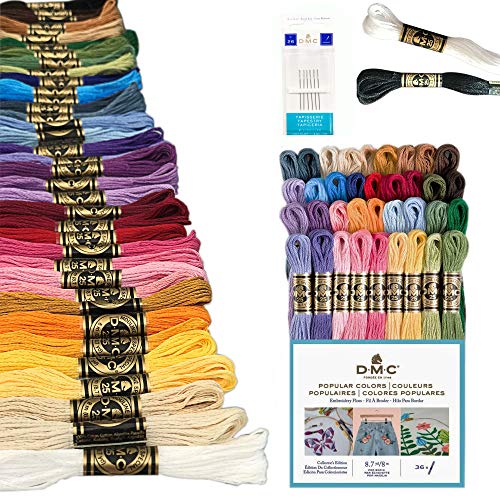
Best Embroidery Floss (2026): Six Strands, and You Rarely Use All Six
A skein of embroidery floss is six loosely twisted strands, and almost every pattern asks you to pull some of them out before you start. Stitching with all six because that is how it came off the shelf is the single most common beginner mistake, and it is why beginner work looks lumpy where it should look smooth.

Best Embroidery Hoop (2026): Drum-Tight Fabric Is the Whole Job
A hoop has one job: hold the fabric tight enough that your stitches sit where you put them. A hoop that slips lets the fabric sag, and a sagging ground gives you uneven tension, puckered stitches and a finished piece that will not lie flat. Almost every hoop complaint is really a grip complaint.

Best Fabric Scissors (2026): Why You Never Cut Paper With Them
Fabric scissors are the tool most likely to be ruined by the person who owns them, usually within a month, usually by cutting paper. Fabric is soft and slippery, so shears rely on a very fine edge to catch and slice rather than push — and paper is abrasive enough to take that edge off in a few cuts. Everything else about choosing a pair follows from protecting that edge.

Best Beginner Knitting Needles (2026): 3 Picks
The needle that fits your first project matters more than the brand. Most beginners should start with a single pair of size US 8 (5mm) straight needles in bamboo, since bamboo grips the yarn and slows dropped stitches. A cheap starter set covers more sizes for less money, and an interchangeable circular set is the thing to grow into once you know you're sticking with it.

Best Beginner Crochet Hooks (2026): 3 Picks
A beginner crochet hook set gives you the common sizes (roughly 2mm to 6mm) in one case so you never have to guess which one your yarn needs. The one thing that actually matters starting out is a comfortable grip and a smooth hook head, because a hook that snags or cramps your hand is the fastest way to quit. Metal shafts with a soft rubber handle are the easy default.