Best Beginner Embroidery Kits (2026): 3 Starter Kits Worth Buying
A beginner embroidery kit is a box that has everything you need to start stitching in one go: a hoop, floss, needles, fabric, and usually a pattern already printed on the cloth. The one spec that actually matters for a first kit is whether the fabric comes stamped with a pattern, because tracing your own design is the thing most people give up on before they even start.
HobbyStack may earn a commission from links on this page at no extra cost to you. Our picks are chosen on merit; the commission helps fund the research.
- A stamped kit (pattern printed on the fabric) is the easiest way to start. You just follow the lines.
- You do not need to spend a lot. A $12 kit has the same hoop, needle, and floss as a $25 one.
- Buy a kit with a real project on the cloth, not just a pile of blank supplies, so you finish something your first week.
- Cotton or aida fabric and a wooden or bamboo hoop are all you need. Skip anything fancier for now.
 Caydo 3 Sets Cross Stitch Kit for BeginnersTesting whether you like embroidery without spending much$17Check price
 Our pickColorful Flowers Embroidery Kit for BeginnersMost beginners who want to finish a nice piece their first week$20Check price
 Similane 215-Piece Embroidery Starter KitPeople who already know they want to make several projects$22Check price
The first thing to sort out is stamped versus blank. A stamped kit has the design printed right on the fabric, so you sit down and stitch over the lines. A blank supply kit gives you loose fabric and floss and expects you to transfer your own pattern, which means tracing, water-soluble pens, and a fair bit of fiddling before you even pick up a needle. For a first kit, go stamped. It is the difference between finishing a little flower on day one and staring at a blank hoop wondering where to start.
After that, most beginner kits are more alike than the price tags suggest. They all give you a hoop, a handful of needles, some floss, and a chunk of cotton or aida cloth. A cheap kit and a pricey one use basically the same parts. What you pay more for is quantity: more floss colors, more hoops in different sizes, extra fabric so you can keep going after the first project. If you just want to try embroidery once and see if you like it, the budget kit is genuinely fine. If you already know you want to make a few things, the bigger kits save you a second order.
One honest heads-up on the floss. The thread in these starter kits is fine for learning, but it is not the same as buying single skeins of a good brand like DMC. It can be a touch thinner or the colors a little less consistent. That does not matter at all while you are figuring out how to hold a hoop and pull a stitch even. Once you are hooked and starting a piece you actually want to frame, that is the moment to buy nicer floss by the color. For now, whatever comes in the box is plenty.
 Best budget pick
Caydo 3 Sets Cross Stitch Kit for Beginners
Three pre-printed fabrics, hoops, thread, and tools for the lowest price that still gets you real projects.
What's good
- Very cheap, so it is a low-risk way to find out if you like it
- Comes with three different stamped designs, not just one
- Includes hoops, needles, thread, and scissors, so nothing else to buy
- Patterns are printed on the fabric, so you just follow the lines
What's not
- Floss is basic starter thread, not premium
- Not much extra fabric once you finish the three designs
 Best for most beginners
Colorful Flowers Embroidery Kit for Beginners
A patterned, beginner-friendly kit that hits the sweet spot of easy to start, nice result, still cheap.
What's good
- Pattern is stamped on the fabric, so it is genuinely beginner-easy
- Well-reviewed and consistent, fewer duds than random no-name kits
- Comes with clear instructions and the right needles
- Result actually looks good enough to frame or gift
What's not
- Usually one main project rather than a big multi-pack
- Floss is fine for learning but you may want nicer thread later
 Best premium pick
Similane 215-Piece Embroidery Starter Kit
A larger bamboo-hoop kit with 100 floss colors and multiple fabrics, so you are set for many projects, not just one.
What's good
- Five bamboo hoops in different sizes for any project size
- 100 floss colors, so you rarely run out mid-project
- Loads of extra tools: pins, bobbins, threaders, scissors
- Bamboo hoops feel nicer and hold fabric tighter than plastic
What's not
- Fabric is blank aida, so you supply your own pattern or design
- More stuff than a true first-timer needs on day one
A lot of "embroidery" starter kits are technically cross stitch (little X's on gridded aida cloth) rather than freehand embroidery. Both are great for beginners and use the same hoop and floss. If you specifically want the flowy, drawn-line look, check that the kit says "stamped embroidery" and shows curved designs, not a grid of squares.
Before you buy
Check that the pattern is printed ON the fabric. "Stamped" or "pre-printed" means you just follow the lines instead of transferring your own.
Count the hoop sizes. One hoop is fine to start, but a kit with two or three sizes lets you match the hoop to the project.
Make sure needles are included and are embroidery or cross-stitch needles. A few kits skip them or toss in the wrong type.
Look for a kit with an actual beginner project on it (a small flower or plant), not just a bag of blank supplies you have to design yourself.
Embroidery kit questions beginners actually ask
Do I need to know how to sew to start embroidery?
Is a cheap embroidery kit actually any good?
What is the difference between embroidery and cross stitch?
How long does a first embroidery project take?
If you are pretty sure you want to try embroidery, the mid-range stamped kit is the easy call. It has a real project printed on the fabric, enough floss to finish it, and it does not cost much. Grab the cheapest 3-set if you just want to test the waters, or the big 215-piece kit if you already know you will make several things and want the extra hoops and floss.
Ready to actually do it?
The first embroidery quest takes an evening, and it tells you whether the gear was worth it better than any review can.
Start EmbroideryThe HobbyStack editorial team researches each guide against manufacturer specifications, published resources and practitioner sources. Every product is checked for availability and described against its current listing before publication, and prices are re-checked when guides are updated.
About our editorial process →More gear guides
All guides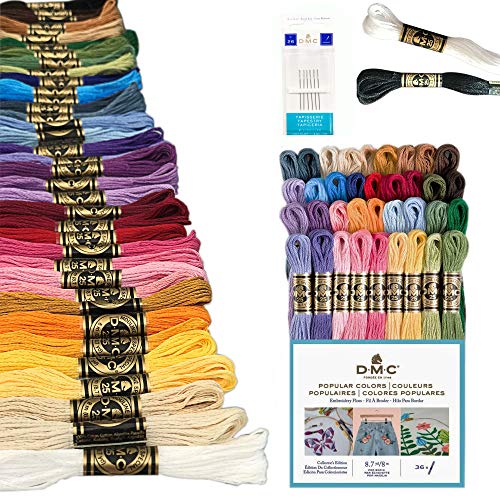
Best Embroidery Floss (2026): Six Strands, and You Rarely Use All Six
A skein of embroidery floss is six loosely twisted strands, and almost every pattern asks you to pull some of them out before you start. Stitching with all six because that is how it came off the shelf is the single most common beginner mistake, and it is why beginner work looks lumpy where it should look smooth.

Best Embroidery Hoop (2026): Drum-Tight Fabric Is the Whole Job
A hoop has one job: hold the fabric tight enough that your stitches sit where you put them. A hoop that slips lets the fabric sag, and a sagging ground gives you uneven tension, puckered stitches and a finished piece that will not lie flat. Almost every hoop complaint is really a grip complaint.

Best Embroidery Scissors (2026): Sharp All the Way to the Tip
Embroidery scissors do one job that ordinary scissors cannot: cut a single thread flush against the fabric without nicking it. That needs blades sharp right to the very point, meeting cleanly with no gap. It is a surprisingly demanding specification, and it is why a good small pair costs more than a large pair of household scissors.

Best Fabric Scissors (2026): Why You Never Cut Paper With Them
Fabric scissors are the tool most likely to be ruined by the person who owns them, usually within a month, usually by cutting paper. Fabric is soft and slippery, so shears rely on a very fine edge to catch and slice rather than push — and paper is abrasive enough to take that edge off in a few cuts. Everything else about choosing a pair follows from protecting that edge.

Best Beginner Knitting Needles (2026): 3 Picks
The needle that fits your first project matters more than the brand. Most beginners should start with a single pair of size US 8 (5mm) straight needles in bamboo, since bamboo grips the yarn and slows dropped stitches. A cheap starter set covers more sizes for less money, and an interchangeable circular set is the thing to grow into once you know you're sticking with it.

Best Beginner Crochet Hooks (2026): 3 Picks
A beginner crochet hook set gives you the common sizes (roughly 2mm to 6mm) in one case so you never have to guess which one your yarn needs. The one thing that actually matters starting out is a comfortable grip and a smooth hook head, because a hook that snags or cramps your hand is the fastest way to quit. Metal shafts with a soft rubber handle are the easy default.