Best Go Books (2026): Beginners Want Joseki and Need Life and Death
Every beginner reaches for a book of joseki, the memorised corner sequences, because they look like the secret. They are not. Strength at Go comes from reading life and death and recognising good shape, and a player who has memorised openings without those will play twenty moves of professional theory and then lose the group.
HobbyStack may earn a commission from links on this page at no extra cost to you. Our picks are chosen on merit; the commission helps fund the research.
- Life and death problems, called tsumego, are what actually raise your rank.
- Do not memorise joseki early. You will play the right moves for the wrong reasons.
- Play 9x9 before 19x19. The whole game is visible and the lessons are fast.
- Count liberties. Most beginner losses are a group dying that could have lived.
- Kageyama is the book almost every strong player names.
 Learn to Play Go, Vol IDay one$18Check price
 Our pickLessons in the FundamentalsEveryone$24Check price
 The Second Book of GoGetting past beginner$57Check price
What actually makes you stronger
Go has about five rules and an effectively infinite game tree, so improvement is not about knowledge in the way chess openings are. It is about reading and shape.
Life and death, tsumego. Whether a group can be killed or made to live. This is the single highest-value study in Go at every level, and it is where beginners gain fastest. A player who reads life and death well will beat a stronger-looking player who does not, because entire groups are the stakes.
Good shape. Stones have efficient and inefficient configurations, and recognising them is pattern recognition built by playing and reviewing rather than memorising. The empty triangle is the classic inefficient shape, and learning to feel why takes games, not pages.
Direction of play. Which part of the board matters now. Beginners play locally, responding to the last move, and lose the whole board while winning every exchange.
Then joseki, and why it is a trap. Joseki are studied corner sequences, balanced for both sides. They are real and strong players know many.
For a beginner they are harmful, because a joseki is only correct in a context, and playing it without understanding the context means playing the right move for the wrong reason and then having no idea what to do when the opponent deviates. Which they will, constantly, because they also do not know it.
The order that works: rules, then life and death, then shape and direction, then joseki a long way later.
And play 9x9 first. The whole board fits in your head, games take minutes, and the fundamentals of surrounding territory and killing groups are identical.
Reading Go books, and the habits around them
Do the problems. Actually do them. A tsumego book read like prose is almost worthless. Cover the answer, read the sequence out in your head until you are certain, and only then look. The work of holding the position in your head is the training.
Do not move the stones when solving. Reading ahead without moving is precisely the skill you are building.
Easy problems in volume beat hard problems slowly. A hundred problems you solve in ten seconds each build pattern recognition faster than five you grind through. This is the opposite of how people instinctively study.
Then the habits that compound:
Review your losses. Not the whole game. Find the one move where the game actually turned, which is usually much earlier than it felt.
Play faster and more. Volume of games at a comfortable pace beats agonising over a few.
Count liberties out loud while learning. Most beginner losses are a group dying that had a way to live, and the cause is not counting.
Learn the ranking system. Kyu ranks count down toward stronger, so 20k is a beginner and 1k is strong. Dan ranks then count up. Handicap stones let mismatched players have a real game, which is unusual among board games and worth using.
Find a server and a club. Go is taught through reviews by stronger players, and the community does this generously.
 Best for day one
Learn to Play Go: A Master's Guide to the Ultimate Game
A clear introduction that gets you from no knowledge to playing actual games, which sounds basic and is the thing most Go material skips past. It covers the rules properly, including the ones that confuse people, and the first principles of surrounding territory and capturing. Volume I of a series, so it stops where the real study begins. If you already know the rules and have played a few games, you can skip straight past it.
What's good
- Gets you from nothing to playing games
- Covers the rules that usually confuse beginners
- Clear and well paced for an absolute start
- Cheapest of the three
What's not
- Skippable if you already know the rules
- Volume I only, so it stops early
- Light on life and death problems
- Less memorable than Kageyama
 Best for everyone
Lessons in the Fundamentals of Go
The book almost every strong player names when asked, and what makes it unusual is that it is about how to think rather than what to play. Kageyama spends his time on the basics that players skip in their hurry to look sophisticated, and argues persuasively that this is exactly why they stay weak. It is also genuinely enjoyable to read, which matters for a book you will return to. It is not a problem collection.
What's good
- The most widely recommended Go book there is
- About how to think, not sequences to memorise
- Genuinely enjoyable rather than dry
- Rewards rereading as you get stronger
What's not
- Not a problem collection, so pair it with tsumego
- Assumes you know the rules already
- Dated examples in places
- Will not teach you joseki, deliberately
 Best for getting past beginner
The Second Book of Go (Beginner and Elementary Go Books)
Written for the gap that most Go material leaves open: you know the rules, you have played a hundred games, and you have no idea what to study next. It covers the opening, middle game fighting and endgame at a level that assumes competence without assuming strength, which is exactly where most self-taught players get stuck. The price is high for a paperback and reflects limited printing rather than extra content.
What's good
- Aimed squarely at the post-beginner gap
- Covers opening, middle game and endgame together
- Assumes competence without assuming strength
- Fills the gap most material leaves
What's not
- Expensive for a paperback, due to limited printing
- Too advanced as a first book
- Denser reading than Kageyama
- Still not a substitute for doing problems
The instinct is to find problems at the edge of your ability and grind through them. For Go that is backwards. A hundred tsumego you solve in ten seconds each build the pattern recognition that wins games, where five you labour over for an hour mostly teach you that you cannot do them. Work through easy collections repeatedly until the shapes are instant, and only then raise the difficulty.
A study routine that works
Ten minutes of tsumego a day beats two hours at the weekend. Pattern recognition is built by repetition over time.
Play on a small board while learning. 9x9 games take minutes, the whole position is readable, and every game contains life and death. Move to 13x13, then 19x19.
Review one move per loss. Find the point where the game turned and understand that single move. Reviewing a whole game teaches less than understanding one mistake properly.
Get reviewed. Stronger players on servers and at clubs review games freely, and a ten-minute review from someone three stones stronger is worth a chapter.
Count the score before the game ends. Learning to count territory changes how you play the endgame, and most beginners never try until the game is over.
Resign gracefully and often. Playing out a lost game teaches little; starting a new one teaches more. In Go resignation is normal courtesy rather than defeat.
Do not chase rank. Rank follows study. Players who grind games without reviewing plateau for years, and the ones who do problems and get reviewed climb steadily.
Before you buy
Start with Kageyama unless you do not know the rules yet.
Pair any book with a tsumego collection. Problems are the engine.
Do not buy joseki dictionaries early. They will mislead you.
Play 9x9 while you read.
Learn the kyu and dan ranking so you can find fair opponents.
Go book questions
Which Go book should I start with?
Should I study joseki as a beginner?
What is tsumego and why does it matter so much?
Should I play on a 19x19 board straight away?
Buy Kageyama. Lessons in the Fundamentals is the book strong players name, it is about how to think rather than what to memorise, and you will reread it as you improve. Add a rules introduction first only if you have never played. The Second Book of Go is the right next step once you have a hundred games behind you. And pair any of them with easy tsumego, done daily.
Ready to actually do it?
The first go (game) quest takes an evening, and it tells you whether the gear was worth it better than any review can.
Start Go (Game)The HobbyStack editorial team researches each guide against manufacturer specifications, published resources and practitioner sources. Every product is checked for availability and described against its current listing before publication, and prices are re-checked when guides are updated.
About our editorial process →More gear guides
All guides
Best Go Sets for Beginners (2026)
A Go set is just a board, a bowl of black stones, and a bowl of white, but the details make a real difference when you are learning. Magnetic stones that do not slide, a full 19x19 grid, and a board that lies flat all make the game easier to focus on. Here are three complete sets, from a travel board to a bamboo one.

Best Beginner Chess Sets (2026): 3 Real Picks
A tournament-style set is the right first chess set: standard-size Staunton pieces, weighted so they don't tip, on a board with 2.25 inch squares. Skip the decorative themed sets for now. The one real decision is vinyl (cheap, portable, what clubs actually use) versus wood (nicer to own, costs more). Everything below is a set people genuinely buy and play on.
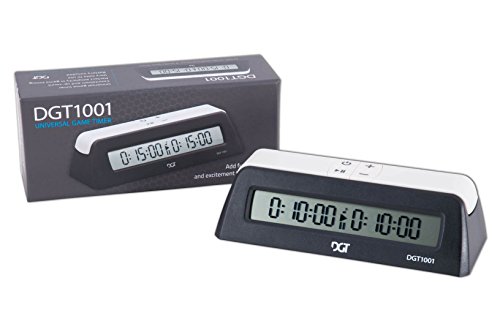
Best Chess Clock (2026): Delay, Increment and Why It Matters
A chess clock changes the game more than any other piece of equipment, because it turns thinking time into a resource you can run out of. The part beginners rarely have explained is that not all timed chess is the same: delay and increment are different rules that produce very different endgames, and the clock you buy determines which ones you can play.

Best Poker Chip Set for Beginners (2026): 3 Sets for Every Home Game
A proper chip set is what turns a card game into poker night, and the thing that separates a cheap set from a great one is the weight and feel of the chips. A 500-count set covers a full table, and heavier clay-composite chips just feel like the real thing. Here are three good sets, from a light-but-complete starter to a casino-grade box.

Best Speed Cubes for Beginners (2026)
The jump from a stiff hardware-store Rubik's Cube to a real magnetic speed cube is the single biggest upgrade in solving: it turns smoothly, corner-cuts instead of locking up, and the magnets snap each layer into place. Here are three, from a $10 cube that already does all that to a maglev flagship.

Best Pottery Tool Set (2026): Six of the Twelve Do Nearly Everything
Open a twelve-piece pottery set and six tools will do nearly all your work: the wire cutter, a wooden rib, a metal rib, a loop trimming tool, a sponge and a needle tool. The rest get picked up once, found to duplicate something, and left in the canister for years.