Best Beginner Chess Sets (2026): 3 Real Picks
A tournament-style set is the right first chess set: standard-size Staunton pieces, weighted so they don't tip, on a board with 2.25 inch squares. Skip the decorative themed sets for now. The one real decision is vinyl (cheap, portable, what clubs actually use) versus wood (nicer to own, costs more). Everything below is a set people genuinely buy and play on.
HobbyStack may earn a commission from links on this page at no extra cost to you. Our picks are chosen on merit; the commission helps fund the research.
- Buy tournament-style, not decorative: standard Staunton pieces, 3.75 inch king, 2.25 inch board squares. It's what clubs and coaches use.
- Get weighted pieces. A weight in the base stops them tipping and just feels better to move. Hollow pieces feel like toys.
- A vinyl roll-up board is the normal first buy. It's cheap, rolls up in a bag, and is the exact board used at real tournaments.
- Wood is a want, not a need. It plays the same. Only step up if you'll leave it out and enjoy looking at it.
 WE Games Best Value Tournament Chess SetThe cheapest set that's still real tournament gear$25Check price
 Our pickUS Chess Quiver Tournament Set (Triple Weighted)The set most beginners should just buy$37Check price
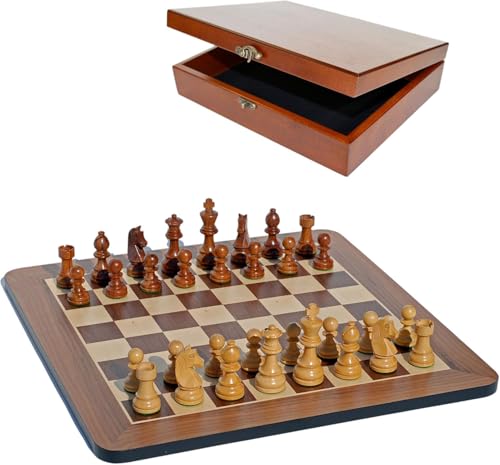 WE Games Grand Staunton Luxury Chess SetWhen you want a real wood set you'll leave out$240Check price
What actually matters is size and weight. "Tournament size" means a king about 3.75 inches tall on a board with 2.25 inch squares, so the pieces fit their squares and match what you'll see everywhere else. Weighted pieces have a metal slug in the base. That lowers the center of gravity so they don't topple when you bump the board, and it gives each piece a satisfying heft. Triple weighted is the heaviest common option and worth it. Hollow plastic pieces are the thing to avoid.
The board choice is simpler than it looks. A vinyl roll-up board is what almost every club and tournament uses. It's flat, has algebraic notation printed on the edges (the a-h, 1-8 coordinates you'll want while learning), rolls into a bag, and shrugs off spills. Wood boards look better sitting out at home but play identically and cost a lot more. Neither makes you better at chess.
The common beginner mistake is buying with your eyes: a Harry Potter set, a glass set, a chunky decorative set with a tiny board. They look nice on a shelf and are annoying to actually play on, because the pieces are the wrong size and often unweighted. Buy a plain tournament set first. If you fall in love with the game, a nice wood set is a great second purchase.
 Best budget pick
WE Games Best Value Tournament Chess Set
The entry set: standard-size plastic pieces, vinyl roll-up board, under most set budgets.
What's good
- Correct tournament sizing: 3.75 inch king, 2.25 inch board squares
- Vinyl board rolls up and takes abuse, exactly like club boards
- Comes with 34 pieces including 2 extra queens plus a bag
- Cheap enough to be a no-brainer first buy
What's not
- Pieces are only lightly weighted, not triple weighted, so they feel less planted
- Plastic and vinyl are functional, not nice to look at
- Board notation and print quality are basic
 Best for most beginners
US Chess Quiver Tournament Set (Triple Weighted)
The default: triple-weighted pieces, regulation vinyl board, meets US Chess and FIDE specs.
What's good
- Triple weighted pieces feel planted and don't tip
- Meets US Chess and FIDE tournament requirements, so nothing to relearn
- Regulation vinyl board with algebraic notation, rolls up for transport
- Includes 34 pieces with 2 spare queens; sold in several board colors
What's not
- Still plastic and vinyl, so it's a tool not a display piece
- Costs a bit more than the bare-budget sets
- Weighted pieces make the whole set noticeably heavier to carry
 Best to grow into
WE Games Grand Staunton Luxury Chess Set
The nice one: weighted wood pieces, walnut board, and a wooden storage box.
What's good
- Weighted solid-wood pieces with felt bottoms, tournament proportions
- Real walnut board looks good left out at home
- Comes with a felt-lined wooden box, so storage is part of the deal
- 3.75 inch king keeps it standard, no adjustment coming from a club set
What's not
- Much pricier than a vinyl set that plays identically
- Wood board and box are heavier and less travel-friendly
- Overkill if you're not sure the hobby will stick yet
HobbyStack has a full Chess overview with starter costs, the gear you actually need, and an honest take on what it's like to begin.
Before you buy
Confirm the pieces are weighted, not hollow, in the listing.
Check the square size (around 2 inches) so standard pieces fit.
A roll-up board and bag travels better than a fixed wooden board.
Common questions
What chess set should a beginner buy?
What size chess board is standard?
Are weighted pieces worth it?
You don't need to overthink your first chess set. The recommended pick suits most beginners. Go budget to spend less, or premium to grow into.
Ready to actually do it?
The first chess quest takes an evening, and it tells you whether the gear was worth it better than any review can.
Start ChessThe HobbyStack editorial team researches each guide against manufacturer specifications, published resources and practitioner sources. Every product is checked for availability and described against its current listing before publication, and prices are re-checked when guides are updated.
About our editorial process →More gear guides
All guides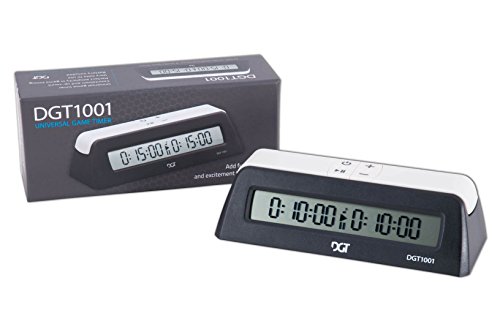
Best Chess Clock (2026): Delay, Increment and Why It Matters
A chess clock changes the game more than any other piece of equipment, because it turns thinking time into a resource you can run out of. The part beginners rarely have explained is that not all timed chess is the same: delay and increment are different rules that produce very different endgames, and the clock you buy determines which ones you can play.

Best Go Books (2026): Beginners Want Joseki and Need Life and Death
Every beginner reaches for a book of joseki, the memorised corner sequences, because they look like the secret. They are not. Strength at Go comes from reading life and death and recognising good shape, and a player who has memorised openings without those will play twenty moves of professional theory and then lose the group.

Best Go Sets for Beginners (2026)
A Go set is just a board, a bowl of black stones, and a bowl of white, but the details make a real difference when you are learning. Magnetic stones that do not slide, a full 19x19 grid, and a board that lies flat all make the game easier to focus on. Here are three complete sets, from a travel board to a bamboo one.

Best Poker Chip Set for Beginners (2026): 3 Sets for Every Home Game
A proper chip set is what turns a card game into poker night, and the thing that separates a cheap set from a great one is the weight and feel of the chips. A 500-count set covers a full table, and heavier clay-composite chips just feel like the real thing. Here are three good sets, from a light-but-complete starter to a casino-grade box.

Best Speed Cubes for Beginners (2026)
The jump from a stiff hardware-store Rubik's Cube to a real magnetic speed cube is the single biggest upgrade in solving: it turns smoothly, corner-cuts instead of locking up, and the magnets snap each layer into place. Here are three, from a $10 cube that already does all that to a maglev flagship.

Best Cooperative Board Games (2026): Playing With the Table, Not Against It
Cooperative games are the easiest way into board games with people who do not think they like board games, because nobody gets knocked out and nobody has to be the one who ruins a friendship over a trade. They also have one specific failure mode that no box warns you about: the loudest player quietly starts telling everyone else what to do.