Best Handheld Anemometer (2026): Where You Stand Changes the Reading
Wind speed is quoted at ten metres above open ground, because that is the standard. Standing in a garden holding a meter at chest height behind a fence, you will read a fraction of the real figure, and no instrument fixes that. Where and how you measure matters more than what you measure with.
HobbyStack may earn a commission from links on this page at no extra cost to you. Our picks are chosen on merit; the commission helps fund the research.
- Official wind speeds are measured at 10 metres over open ground. Yours is not.
- Obstructions affect wind for roughly ten times their height downwind.
- Vane meters are cheap and accurate in moving air. Hot-wire suits very low flow.
- Record gusts and averages separately. A single number means little.
- Hold it at arm's length, facing into the wind, away from your body.


Why your reading is lower than the forecast
The standard is ten metres above open, level ground, and every official wind speed you have ever read is quoted on that basis. It exists so that readings from different places can be compared at all.
At ground level, wind is slowed by friction with the surface and everything on it. The effect is large: at two metres in an ordinary garden you might read half the ten-metre figure, sometimes less.
Obstructions reach much further than people expect. The rule of thumb is that a building, hedge or tree line disturbs airflow for roughly ten times its height downwind, and some of that distance upwind too. A three-metre hedge makes readings unreliable for thirty metres behind it.
So if you want numbers that mean something:
- Get as high and as open as you reasonably can
- Stay at least ten times the height of the nearest obstruction away from it
- Record the height and location you measured at, every time
- Compare your own readings to each other, not to the forecast
That last point is the useful one. A handheld anemometer is excellent for tracking how conditions change at a spot you care about, and poor for producing a figure comparable to a weather station.
Gusts and averages are different measurements. A gust is a short peak; the average is over a stated period, conventionally ten minutes for official reporting. Quoting one as the other is the commonest error in amateur observation.
Sensor type, units, and what the extra sensors are for
Vane anemometers use a small propeller or impeller. They are accurate across normal wind speeds, cheap, robust, and they need the airflow to be reasonably strong to spin freely. All three meters here are vane types.
Hot-wire anemometers measure how fast moving air cools a heated element. They read very low air speeds well, which makes them the tool for checking ventilation ducts and draughts rather than weather.
Cup anemometers are the three-cup spinning type on weather stations. They do not care which direction the wind comes from, which is why fixed installations use them.
Units confuse people. Meteorology uses metres per second, knots or miles per hour. CFM, cubic feet per minute, is a volume flow figure for ducts and needs a duct area to mean anything. A meter offering CFM is aimed partly at HVAC work, which is fine, but CFM is not a wind speed.
The extra sensors are where the money goes, and they are genuinely useful in combination:
- Temperature and humidity let you work out dew point, which is what actually predicts fog, dew and frost
- Barometric pressure is the single most useful forecasting input an amateur has. Falling pressure means deteriorating weather, and the rate of fall matters more than the value
- Wind chill and heat index are calculated from wind, temperature and humidity together
A wind-only meter tells you one thing. A meter with pressure and humidity lets you actually forecast.
 Best for starting out
BTMETER BT-100 Handheld Anemometer, Digital Wind Speed CFM Meter Gauge Air Flow Velocity Tester for HVAC Shoot
A vane anemometer that reads wind speed and CFM volume flow, which covers both casual weather observation and practical jobs like checking a vent or a draught. For the price of a couple of books it tells you what the wind is actually doing where you are standing, which is often very different from the forecast. Wind and temperature only, so no pressure or humidity, which means no dew point and no real forecasting ability.
What's good
- Cheapest route to real measurements
- Reads both wind speed and CFM volume flow
- Vane sensor is accurate across normal wind speeds
- Pocket sized and simple to use
What's not
- No barometric pressure, so no forecasting
- No humidity, so no dew point
- Vane needs reasonable airflow to spin
- Basic build compared with a Kestrel
 Best for most observers
BTMETER BT-100WM Handheld Anemometer, Wind Speed Meter, Digital Barometer
The same vane sensor with a barometer and humidity added, and that combination is what turns a wind gauge into a weather instrument. Pressure trend is the most useful forecasting input an amateur has, since falling pressure and the rate of its fall predict deteriorating weather better than any single reading. Humidity with temperature gives you dew point, which is what actually tells you whether fog or frost is coming.
What's good
- Barometer makes actual forecasting possible
- Humidity plus temperature gives dew point
- Same proven vane sensor as the BT-100
- Still pocket sized and affordable
What's not
- Half again the price of the BT-100
- Pressure sensor is less precise than a Kestrel
- No data logging to a computer
- Readings still subject to where you stand
 Best for doing it properly
Kestrel 3500FW Fire Weather Meter, Safety Orange
Kestrel meters are what wildland fire crews, ballistics shooters and field researchers carry, and the reason is calibrated accuracy in bad conditions rather than a longer feature list. This is the fire weather version in safety orange, which adds the specific calculations that discipline needs. It is genuinely waterproof and genuinely repeatable, which is what separates an instrument from a gadget. It is also over four times the BT-100WM.
What's good
- Calibrated accuracy field researchers rely on
- Built to survive weather rather than be sheltered from it
- Repeatable readings you can compare over seasons
- High-visibility safety orange body
What's not
- Over four times the BT-100WM
- Fire weather calculations are irrelevant to most users
- Overkill for casual observation
- Still a handheld, so siting rules still apply
You are a large obstruction. Holding a meter close to your chest puts the sensor in your own wake and reads low, often by a lot. Extend your arm, face directly into the wind, hold the vane square to the flow, and keep it above shoulder height if you can. Then take a reading over at least thirty seconds rather than a snapshot, noting both the peak gust and your sense of the average.
Building a habit that produces useful data
Measure the same way every time. Same spot, same height, same duration. Consistency is what makes your own records comparable, and comparability is the whole point.
Write down the conditions, not just the number. Cloud cover, precipitation, direction. A wind speed with no direction and no context is almost useless a month later.
Watch pressure trend rather than pressure value. A reading of 1008 millibars means little on its own. Falling three millibars in three hours means something is coming.
Learn the Beaufort scale. Being able to estimate wind from what leaves, flags and water are doing is a genuine skill, and it calibrates your instrument readings against reality.
Calculate dew point. Temperature minus dew point tells you how close the air is to saturation. A small gap overnight with clear skies and light wind means fog or frost.
Compare against a nearby official station. Not to match it, but to learn your own site's offset. Once you know your garden reads sixty per cent of the airport, your readings become translatable.
Keep the vane clean and free. Dust and salt slow an impeller, and a slowed impeller reads low in a way that is easy to miss.
Before you buy
Get pressure and humidity if you want to forecast rather than just measure.
Vane sensors for weather, hot-wire for ducts and draughts.
Check which units it reports. CFM is not a wind speed.
Note that your garden will always read below the forecast.
Record location and height with every reading.
Anemometer questions
Why is my reading lower than the forecast?
What is the difference between vane and hot-wire?
Do I need barometric pressure?
How should I hold it?
The BTMETER BT-100WM is the one to buy: the barometer and humidity turn a wind gauge into something you can actually forecast with, for half again the price of the wind-only version. Take the BT-100 if you only want to know what the wind is doing right now. The Kestrel is a genuine instrument and worth it if you need readings you can rely on across seasons. Then always note where you stood.
Ready to actually do it?
The first meteorology quest takes an evening, and it tells you whether the gear was worth it better than any review can.
Start MeteorologyThe HobbyStack editorial team researches each guide using practitioner communities, published resources, and direct input from active hobbyists. Every guide is reviewed for accuracy before publication and updated when practices change.
About our editorial process →More gear guides
All guides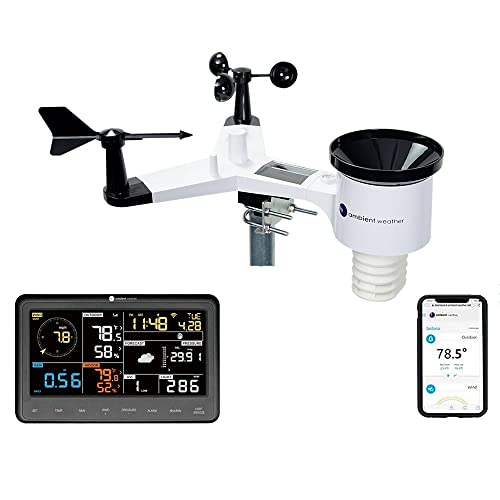
Best Home Weather Station (2026): 3 Picks from Starter to Pro
A home weather station puts a sensor outside that measures your own backyard's temperature, humidity, wind, and rain, and sends it to a display, and often a phone app, indoors. The big decision is how much accuracy you want and whether you want it connected to WiFi. All three here are complete all-in-one stations, from an easy, affordable starter to a professional-grade unit that serious weather watchers keep for years.

Best Stereo Microscope for Entomology (2026): 3 Real Picks for Studying Insects
The moment you want to identify an insect, you need a stereo microscope, and it is worth being clear that this is the right type. A stereo (or dissecting) microscope gives a low-power, upright, 3D view of a whole specimen on the stage, which is how you examine a pinned beetle or a fly's wing. It is a different tool from the compound microscope from biology class, which magnifies far more but only sees thin slides. For entomology you want roughly 10X to 45X, good working distance, and enough light. Here are three good ones across the range.

Best Mushroom Grow Kit for Beginners (2026): Spray-and-Grow to Monotub
A mushroom grow kit is the easiest way into growing your own: the simplest ones are a block you open, mist daily, and harvest gourmet mushrooms from in a couple of weeks, with nothing to sterilize and no experience needed. Here are three good ones, from a foolproof spray-and-grow box to a full monotub setup you inoculate yourself.

Best Archaeology Trowel (2026): One Piece of Forged Steel, Four Inches Long
An archaeology trowel is a pointing trowel from a bricklayer, borrowed wholesale, and the profession is unusually specific about it. Four to five inches, one piece of forged high-carbon steel from tip to tang, and a blade that will be worn down to a stub over a career. Welded trowels snap at the neck, and everyone has seen it happen.

Best Automata Kit (2026): A Cam Is a Shape That Stores a Movement
An automaton is a machine that turns one simple input, usually a crank, into a specific sequence of movement. The clever part is almost always a cam: a shape cut so that as it rotates, a follower riding on its edge rises and falls in exactly the pattern you designed. The movement is stored in the shape.

Best Soap Carving Tools (2026): Loop Tools Cut, Knives Only Slice
A knife slices soap, which is fine for the first rough shape and useless for a curve. To hollow a concave surface you need a loop or ribbon tool that shaves a thin controlled ribbon away, and that single tool change is what separates a carved bar from a whittled one.