Best Rotary Tool and Flex Shaft (2026): Control Beats Power
Holding a rotary tool is like carving with a brick: the motor, the weight and the vibration are all in your hand, and precision suffers for it. A flex shaft moves the motor away and leaves you holding something the size of a fat pen. For detail work it is not an upgrade, it is a different tool.
HobbyStack may earn a commission from links on this page at no extra cost to you. Our picks are chosen on merit; the commission helps fund the research.
- The budget pick is an ATTACHMENT. It needs a Dremel rotary tool you already own.
- The Dremel 4300 kit already includes that flex shaft, so do not buy both.
- A flex shaft moves the weight and vibration out of your hand. That is the whole point.
- Variable speed matters more than maximum speed. Plastics melt at high RPM.
- Wear eye protection and a respirator. Resin and fibreglass dust is genuinely harmful.
 Dremel 225-02 Flex ShaftAlready own a Dremel$41Check price
 Our pickDremel 4300-5/40 KitMost people$152Check price
 Foredom SR Flex Shaft KitAll-day detail work$430Check price
What a flex shaft actually changes
A rotary tool puts a motor, a fan and a bearing assembly directly in your hand. It is bearable for cutting and grinding, where you are applying force anyway, and it fights you for anything that needs precision.
A flex shaft separates the two. The motor hangs on a stand or sits on the bench, and a flexible cable carries the rotation to a slim handpiece you hold like a pen.
Three things improve at once. Weight — you are holding a few ounces rather than a couple of pounds, so your hand does not fatigue after twenty minutes. Vibration — most of it stays in the motor, so fine cuts do not chatter. Reach — a slim handpiece gets into recesses and corners that a fat tool body physically cannot.
The cost is setup. You need somewhere to hang or stand the motor, and there is a cable across your bench.
For cutting a sheet of styrene, a bare rotary tool is fine. For carving a helmet detail, cleaning up a 3D print, or setting a stone, the flex shaft is the reason the work looks controlled.
Speed, and why plastics punish getting it wrong
Rotary tools run to 30,000 RPM or more, and for most of what prop makers do that is far too fast.
Plastic melts. Cutting or sanding styrene, PLA, resin or acrylic at high speed generates enough friction heat to melt the material, which gums the bit solid and leaves a smeared mess rather than a cut. The fix is low speed and a light touch, and it feels wrong until you try it.
Cutting discs shatter if you lean on them, and they shatter at speed, in your direction.
Wood and metal genuinely want higher speeds, so the tool has a wide range for a reason.
Useful starting points: low, around 5,000-10,000 RPM for plastics and resin. Medium, 10,000-20,000 for wood, soft metals and general sanding. High, 20,000+ for cutting steel, engraving hard material, and polishing.
Which is why variable speed with real low-end control is the specification to check, rather than the headline maximum. A tool that will not go slow cannot do plastic well, and plastic is most of prop work.
 Best if you already own a Dremel
Dremel 225-02 Flex Shaft Rotary Tool Attachment
This is an attachment, not a tool — it needs a Dremel rotary tool you already have, and it fits models 4300, 4200, 4000, 3000, 200 and 100. Given that, it is the cheapest route to a genuinely different working experience: a 36-inch flexible shaft and a slim comfort-grip handpiece that you hold like a pen, with the motor left sitting elsewhere. It has a keyless chuck and an integrated shaft-lock button on the handpiece, so changing bits does not mean walking back to the tool with a spanner. Reaching into corners and recesses becomes possible rather than a contortion. One thing to know before buying: the Dremel 4300 kit below already includes this exact attachment, so buying both is buying it twice.
What's good
- Cheapest way to a pen-sized handpiece
- 36-inch shaft gives real freedom of movement
- Shaft-lock button on the handpiece for fast bit changes
- Fits every common Dremel from the 100 up
What's not
- NOT a tool — needs a Dremel you already own
- Already included in the 4300 kit below
- The cable stiffens with age and fights you
- Needs somewhere to hang or rest the motor
 Best for most people
Dremel 4300-5/40 High-Performance Rotary Tool Kit Bundle
The complete answer, and the one to buy if you are starting from nothing: the 4300 rotary tool plus the 225-02 flex shaft, five attachments and forty accessories in one bundle. The 4300 is the first Dremel with a three-jaw chuck, meaning accessory changes need no tool and no collets, and it accepts every Dremel shank size — which sounds minor and removes the single most tedious part of using one, since collet-swapping is where people give up and use the wrong bit. It has a pivoting LED that directs light where you are actually cutting, a 360-degree grip zone, and a redesigned airflow system that keeps it running cool and quiet. Buying the tool and the shaft separately costs more than this bundle does.
What's good
- Tool AND flex shaft together — nothing else to buy
- Three-jaw chuck: no collets, no tool for bit changes
- Pivoting LED lights where you are working
- 40 accessories, so you can start immediately
What's not
- Corded, so there is always a lead
- Forty accessories includes plenty you will never use
- Still needs a stand for proper flex-shaft use
- Nowhere near Foredom torque at very low speed
 Best for all-day work
FOREDOM SR MOTOR 1/6HP FLEX SHAFT KIT FLEXIBLE SHAFT + 30
A different class of machine, and the case for it is specific. The 1/6 HP hang-up motor is designed to be suspended above the bench and driven by a foot pedal, which changes how you work more than any specification: both hands stay on the piece and speed is controlled by your foot, continuously, so you can ease into a cut rather than committing to a preset. It holds torque at low RPM, which is exactly where a Dremel gets weak and where plastics and resin need to be worked. The kit includes the #30 handpiece and the FCT foot control. This is what jewellers and professional model makers run all day, and the honest note is that it is nearly three times the Dremel bundle and needs bench space and a hanging point.
What's good
- Foot pedal control — both hands stay on the work
- Holds torque at low RPM where plastics need it
- Built to run all day, not in bursts
- The professional standard for jewellers and model makers
What's not
- Nearly three times the Dremel bundle
- Needs a hanging point and dedicated bench space
- Handpieces and accessories are an extra ongoing cost
- Complete overkill for occasional projects
Sanding cured resin, fibreglass or Bondo produces fine particles that lodge deep in the lungs, and a rotary tool at speed makes a great deal of it very quickly. Wear a properly rated respirator, not a dust mask, and eye protection — bits shatter and throw fragments. Work outside or with extraction. This is the part of prop making that causes lasting harm, and it does it invisibly over years.
The bits that actually get used
Kits come with a hundred accessories and most makers use about six.
Sanding drums — the workhorse for shaping foam, resin and 3D prints. Buy replacement bands in bulk; they wear out fast and a worn drum burnishes rather than cuts.
Cutting discs — reinforced ones, not the plain brittle discs, because reinforced discs do not shatter as readily. Keep the guard on.
Carbide burrs — for shaping hard resin and metal. Expensive, and they last far longer than the cheap steel equivalents and cut rather than scrape.
Diamond points — engraving, glass, hard stone, and detailing where a burr is too aggressive.
Polishing wheels with compound — the last step on any clear part or gloss finish, and what makes a print look moulded rather than printed.
Brass brushes — cleaning up without removing material.
What you will rarely touch: the drill bits, the tiny grinding stones, and the endless cutoff wheels in a hundred-piece kit. Buy consumables separately once you know what you actually wear out.
Before you buy
Check whether it is a tool or an attachment. The cheap one is an attachment.
Do not buy the 225-02 and the 4300 kit. The kit includes it.
Low-end speed control matters more than maximum RPM for plastics.
Buy a stand or a hook. A flex shaft needs somewhere to hang.
Respirator and eye protection before accessories.
Rotary tool questions
What does a flex shaft do?
Do I need to buy the flex shaft separately from a Dremel?
What speed should I use on plastic?
Is a Foredom worth it over a Dremel?
Buy the Dremel 4300-5/40 bundle if you are starting from nothing — it is the tool and the flex shaft together, with a tool-less chuck that removes the most tedious part of using one, and it costs less than buying the two separately. Buy the 225-02 on its own only if you already own a compatible Dremel, and check you are not buying it twice. The Foredom is the right machine if you work for hours and want a foot pedal. Respirator first, accessories second.
Ready to actually do it?
The first prop & replica fabrication quest takes an evening, and it tells you whether the gear was worth it better than any review can.
Start Prop & Replica FabricationThe HobbyStack editorial team researches each guide against manufacturer specifications, published resources and practitioner sources. Every product is checked for availability and described against its current listing before publication, and prices are re-checked when guides are updated.
About our editorial process →More gear guides
All guides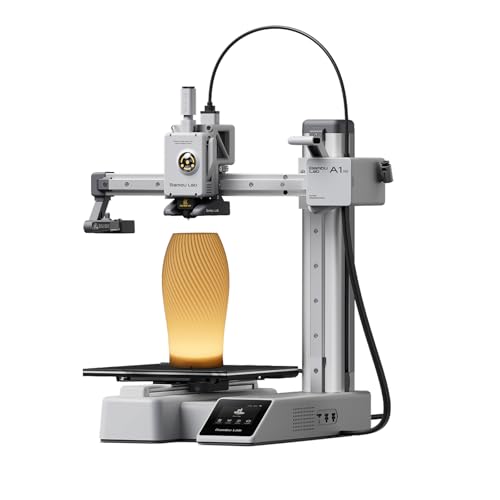
Best 3D Printer for Prop Making (2026): Build Volume Decides How Many Seams
A helmet does not fit on any hobby printer, so props get sliced into pieces, printed, and glued back together. Every seam is then filled, sanded and primed by hand, which is where the hours actually go. Build volume is not about printing bigger things in one piece, it is about how many seams you have to hide.

Best Beginner Digital Piano (2026): 3 Picks for Every Budget
If you want to actually learn piano, not just play with sounds, the keys matter more than anything else. You want 88 of them, and you want them weighted so your fingers build real technique that transfers to an acoustic. Here are three that do it right, from an affordable starter to a piano you can play for years.

Best Acoustic Guitar Strings for Beginners: Gauge, Coating, and Tone
Fresh strings transform how a guitar sounds and feels: and beginners often play far too long on old, dead ones. Light-gauge strings are easier on new fingers, and coated strings last longer. Here is what to put on your acoustic, how we chose, and what to expect.

Best Beginner Acoustic Guitar 2026: Yamaha FG800 vs Fender CD-60S vs Taylor GS Mini
The first acoustic guitar makes or breaks whether you stick with the instrument. Spend $80 and you'll quit in 6 months. Spend $230 and you'll be playing in 5 years. Here are the three acoustics worth buying as a beginner.

Best Beginner Electric Guitars: The Yamaha Pacifica and Its Rivals
A good beginner electric is easy to play, stays in tune, and is versatile enough for any style, and you do not need to spend much to get one. The Yamaha Pacifica is the runaway favourite. Here are three, how we chose them, and what to expect.

Best Beginner Guitar Amps: From Practice Amp to Modeling Powerhouse
An electric guitar needs an amp to make a sound, but the right beginner amp does far more than get loud. Modern modeling amps pack dozens of tones and effects into a small box. Here are three worth plugging into, how we chose them, and what to expect.