A complete guide to drawing with graphite — what to practise, which pencils matter, how to see like an artist, and how to actually improve.
Pencil drawing is the most accessible creative skill you can develop. A pencil, paper, and patience are genuinely all you need. The real challenge isn't materials or talent — it's learning to observe the world accurately enough to put what you see onto the page. This guide gives you a clear path to doing exactly that.
What Pencil Drawing Actually Is
Pencil drawing is the practice of making marks on paper with a graphite pencil to create images, studies, or compositions. It sits at the foundation of nearly every visual art form — painters sketch in pencil, illustrators rough ideas in pencil, architects draft in pencil. Learning to draw well with a pencil is learning the underlying language of visual art.
What makes it genuinely different from other creative hobbies is that improvement is almost entirely perceptual. You are not training a physical skill so much as training your eyes. The gap between what you draw and what you see exists because the brain substitutes symbols for observation — you draw what you think a hand looks like rather than what the hand in front of you actually looks like. Closing that gap is the core challenge, and it closes faster than most beginners expect.
The materials carry almost no barrier. A decent pencil set costs under $10. Paper is everywhere. There is no setup, no drying time, no cleanup. The only investment is time, and even 15 minutes a day compounds quickly into real skill.
Types of Drawing to Explore
[object Object],[object Object],[object Object],[object Object],[object Object]
Start with simple still life objects placed under a single lamp. One light source creates clear shadows and highlights that are easy to read and draw. Spend five minutes on gesture warmups beforehand, then give a single object your full attention for 20 to 30 minutes. This combination builds both looseness and precision from the very first session.
Materials You'll Need
The non-negotiables — you need these before your first session. No upsell here, just what actually matters to get started safely.


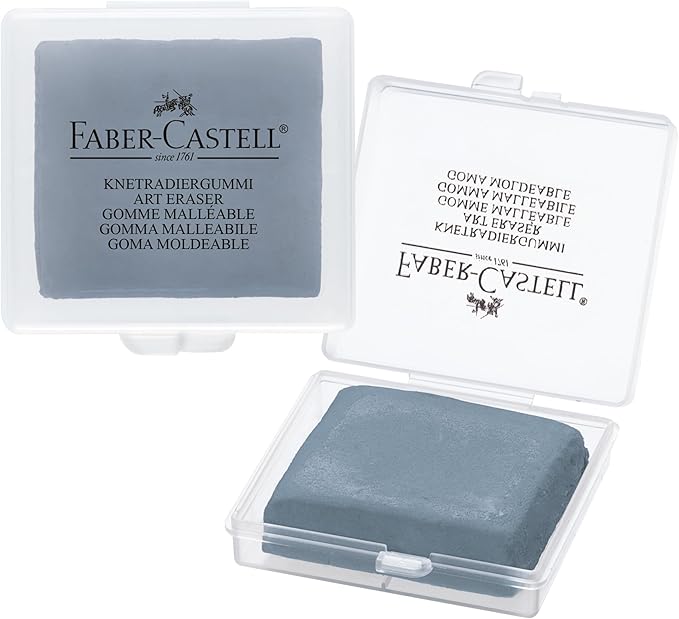

Worth it once you're committed. These items meaningfully improve your experience and are often bought within the first few months.


Interactive Buyer's Guide
Compare all tiers, track what you own, see your full budget.
How to Get Started Step by Step
Get a basic pencil range
HB, 2B, 4B, and 6B covers everything you need to learn. Working with a single grade limits what you can discover about tone and mark-making from the start.
Draw from a real object, not imagination
Put something in front of you and draw it. Drawing from imagination before you have observational skill embeds habits that take longer to undo than to avoid in the first place.
Learn to see shapes, not things
Break every subject into basic geometric forms first. A face is an oval with a cylindrical neck. Proportion becomes far easier when you stop drawing symbols and start drawing what you actually see.
Practise tonal gradients deliberately
Fill a strip of boxes going from white to black using only pressure and pencil grade. This trains tonal control faster than any amount of drawing finished subjects.
Sketch light, commit late
Start every drawing with faint marks and build up gradually. Trying to nail every line on the first stroke creates tight, stiff drawings and a lot of unnecessary erasing.
Keep everything you draw
Progress in drawing is too slow to see day to day. Comparing work from two months ago is one of the most motivating experiences available to a beginner and removes doubt about whether you are improving.
What to Expect in Your First Sessions
Here's what typically happens when you start — and why it's useful information, not failure.
Proportions will be off. Eyes drawn too large, heads too narrow, objects that look nothing like themselves. Proportion errors come from drawing symbols rather than observing closely. The fix is measuring with your pencil held at arm's length and comparing relationships rather than drawing from memory.
Lines will feel stiff or shaky. Controlled, confident line quality takes repetition. Drawing long strokes from the shoulder rather than the wrist produces smoother marks than slow, careful drawing. Loosening your grip and holding the pencil further back helps immediately.
Shading will look flat. Creating the illusion of three dimensions requires understanding where light originates and how it wraps around form. Studying a single sphere under a lamp before attempting complex subjects builds this understanding faster than anything else.
You'll erase far too much. Every mark feels permanent. The habit to build instead is sketching very lightly first, then committing to lines gradually as the drawing develops. Erasing becomes a tool for lifting highlights rather than correcting every uncertain line.
Something will click. At some point in your early sessions, one area of a drawing will look exactly right. A shadow falls convincingly, a line captures something true about the subject. That moment is why people get hooked on this hobby.
Beginner Tips That Actually Help
Hold the pencil further back than feels natural
Most beginners grip close to the tip the way they hold a pen for writing. Holding two thirds of the way up the pencil loosens the wrist, allows the arm to move more freely, and produces marks that feel alive rather than laboured. Reserve the writing grip for fine detail work only.
Squint at your subject before drawing it
Squinting reduces a subject to simplified areas of light and dark, stripping away distracting detail. It's one of the oldest techniques in drawing and one of the most reliably useful. Before starting a drawing and whenever you feel lost midway through, squint first to re-read the tonal structure of what you're looking at.
Draw the spaces around objects, not just the objects themselves
Negative space drawing means paying attention to the shapes of empty air between and around a subject rather than the subject itself. This bypasses the brain's tendency to draw what it thinks things look like. Beginners consistently find that drawing the negative shapes around a hand produces a more accurate hand than drawing the hand directly.
Use a kneaded eraser to lift tone, not just remove mistakes
A kneaded eraser can be shaped to a fine point and used to pull out highlights from a shaded area rather than erase a line. Using it this way as a drawing tool rather than a correction device produces subtler, more convincing tonal transitions and changes how you think about building a drawing.
Copy a drawing you admire
Copying the work of artists you admire is one of the most effective ways to accelerate learning. You're forced to understand exactly how they produced an effect rather than simply appreciating that it looks good. Artists worth studying for pencil and graphite work include John Singer Sargent for economy of mark, Alphonse Mucha for linework, and Leonardo da Vinci for tonal modelling and anatomical observation.
Fill sketchbooks rather than labouring over single drawings
Early drawings exist to teach you, not to be displayed. Volume of practice at this stage matters more than polish on any individual piece. A sketchbook filled with imperfect work represents genuine progress. A single careful drawing worked over for three hours represents considerably less of it.
Common Questions Answered
- Do you need natural talent to learn to draw?
No. Drawing is an observational and motor skill, not a gift. What looks like natural talent is almost always early exposure and accumulated practice. Adults who draw consistently for six months routinely produce work that surprises them. The primary requirement is showing up regularly, not innate ability.
- Should I learn with pencil or go straight to digital?
Pencil first. The fundamentals — proportion, perspective, tonal range, line quality — are identical across media. Pencil on paper gives you the most direct tactile feedback as you learn those fundamentals. Once you can draw reasonably well on paper, moving to a drawing tablet is straightforward. Learning digitally first is harder because the surface is counterintuitive and the tools add complexity before the basics are established.
- How long before you see real improvement?
Most people see meaningful improvement within 30 to 60 hours of focused practice, roughly two to three months of drawing for 30 minutes daily. Progress isn't linear. There are plateaus where nothing seems to change, followed by noticeable jumps. Keeping old work makes the jumps visible and is the most reliable antidote to the feeling that you're not getting anywhere.
- Is copying from photos considered cheating?
No. Drawing from photo reference is how the majority of working artists, illustrators, and animators operate. Photos freeze a subject in a way that lets you study it for as long as needed, which is genuinely useful when you're learning to observe accurately. The goal is to train your eye and hand, and reference photos help you do exactly that. It only becomes a limitation if you never draw from life at all.
- What subjects should a beginner start with?
Start with inanimate objects before attempting faces or figures. A mug, a shoe, a crumpled piece of cloth — these subjects require careful observation but are forgiving of proportion errors that would be immediately obvious in a portrait. Once you're comfortable drawing what you see in simple objects, hands are the next great challenge. Notoriously difficult, but enormously instructive for understanding form and foreshortening.
- Is pencil drawing a good hobby if you've never done any art before?
It's one of the best starting points precisely because you have no habits to undo. The materials cost almost nothing, the skill is learnable from scratch, it requires no dedicated space, and it transfers well to painting, illustration, and design if you want to go further. Starting with no background puts you in the same position as most people who eventually become genuinely good at it.