Best Arrows for Beginners (2026): 3 Real Picks
Arrows matter more than beginners expect: the wrong arrows fly badly no matter how good your form, and the single most important thing is not the brand but matching the arrow to your bow. Arrows have a 'spine' (stiffness) and a length that must suit your draw length and your bow's draw weight, or they'll wobble and scatter. Carbon is the right material for almost every beginner (durable and consistent), and you buy them by the dozen because you will lose and break some. Here are three good sets across the range, plus how to get the spine and length right.
HobbyStack may earn a commission from links on this page at no extra cost to you. Our picks are chosen on merit; the commission helps fund the research.
- Match spine and length to YOUR bow, first. The wrong stiffness or length flies badly regardless of brand, get this right before anything.
- Carbon is the beginner material. It's durable, consistent, and safer than old aluminum or wood for most bows.
- Buy by the dozen. You will lose and break arrows learning, so a 12-pack is the sensible unit.
- Cheap practice arrows are fine to start. Learn your form and draw length first, then buy tuned arrows.
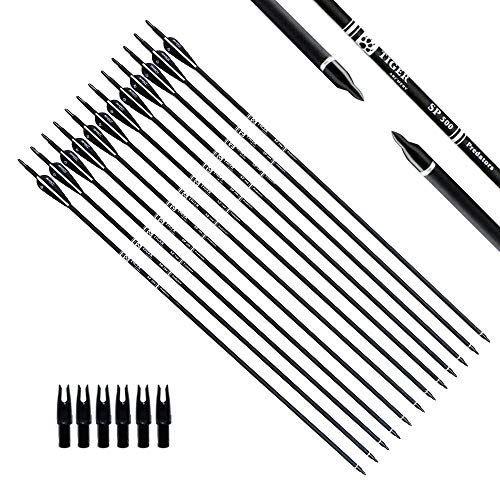 TIGER ARCHERY 30-inch Carbon Arrows (12-pack)Learning your form without wrecking pricey arrows$33Check price
 Our pickMusen Pure Carbon Arrows (30 inch, 12-pack)Better consistency once your form has settled$45Check price
 SAS Rage 30-inch Carbon Arrows (12-pack)Serious target shooting or moving toward hunting$50Check price
The thing nobody tells beginners is that an arrow has to be tuned to the archer, not just bought off a shelf. Two numbers matter. Spine is the arrow's stiffness, and it has to match your bow's draw weight and your draw length: too weak (whippy) or too stiff and the arrow flexes wrong as it leaves the bow, so it wobbles and scatters no matter how clean your release. Length matters too, an arrow must be long enough to sit safely on the rest at full draw (a too-short arrow can fall off and injure you), and it's cut to suit your specific draw length. That's why 'best arrows' always comes with a caveat: the right arrow is the one spined and cut for your setup, which a shop or a spine chart tells you from your draw weight and draw length. Carbon is the material to buy: it's durable, flies consistently, and doesn't dent like aluminum or splinter like wood, and it's what almost every modern beginner should shoot.
So choose by how far along you are, and get the spine right first. If you're brand new and still nailing down your form and draw length, an inexpensive carbon practice set lets you shoot a lot, lose a few, and learn without worrying about wrecking pricey arrows, which is exactly the right way to start. Once your form and draw length have settled, a quality pure-carbon set gives you better consistency (straighter arrows, tighter groups) that rewards the technique you've built. And if you're shooting seriously or moving toward hunting, a premium hunting-grade carbon set offers the straightness tolerance and durability those uses demand. Across all of them, buy the dozen, and confirm the spine and length suit your bow before you order, because the finest arrows in the world fly badly if they're wrong for your setup.
 Best budget start
TIGER ARCHERY 30-inch Carbon Arrows (12-pack)
The right arrows to learn on: cheap enough to lose a few, tough enough to shoot a lot. This TIGER ARCHERY dozen is durable carbon with replaceable screw-in field points and plastic vanes, built to take the misses, deflections, and target-butt abuse that come with learning. At 30 inches they suit a common range of draw lengths (confirm yours), and they work with recurve and compound bows in the typical beginner draw-weight range. For a new archer still dialing in form, release, and draw length, these let you shoot volume, which is how you improve, without flinching every time one skips off the target. The trade-offs are what you'd expect at the price: the straightness tolerance and consistency aren't at the level of a premium arrow, so groups tighten when you upgrade later. But for learning, that doesn't matter yet, and cheap, durable, replaceable-tip carbon is exactly what a beginner should start with.
What's good
- Cheap enough to lose and break while learning
- Durable carbon with replaceable screw-in tips
- Works with recurve and compound in beginner weights
- A full dozen to shoot volume
What's not
- Looser straightness tolerance than premium arrows
- Confirm 30-inch length suits your draw
 Best for most people
Musen Pure Carbon Arrows (30 inch, 12-pack)
The arrows to move to once your form and draw length have settled, because better arrows finally reward better technique. This Musen dozen is pure carbon with a tighter straightness tolerance than budget practice arrows, which means each arrow flies more like the last, so your groups tighten when you do your part. The difference is real once you've built a repeatable release: cheaper arrows scatter partly on their own inconsistency, while straighter arrows put the result back on your form, which is exactly what you want as you progress. They come as a dozen with quality vanes and nocks, sized at 30 inches (confirm it suits your draw), and work well with recurve bows in the common beginner-to-intermediate weight range. They cost a bit more than practice arrows and are still not a top-tier hunting shaft, but for most archers past the raw-beginner stage, the consistency is well worth it. For most people, this is the set to grow into.
What's good
- Straighter, more consistent than practice arrows
- Tighter groups reward improving form
- Quality vanes and nocks, a full dozen
- Good match for recurve in typical weights
What's not
- Costs more than budget practice arrows
- Still confirm spine and length fit your bow
 Best for serious shooting
SAS Rage 30-inch Carbon Arrows (12-pack)
The step up for archers shooting seriously, at higher draw weights, or moving toward hunting. The SAS Rage is a hunting-grade carbon arrow with a stiffer 350 spine (suited to higher-poundage bows, confirm it matches yours), better straightness and durability tolerances, and a build meant to hold up to broadhead-level use, not just paper targets. That spine and toughness matter as your draw weight climbs and as you shoot the kind of arrows that need to survive hard impacts and repeated use. For a committed target archer or someone transitioning toward bowhunting, it's a genuine quality step. The trade-offs: the 350 spine is too stiff for a light beginner bow (spine must match draw weight, so check before buying), and it's more arrow than a new archer on a low-poundage recurve needs. But if you're shooting a heavier bow or want a durable, consistent arrow for serious use, this delivers. Still learning on a light bow? The sets above are the right spine to start with.
What's good
- Hunting-grade durability and straightness
- Stiffer 350 spine for higher-poundage bows
- Holds up to hard, repeated use
- A dozen for serious target or hunting use
What's not
- 350 spine is too stiff for a light beginner bow
- More arrow than a new low-poundage archer needs
Arrow spine (stiffness) must match your bow's draw weight and your draw length, or the arrow flies badly, use a spine chart or ask a shop. Just as important for safety: an arrow must be long enough to stay on the rest at full draw. A too-short arrow can drop off the rest and drive into your bow hand when released, causing serious injury. If you're unsure of your draw length, get measured before you buy.
Before you buy
Get your draw length measured, then match arrow length and spine to your bow. This matters more than brand.
Buy carbon, and buy a dozen; you'll lose and break arrows while learning.
Never shoot an arrow that's too short to stay on the rest at full draw, it's a serious injury risk.
Start with cheap practice arrows; upgrade to consistent arrows once your form is repeatable.
Common questions
How do I know what arrows to buy for my bow?
Are carbon, aluminum, or wood arrows best for beginners?
How many arrows do I need to start?
Why do my arrows scatter even when my form feels good?
For most archers, the answer depends on where you are: start with cheap, durable carbon practice arrows like the TIGER ARCHERY dozen while you learn your form and draw length, then move to a straighter set like the Musen once your technique is repeatable and consistency starts to matter. The hunting-grade SAS Rage is for heavier bows and serious use. Above all, match the spine and length to your bow before you buy, because that matters more than any brand.
Ready to actually do it?
The first archery quest takes an evening, and it tells you whether the gear was worth it better than any review can.
Start ArcheryThe HobbyStack editorial team researches each guide against manufacturer specifications, published resources and practitioner sources. Every product is checked for availability and described against its current listing before publication, and prices are re-checked when guides are updated.
About our editorial process →More gear guides
All guides
Best Archery Finger Tab or Glove (2026): The Release Is the Shot
Everything you do before the release can be perfect and the arrow will still go wide if the string rolls off your fingertips rather than leaving cleanly. Finger protection is not mainly about comfort. It is about giving the string one consistent surface to leave from, every single time.

Best Beginner Recurve Bow 2026: Samick Sage vs PSE Razorback vs Bear Grizzly
Takedown recurves are the right beginner archery purchase: swappable limbs grow with your strength, the skills build fundamental archery technique, and the picks here have been the standard for years.

Best Golf Balls for Beginners: Soft, Straight, and Cheap to Lose
Beginners lose a lot of golf balls: so the best beginner ball is soft, straight, and inexpensive, not the $55-a-dozen tour ball the pros play. Here is what to put in your bag, how we chose, and what to expect.

Best Beginner Golf Club Sets: Complete Boxed Sets That Won’t Hold You Back
A complete boxed set is the smartest first golf purchase there is: every club you need, built to forgive the mishits beginners actually make, for far less than buying clubs one at a time. Here are the three sets worth your money, how we chose them, and what to expect.

Best Golf Bags for Beginners: Carry, Stand, and Cart
Your starter set probably came with a bag, but it’s often heavy and basic. If you walk the course, a lighter stand bag transforms the round. Here are three, how we chose them, and what to expect.

Best Golf Gloves for Beginners: Fit, Material, and Which Hand
A glove is the cheapest piece of golf gear that helps every single swing: better grip, fewer blisters. Worn on your lead hand only. Here are three worth pulling on, how we chose them, and what to expect.