
Best Beginner Camping Tent 2026: Coleman Sundome vs REI Wonderland vs Big Agnes Big House
The first tent makes or breaks whether you stick with camping. Buy a cheap pop-up and you'll quit by the second wet weekend. Buy a real tent for $100-450 and you'll camp for decades.
HobbyStack may earn a commission from links on this page at no extra cost to you. Our picks are chosen on merit; the commission helps fund the research.
- For car camping (drive to campsite, set up tent), get a 4-person tent even if you're 2 people. The extra space is for gear, dogs, and weather days when you're stuck inside.
- Our pick: the REI Co-op Wonderland 4 (~$449). Cabin-style standing height, real D-shaped doors, vastly better ventilation than budget tents. The tent serious car campers upgrade to and keep for decades.
- Tighter budget: the Coleman Sundome 4-Person (~$100). The default beginner tent across every outdoor publication. Sub-$150, sets up in 10 minutes, holds up to typical rain.
- Lifetime buy: the Big Agnes Big House 4 Deluxe (~$550). Premium materials, near-vertical walls (more usable interior space), high-end seam taping. Worth it if you camp every other weekend.
- Skip: 1-2 person backpacking tents for car camping (too cramped for weeklong trips); anything labeled 'instant pop-up' (rarely water-tight, tear easily); used tents from unknown sources (mold and UV damage are invisible).
Our pickREI Co-op Wonderland 4Most beginners$449Check price
 Coleman Sundome 4-Person TentTrying it cheap$82Check price
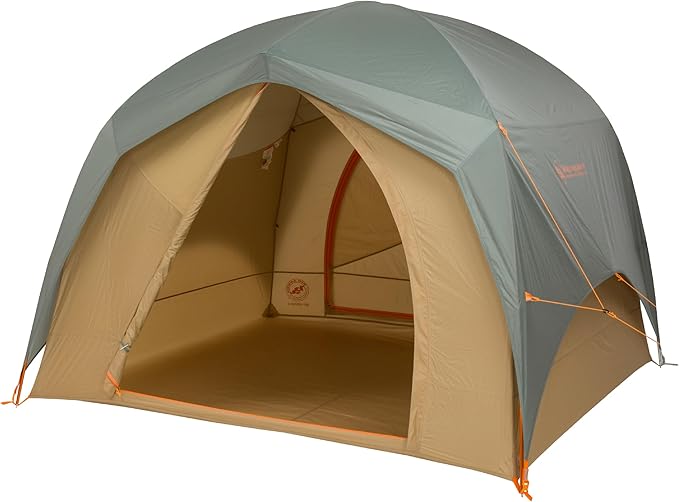 Big Agnes Big House 4 DeluxeGoing deep$484Check price
Why size up for car camping
The single most common beginner tent mistake: buying a "2-person" tent because you're 2 people.
Backpacking tents are sized tight — you carry the weight every mile, so you want minimum volume. Manufacturers rate them by how many adults can barely fit shoulder-to-shoulder with no gear. For backpacking, that's fine. For car camping, it's miserable.
For car camping you want at least N+2 capacity, where N is your group size. Two people in a 4-person tent get to sleep with their bags inside, change clothes standing up, sit through a rainstorm playing cards, bring the dog. Two people in a 2-person tent are doing none of those things.
Weight is irrelevant for car camping. The tent rides in the trunk; you carry it 20 feet from the parking spot to the campsite. Buy big.
Other things that matter for car camping but rarely get discussed in marketing:
- Standing height inside. Cabin-style tents (vertical walls) let you stand up; dome tents only let you stand in the very center. Standing height = changing clothes without crawling.
- Real doors. D-shaped doors are easier to step through than the round zippered openings on cheap tents. Two doors (one each side) means the person on the back doesn't crawl over the person on the front to pee at night.
- Vestibules. Covered outside space at the entrance for muddy boots, wet gear, dog. Most premium tents include vestibules; budget tents don't.
- Real seam taping. All cheap tents claim "waterproof." The actual test is whether the seams (where the tent fabric is sewn together) are sealed. Coleman seam-tapes; REI factory seam-tapes; Big Agnes uses premium tape. Off-brand tents often don't seam-tape at all — they leak at every seam.
The result of cheaping out: you sleep in a damp tent in rain, hate camping, blame the hobby. The fix is to spend $100-450 on a real tent.
REI Co-op Wonderland 4
The REI Co-op Wonderland 4 is the consensus mid-range car-camping tent across REI's own buying guides, OutdoorGearLab, and CleverHiker. The cabin-style design with near-vertical walls gives you usable standing room across most of the interior — not just a cone in the center. Two real D-shaped doors with awning-style covers, two vestibules, and full mesh ceiling panels for ventilation (essential — budget tents trap condensation that drips on your sleeping bag). The tent feels like a small room, not a closet. REI's quality control is among the best in the consumer outdoor market, and the tent lasts 10+ years of regular car-camping use.
What's good
- Cabin-style design with standing height across most of the interior
- Two real D-shaped doors with vestibules for muddy boots and gear
- Excellent mesh ventilation prevents condensation buildup
- REI's QC is the best in consumer outdoor tents
- REI's no-questions-asked return policy (1-year guarantee)
What's not
- $449 is real money — overkill if you'll only camp twice a year
- Heavier than budget tents (~22 lbs) — fine for car camping, impossible for backpacking
- Cabin design catches more wind than low-profile dome tents
 Best under $150
Coleman Sundome 4-Person Tent
The Coleman Sundome 4-Person is the default beginner car-camping tent across every outdoor publication. Sub-$100, sets up solo in 10 minutes, and the WeatherTec™ tub floor and inverted seams genuinely keep water out in moderate rain. The included rain fly covers the top mesh panels. It's a real tent — not a toy, not an instant pop-up, not a knock-off. The compromises are real but manageable: dome shape means standing room only in the center, single door, mediocre ventilation, lighter fabric than premium tents (5-7 year lifespan with regular use vs 10+ for premium). For someone testing whether camping sticks as a hobby, this is the right entry point.
What's good
- Sub-$100 real working tent — not a toy or pop-up
- WeatherTec™ tub floor and welded seams genuinely keep water out
- Sets up solo in 10 minutes with practice
- Coleman's customer service responds and replacement parts are available
- Compact when packed — fits in any trunk
What's not
- Dome shape means standing room only in the center
- Single door — back-row sleeper crawls over front-row to exit
- Mediocre ventilation — condensation builds on humid nights
- 5-7 year lifespan with regular use (vs 10+ for premium)
 Lifetime tent
Big Agnes Big House 4 Deluxe
The Big Agnes Big House 4 Deluxe is the premium pick for someone who camps regularly and wants the tent that lasts forever. Near-vertical walls maximize usable interior space; the materials are premium (heavier nylon, premium aluminum poles, real fabric durable water repellent treatment); seam taping is the highest grade in consumer tents. Big Agnes is the premium outdoor-tent brand — what wilderness outfitters and serious car campers buy. 10-15 year lifespan with care. Worth $550 if you'll camp every other weekend; absolute overkill for the occasional weekend trip.
What's good
- Near-vertical walls = maximum usable interior space
- Premium materials (heavier fabric, premium aluminum poles, premium seam taping)
- 10-15 year lifespan with care
- Big Agnes brand and warranty — premium tier outdoor manufacturer
- Holds value extremely well in the used market (~$300-400 used)
What's not
- $550 is real money for a tent you'll use 8-20 nights a year
- Heavier (~25 lbs) than the REI Wonderland
- Premium price point only justified by frequent use
REI's 1-year satisfaction guarantee is functionally a 1-year free trial on any tent. Set it up at home, use it on 3-4 camping trips, decide whether you actually like camping. If not, return for a full refund. REI takes returns no questions asked. This makes the REI Wonderland 4 a particularly safe purchase for someone unsure they'll commit to the hobby.
How to choose between the three
Pick the REI Wonderland 4 if you'll camp 4+ times per year. The cabin design and ventilation make full-week trips livable. The single best tent value for committed car campers.
Pick the Coleman Sundome if you're testing whether camping sticks. Real tent, real seams, sub-$100. Use it for 1-2 years and upgrade if you fall in love with the hobby.
Pick the Big Agnes Big House 4 if you camp every other weekend and you want the tent that lasts 15 years. Premium build, near-vertical walls, the tent serious outdoor enthusiasts keep.
What's the same across all three: 4-person rating (right size for car camping pairs/threes), 3-season rating (handles spring through fall in most US climates), real waterproof construction. The differences that matter: interior usable volume (Big Agnes > REI > Coleman), ventilation (REI > Big Agnes > Coleman), lifespan (Big Agnes > REI > Coleman), and weight (Coleman > REI > Big Agnes).
Whichever you pick: practice setup at home the day you receive it. The first setup in a campground with darkness falling and rain starting is the wrong time to read the instructions. 15 minutes in your backyard saves hours of frustration on your first trip.
Before you buy
Pitch it in your backyard first. Practice setup, identify any missing parts or quality issues, and return immediately if something's wrong. Don't discover problems at the campsite.
Buy a footprint or tarp. A ground cloth (footprint specific to your tent ~$60, or a generic tarp ~$15) protects the tent floor from punctures and abrasion. Doubles the tent's lifespan.
Get tent stakes that aren't included. The stakes that come with most tents are bent aluminum wire that won't survive 5 uses. Real MSR Groundhog stakes ($25 for 8) hold the tent down in actual wind and rain.
Buy a tent repair kit. Tenacious Tape and Coghlan's tent pole repair kit ($15-20 each) handle the common in-field failures. Throw them in your camping bin.
Used REI Wonderlands sell on Facebook Marketplace for $200-280. Worth a 2-week search. Real REI tents last 10+ years even with regular use, so used ones are often as good as new.
Common questions about beginner camping tents
Why 4-person if there's only 2 of us?
Coleman vs REI vs Big Agnes — which brand?
Should I get a tarp / footprint?
How long does a tent last?
What about waterproofness ratings (1500mm, 3000mm)?
Can I use this for backpacking?
For most people, the REI Co-op Wonderland 4 is the buy — the best balance of price, quality, and longevity. Want to spend less? The Coleman Sundome 4-Person Tent gets you started for a fraction of the cost. Ready to go deeper? The Big Agnes Big House 4 Deluxe is the upgrade.
Ready to actually do it?
The first camping quest takes an evening, and it tells you whether the gear was worth it better than any review can.
Start CampingThe HobbyStack editorial team researches each guide against manufacturer specifications, published resources and practitioner sources. Every product is checked for availability and described against its current listing before publication, and prices are re-checked when guides are updated.
About our editorial process →More gear guides
All guides
Best Headlamp for Camping (2026): The Lumen Number Is the First 30 Seconds
The lumen figure on a headlamp box is measured at the moment you switch it on with a fresh battery. Most lamps cannot hold it, and many are down to a third of it within the hour. What you actually care about is how bright it still is at 11pm when you are looking for the tent, which is a number almost nobody prints.

Best Sleeping Pad for Beginners (2026): R-Value Is the Number That Matters
People buy a warm sleeping bag, sleep badly, and blame the bag. Almost always it was the pad. You compress the insulation underneath you to nothing, so the only thing between your body and the ground is the pad, and cold ground pulls heat out of you far faster than cold air. The number that describes this is R-value, and it is the one specification worth understanding before you spend anything.

Best Air Compressor for Overlanding (2026): Airing Down Is Free, Airing Up Is Not
Dropping tyre pressure is the single most effective thing you can do off road and it costs nothing. Putting the air back before you rejoin a highway is the part that needs equipment, and it is where the cheap compressors fail — not dramatically, but by taking forty minutes per tyre and overheating halfway through.

Best Recovery Traction Boards (2026): Low Revs, and Never Stand Behind One
A traction board only works if the tyre bites it rather than polishing it. Spin a wheel on a nylon board and you melt the lugs flat in seconds, which is the single most common way people destroy a set on their first recovery. Low revs, and let the tyre walk up onto the board.

Best Beginner Hiking Backpack 2026: Osprey Daylite vs Talon vs Atmos
The right hiking backpack depends on one number: how long you plan to be out. Day hike → 20–30L. Overnight → 33–45L. Multi-day → 50–65L. Get the volume wrong and you're either cramming gear into too little space or hauling empty weight all day. Here are three Osprey packs, each sized for a different stage of hiking, that will outlast your beginner phase.

Best Beginner Hiking Boots 2026: Merrell Moab 3 vs Salomon X Ultra 4
Your first hiking boots need to do three things: not blister you, stay dry on wet trails, and grip technical terrain. The Merrell Moab 3 Waterproof checks all three for around $130. Here are three real boots: a non-waterproof breathable option, the waterproof all-rounder, and a stiffer upgrade for rocky terrain, each with a confirmed Amazon link.