Best Beginner Weaving Loom (2026): 3 Rigid-Heddle Looms to Start On
For learning to weave, the loom to start on is a rigid-heddle loom. It is simple, affordable, and quick to set up compared to a big floor loom, and you can weave real scarves, towels, and cloth on it within a day. The main choices are size, brand, and whether it folds. All three picks here are proper rigid-heddle looms from the two names weavers trust, from a complete starter kit to a folding loom you grow into.
HobbyStack may earn a commission from links on this page at no extra cost to you. Our picks are chosen on merit; the commission helps fund the research.
- Start on a rigid-heddle loom. It is the simplest, most affordable loom, quick to warp and weave, and you can make real cloth on it within a day, unlike a big, expensive floor loom.
- Loom width sets your project width. A 15 to 16 inch loom handles scarves, runners, and towels, which covers most beginner projects. Go wider only if you know you want blankets and shawls.
- Buy a real loom, not a toy frame. The children's potholder-style frames will not teach you real weaving. A proper rigid-heddle loom from Schacht or Ashford is the honest starting point.
- Check what is included. A good starter loom comes with a reed, shuttles, a threading hook, and a warping peg, so you can start weaving without hunting for extras.
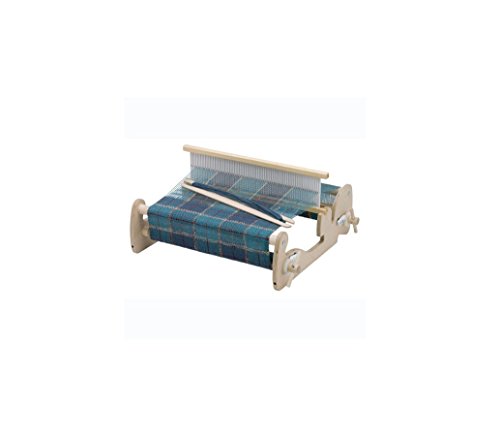 Schacht Cricket 15-Inch Rigid-Heddle LoomA complete starter kit to weave today$298Check price
 Our pickAshford 16-Inch Rigid-Heddle LoomThe versatile loom to settle on$315Check price
 Schacht Flip 25-Inch Folding Rigid-Heddle LoomA wider, folding loom to grow into$448Check price
Weaving looms come in many types, but for a beginner the answer is a rigid-heddle loom, and it is not close. It is a compact, affordable frame with a single heddle, the comb-like part that both spaces your warp threads and lifts alternate threads to make the sheds you weave through. It is quick to set up, easy to understand, and light enough to weave on your lap or a table, yet it makes real cloth: scarves, towels, runners, and shawls. A big multi-shaft floor loom does more, but it costs many times as much, takes up a room, and is far more to learn, none of which a beginner needs. The main spec that matters is weaving width, which sets how wide your projects can be. A 15 to 16 inch loom is the sweet spot for beginners, wide enough for scarves, runners, and towels; you only need a wider loom if you specifically want blankets or full-width shawls.
After width, look at what comes in the box and whether the loom folds. The best beginner looms are sold as kits that include the reed, a couple of shuttles to carry your weft yarn, a threading hook, and a warping peg to measure out your warp, so you can start weaving immediately rather than piecing together accessories. Some looms also fold in half with the work still on them, which is lovely if you are short on space or want to take your weaving to a class. From there, choose on how much you will weave: a complete starter kit gets you going for the least, a standard loom gives you more width and room to grow, and a folding loom adds portability and a wider weaving area for when you are hooked. A rigid-heddle loom holds its value, and many weavers keep theirs for life even after adding bigger looms.
 Best budget loom
Schacht Cricket 15-Inch Rigid-Heddle Loom
The most complete way to start weaving on day one. The Schacht Cricket is a beloved 15-inch rigid-heddle loom that comes as a full kit, an 8-dent reed, a threading hook, a warping peg, table clamps, two shuttles, and even two balls of yarn, so you can warp it and weave your first scarf without buying a single extra. Schacht is one of the two names weavers trust, and the Cricket is compact, light, and genuinely easy to learn on. Fifteen inches is plenty of width for scarves, runners, and towels, which covers most beginner projects. It does not fold and it is a starter width rather than a do-everything loom, but as an affordable, complete, high-quality first loom, it is the one most people should start with.
What's good
- Complete kit, includes yarn to weave immediately
- From Schacht, a trusted weaving brand
- Compact and genuinely easy to learn on
- 15 inches suits most beginner projects
What's not
- Does not fold for storage or travel
- Starter width, not for full blankets
 Best for most weavers
Ashford 16-Inch Rigid-Heddle Loom
The loom most weavers happily settle on. The Ashford Rigid Heddle Loom is the standard 16-inch model from the other great weaving brand, and it hits the sweet spot of price, width, and room to grow. It is quick and easy to warp and weave, light and portable, and it sits within Ashford's big ecosystem of reeds, stands, and accessories, so as your skills grow you can add finer or coarser reeds, a second heddle for more complex weaves, or a stand, without changing looms. Sixteen inches handles scarves, runners, and towels comfortably. It comes as the loom with a reed rather than a yarn-included kit, so you buy your own yarn, but for a versatile loom you will not outgrow quickly, it is the natural pick.
What's good
- Versatile 16-inch width for most projects
- Part of Ashford's big system of reeds and add-ons
- Quick to warp, light, and portable
- Room to grow into more complex weaves
What's not
- Loom and reed only, no yarn included
- Does not fold like the premium pick
 Best to grow into
Schacht Flip 25-Inch Folding Rigid-Heddle Loom
The loom for someone who wants more width and a loom that packs away. The Schacht Flip is a 25-inch rigid-heddle loom whose party trick is folding in half with your project still warped on it, so you can tuck it under a bed, carry it to a class, or set it aside between sessions without unwinding your work. The extra width lets you weave wider shawls, wraps, and small blankets that a 15 or 16 inch loom cannot, and it keeps the comfortable, sturdy, easy-to-warp feel Schacht is known for. It is the priciest here and more loom than a first-timer strictly needs, but if you already suspect you will love weaving and want a loom that grows with you and stores easily, the Flip is the one to buy once.
What's good
- Folds in half with the weaving still on it
- Wider 25 inches for shawls and small blankets
- Sturdy and comfortable, easy to warp
- A grow-into loom you keep for years
What's not
- The priciest of the three
- More loom than a total beginner needs
The loom is the main buy, but a couple of things complete your setup. You need weaving yarn: a smooth worsted-weight wool or cotton is forgiving to learn on, and the Cricket kit even includes some to start. Many weavers add a stand so the loom sits at a comfortable angle and frees both hands, though you can clamp any of these to a table to begin. And you may eventually want a second reed in a different dent, the reed's thread spacing, to weave finer or chunkier yarns. None of this is urgent: with the loom, a reed, a shuttle, and some yarn, you can weave your first scarf this weekend.
Which to buy: want everything you need, including yarn, to weave today for the least? The Schacht Cricket. Want a versatile standard loom with room to grow that you will not outgrow? The Ashford Rigid Heddle. Want a wider loom that folds away with your work still on it? The Schacht Flip.
Before you buy
Start with a smooth worsted-weight wool or cotton yarn, which is forgiving while you learn to warp and weave.
Fifteen to sixteen inches is the right first width. Do not buy wider than you need, since it is more to warp and heavier to handle.
Consider a stand once you are hooked, so the loom sits at a comfortable angle and frees both hands.
Watch a couple of warping videos before your first project. Warping is the fiddly part, and seeing it done makes it click.
Search results mix real rigid-heddle looms in with children's frame and potholder looms that cost around 20 dollars, and it is worth knowing the difference. The toy frames are fine for kids making coasters, but they have no heddle, so they cannot create a proper shed or teach you real weaving, and you will outgrow them in an afternoon. A genuine rigid-heddle loom from Schacht or Ashford costs more because it is a real instrument you can weave real cloth on for years. If you actually want to learn to weave, start with one of these rather than a frame.
Beginner weaving loom questions
What kind of loom should a beginner get?
What size loom do I need?
Which weaving loom should a beginner buy?
What else do I need besides the loom?
What is a rigid heddle?
Can I weave real things or just samples?
For most weavers the Ashford 16-inch Rigid Heddle is the pick: a versatile standard loom, quick to warp, with a big system of reeds and add-ons you can grow into. Want everything you need, including yarn, to weave your first scarf today for the least? The Schacht Cricket is the complete starter kit. Want a wider loom that folds away with your project still on it? The Schacht Flip is the one to grow into. All three are real looms from the brands weavers trust, so skip the toy frames and start on one of these.
Ready to actually do it?
The first weaving quest takes an evening, and it tells you whether the gear was worth it better than any review can.
Start WeavingThe HobbyStack editorial team researches each guide against manufacturer specifications, published resources and practitioner sources. Every product is checked for availability and described against its current listing before publication, and prices are re-checked when guides are updated.
About our editorial process →More gear guides
All guides
Best Beginner Sewing Machine 2026: Brother vs Janome vs Singer
The first sewing machine is the difference between sewing as a satisfying hobby and sewing as the thing you tried for a month. Here's how to pick a beginner machine that actually works, plus the brands and models to skip.

Best Fabric Marking Tools (2026): Marks That Come Out Again
Every marking tool is a trade between two failure modes: a mark that disappears before you have sewn it, and a mark that will not come out afterwards. There is no tool that avoids both on every fabric, which is why experienced sewers own several and always test on a scrap first. The one that ruins a garment is usually the one nobody tested.

Best Fabric Shears for Beginners (2026): 3 Real Picks
There is one rule that matters more than which shears you buy: they never touch paper. Paper dulls a fabric blade fast, and a dull blade stops cutting cloth and starts pushing it, so your line wanders and the edge frays. That single habit separates shears that stay sharp for years from a pair that feels cheap within a month, and it is why sewers guard their fabric scissors and label them. Beyond that, the choices are simple: length, weight, and whether the handle suits your hand. Here are three good pairs and who each is actually for.

Best Seam Ripper (2026): The Tool That Saves the Garment
Unpicking is not a sign of failure; it is most of sewing. Every fitted garment involves stitching something, trying it, and taking it apart again, and the tool that does that badly will put a hole in fabric you have already cut and cannot replace. A seam ripper is two pounds of insurance on a project worth considerably more.

Best Sewing Machine Needles (2026): The Cheapest Fix for Bad Stitching
Skipped stitches, puckering, snapping thread and a machine that suddenly sounds wrong are almost always the needle, and almost never the machine. Needles are consumable — they blunt, bend a fraction and develop burrs long before they look damaged — and most people sewing badly are sewing with a needle that should have been binned months ago.

Best Thread Snips (2026): The Scissors You Keep Beside the Machine
Trimming a thread with dressmaking shears means picking up something heavy, opening it wide, and getting a blade near fabric you have just spent an hour sewing. Small scissors live beside the machine, open barely at all, and cut the thread where it leaves the seam. It is a tiny tool that changes the rhythm of sewing more than its price suggests.