Best Ping Pong Paddle for Beginners (2026): 3 Real Rackets to Improve With
If you have only ever played with the hard, pimpled paddles from a rec-room drawer, a real ping pong paddle is a revelation: the grippy rubber lets you put spin on the ball and actually control where it goes, which is how the game is meant to feel. For a beginner who wants to improve, the sweet spot is a pre-made paddle with decent controllable rubber, not a cheap toy and not a pricey custom setup. Here are three, from the control-first paddle coaches most often recommend to a faster carbon blade to grow into.
HobbyStack may earn a commission from links on this page at no extra cost to you. Our picks are chosen on merit; the commission helps fund the research.
- Skip the hard, pimpled rec-room paddles. A real paddle has grippy inverted rubber that lets you spin and control the ball, which is the whole point and how you actually improve.
- For learning, control beats speed. A beginner paddle should be controllable, not the fastest; too much speed makes the ball fly off and hides your mistakes.
- Look for ITTF approved rubber. It means the rubber meets the standard used in real matches, so what you learn transfers. All three picks here are approved.
- A pre-made paddle is right for beginners. Custom blade-and-rubber setups are great later, but a good pre-made bat is cheaper, simpler, and plenty to learn on.
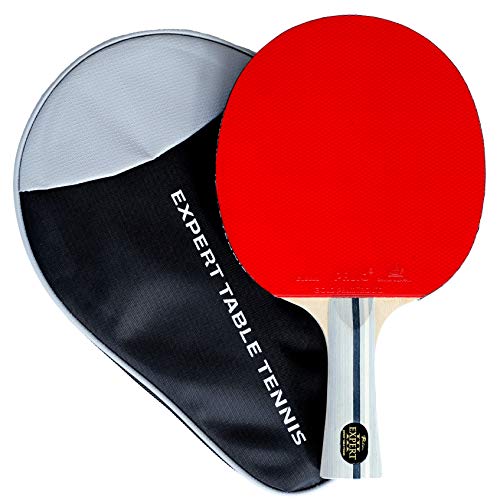 Palio Expert 3.0 Table Tennis RacketThe classic first paddle for learning$40Check price
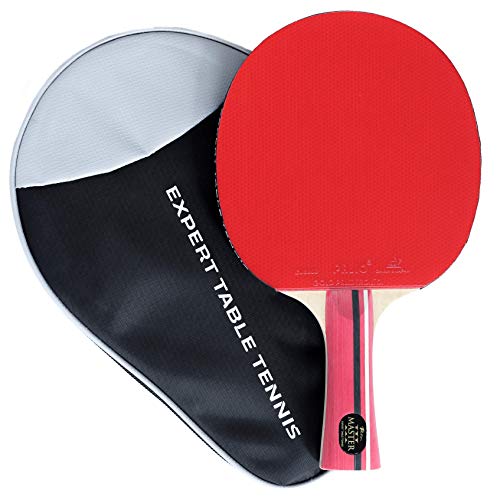 Our pickPalio Master 3.0 Table Tennis RacketA little more speed as you improve$50Check price
 STIGA Pro Carbon Table Tennis RacketSpeed and a big sweet spot to grow into$70Check price
The single biggest upgrade from a toy paddle is the rubber. Cheap paddles have thin, hard, or pimpled surfaces that cannot grip the ball, so you can only really push it back; a proper paddle has a layer of grippy inverted rubber over a sponge, and that grip is what lets you brush the ball to create spin, control its direction, and play the shots that make table tennis fun. The other thing to understand is the trade-off between control and speed. Faster paddles, with thicker sponge and carbon blades, send the ball back harder, which sounds good but actually makes it harder to keep the ball on the table and lets you get away with sloppy technique. A more controllable paddle keeps the ball where you aim it, so you learn proper strokes and spin, which is exactly what a beginner wants. You can always graduate to more speed later.
You will see two kinds of paddle for sale: pre-made bats, where the rubber is already glued to the blade, and custom setups, where you buy a bare blade and choose your own rubbers. Custom is what serious players eventually do, but for a beginner it is more money, more decisions, and no real benefit; a good pre-made paddle from a proper brand plays beautifully and is the right call to learn on. From there, choose on how much control versus speed you want. If you are truly starting out, a control-focused paddle helps you learn fastest. As your strokes get reliable and you want more attacking power, a slightly faster all-round paddle suits, and a carbon blade adds speed and a bigger sweet spot for when you start hitting harder.
 Best budget paddle
Palio Expert 3.0 Table Tennis Racket
The paddle coaches most often point beginners to, and the value pick here. The Palio Expert 3.0 pairs an all-wood blade with ITTF-approved Palio CJ8000 rubbers tuned for control rather than raw speed, which is exactly what you want when you are learning: the ball stays where you aim it, so you develop proper strokes and get a feel for spin instead of wildly slapping the ball off the end of the table. It comes with a protective case and thicker edge tape to make the rubbers last. It is not the fastest paddle, which is the point, and keen players will eventually want more attacking speed. But as an affordable, genuinely good first paddle that teaches good habits, it is hard to beat.
What's good
- Control-focused, ideal for learning proper strokes
- ITTF-approved rubber, so skills transfer to real play
- Comes with a protective case and durable edge tape
- Excellent value, the classic beginner recommendation
What's not
- Not built for fast attacking play
- Keen players will want more speed as they improve
 Best for most beginners
Palio Master 3.0 Table Tennis Racket
The paddle for a beginner who wants a little room to grow. The Palio Master 3.0 sits a step above the Expert: it keeps ITTF-approved Palio rubber and a comfortable all-wood blade, but the setup is a touch faster and more all-round, so it rewards you with a bit more speed and spin as your strokes become reliable, without becoming twitchy or hard to control. It is still very much a learning paddle, just one you are less likely to outgrow in a season. It comes with a case and the same durable edge tape. If you know you will stick with table tennis and want one paddle that suits your first year or two rather than your first month, this is the balanced choice.
What's good
- A bit more speed and spin than the Expert
- Still controllable and beginner-friendly
- ITTF-approved rubber and a comfortable all-wood blade
- Less likely to outgrow if you keep playing
What's not
- Slightly less forgiving than the control-first Expert
- Costs a little more
 Best to grow into
STIGA Pro Carbon Table Tennis Racket
The paddle for someone who wants to grow into an attacking game. The STIGA Pro Carbon uses a carbon-layered blade that adds speed and stiffness along with a larger, more forgiving sweet spot, and it pairs it with fast ITTF-approved inverted rubber built for spin. It is a genuinely quick paddle, popular with improving players who want to start hitting the ball hard and putting heavy spin on it. The flip side is that all that speed is less forgiving for a total beginner, so the ball leaves the paddle faster and punishes loose technique more than the Palio picks do. If you already have some rec-room experience or you are the type who would rather grow into a paddle than out of one, this is the fast, satisfying step up.
What's good
- Carbon blade adds speed and a big sweet spot
- Fast ITTF-approved rubber with plenty of spin
- Great for growing into an attacking game
- A popular, satisfying step-up paddle
What's not
- The speed is less forgiving for a total beginner
- The priciest of the three
It is tempting to buy the fastest paddle you can, but for a true beginner that is backwards. A very fast paddle sends the ball flying with the smallest touch, so it is harder to keep rallies going and it hides the technique flaws you are trying to fix. A more controllable paddle keeps the ball where you aim it, which lets you actually learn to loop, push, and spin. As those strokes become second nature, a faster paddle starts to make sense, but there is no rush: plenty of strong players still use controllable setups.
Which to buy: brand new and want the cheapest paddle that teaches good habits? The Palio Expert 3.0. Planning to stick with it and want a bit more room to grow? The Palio Master 3.0. Already have some experience, or want to grow into a fast attacking game? The STIGA Pro Carbon.
Before you buy
Store the paddle in a case, away from heat and sun. The rubber dries out and loses grip if it is left exposed.
Clean the rubber now and then with a little water and a sponge. Clean rubber grips the ball far better and lasts longer.
Buy a few 3-star balls to go with it. Cheap balls are inconsistent and wobble, which makes it harder to judge your shots.
Do not chase the fastest paddle as a beginner. Control helps you learn faster, and you can always upgrade later.
The four-paddle bundles sold for a rec-room set are fine for the occasional party game, but they are a poor way to actually learn. The rubber is hard and thin with almost no grip, so you cannot create or read spin, and every player who gets more serious quickly outgrows them. You do not need to spend much to fix this: a single proper paddle like the Palio Expert costs about the same as one of those bundles and completely changes how the game feels and how fast you improve.
Beginner ping pong paddle questions
Why is a real paddle better than a rec-room one?
Should a beginner get a fast paddle or a slow one?
Which paddle should a beginner buy?
What does ITTF approved mean?
Should I buy a pre-made paddle or a custom setup?
How do I make a paddle last?
For a true beginner, the Palio Expert 3.0 is the pick: control-focused, ITTF approved, and cheap enough to be a no-brainer, and it teaches the good habits that make you improve. If you know you will stick with it and want a bit more room to grow, the Palio Master 3.0 adds some speed and spin while staying friendly. If you already have some experience or want to grow into a fast attacking game, the STIGA Pro Carbon is the carbon-bladed step up. Whatever you pick, get a real single paddle rather than a rec-room multipack, and a few 3-star balls to go with it.
Ready to actually do it?
The first table tennis quest takes an evening, and it tells you whether the gear was worth it better than any review can.
Start Table TennisThe HobbyStack editorial team researches each guide against manufacturer specifications, published resources and practitioner sources. Every product is checked for availability and described against its current listing before publication, and prices are re-checked when guides are updated.
About our editorial process →More gear guides
All guides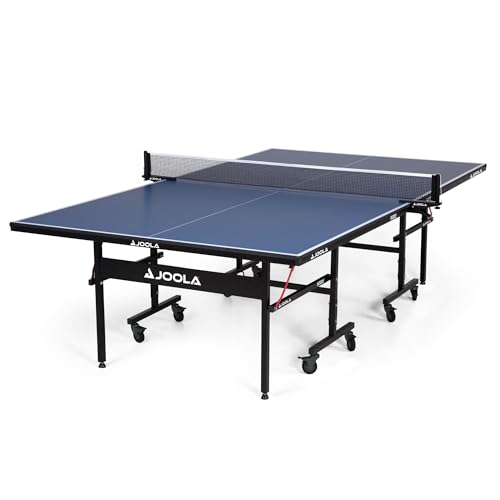
Best Ping Pong Table for Beginners (2026): From Conversion Top to Tournament
A ping pong table is a big purchase, and the first real question is not which brand but how much table you actually need and have room for. If you already have a dining or pool table, a conversion top gets you playing for a little over a hundred dollars. If you want a proper folding table you can roll away, that is the sweet spot most people should buy. And if you want tournament-grade bounce, a thicker top is the upgrade. All three picks here are from JOOLA, an Olympic table tennis brand, and they climb from topper to tournament.

Best Beginner Pool Cue (2026): 3 Two-Piece Cues for Every Budget
Owning your own cue is the single biggest upgrade to your game, because house cues are usually warped, mismatched, and worn out. A good beginner cue is a straight two-piece maple stick around 19 ounces with a 13mm tip, which is the standard setup that suits almost everyone. Here are three that fit the bill, from a solid entry cue to a premium American-made stick.
Best Beginner Bowling Ball (2026): 3 First-Ball Picks
Your first bowling ball comes down to one simple choice: do you want it to go straight and predictable, or start to hook? All three here are real starter balls, and the honest truth is that a plain plastic ball that rolls straight is the best first pick for a lot of people, because it is cheap, forgiving, and doubles as a spare ball forever. The real ladder is how much the ball hooks and how far you plan to take the game: a straight plastic ball to learn on, an entry reactive ball that hooks a little for your first league, or a versatile reactive ball you grow into. One thing matters more than which ball you buy, though, and that is getting it drilled to fit your hand at a pro shop. Here are three good first balls, and how to choose.

Best Bowling Shoes (2026): One Shoe Slides, the Other Stops
Rental shoes have slide soles on both feet, which is why they are handed out to everyone and why they never feel right. A proper bowling shoe is asymmetric: one foot slides through the release, the other grips to push off and stop. Which foot does which depends on the hand you bowl with, and buying the wrong version means a shoe that fights every approach.

Best Karate Gi for Beginners (2026): 3 Picks by Weight and Feel
Your first karate gi (the white uniform) really comes down to one number: fabric weight, measured in ounces. A lightweight gi is cheap, cool, and perfect for learning, while a heavier gi feels more substantial and makes that satisfying 'snap' when you punch, but costs more and runs hot. Beginners almost always want a light gi to start, and most dojos are happy with a plain white one. The other thing to get right is sizing, since gis shrink, and buying the right belt colour (usually just a white belt to begin). Here are three good ones, from an affordable student gi to a premium heavyweight you grow into.

Best Beginner Pickleball Paddle (2026): 3 Picks for Every Budget
The paddle is the one piece of gear that actually changes how you play, and the wall of look-alike options hides a few real differences that matter on day one. Here are three we'd hand a new player: a no-regrets budget pick, an all-around upgrade, and a control paddle worth growing into.