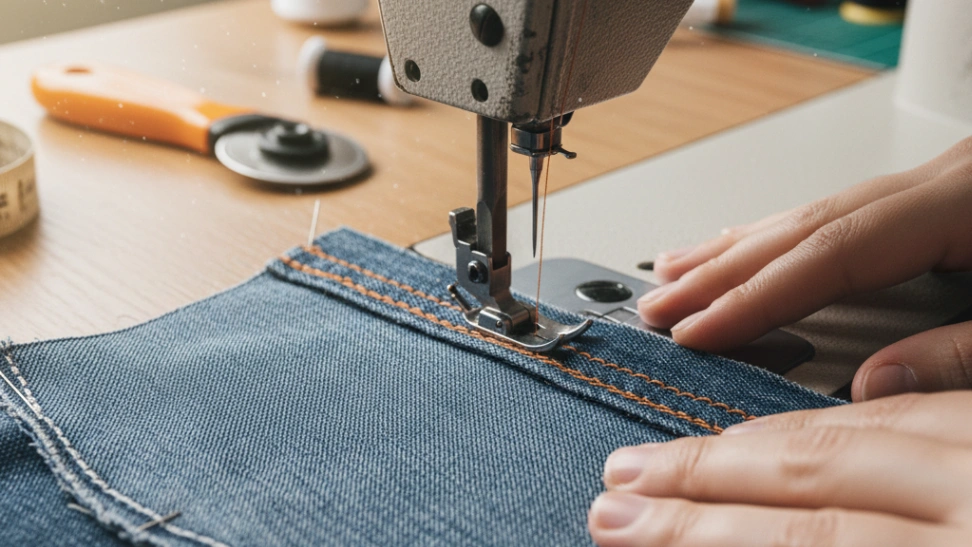
Best Beginner Sewing Machine 2026: Brother vs Janome vs Singer
The first sewing machine is the difference between sewing as a satisfying hobby and sewing as the thing you tried for a month. Here's how to pick a beginner machine that actually works, plus the brands and models to skip.
HobbyStack may earn a commission from links on this page at no extra cost to you. Our picks are chosen on merit; the commission helps fund the research.
- Three brands matter for beginners in 2026: Brother (best for learners, widest features for the price), Janome (best build quality, lasts decades), Singer (great for heavy fabrics but iffy reliability outside the Heavy Duty line).
- Our pick: the Brother CS7000X Computerized (~$249). 70 built-in stitches, LCD screen, drop-in bobbin, quilting extension table. Real machine you grow into rather than outgrow in year one.
- Budget: the Brother XM2701 (~$129). 27 stitches, mechanical, but covers 95% of what beginners actually sew. The default sub-$150 starter.
- Heavy-duty: the Janome HD3000 (~$380). Metal frame, handles denim/canvas/upholstery without bogging. Skip Singer's Heavy Duty 4423 here — Janome's build is materially better.
- Skip: mini sewing machines (toys), anything under $80 (rubber belts and plastic gears that fail in months), Singer non-Heavy-Duty models in the $100–200 range (quality has slipped).
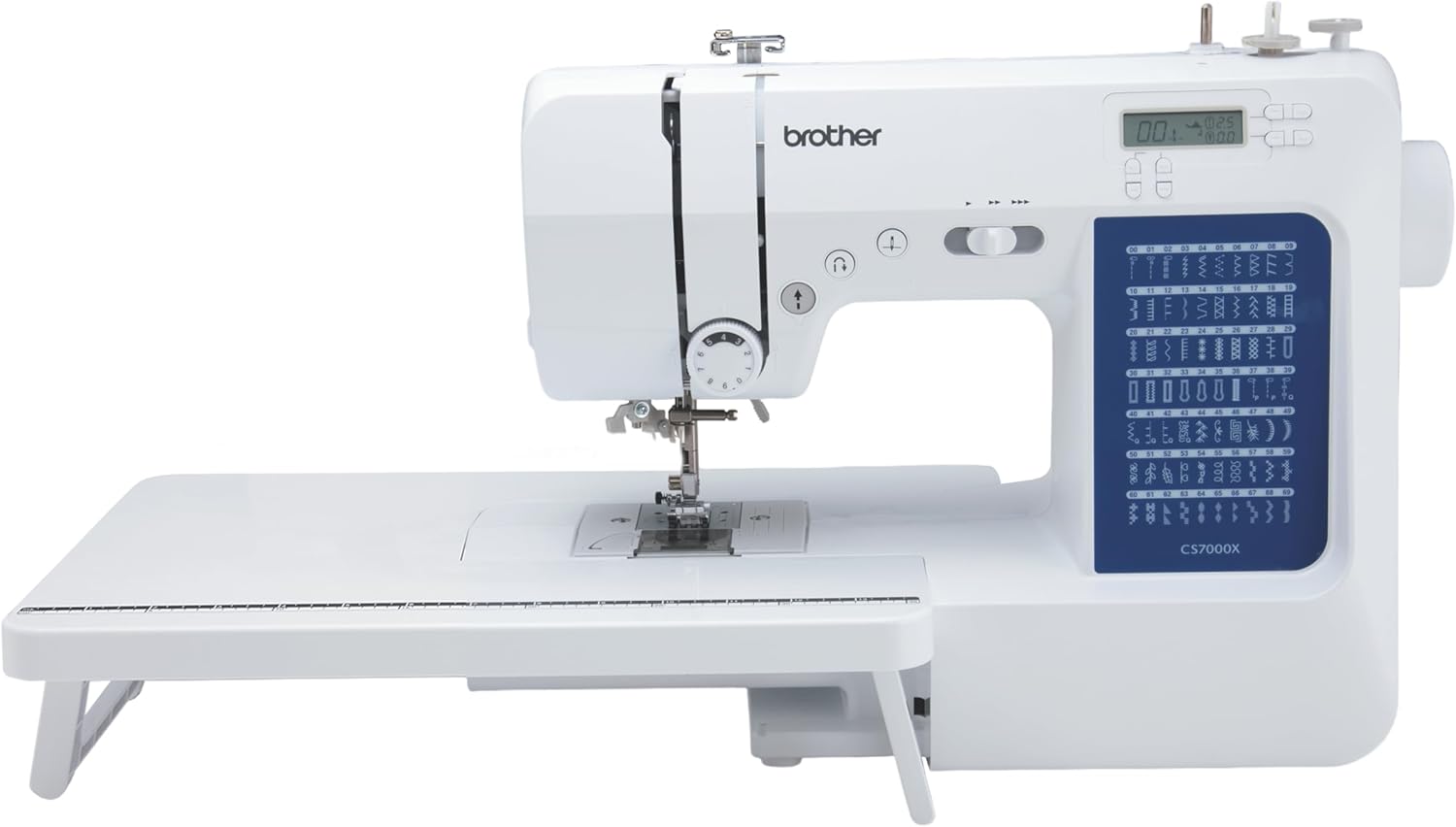 Our pickBrother CS7000X Computerized Sewing & Quilting MachineMost beginners$280Check price
 Brother XM2701Trying it cheap$129Check price
 Janome HD3000 Heavy DutyGoing deep$529Check price
Why the brand matters more than the feature list
Sewing machine spec sheets are misleading. Every machine in the $100–300 range claims "60+ stitches", "automatic buttonhole", "drop-in bobbin", "free arm". On paper they look interchangeable. In practice, the difference between brands is build quality — what's the frame made of, how tight are the gear tolerances, will the motor hold up to denim — and those things don't show up in the marketing.
Three brands have earned their reputations honestly with hobbyists:
Brother dominates the beginner market by combining low prices with genuinely friendly user experience (clear manuals, easy threading, drop-in bobbin standard, accessible online tutorials). Their entry models cut corners on long-term build but the lower-mid range (CS7000X, SE700) is the best beginner-to-intermediate value in the market.
Janome is what experienced sewists buy and pass to their kids. Heavier frames, tighter tolerances, smoother feed. Their HD3000 Heavy Duty is a 30-year machine. Their downside: fewer beginner-friendly UI features and higher prices for the entry models.
Singer built its reputation on a century of solid machines. The Heavy Duty 4423 is still a workhorse for thick fabrics. Outside that line, modern Singer quality has been inconsistent — many recent budget models have plastic parts where they shouldn't.
What this means: avoid generic Amazon brands you've never heard of, even when the spec sheet looks identical. The bearings and the motor are where corners get cut, and you find out the hard way 200 hours in.
How we picked
We weighted the picks against what an actual beginner does in their first year:
- Threading the machine and bobbin every time — should not require a YouTube video. Drop-in bobbins beat front-loading bobbins for beginners. Automatic needle threaders save eye strain.
- Reliably handling 2–4 layers of denim — every beginner hems jeans at some point. A machine that skips stitches or jams on denim becomes the machine that doesn't get used.
- Buttonholes that work first try — one-step automatic buttonholes mean you set the buttonhole foot and press start, and the machine handles it. Four-step buttonholes are fiddly and beginners often give up.
- Repair availability — when (not if) a belt goes or a tension knob breaks, can a local sewing-machine shop fix it? Brother/Janome/Singer all qualify. Off-brands often don't.
- Resale value — Brother and Janome hold value well; if you upgrade in year two, you recover 50–60% of your spend.
What we explicitly don't optimize for: stitch count above ~30 (you'll use 5–8 regularly), embroidery features (separate hobby, requires its own machine), serger/overlock (a complementary second machine, not a substitute).
 Best for most beginners
Brother CS7000X Computerized Sewing & Quilting Machine
The Brother CS7000X is the right machine for someone who's serious about learning but doesn't want to spend $400 on a first machine they might not stick with. 70 built-in stitches (you'll regularly use 8 of them, but they're there), LCD screen for choosing stitches without guessing, drop-in bobbin with see-through cover, automatic one-step buttonhole, quilting extension table included. Real Brother build quality and the largest beginner community on YouTube — every problem has a tutorial. The sweet spot of features per dollar in 2026.
What's good
- 70 stitches + LCD selection is a real step up from mechanical entry machines
- Drop-in bobbin with clear cover — no fumbling, no bobbin-case fights
- One-step buttonhole that genuinely works first try
- Quilting extension table included (would be $40 separately) — room to grow
- Massive Brother CS7000X tutorial library on YouTube
What's not
- Plastic body — won't survive a tip-over the way a metal-frame Janome would
- Computerized means more electronics to fail vs. a fully mechanical machine in 20 years
- Not made for heavy denim/canvas work — see the Janome pick for that
 Best under $150
Brother XM2701
If $250 isn't in the budget yet, the Brother XM2701 is the only sub-$150 machine we recommend without reservation. 27 built-in stitches (the ones you actually use), mechanical operation (more durable than computerized at this price), drop-in bobbin, automatic needle threader, one-step buttonhole. Surprisingly capable for the price — many sewists report using one as their primary machine for years before upgrading. The right pick when you want a real working machine and you're testing whether sewing sticks as a hobby.
What's good
- Genuinely affordable working machine under $150
- Mechanical (no electronics) means fewer failure points over time
- Drop-in bobbin and auto needle threader are unusual at this price
- Brother XM2701 has the biggest beginner community on YouTube — every error has a fix
What's not
- 27 stitches is enough for general sewing but limits decorative work
- Single-speed motor — no foot pedal control of speed precision
- Light-duty fabrics only — struggles with thick denim or multiple canvas layers
- Plastic external body shows wear quickly
 Heavy-duty workhorse
Janome HD3000 Heavy Duty
If you'll work with denim, canvas, upholstery, leather, or multiple thick layers — the Janome HD3000 is the right buy. Metal frame, industrial-grade feed mechanism, real motor that doesn't bog down under thick fabric. 18 stitches (fewer than the Brother but the ones a heavy-fabric sewist needs), genuinely lasts decades with basic maintenance. The Singer Heavy Duty 4423 is the obvious comparison at $50 less — we pick the Janome anyway because the build quality difference is real, the tension regulation is more reliable, and Singer has had quality slips that Janome hasn't.
What's good
- Metal internal frame — survives heavy use and rough handling
- Industrial feed handles denim, canvas, upholstery, leather without bogging
- Janome's reputation for 20–30 year service life with light maintenance
- Fewer features means fewer things to break or get confused by
- Strong resale value on the used market
What's not
- More expensive than the Singer Heavy Duty 4423 ($380 vs $260) — the build justifies it but the gap is real
- Only 18 stitches — light on decorative options
- No LCD or computerized stitch selection — mechanical dial only
- Heavier than the Brother machines (~17 lbs) — not as portable
Avoid: any "mini sewing machine" under $50 (toys, not tools — they will frustrate you within a week), Singer's Stylist 7258 and similar mid-budget Singers (recent quality issues — get Brother at this price tier or Janome higher up), any machine from a brand without a US service center (when it breaks, you're shipping it overseas), embroidery-focused machines as a first machine (great as a second machine when you know you want embroidery, frustrating as a do-it-all).
What you'll also need
Buying just the machine is fine but expect to spend another $40–80 on supplies before your first real project:
- A fabric scissor that only cuts fabric (Gingher 8" or Kai 5210 — ~$30). Never let anyone cut paper with it. The fabric edge dulls instantly and you'll be cursing for years.
- Bobbins that match your machine class (3-pack ~$10). The machine comes with two; you want at least 5–6 so you can pre-wind multiple thread colors.
- A small assortment of needles in different sizes for different fabrics (Schmetz universal pack ~$10). 80/12 for cotton, 90/14 for denim, 75/11 for fine fabrics. Machines come with 1–2 needles; you want a stash.
- Quality thread in the colors you'll use (Mettler, Gutermann, Aurifil — ~$5/spool). Cheap thread breaks mid-seam and leaves lint that clogs your machine.
- Pins and a magnetic dish to hold them (~$15). Beats stabbing yourself.
Optional but smart in month one: a rotary cutter and self-healing mat (~$40 combo) — way faster than scissors for straight-line cuts; a seam ripper that doesn't suck (Clover white-tipped ~$10).
Before you buy
Plan to oil it. All three machines need a drop of sewing-machine oil at the marked points every 8–16 hours of use. The manual shows where. This 30-second habit doubles the machine's service life.
Buy thread you can return. Don't bulk-buy a 24-pack of cheap thread on day one. Get 3–4 spools of high-quality thread first to figure out what colors you actually use.
Try the machine before deciding if you'll stick with the hobby. A first project (zippered pouch, simple skirt, tote bag) tells you within a weekend whether sewing is your thing. If yes, upgrade questions can wait six months.
Skip the warranty extensions. All three brands warranty 1 year electrical / 25 years frame standard. Extended warranties are not worth it on reliable machines.
Check Facebook Marketplace for used Janomes. A used HD3000 or older Janome MC at half price is a great find — they last forever, so used examples are still excellent.
Common questions about beginner sewing machines
Brother vs Janome vs Singer — which brand should I buy?
Do I need a computerized machine or mechanical?
Can I sew leather or upholstery on a beginner machine?
What's the difference between a sewing machine and a serger?
Are mini sewing machines worth it?
How often do I need to service or repair a sewing machine?
For most people, the Brother CS7000X Computerized Sewing & Quilting Machine is the buy — the best balance of price, quality, and longevity. Want to spend less? The Brother XM2701 gets you started for a fraction of the cost. Ready to go deeper? The Janome HD3000 Heavy Duty is the upgrade.
Ready to actually do it?
The first garment construction quest takes an evening, and it tells you whether the gear was worth it better than any review can.
Start Garment ConstructionThe HobbyStack editorial team researches each guide against manufacturer specifications, published resources and practitioner sources. Every product is checked for availability and described against its current listing before publication, and prices are re-checked when guides are updated.
About our editorial process →More gear guides
All guides
Best Fabric Marking Tools (2026): Marks That Come Out Again
Every marking tool is a trade between two failure modes: a mark that disappears before you have sewn it, and a mark that will not come out afterwards. There is no tool that avoids both on every fabric, which is why experienced sewers own several and always test on a scrap first. The one that ruins a garment is usually the one nobody tested.

Best Fabric Shears for Beginners (2026): 3 Real Picks
There is one rule that matters more than which shears you buy: they never touch paper. Paper dulls a fabric blade fast, and a dull blade stops cutting cloth and starts pushing it, so your line wanders and the edge frays. That single habit separates shears that stay sharp for years from a pair that feels cheap within a month, and it is why sewers guard their fabric scissors and label them. Beyond that, the choices are simple: length, weight, and whether the handle suits your hand. Here are three good pairs and who each is actually for.

Best Seam Ripper (2026): The Tool That Saves the Garment
Unpicking is not a sign of failure; it is most of sewing. Every fitted garment involves stitching something, trying it, and taking it apart again, and the tool that does that badly will put a hole in fabric you have already cut and cannot replace. A seam ripper is two pounds of insurance on a project worth considerably more.

Best Sewing Machine Needles (2026): The Cheapest Fix for Bad Stitching
Skipped stitches, puckering, snapping thread and a machine that suddenly sounds wrong are almost always the needle, and almost never the machine. Needles are consumable — they blunt, bend a fraction and develop burrs long before they look damaged — and most people sewing badly are sewing with a needle that should have been binned months ago.

Best Thread Snips (2026): The Scissors You Keep Beside the Machine
Trimming a thread with dressmaking shears means picking up something heavy, opening it wide, and getting a blade near fabric you have just spent an hour sewing. Small scissors live beside the machine, open barely at all, and cut the thread where it leaves the seam. It is a tiny tool that changes the rhythm of sewing more than its price suggests.

Best Beginner Weaving Loom (2026): 3 Rigid-Heddle Looms to Start On
For learning to weave, the loom to start on is a rigid-heddle loom. It is simple, affordable, and quick to set up compared to a big floor loom, and you can weave real scarves, towels, and cloth on it within a day. The main choices are size, brand, and whether it folds. All three picks here are proper rigid-heddle looms from the two names weavers trust, from a complete starter kit to a folding loom you grow into.