Best Beginner Surfboard 2026: Soft-Tops from Wavestorm to Catch Surf
The single biggest mistake new surfers make is buying a short, sleek board because it looks cool. Beginners need a big, stable, forgiving soft-top, volume is what catches waves and gets you standing. Here are three foam boards that get the job done, from the iconic budget Wavestorm to a premium Catch Surf.
HobbyStack may earn a commission from links on this page at no extra cost to you. Our picks are chosen on merit; the commission helps fund the research.
- Beginners need volume and stability above all — a big foam soft-top, not a short hard board. Volume is what catches waves and forgives mistakes.
- Our pick: the Thurso Surf Spire 8' (~$300). A more durable, better-shaped soft-top than the cheapest foamies, with a slick bottom for glide. Fins and leash included.
- Budget: the Wavestorm 8ft (~$150). The iconic, ubiquitous beginner foamie — catches everything, takes a beating, and resells easily.
- Buy it once: the Catch Surf Blank Series 8' (~$450). A premium foamie real surfers keep — proper performance from a board that's still forgiving.
- Get a 7–9ft board, learn in the whitewater, and don't 'upgrade' to a short board until you can reliably catch and ride.
 Our pickThurso Surf Spire 8' Soft-TopMost beginners$299Check price
 Wavestorm 8ft ClassicTrying it cheap$150Check price
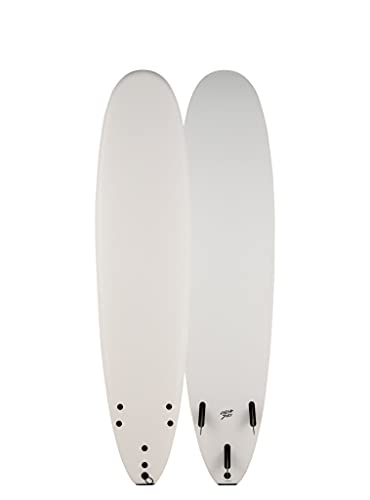 Catch Surf Blank Series 8'Buy it once$400Check price
Why bigger and foam wins
Everything about a beginner board comes down to volume. A high-volume board floats you, paddles easily, and catches waves with margin to spare — which is exactly what you need when you're learning to read and time waves. A short, low-volume board does the opposite: it sinks under you, is brutal to paddle, and demands perfect timing you don't have yet. Foam (soft-top) construction adds the other half of the equation — it's forgiving when you fall, far safer when the board hits you (and it will), and it shrugs off the abuse of learning. The cool short board can wait until you've actually learned to surf on a foamie.
How we picked
We weighted these on what gets a beginner standing and progressing: volume and stability (the whole game early on), durability (learning is hard on a board), whether fins and a leash are included (so you're ready to surf out of the box), how well it still rides as you improve, and value. All three are 8-foot soft-tops in the beginner sweet spot; they differ in build quality and how long they'll stay useful as you get better.
 Best for most beginners
Thurso Surf Spire 8ft Soft Top
A step up in quality soft top for a committed beginner. The Thurso Surf Spire is an 8-foot foam longboard with a more refined build than a basic big-box board, a stiffer stringer setup for less flex, a grippy textured deck, and included fins and leash, so it paddles and catches waves a little better while keeping the safe, forgiving foam that makes learning painless. Eight feet gives plenty of stability and paddle speed for catching whitewater and easy green waves. The board to progress on once you know you love surfing.
What's good
- Refined soft top: stiffer, less flex than big-box foam
- Grippy deck; includes fins and leash
- 8ft is stable and paddles well for learning
- Safe, forgiving foam to progress on
What's not
- Pricier than a basic foam longboard
- Still a soft top, not a hard board
 Best under $200
Wavestorm 8ft Classic
The board that has taught more people to surf than any other. The Wavestorm 8ft is cheap, everywhere, and does the one thing a first board must: its huge volume catches waves easily and the forgiving foam makes falling (and getting hit) safe. It comes with fins and a leash, takes a relentless beating, and — because everyone knows it — resells easily when you move on. The build is basic and you'll outgrow the flexy foam, but as the lowest-risk way onto a real, wave-catching board, nothing beats it.
What's good
- Cheapest way onto a real, wave-catching board
- Huge volume — catches waves and forgives mistakes
- Foam construction is safe and takes a beating
- Fins and leash included
- Holds resale value; easy to pass on
What's not
- Basic shape and build — you'll outgrow it
- Heavy, flexy foam glides less than a premium foamie
- Rudimentary fin system
 Buy it once
Catch Surf Blank Series Funboard
The foam board that experienced surfers keep on the rack — and that means you won't outgrow it. The Catch Surf Blank Series adds triple wood stringers and a dual-composite core for real stiffness and drive (most budget foam is noodly by comparison), a wider nose that makes paddling and catching waves effortless, and a squash tail that actually lets you turn as you improve. It's still soft-topped, high-volume, and forgiving, so it's beginner-friendly today and genuinely fun for years. The premium foamie that doubles as a long-term board.
What's good
- Performance foamie: triple stringers, dual-composite core
- Wider nose paddles and catches waves easily
- Stiffer and faster than budget foam, still forgiving
- A board you won't outgrow as you improve
- Removable fins included
What's not
- Premium price for a foam board
- More than a tentative beginner needs
- Big to store and transport
The urge to trade your foamie for a short, sleek board is the fastest way to stall your progress. Stay on a big soft-top until you can reliably paddle into unbroken waves, pop up, and turn — usually many months of regular surfing. Volume is your friend far longer than you think.
Before you buy
Buy 7–9ft to start — more length and volume means more waves caught and faster progress. Heavier or taller surfers should size up.
Rent or borrow before buying if you can, to confirm you like surfing and what size suits you.
Learn in the whitewater (broken waves) on this board before paddling out to the unbroken faces.
Rinse foam boards with fresh water and keep them out of prolonged direct sun — heat damages foam. Store in shade or a board bag.
Even a soft-top needs a leash and grip where the deck is slick; check what your board includes.
Common questions about beginner surfboards
Why a soft-top and not a hard board?
What size surfboard should a beginner get?
Wavestorm vs South Bay vs Catch Surf?
Do I need fins and a leash too?
Can I get good on a foam board, or do I have to upgrade?
How long until I size down to a shortboard?
For most beginners the South Bay 8' is the buy — a durable, better-shaped soft-top that still forgives everything. Just testing the water? The Wavestorm 8ft is the cheap, proven entry. Want a foamie you'll keep for years? The Catch Surf Blank Series. Go big, learn in the whitewater, and don't size down too soon.
Ready to actually do it?
The first surfing quest takes an evening, and it tells you whether the gear was worth it better than any review can.
Start SurfingThe HobbyStack editorial team researches each guide against manufacturer specifications, published resources and practitioner sources. Every product is checked for availability and described against its current listing before publication, and prices are re-checked when guides are updated.
About our editorial process →More gear guides
All guides
Best Surf Wetsuit (2026): The Zip Decides More Than the Price
A wetsuit does not keep water out. It lets a thin layer in, traps it against your skin and lets your body heat it, which is why fit matters more than thickness — a loose suit flushes cold water through and never warms up. The two numbers and the zip position tell you almost everything else.

Best Snowboard Goggles for Beginners (2026): 3 Real Picks
Goggles are not optional on a snowboard: wind, glare, cold, and blowing snow make riding without them miserable and unsafe, and unlike sunglasses they seal to your face and stay put. The good news is you do not need to spend much. Any decent pair blocks UV and wind; what more money buys is better anti-fog, optics that read terrain in flat light, and quick lens swaps for changing conditions. Here are three good ones, plus the one spec that actually matters.

Best Snowboard Helmet for Beginners (2026): 3 Real Picks
A helmet is the one piece of snowboard gear you should never skip and never buy used, and the good news is a solid one is cheap. Any certified snow helmet protects your head in a standard impact; what more money buys is MIPS rotational protection, better fit, venting, and warmth. Most beginners are well served by an inexpensive certified helmet. Here are three good ones across the range, plus what actually matters when you choose.

Best Beginner Kayak (2026): 3 Stable Sit-On-Tops to Start Paddling
For a first kayak, the easy answer is a sit-on-top: you sit on top of it rather than inside, so it feels stable, it will not fill with water, and if you do tip over you can just climb back on. What matters most for a beginner is stability, weight (can you carry it and get it on your car), and a comfortable seat. Here are three good ones, from a paddle-included starter to a supremely comfy do-it-all boat.

Best Kayak PFD (Life Jacket) for Beginners (2026): 3 Real Picks
A PFD, or personal flotation device, is the one piece of kayaking gear you never skip, and for paddling you want a specific kind: a US Coast Guard-approved Type III paddling vest cut short and high so it doesn't jam against your kayak's seat back or trap your arms. Any approved vest keeps you afloat; what more money buys is ventilation, better arm freedom, and pockets. The most important thing is simply that you wear it, every time, so it has to be comfortable enough that you actually do. Here are three good ones across the range, plus what actually matters when you choose.

Best Beginner Belay Device 2026: BD ATC-XP vs Petzl GRIGRI vs GRIGRI+
A belay device is the friction tool that lets you manage the rope, catching your climber's falls and lowering them safely. Every climber needs to own one once they're belay certified. Here are three picks across the two fundamental categories: the standard tube device every beginner learns on, and the two versions of Petzl's cam-assisted GRIGRI that most serious gym climbers eventually upgrade to.