Best Chef's Knife (2026): The Only Knife Most Kitchens Need
A chef's knife does perhaps ninety percent of the cutting in a kitchen, which is why it is the one knife worth thinking about and why a block of ten is mostly storage. The choice comes down to a single trade that nobody explains at the counter: harder steel holds an edge longer and chips more easily, softer steel dulls faster and forgives almost everything.
HobbyStack may earn a commission from links on this page at no extra cost to you. Our picks are chosen on merit; the commission helps fund the research.
- 8 inches is the right length for most people — long enough for a cabbage, controllable for an onion.
- German steel is softer: duller sooner, but it survives being knocked about and is easy to sharpen.
- Japanese steel is harder: a finer, longer-lasting edge that chips if you hit a bone or twist it.
- A sharp cheap knife beats a blunt expensive one every single time. Buy a steel and use it.
- Hand wash it, even the ones labelled dishwasher safe. The label is about the handle surviving, not the edge.
 Our pickVictorinox Fibrox Pro 8"Almost everyone$46Check price
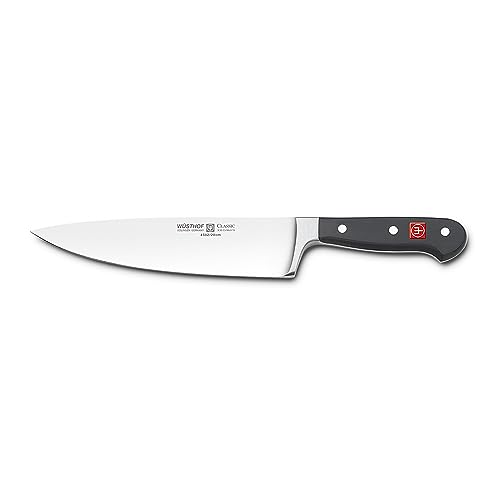 Wüsthof Classic 8"A knife for life$170Check price
 Shun Classic 8"Precision and fine work$140Check price
Hard steel, soft steel, and what you give up
Steel hardness is measured on the Rockwell C scale, and it is the single specification that explains most of the difference between knives.
German knives typically sit around 56-58 HRC. Softer steel rolls rather than chips, so an edge that has gone dull can usually be brought back with a few passes on a honing steel. They tolerate scraping the board, hitting a chicken bone, and being handled carelessly. The cost is that they need that honing regularly.
Japanese knives run harder, often 60-62 HRC. That holds a much finer edge for far longer, and the blades are ground thinner, so they slide through food rather than wedging it apart. The cost is brittleness: twist one in a squash or hit a bone and the edge chips rather than rolling, and chips need proper sharpening to remove.
Neither is better. A hard thin knife in a careless kitchen is a knife with a chipped edge; a soft knife in a careful one is doing more work than it needs to.
Sharpening is the thing nobody does
Most people cook for years with a blunt knife and blame the knife. A cheap sharp blade outperforms an expensive dull one at every task, and the gap is not close.
Honing realigns an edge that has folded over. A honing steel does not remove metal; it straightens what is there, and it is what you do every few uses. On a soft German knife this restores most of the performance.
Sharpening removes metal to create a new edge, and it is needed every few months depending on use. A whetstone gives the best result and takes practice; a pull-through sharpener is fast, crude, and removes more metal than it should — acceptable on a cheap knife, wasteful on a good one.
Also: the board matters. Wood or plastic. Glass, stone and ceramic boards destroy an edge in a handful of cuts, and no amount of honing fixes that.
 Best for almost everyone
Victorinox Fibrox Pro 8 Inch Chef’s Knife
The knife that professional kitchens buy by the dozen, and the one that makes expensive knives hard to justify. Softer German steel that takes a genuinely sharp edge, gives it up gradually, and comes straight back with a honing steel — which is the behaviour you want while you are still learning to look after a knife. The textured grip stays secure with wet hands, and the blade is stamped rather than forged, so it is light and nimble rather than substantial. It looks like a workhorse because it is one. If you have never owned a good knife, buy this, buy a honing steel, and spend the difference on food.
What's good
- Takes a properly sharp edge for very little money
- Forgiving soft steel — hones back easily
- Grippy handle, secure with wet hands
- Lifetime warranty against defects
What's not
- Dulls faster than harder steels
- Stamped, so it feels less substantial
- Plain looking
- Labelled dishwasher safe — still hand wash it
 Best knife for life
WÜSTHOF Classic 8 Inch Chef’s Knife,Black,8-Inch
Forged from a single billet rather than stamped from sheet, which gives it weight and balance the cheaper knife does not have — and that heft does real work, letting the blade fall through an onion rather than being pushed. The full bolster adds strength where the blade meets the handle and gives your finger something to sit against. Same forgiving German steel, so the maintenance routine is unchanged. There is enough metal here to be sharpened for decades. Honest caveats: it is three times the price for perhaps a modest improvement in cutting, and the full bolster makes sharpening the heel awkward as the knife ages. Buy it because you want an object you keep, not because it cuts dramatically better.
What's good
- Forged — real weight and balance
- Enough steel to sharpen for decades
- Full bolster is strong and comfortable
- Same forgiving German steel
What's not
- Three times the Victorinox for a modest gain
- Full bolster complicates sharpening the heel
- Heavy if you prefer a nimble knife
- Needs the same regular honing
 Best for precision
Shun Classic 8" Chef's Knife
Harder Japanese VG-MAX steel ground thin and sharpened to sixteen degrees a side, against roughly twenty on a German knife, and the difference is immediately obvious — it parts food rather than pushing through it, and slicing a shallot paper-thin becomes easy rather than fiddly. The edge lasts far longer between sharpenings. It is also the least forgiving knife here: hit a bone, twist it in a hard squash, or scrape the board with the edge and it chips rather than rolling. Shun sharpen and hone their knives free, which takes most of the sting out of that, though you are without the knife while it travels. The handle is a D-shape, comfortable but noticeably shaped rather than neutral. Buy it if you already look after your knives.
What's good
- Noticeably finer, sharper edge at 16 degrees
- Holds that edge far longer
- Thin blade parts food cleanly
- Free factory sharpening and honing
What's not
- Chips rather than rolls — unforgiving
- Not for bones or frozen food
- D-shaped handle is a shape you either like or do not
- Wrong first good knife
Some knives, the Victorinox included, are sold as dishwasher safe. That means the materials survive the cycle, not that the edge does — heat, harsh detergent and knocking against other items dull a blade fast, and a rack full of knives is a hand hazard when you unload it. Wash by hand and dry immediately. Glass, stone and ceramic boards are worse still: harder than the steel, they wreck an edge in a handful of cuts. Wood or plastic, always.
Why not a block of ten
Knife blocks are sold on the count and used on about three of them.
A chef's knife does the overwhelming majority of kitchen cutting. A paring knife handles the small in-the-hand jobs it is too big for. A serrated bread knife does the one thing a straight edge cannot, because bread crust needs sawing rather than pressing.
That is the set. Everything else in a block — the steak knives, the utility knife, the second smaller chef's knife — is either duplication or something you use twice a year.
Buying three good knives costs about what a mediocre block does, and you will actually use all three. Add a honing steel and a wooden board and the kitchen is properly equipped.
Before you buy
Hold it if you can. Balance and handle shape matter more than the brand.
8 inches unless you have small hands or a very small board.
Buy a honing steel at the same time. It is not optional.
Softer German steel is the forgiving choice while you learn.
Wood or plastic boards only.
Chef's knife questions
What size chef's knife should I buy?
What's the difference between German and Japanese knives?
Is an expensive chef knife worth it?
How often should I sharpen a chef knife?
Buy one 8-inch chef's knife and a honing steel, and stop thinking about knives. The Victorinox Fibrox is the sensible answer for almost everyone — professional kitchens buy it by the dozen for good reasons. The Wüsthof Classic is worth it if you want a forged object you keep for life. The Shun is for careful cooks who already sharpen and want a finer edge. Wash by hand, use a wooden board, and hone it.
Ready to actually do it?
The first historical cooking quest takes an evening, and it tells you whether the gear was worth it better than any review can.
Start Historical CookingThe HobbyStack editorial team researches each guide against manufacturer specifications, published resources and practitioner sources. Every product is checked for availability and described against its current listing before publication, and prices are re-checked when guides are updated.
About our editorial process →More gear guides
All guides
Best Dutch Oven (2026): A Camp Oven and a Kitchen Pot Are Not the Same Thing
Two very different pots share the name. One has three legs and a flanged lid built to hold burning coals on top, and it is what historical recipes assume. The other is a smooth enamelled casserole for a hob and an oven. Buy the second and try to cook over a fire with it and nothing will work the way the recipe says.

Best Historical Cookbooks (2026): Cooking From Sources That Give No Quantities
Medieval recipes assume you already know how to cook. They rarely give quantities, almost never give times or temperatures, and end when the writer thought the point was obvious. The whole value of a good historical cookbook is the bridge across that gap, and books differ enormously in how much bridge they build.

Best Mortar and Pestle (2026): Rough Granite Beats Polished Marble
A mortar and pestle grinds by friction, so the single most important property is that the inside is rough. The beautiful polished marble sets sold as kitchen ornaments fail at this completely — spices skate around the bowl instead of breaking down. It is the most common way people buy the wrong one, and the difference is visible before you get it home.

Best Pot for Cheese Making (2026): Milk Scorches Where the Pan Is Thin
Milk is unforgiving in two specific ways. It reacts with bare aluminium and copper, which taints the curd and discolours the pan, and it scorches wherever the base has a hot spot — and once a batch has caught, the whole thing tastes of it. Both problems are solved by the same purchase, and neither is solved by watching more carefully.
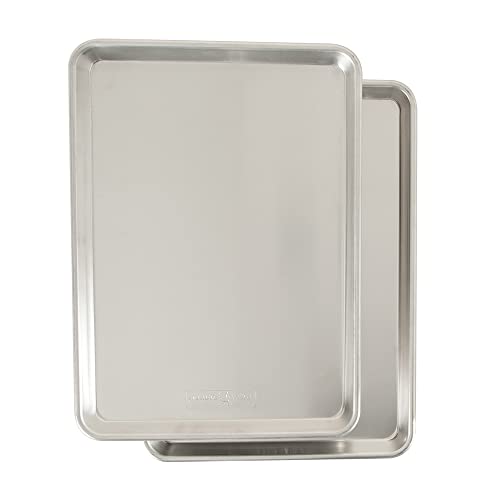
Best Baking Sheet for Beginners (2026): Why Half-Sheet Aluminium Wins
A baking sheet is the most-used pan in most kitchens and the one people spend least time choosing. The cheap ones warp with a bang the first time they hit a hot oven, and a warped sheet cooks unevenly forever after. The fix is not expensive: a heavy half sheet in bare aluminium with a rolled rim, which is what professional kitchens have used for decades.

Best Beginner Stand Mixer 2026: KitchenAid Artisan vs Classic vs Pro 600
Stand mixers are a one-time purchase that lasts decades. Pick the right KitchenAid (it's almost always going to be a KitchenAid) and you'll never need to think about it again. Pick wrong and you'll end up reselling and rebuying within 5 years.