Best Historical Cookbooks (2026): Cooking From Sources That Give No Quantities
Medieval recipes assume you already know how to cook. They rarely give quantities, almost never give times or temperatures, and end when the writer thought the point was obvious. The whole value of a good historical cookbook is the bridge across that gap, and books differ enormously in how much bridge they build.
HobbyStack may earn a commission from links on this page at no extra cost to you. Our picks are chosen on merit; the commission helps fund the research.
- A redaction is a modern working version of an original recipe. It is the thing you actually cook from.
- The best books print the original alongside the redaction so you can see what was interpretation.
- Period sources give no quantities and no times. Anyone supplying them has made a judgement call.
- Medieval European food is sweet-sour and heavily spiced, not bland. That surprises most people.
- Pick by period and by how much scholarship you want next to the cooking.
 Our pickPleyn DelitCooking from the sources$36Check price
 The Medieval CookbookUnderstanding the world$41Check price
 An Early MealNorse and Viking Age$49Check price
What a redaction is, and why it is the whole game
An original medieval recipe reads something like an instruction to take your meat, seethe it, grind spices with bread and vinegar, cast it together and colour it. No amounts. No timings. No pan size. It was written as a memory aid for someone who already cooked professionally.
A redaction is a modern cook's working reconstruction: the same dish with quantities tested in a real kitchen, a temperature, a time, and substitutions where an ingredient is now unavailable.
Every redaction contains judgement. How much saffron is "a little"? Is that vinegar as sharp as ours? A book that prints only redactions is asking you to trust its author invisibly, and a book that prints the original text next to the redaction lets you see exactly where the interpretation happened and disagree with it.
That is the single most useful thing to look for, and it is what separates a cookbook you cook from for years from one you use twice.
Medieval food was not bland
The most persistent myth is that medieval European cooking was grey and plain, and that heavy spicing existed to disguise spoiled meat. Both are wrong. Spices were extremely expensive, and nobody spends a fortune covering up meat they could simply not serve — the spicing was conspicuous display, and the recipes that survive are mostly from wealthy households where display was the point.
The dominant flavour profile is sweet and sour together, which is the part modern cooks find strangest. Vinegar or verjuice against sugar or dried fruit, in savoury dishes, routinely.
Colour mattered enormously. Dishes were deliberately tinted gold with saffron, green with herbs, red with sandalwood, and served to be looked at.
Almond milk is everywhere, partly for fast days when dairy was forbidden and partly because it behaves differently from cream.
Expect all of this to taste unfamiliar rather than bad. The books that acknowledge it up front are the ones that will keep you cooking.
 Best for cooking from sources
Pleyn Delit: Medieval Cookery for Modern Cooks
The standard recommendation among people who actually cook medieval food rather than read about it, and it earns that by printing the original recipe text beside a tested modern redaction. That format is the reason to own it: you can see the source, see what the editors decided it meant, and disagree with them once you have cooked a few. Published by a university press, so the scholarship is careful and cited rather than atmospheric, and the recipes are chosen because they work in a modern kitchen. It is a working book rather than a beautiful one — sparse presentation, few pictures, and no attempt to sell you the period. If you want to cook, this is the one; if you want to be transported, it is not.
What's good
- Original text printed beside each redaction
- Recipes tested to work in a modern kitchen
- Careful, cited scholarship from a university press
- The book experienced medieval cooks recommend
What's not
- Plain presentation, very few illustrations
- Assumes some general cooking competence
- Less historical context than a narrative book
- Not the book to browse for pleasure
 Best for context
The Medieval Cookbook by Maggie Black (1992-09-17)
A far more illustrated book that sets the food inside the world it came from — who ate what, how a great household actually fed itself, what a feast was for — with manuscript images throughout. That context does real work, because a medieval recipe makes far more sense once you know it was cooked for a hall of a hundred people by a professional kitchen, not for four people at a table. The recipes are adapted for modern cooking and are approachable. The trade against the more scholarly option is that you get less of the original text and more of the author's presentation, so you are trusting the interpretation rather than watching it happen. A good first book, and a genuinely enjoyable one to read.
What's good
- Manuscript illustrations throughout
- Explains the world the recipes came from
- Approachable adaptations for modern kitchens
- Enjoyable to read rather than only to use
What's not
- Less original source text than Pleyn Delit
- You are trusting the interpretation more
- An older book, so some scholarship has moved on
- Fewer recipes than a dedicated collection
 Best for the Viking Age
An Early Meal a Viking Age Cookbook and Culinary Odyssey
A different problem entirely, and the reason it exists. Viking Age Scandinavia left no cookbooks at all, so this reconstructs the food from archaeology — what was found in middens, cooking pits, storage and burials, plus what the sagas mention in passing. That makes it a genuinely different kind of book: less "here is a recipe" and more "here is what the evidence supports, and here is a dish built from it". It is honest about where the evidence runs out, which is the mark of the work being trustworthy. Buy it if the Norse world is what draws you, or if you want to see how food history is done when there are no recipes to redact. It is not a medieval European cookbook and does not overlap with the other two.
What's good
- Reconstructs food from archaeological evidence
- Covers a period with no surviving recipes at all
- Honest about where the evidence stops
- Shows how food history is actually done
What's not
- Viking Age only — no overlap with medieval Europe
- More reconstruction than recipe collection
- Some ingredients are hard to source now
- Dearest of the three
The instinct is to attempt something spectacular, and spectacular medieval dishes are long, expensive and easy to get wrong. Start with a spiced pottage or a simple sauce — one pot, a handful of ingredients, and a flavour profile that will tell you immediately whether you like sweet-sour savoury food. If you do, everything else in the book opens up. If you do not, you have learned it cheaply.
Sourcing what the recipes ask for
Most period ingredients are available; a few need a substitute, and knowing which is which saves a lot of hunting.
Verjuice is the juice of unripe grapes, sharp but less aggressive than vinegar. It is sold by specialist grocers, and cider vinegar cut with water or a mix of lemon and white grape juice is a workable stand-in.
Grains of paradise, long pepper and cubeb are real and still sold by spice merchants. They are worth buying, because they are what much of this food actually tasted of.
Almond milk should be made rather than bought — commercial almond milk is thin and stabilised, and period recipes rely on it being thick enough to behave like a sauce base.
Sandalwood for red colouring is best skipped; other colourings are easier and the effect is decorative.
Anything a book tells you to substitute, it should say why. Books that quietly swap ingredients without saying so are the ones to be wary of.
Before you buy
Look for the original text printed next to the redaction. It is the difference between cooking and following.
Pick your period first. Medieval European and Viking Age barely overlap.
Expect sweet-sour savoury food and heavy spicing. That is the point, not a mistake.
A book that says where the evidence runs out is more trustworthy than one that never does.
Start with a one-pot dish before attempting anything from a feast menu.
Historical cookbook questions
What is a redaction in historical cooking?
Was medieval food really bland?
Which historical cookbook should I start with?
Can I find medieval ingredients today?
Buy the book that shows its working. Pleyn Delit is the one to cook from — original text beside tested redactions, so you can see every judgement the editors made and start making your own. The Medieval Cookbook is the better read and the better introduction to the world the food came from. An Early Meal is a different project altogether, reconstructing Viking Age food from archaeology, and worth it only if that period is the draw.
Ready to actually do it?
The first historical cooking quest takes an evening, and it tells you whether the gear was worth it better than any review can.
Start Historical CookingThe HobbyStack editorial team researches each guide against manufacturer specifications, published resources and practitioner sources. Every product is checked for availability and described against its current listing before publication, and prices are re-checked when guides are updated.
About our editorial process →More gear guides
All guides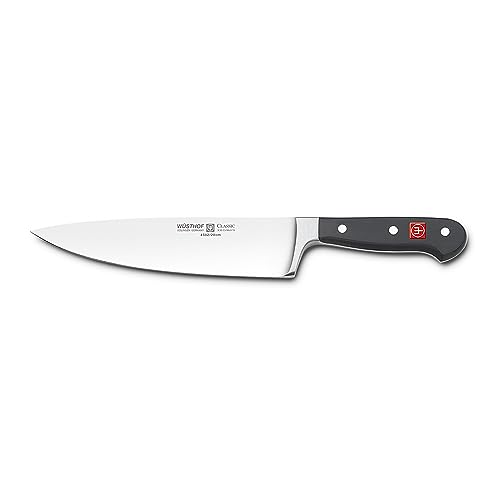
Best Chef's Knife (2026): The Only Knife Most Kitchens Need
A chef's knife does perhaps ninety percent of the cutting in a kitchen, which is why it is the one knife worth thinking about and why a block of ten is mostly storage. The choice comes down to a single trade that nobody explains at the counter: harder steel holds an edge longer and chips more easily, softer steel dulls faster and forgives almost everything.

Best Dutch Oven (2026): A Camp Oven and a Kitchen Pot Are Not the Same Thing
Two very different pots share the name. One has three legs and a flanged lid built to hold burning coals on top, and it is what historical recipes assume. The other is a smooth enamelled casserole for a hob and an oven. Buy the second and try to cook over a fire with it and nothing will work the way the recipe says.

Best Mortar and Pestle (2026): Rough Granite Beats Polished Marble
A mortar and pestle grinds by friction, so the single most important property is that the inside is rough. The beautiful polished marble sets sold as kitchen ornaments fail at this completely — spices skate around the bowl instead of breaking down. It is the most common way people buy the wrong one, and the difference is visible before you get it home.

Best Pot for Cheese Making (2026): Milk Scorches Where the Pan Is Thin
Milk is unforgiving in two specific ways. It reacts with bare aluminium and copper, which taints the curd and discolours the pan, and it scorches wherever the base has a hot spot — and once a batch has caught, the whole thing tastes of it. Both problems are solved by the same purchase, and neither is solved by watching more carefully.
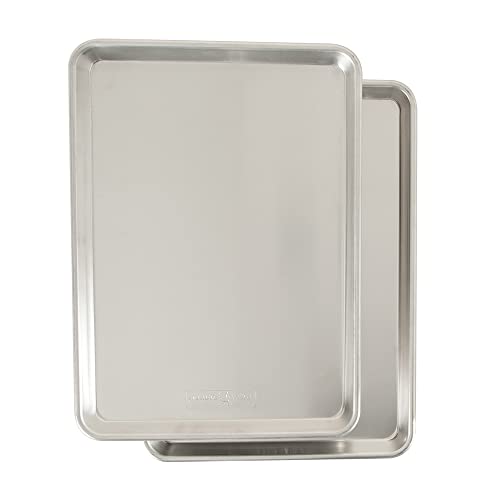
Best Baking Sheet for Beginners (2026): Why Half-Sheet Aluminium Wins
A baking sheet is the most-used pan in most kitchens and the one people spend least time choosing. The cheap ones warp with a bang the first time they hit a hot oven, and a warped sheet cooks unevenly forever after. The fix is not expensive: a heavy half sheet in bare aluminium with a rolled rim, which is what professional kitchens have used for decades.

Best Beginner Stand Mixer 2026: KitchenAid Artisan vs Classic vs Pro 600
Stand mixers are a one-time purchase that lasts decades. Pick the right KitchenAid (it's almost always going to be a KitchenAid) and you'll never need to think about it again. Pick wrong and you'll end up reselling and rebuying within 5 years.