Best Dutch Oven 2026: Lodge vs Le Creuset vs Staub (Is the Expensive One Worth It?)
A Dutch oven is the most versatile heavy pot you'll own: braises, stews, soups, and bakery-quality bread. The first thing to know is the one nobody selling you a $400 pot leads with: enameled cast iron cooks nearly the same whatever the badge. So the real question isn't which cooks best, it's what the extra money buys, and whether that's worth it to you.
HobbyStack may earn a commission from links on this page at no extra cost to you. Our picks are chosen on merit; the commission helps fund the research.
- For most people, the Lodge Enameled Cast Iron (~$100) is the pick — it braises, stews, and bakes bread as well as pots costing four times more, with a warranty that covers chips and cracks. The honest truth of Dutch ovens: you do not need to spend $400 to cook beautifully.
- If you want the heirloom, the Le Creuset Signature (~$301) is the benchmark — the lightest cast iron here, the most chip-resistant enamel, and the most versatility, in the colors that made it an icon. You're paying for refinement and longevity, not better braises.
- For braising specifically, the Staub Cocotte (~$399) has a matte-black, naturally non-stick interior and the tightest-sealing lid here — it traps moisture better than almost anything, which braising enthusiasts love. The trade is weight and price.
- Performance is nearly identical — so what are you paying for? All enameled cast iron holds and spreads heat much the same way; the Lodge cooks like the French pots. The extra money buys lighter weight, finer enamel, a non-stick interior, the looks, and an heirloom — not better food.
- Skip: bare (un-enameled) cast iron for acidic braises and tomato sauces (it reacts and needs seasoning — enameled is the all-rounder); a too-small pot (5.5–7 quarts is the household sweet spot); and the assumption that pricier means better-cooking. It doesn't.
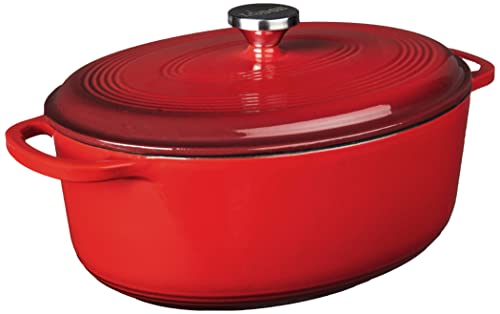 Lodge 7 Quart Enameled Cast Iron Oval Dutch Oven with LidPick$84Enameled · value · warrantyMost people
 Le Creuset Enameled Cast Iron Signature Round Dutch Oven$279Lightest · versatile · heirloomThe benchmark
 Staub Cast Iron 5.5-Quart Round Cocotte$350Matte interior · best braiserBraising
They cook nearly the same — so what's the extra $300 for?
Here's the thing nobody selling you a $400 pot leads with: all enameled cast iron cooks remarkably alike. It's heavy iron — which holds and spreads heat slowly and evenly — coated in enamel so it won't react with acidic food. A braise, a stew, a loaf of no-knead bread comes out essentially the same from a $100 Lodge as from a $400 Le Creuset or Staub. If your goal is good food, the budget pot gets you there.
So what does the extra money actually buy? Real things — just not better cooking:
- Weight. Le Creuset uses purer iron, so its pots are noticeably lighter than the same-size Lodge or Staub — which matters every time you lift a full pot of stew.
- Enamel quality. The French brands' enamel is finer, and Le Creuset's is the most chip-resistant; a Lodge's enamel is good but a touch more utilitarian.
- The interior. Staub's matte-black enamel is naturally more non-stick and built for searing and braising; Le Creuset and Lodge use a lighter, smoother interior that makes browning easier to see.
- The looks, and the heirloom. The iconic colors, the heft, the lifetime reputation — a Le Creuset or Staub is a pass-it-down object in a way a Lodge isn't.
None of that changes how dinner tastes. It changes how the pot feels to own and use over decades. Decide whether that's worth three to four times the price to you — there's no wrong answer.
 Best for most people
Lodge 7 Quart Enameled Cast Iron Oval Dutch Oven with Lid
The smart buy, full stop. The Lodge enameled cast iron Dutch oven does the actual job of a Dutch oven — slow, even, heat-holding braises, stews, soups, and bakery-quality bread — as well as pots costing four times as much, because the physics of heavy enameled iron is the same whatever the badge. It's a touch heavier and a little less refined than the French brands, and the enamel is more workhorse than jewel, but Lodge backs it with a warranty that covers chips and cracks, and at this price it's the pot that lets you put the savings into ingredients. If you want a Dutch oven to cook with rather than display, start — and very possibly stop — here.
What's good
- Cooks braises, stews, and bread as well as $400 pots
- A quarter of the price of the French brands
- Warranty covers chips and cracks
- The honest value pick — most people need nothing more
What's not
- Heavier than a same-size Le Creuset
- Enamel is workhorse-grade, not jewel-fine
- Lacks the looks and heirloom cachet of the premiums
 The benchmark heirloom
Le Creuset Enameled Cast Iron Signature Round Dutch Oven
The one you buy to keep for life. The Le Creuset Signature is the pot every other Dutch oven is measured against: the lightest cast iron here (purer iron ore), the most chip-resistant enamel, and the most versatile performance — it sears, braises, bakes, and serves at the table with equal ease, in the colors that made it an icon. You're not buying better-tasting food than the Lodge makes; you're buying a refined, lighter, longer-lasting object you'll hand down, with a brand and warranty to match. If a Dutch oven is going to live on your stove for the next thirty years, this is the one most people are happiest to have spent up on.
What's good
- Lightest cast iron here — easier to lift when full
- The most chip-resistant, refined enamel
- Endlessly versatile — sear, braise, bake, serve
- The iconic heirloom you pass down
What's not
- Three times the Lodge's price for similar cooking
- You're paying for refinement and looks, not better food
- Still heavy compared with non-cast-iron pots
 The braiser's pick
Staub Cast Iron 5.5-Quart Round Cocotte
For people who braise. The Staub Cocotte is built around two things the others don't quite match: a matte-black enamel interior that's naturally more non-stick and made for searing, and an unusually tight-sealing lid (often with little spikes underneath) that traps and recirculates moisture better than almost any pot — exactly what a long braise wants. If your cooking leans toward slow-cooked meats, stews, and anything where keeping moisture in matters, Staub is the connoisseur's choice. The costs are real: it's the heaviest and priciest here, and the dark interior makes it slightly harder to judge browning. But for braising, it's superb.
What's good
- Matte-black interior — naturally non-stick, great for searing
- Tightest-sealing lid — superb moisture retention for braises
- Beautifully made; an heirloom in its own right
- The specialist's pick for slow-cooked dishes
What's not
- Heaviest pot here, and the most expensive
- Dark interior makes browning harder to judge
- Overkill if you don't braise often
Two things keep an enameled Dutch oven happy for decades. First, enameled is the all-rounder: unlike bare cast iron, the enamel won't react with tomatoes, wine, or vinegar, so you can braise and simmer acidic dishes freely — which is most of what a Dutch oven is for. Second, don't blast it on high, dry heat — the enamel can craze or discolor. Preheat on medium with a little oil, never put a hot pot under cold water (thermal shock chips enamel), and clean with a non-abrasive sponge. Treated this way, any of these pots — the Lodge included — will outlive most of your other cookware.
How to choose between the three
Pick the Lodge if you want a Dutch oven to cook with. It braises, stews, and bakes as well as the $400 pots, carries a chip-and-crack warranty, and leaves the savings for ingredients. For most people, this is the whole answer.
Pick the Le Creuset if you want the heirloom — the lightest pot here, the finest enamel, the most versatility, and the looks, to keep and hand down. You're buying refinement and longevity, not better food.
Pick the Staub if you braise often and want the best at it — the matte non-stick interior and tight, moisture-trapping lid are made for slow-cooked meats and stews.
If you're unsure, get the Lodge. It cooks like the expensive ones; everything above it is about how the pot feels to own, not how dinner tastes.
Before you buy
5.5 to 7 quarts is the sweet spot. Big enough for a chicken, a loaf, or a family braise; not so big it's unwieldy. One round pot this size covers most cooking.
Round, not oval. A round pot heats more evenly on a round burner and is more versatile; ovals mainly exist to fit a long roast.
Pay for the pot, not the color. Premium-brand 'special' colors cost more for the same pot — buy the cheapest colorway you like.
Price buys feel and longevity, not better food. If 'cooks the same' is enough, the Lodge is the answer; if you want the object, spend up with open eyes.
Check the knob. A metal or high-temp knob lets you use the pot in a hot oven for bread; some cheaper lids have plastic knobs that cap the oven temperature.
Common questions about Dutch ovens
Is an expensive Dutch oven worth it?
Lodge vs Le Creuset vs Staub — what is the real difference?
What size Dutch oven should I buy?
Enameled or bare cast iron — which should I get?
Round or oval Dutch oven?
How do I care for an enameled Dutch oven?
For most people, the Lodge 7 Quart Enameled Cast Iron Oval Dutch Oven with Lid is the buy — it cooks braises, stews, and bread as well as pots four times the price (~$100), with a chip-and-crack warranty. Want the lightest, finest heirloom? The Le Creuset Enameled Cast Iron Signature Round Dutch Oven is the benchmark. Braise a lot? The Staub Cast Iron 5.5-Quart Round Cocotte's matte interior and tight lid are made for it. None of them makes better food than the Lodge — they make a nicer object to own.
Ready to actually do it?
The first cooking quest takes an evening, and it tells you whether the gear was worth it better than any review can.
Start CookingThe HobbyStack editorial team researches each guide using practitioner communities, published resources, and direct input from active hobbyists. Every guide is reviewed for accuracy before publication and updated when practices change.
About our editorial process →More gear guides
All guides
Best Chef's Knife for Beginners 2026: Victorinox vs Wüsthof vs Shun
A chef's knife is the most important tool in any kitchen, and the best news for beginners is that the cheap one is genuinely excellent. The Victorinox Fibrox is what culinary schools and professional kitchens use, for around $50. So the real question isn't which knife cuts best, a sharp one of any of these does, but whether you want to spend up for a German or Japanese knife's feel. Here's the honest breakdown.

Best Skillet for Beginners (2026): 3 Real Picks
A skillet is the one pan you'll reach for most, so it's worth getting right, and the honest truth is the best skillet depends on what you cook. Cast iron is cheap, lasts forever, and sears beautifully but is heavy and needs care; nonstick makes eggs and delicate food effortless but wears out; carbon steel is the restaurant choice, searing like cast iron but lighter and more responsive. Rather than budget-to-best of one thing, these are three genuinely different pans for three ways of cooking. Here they are, plus how to pick the one that fits your kitchen.
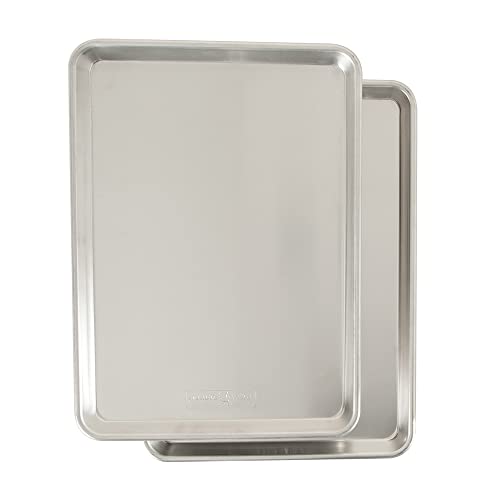
Best Baking Sheet for Beginners (2026): Why Half-Sheet Aluminium Wins
A baking sheet is the most-used pan in most kitchens and the one people spend least time choosing. The cheap ones warp with a bang the first time they hit a hot oven, and a warped sheet cooks unevenly forever after. The fix is not expensive: a heavy half sheet in bare aluminium with a rolled rim, which is what professional kitchens have used for decades.

Best Beginner Stand Mixer 2026: KitchenAid Artisan vs Classic vs Pro 600
Stand mixers are a one-time purchase that lasts decades. Pick the right KitchenAid (it's almost always going to be a KitchenAid) and you'll never need to think about it again. Pick wrong and you'll end up reselling and rebuying within 5 years.

Best Kitchen Scale for Baking 2026: Escali vs Ozeri vs OXO
A kitchen scale is the single most important tool in baking: weight is exact where measuring cups aren't, and switching to grams is the fastest way to make your recipes finally come out the same every time. The good news: accuracy is basically a solved problem, so the real choice isn't which scale weighs best (they're all spot-on) but which features you want. Here's the honest breakdown.
Best Mixing Bowls for Baking (2026): Stainless, Glass or Plastic
Mixing bowls are the piece of kit people own by accident — whatever came with the house, in whatever sizes. It mostly does not matter, with one real exception: plastic bowls will stop egg whites whipping, and almost nobody is told why. Beyond that it is about weight, nesting, and owning three rather than one.