Best Dip Pen Nibs (2026): New Nibs Are Coated and Will Not Take Ink
A brand new nib dipped in ink will often refuse to write, and almost every beginner concludes they have bought a dud. Nibs ship with a thin oil or lacquer coating to stop them rusting in the packet, and ink beads off it. Until you remove that coating, nothing is going to work.
HobbyStack may earn a commission from links on this page at no extra cost to you. Our picks are chosen on merit; the commission helps fund the research.
- Clean the factory coating off a new nib or it will not hold ink.
- Flex is what gives line variation. Pressure spreads the tines and widens the stroke.
- Railroading is tines splayed too far so ink stops bridging. Ease off.
- Pointed nibs do copperplate and Spencerian. Broad-edge nibs do italic and blackletter.
- Dry nibs immediately. Steel rusts in hours, not days.
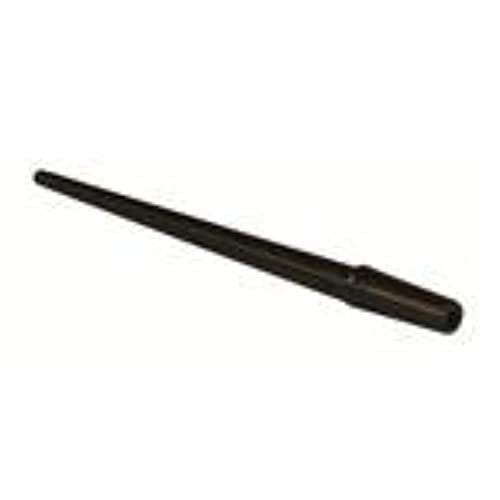

Preparing a new nib, which nobody tells you
Nibs are coated at the factory. A thin film of oil or lacquer protects the steel from corrosion between manufacture and use. Ink is water-based, so it beads straight off it. The nib looks fine and simply will not write, or writes a broken, skipping line.
Removing it takes a minute. Any of these work:
- Toothpaste on a toothbrush, scrubbed over both faces, then rinsed and dried thoroughly. The gentlest method.
- Potato. Push the nib into a raw potato and leave it for a few minutes. The starch strips the coating, and this is the traditional calligrapher's trick.
- A quick pass through a flame. Effective and the riskiest: too long and you soften the temper of the steel, which permanently ruins the flex.
You will know it worked when ink sits evenly on the nib instead of pulling into beads.
Then the other half: nibs rust. They are carbon steel, they are repeatedly dipped in water-based ink, and they are not stainless. Leave one wet and it will have orange spots within hours.
So the routine is: rinse in water, dry completely with a cloth or kitchen paper, every single time you finish. A rusted nib writes scratchily, catches on paper and eventually fails.
Nibs are consumables. Tines lose their spring, the tip wears, and the point goes slightly blunt. A nib used regularly lasts weeks to a few months, which is why they are sold in packs of ten.
Flex, pointed versus broad-edge, and railroading
Flex is the whole point of a pointed nib. The nib is split into two tines. Press down and they spread apart, which widens the line; release and they close, which narrows it. That pressure-controlled line variation is what makes copperplate and Spencerian look the way they do, and no fountain pen or marker reproduces it.
Flexibility is a spectrum and it is a skill match.
- Firm nibs, like the Nikko G, need real pressure to spread. Less dramatic contrast, far more forgiving, and much harder to damage. This is the beginner nib.
- Very flexible nibs, like the Brause Rose, spread enormously under light pressure. Spectacular thick-to-thin contrast, and they catch, splay and dig into paper the moment your pressure is inconsistent.
Starting on a very flexible nib is the commonest reason people conclude they have no aptitude for this.
Then the other family entirely. Broad-edge nibs have a flat chisel tip and do not flex at all. Line width comes from the angle you hold the pen, not from pressure. That is how italic, blackletter and uncial are written, and it is a completely different technique. A pointed-nib set will not do italic and vice versa.
Railroading is the beginner fault with a name. The tines spread so far apart that ink can no longer bridge the gap, and you get two parallel lines with a blank channel between them, like rails. The causes: too much pressure, not enough ink on the nib, or moving too fast on the downstroke. Ease off, re-dip more often, and slow the thick strokes.
 Best for finding what you like
14 Pcs Calligraphy Nibs Dip Pen Nibs Holders with Comic Wooden Drawing Pens Holder with Stainless Steel Nib, Oblique Calligraphy Dip Pens Set Fluid Writer Pen for Writing, Painting, Signing, Sketch
Fourteen assorted nibs with holders for the price of a coffee, which is the right first purchase because nib preference is genuinely personal and no amount of reading substitutes for trying several. An assortment lets you feel the difference between firmer and more flexible tines, and between pointed and broader shapes, on the same afternoon. Quality is what the price suggests, and these are for learning on rather than for finished work.
What's good
- Fourteen nibs and holders for a few dollars
- Lets you feel the range of flex and shape
- Includes holders, so nothing else needed
- No loss if you ruin several learning
What's not
- Quality is variable between nibs
- No named nibs to reorder when you find one you like
- Not good enough for finished work
- Still needs the factory coating cleaning off
 Best for most beginners
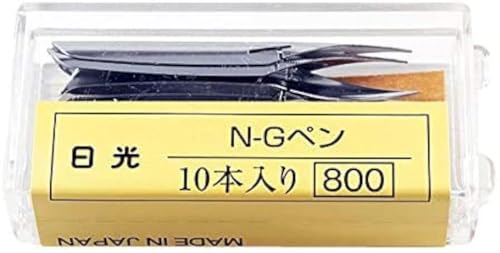
Nikko Manga Pen Nib N-Gpen, 10 Nibs (1 Pack) with Anti Rust Paper for Storage
The nib almost every calligraphy teacher recommends first, and the reason is its firmness. It needs genuine pressure to spread the tines, which means inconsistent pressure produces a slightly uneven line rather than a catastrophe, and it is very hard to damage by pressing too hard. Ten to a pack with an anti-rust treatment, because nibs are consumables. Contrast is less dramatic than a flexible nib, which is exactly the trade you want early.
What's good
- Firm enough to be genuinely forgiving
- The nib most teachers start students on
- Ten per pack, which matches how fast nibs wear
- Anti-rust treatment in the packet
What's not
- Less thick-to-thin contrast than flexible nibs
- Needs real pressure, which tires the hand at first
- Pointed only, so no italic or blackletter
- Still needs cleaning before first use
 Best for dramatic contrast
Brause Rose 76 Nib (Pack of 3)
A genuinely flexible German nib that spreads widely under light pressure, which produces the dramatic hairline-to-broad contrast that copperplate and Spencerian are admired for. Brause have made nibs for over a century and the consistency shows. The flexibility is also why it is unforgiving: it catches on paper, splays and railroads the instant your pressure wavers, and it will dig in and spray if you push a downstroke too hard.
What's good
- Dramatic hairline to broad contrast
- Brause consistency over a century of making nibs
- What experienced copperplate work is written with
- Rewards good pressure control immediately
What's not
- Very unforgiving of inconsistent pressure
- Catches and railroads easily while learning
- Only three per pack at twice the price
- Needs smooth paper to behave
This catches nearly everyone once, and people return perfectly good nibs over it. Ink beading or sliding off a new nib means the factory anti-rust film is still on it. Scrub both faces with toothpaste on an old toothbrush, rinse, and dry completely; or push the nib into a raw potato for a few minutes. You will see the difference immediately when ink sits evenly instead of pulling into droplets.
Holding it, and the rest of the setup
Thin strokes up, thick strokes down. Pointed nib work is built on this: you never press on an upstroke, because the tines dig into the paper and catch. All the pressure, and therefore all the thickness, happens pulling downward.
Keep the nib aligned with the stroke. The split between the tines should point along the direction you are pulling. Pulling sideways loads one tine more than the other and the nib will catch.
An oblique holder angles the nib relative to the handle, which lets a right-handed writer keep the tines aligned on the steep slant copperplate requires. A straight holder works for broad-edge and for scripts with less slant.
Dip to just above the vent hole, not deeper. An overloaded nib blobs the first stroke.
Use smooth paper. Textured paper catches tines and shreds the fibres, and the resulting furry line looks like a technique problem. Smooth, well-sized paper fixes a lot of apparent faults.
Keep a water jar and a cloth beside you. Wipe the nib every few dips; dried ink in the vent hole changes the flow.
Expect to go through nibs. A worn nib that catches is not a skill problem, and persisting with one teaches you to compensate for a fault.
Before you buy
Start with a firm nib. Flexible nibs punish inconsistent pressure.
Pointed for copperplate and Spencerian, broad-edge for italic and blackletter.
Buy in packs. Nibs are consumables that last weeks.
Clean the factory coating off before the first dip.
Get smooth paper at the same time.
Dip pen nib questions
Why will my new nib not hold ink?
What does nib flex actually do?
What is railroading and how do I stop it?
Can I use a pointed nib for italic?
Buy the Nikko G ten-pack. It is firm enough to be forgiving while you learn pressure control, it is what most teachers start students on, and ten nibs matches how quickly they actually wear out. Add the cheap assorted set alongside it to feel the range. Move to the Brause Rose once your pressure is consistent and you want real contrast. Clean whichever you buy before the first dip.
Ready to actually do it?
The first calligraphy quest takes an evening, and it tells you whether the gear was worth it better than any review can.
Start CalligraphyThe HobbyStack editorial team researches each guide using practitioner communities, published resources, and direct input from active hobbyists. Every guide is reviewed for accuracy before publication and updated when practices change.
About our editorial process →More gear guides
All guides
Best Calligraphy Starter Kits for Beginners: Dip Pens, Speedball, and the Pilot Parallel
The right starter kit makes the difference between smooth, satisfying letters and a frustrating mess of ink blots and scratchy strokes. Here are the three kits worth buying first, and why a cheap brush-pen bundle is not one of them.

Best Calligraphy Pen Holders (2026): Straight, Oblique and Why It Matters
The holder is the cheapest part of dip-pen calligraphy and the one that decides whether the script you want is even possible. A straight holder is fine for most hands and most styles. Copperplate and Spencerian, with their steep slant, are very hard to write with one — and that is the whole reason the strange-looking oblique holder exists.

Best Beginner Acrylic Paint Set 2026: Liquitex BASICS and Where to Start
Acrylics are the best paint to start with: fast-drying, water-cleanup, and forgiving, but the cheapest craft-store paints are so thin and chalky they'll put you off. The fix is student-grade acrylics with real pigment, which cost barely more. Here are three sets, from the beginner standard to a pro-quality upgrade.

Best Canvas for Painting (2026): Cotton, Linen, and What Primed Really Means
Almost every cheap canvas says pre-primed, and almost every painter adds more primer anyway. Factory gesso is applied thinly to keep costs down, so paint sinks into the weave, colours dry dull and you use two or three times as much of an expensive tube as you needed to.

Best Easel for Beginners (2026): Tabletop, H-Frame or Neither
An easel is the piece of painting equipment people buy first and need last. Watercolour is usually painted flat or at a shallow angle; small acrylic and oil studies work fine propped against a stack of books. What an easel really buys you is the ability to stand back, see the whole picture at once, and work at a size your table cannot hold.

Best Graphite Pencils for Beginners (2026): 3 Picks
Graphite pencils come in a range of grades, from hard (H) that make light, thin lines to soft (B) that make dark, smudgy ones. For a beginner, the one spec that actually matters is getting a set that spans that range, roughly 2H to 8B, so you can shade properly instead of pressing harder on one pencil. Any of these three will do that.