Best Calligraphy Starter Kits for Beginners: Dip Pens, Speedball, and the Pilot Parallel
The right starter kit makes the difference between smooth, satisfying letters and a frustrating mess of ink blots and scratchy strokes. Here are the three kits worth buying first, and why a cheap brush-pen bundle is not one of them.
HobbyStack may earn a commission from links on this page at no extra cost to you. Our picks are chosen on merit; the commission helps fund the research.
- For most beginners, the Speedball Calligraphy Lettering Set is the best first kit — it has the pen, multiple nibs, ink, and an instruction book in one box.
- A pointed-nib dip pen makes thin-and-thick "modern calligraphy" scripts; a broad-edge nib makes traditional italic and gothic. Know which look you want before you buy.
- The Pilot Parallel Pen is the easiest mess-free way in — it is a fountain pen, so there is no dipping and almost no blotting.
- Cheap craft-store brush-pen bundles fray within weeks. Spend a little more on one good kit than a lot on a drawer of dead pens.
- Paper matters more than beginners expect: cheap paper feathers and bleeds, which makes even good technique look bad.
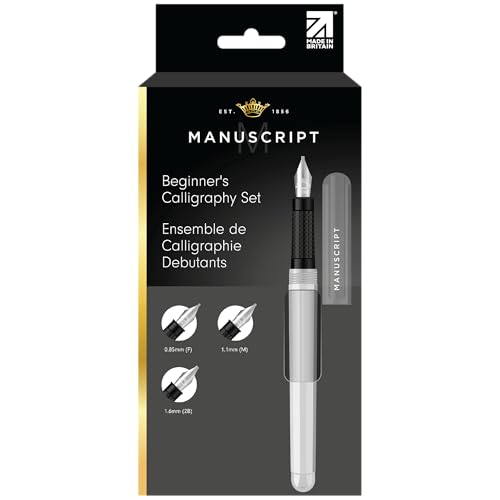 Manuscript Calligraphy KitTrying it cheaply$11Check price
 Our pickSpeedball Calligraphy Lettering SetMost beginners$40Check price
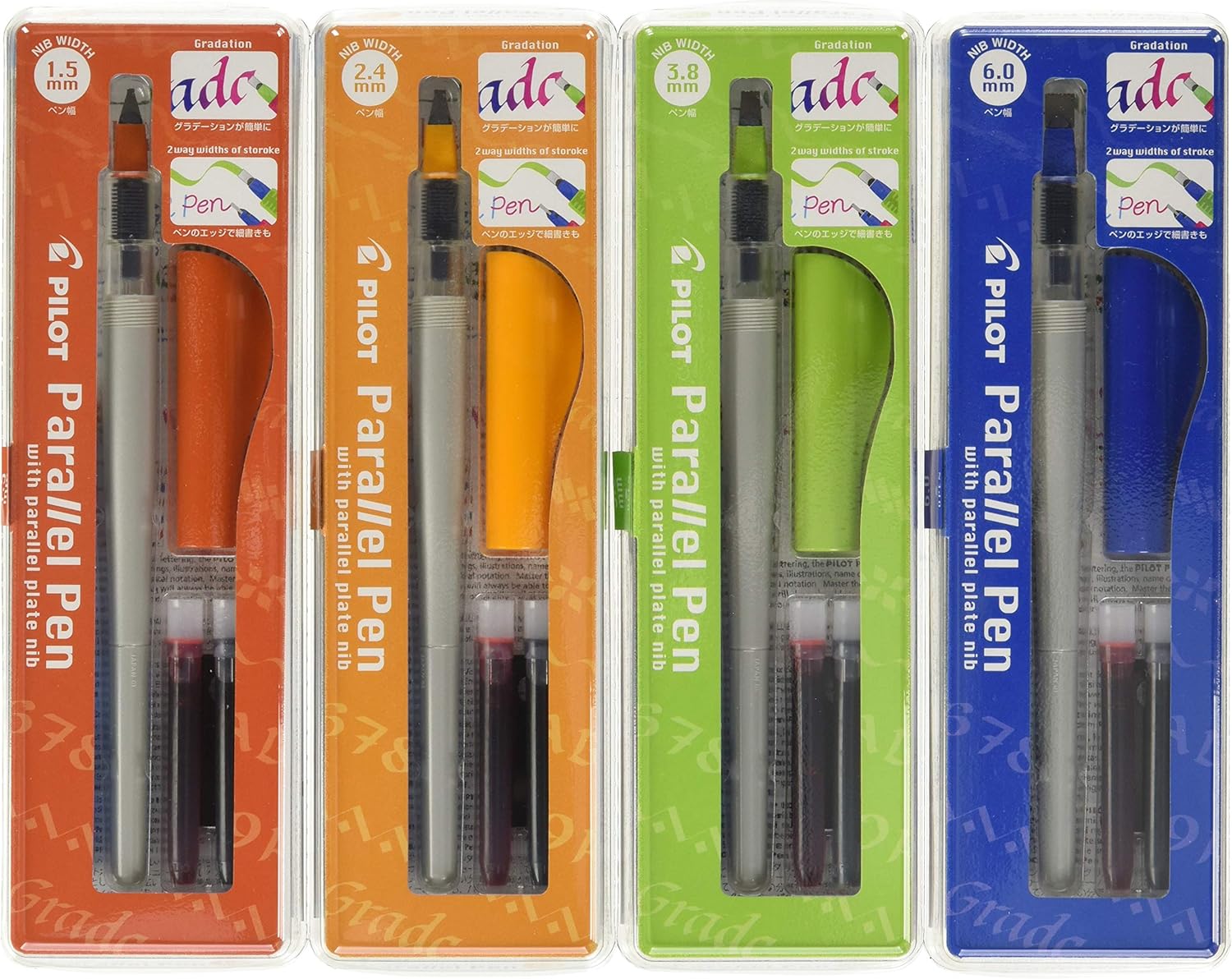 Pilot Parallel Pen Set (4 pens)Mess-free practice$37Check price
Dip pen, brush pen, or fountain pen?
Calligraphy splits into a few tools, and picking the wrong one is the most common beginner mistake.
Dip pens are the traditional route: a holder plus interchangeable metal nibs you dip in ink. They are cheap, versatile, and the standard for both modern (pointed-nib) and traditional (broad-edge) lettering — but they have the steepest learning curve and the most mess. Brush pens are felt- or bristle-tipped markers that flex like a brush; lovely for modern lettering, but the cheap bundles fray fast and teach bad habits. Fountain calligraphy pens like the Pilot Parallel hold their own ink and lay a crisp broad-edge line with no dipping — the gentlest on-ramp of all.
If you are unsure, a dip-pen starter kit teaches you the most transferable skill. If you hate mess, start with the Pilot Parallel.
Pointed nib vs broad-edge nib
This is the decision that actually shapes what your writing looks like. A pointed nib (flexible, comes to a sharp point) creates the thin-up, thick-down strokes of "modern calligraphy" and Copperplate — the script you see on wedding invitations. A broad-edge nib (a flat chisel tip) creates the even, angular strokes of Italic, Gothic, and Uncial — the traditional manuscript look.
A good starter kit like the Speedball includes both styles so you can try each. Do not buy a drawer of exotic nibs on day one; learn to control one nib before you collect more.
 Best budget kit
Manuscript Calligraphy Kit
The cheapest honest way in. A basic dip-pen set with a holder, a handful of nibs, and a bottle of ink — fine for discovering whether you enjoy the dip-pen process before spending more.
What's good
- Genuinely cheap entry point
- Real dip-pen experience, not a toy
- Includes ink and a basic guide
What's not
- Fewer nibs than the Speedball kit
- Ink and paper are basic — you will upgrade
 Best overall starter kit
Speedball Calligraphy Lettering Set
The kit to buy if you buy one. Speedball packs a pen, a useful spread of both pointed and broad-edge nibs, ink, and a 48-page instruction book into one box — so you can try several lettering styles and actually learn from the included guide.
What's good
- Both pointed and broad-edge nibs included
- The instruction book is genuinely good
- Everything in one box — no guesswork
What's not
- Still a dip pen — expect some mess while learning
- Paper not included; buy a smooth pad alongside
 Best no-mess upgrade
Pilot Parallel Pen Set (4 pens)
The mess-free favourite. The Pilot Parallel is a fountain pen, so there is no dipping and almost no blotting — just consistent broad-edge lines. The four-pen set spans fine to bold, and the clever overlapping-nib trick lets you blend ink colours. The easiest way to practise daily without a workspace full of ink.
What's good
- No dipping — practise anywhere, anytime
- Crisp, consistent broad-edge line
- Four widths plus colour-blending tricks
What's not
- Broad-edge only — not for pointed-nib modern scripts
- Cartridges are an ongoing cost
The fastest way to feel like you "cannot do calligraphy" is cheap paper. Printer paper feathers and bleeds, smearing even good strokes. A smooth, heavier marker or layout pad (Rhodia, HP Premium 32lb, or a dedicated calligraphy pad) makes a bigger difference to your first results than any nib upgrade.
Before you buy
Decide your target look first: pointed-nib "modern" scripts vs broad-edge traditional ones use different tools.
Start with one nib and master basic strokes before collecting more.
New dip nibs have a factory coating — wipe them with a little toothpaste or saliva so ink flows.
Keep a jar of water and a rag at hand; clean nibs the moment you finish or ink dries and ruins them.
Buy a smooth practice pad — paper choice affects your results more than the pen at this stage.
Calligraphy kit questions
What is the best calligraphy kit for a complete beginner?
Are brush pens or dip pens better for beginners?
What is the difference between a pointed nib and a broad-edge nib?
Why does my ink feather and bleed?
Do I need special ink?
For most people, buy the Speedball Calligraphy Lettering Set and a smooth practice pad: it gives you both nib styles, ink, and a real instruction book for about $30. If the idea of dipping and cleaning puts you off, start with the Pilot Parallel Pen instead — it is the closest thing to mess-free calligraphy, and you will practise more because of it.
Ready to actually do it?
The first calligraphy quest takes an evening, and it tells you whether the gear was worth it better than any review can.
Start CalligraphyThe HobbyStack editorial team researches each guide against manufacturer specifications, published resources and practitioner sources. Every product is checked for availability and described against its current listing before publication, and prices are re-checked when guides are updated.
About our editorial process →More gear guides
All guides
Best Calligraphy Pen Holders (2026): Straight, Oblique and Why It Matters
The holder is the cheapest part of dip-pen calligraphy and the one that decides whether the script you want is even possible. A straight holder is fine for most hands and most styles. Copperplate and Spencerian, with their steep slant, are very hard to write with one — and that is the whole reason the strange-looking oblique holder exists.
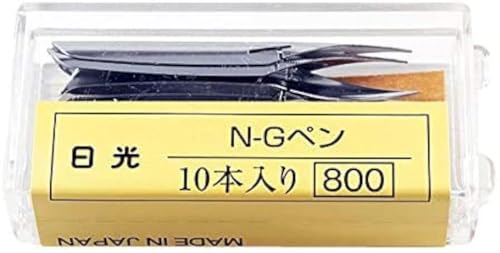
Best Dip Pen Nibs (2026): New Nibs Are Coated and Will Not Take Ink
A brand new nib dipped in ink will often refuse to write, and almost every beginner concludes they have bought a dud. Nibs ship with a thin oil or lacquer coating to stop them rusting in the packet, and ink beads off it. Until you remove that coating, nothing is going to work.

Best Beginner Acrylic Paint Set 2026: Liquitex BASICS and Where to Start
Acrylics are the best paint to start with: fast-drying, water-cleanup, and forgiving, but the cheapest craft-store paints are so thin and chalky they'll put you off. The fix is student-grade acrylics with real pigment, which cost barely more. Here are three sets, from the beginner standard to a pro-quality upgrade.

Best Canvas for Painting (2026): Cotton, Linen, and What Primed Really Means
Almost every cheap canvas says pre-primed, and almost every painter adds more primer anyway. Factory gesso is applied thinly to keep costs down, so paint sinks into the weave, colours dry dull and you use two or three times as much of an expensive tube as you needed to.

Best Easel for Beginners (2026): Tabletop, H-Frame or Neither
An easel is the piece of painting equipment people buy first and need last. Watercolour is usually painted flat or at a shallow angle; small acrylic and oil studies work fine propped against a stack of books. What an easel really buys you is the ability to stand back, see the whole picture at once, and work at a size your table cannot hold.

Best Graphite Pencils for Beginners (2026): 3 Picks
Graphite pencils come in a range of grades, from hard (H) that make light, thin lines to soft (B) that make dark, smudgy ones. For a beginner, the one spec that actually matters is getting a set that spans that range, roughly 2H to 8B, so you can shade properly instead of pressing harder on one pencil. Any of these three will do that.