Best Essential Oil Diffuser for Beginners (2026): 3 Picks for Every Room
A diffuser is the heart of aromatherapy at home, and the kind you want is an ultrasonic diffuser: it disperses a cool mist of water and essential oil without heat, so the oils keep their properties instead of being cooked off. The main things that matter are tank size (how long it runs) and your room size. Here are three good ones, from a tiny bedside unit to a large-room diffuser with oils included.
HobbyStack may earn a commission from links on this page at no extra cost to you. Our picks are chosen on merit; the commission helps fund the research.
- Get an ultrasonic diffuser: it disperses a cool water-and-oil mist without heat, so the oils are not degraded.
- Tank size sets the runtime: a small tank suits a bedside table, a 300 to 500ml tank covers a living room for hours.
- Auto shut-off (when the water runs out) is a must-have and standard on good units.
- The oils are the ongoing cost. Start with a small set of versatile scents (lavender, eucalyptus, citrus).
 InnoGear Essential Oil DiffuserA great little diffuser for very little$14Check price
 Our pickASAKUKI 500ml Essential Oil DiffuserThe all-rounder most people should buy$21Check price
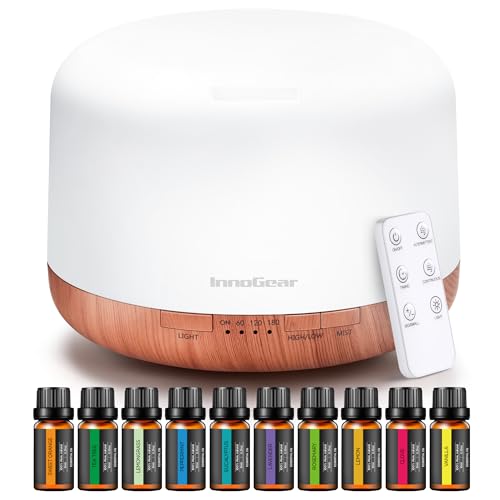 InnoGear Diffuser with 10 Essential Oils SetA complete start with oils included$30Check price
The diffuser type to buy is ultrasonic, and the reason is simple: it uses high-frequency vibration to break water and a few drops of essential oil into a fine, cool mist. Because there is no heat involved, the oils keep their aromatic properties rather than being cooked off the way a heat or candle diffuser can do. Ultrasonic units are also quiet, safe to leave running, and double as a light humidifier, which is why they are the standard choice for home aromatherapy.
Once you are looking at ultrasonic diffusers, two practical things decide which one fits you: tank size and room size. A small tank (around 100 to 150ml) is perfect on a bedside table or desk and runs a few hours; a larger 300 to 500ml tank covers a living room or open space and runs much longer between refills. Look for auto shut-off (so it turns off safely when the water is gone), which good units all have. The oils themselves are the ongoing cost, so it is worth starting with a small set of versatile scents.
 Best budget diffuser
InnoGear Essential Oil Diffuser
The little diffuser that punches way above its price. This compact InnoGear ultrasonic unit disperses a cool oil mist quietly, has auto shut-off, and usually includes soft mood lighting, which is everything you need on a bedside table or desk. The small tank means shorter runtimes and it will not scent a whole open-plan room, but for a bedroom or workspace it is genuinely all most beginners need.
What's good
- Ultrasonic cool mist, quiet
- Auto shut-off and mood lighting
- Perfect for a bedside or desk
- Extremely affordable
What's not
- Small tank means shorter runtime
- Not for large open rooms
 Best for most beginners
ASAKUKI 500ml Essential Oil Diffuser
The one most people should buy. The ASAKUKI 500ml is a hugely popular ultrasonic diffuser for a good reason: the large tank runs for many hours and scents a whole living room, and it has the features you want (auto shut-off, adjustable mist, and multi-colour lighting) at a very fair price. It is the no-overthinking pick that works in the room where you actually spend your time.
What's good
- Large 500ml tank, long runtime
- Scents a whole living room
- Auto shut-off, adjustable mist, lighting
- Hugely popular and well-priced
What's not
- Bigger footprint than a bedside unit
- Larger tank takes longer to refill
 Best complete starter
InnoGear Diffuser with 10 Essential Oils Set
The complete starter that solves the two purchases at once. You get a capable ultrasonic diffuser and a set of ten essential oils to go with it, so you can start experimenting with scents the moment it arrives rather than buying oils separately. For a beginner unsure which oils to get, having a curated set of versatile scents included makes this the easiest way to actually get going.
What's good
- Diffuser plus 10 starter oils
- Nothing else to buy to begin
- Great range of scents to explore
- Solves the oils question for beginners
What's not
- Included oils are starter-grade
- Costs more than the diffuser alone
Choose an ultrasonic diffuser over a heat or candle-based one. Ultrasonic units use vibration to make a cool mist, so the essential oils keep their aromatic properties instead of being degraded by heat. They are also quiet, safe to run unattended (with auto shut-off), and gently humidify the air. Heat diffusers can alter the scent and are not the beginner default.
Which to buy: want a lovely little diffuser for a bedside table or desk on a tiny budget? The compact InnoGear is all most people need. Want one that scents your whole living room for hours? The ASAKUKI 500ml is the easy pick. Not sure which oils to buy? The InnoGear set includes ten so you can start straight away.
Before you buy
Match tank size to the room: small for a bedside or desk, 300 to 500ml for a living room.
Use only a few drops of oil per fill. More is not better and can leave residue.
Use distilled or filtered water if your tap water is hard, to reduce mineral buildup.
Clean it regularly (a little water and vinegar, then wipe dry) so the mist stays strong and the oils stay true.
Essential oil diffuser questions
What type of diffuser is best for beginners?
What size diffuser do I need?
How much essential oil do I put in a diffuser?
Do diffusers double as humidifiers?
What essential oils should a beginner start with?
How do I keep a diffuser working well?
For most beginners the ASAKUKI 500ml is the pick: a popular, large-tank ultrasonic diffuser that scents a whole room for hours at a fair price. Want a lovely little unit for a bedside or desk? The compact InnoGear. Not sure which oils to buy? The InnoGear set includes ten to start. Whatever you choose, go ultrasonic and match the tank size to your room.
Ready to actually do it?
The first aromatherapy quest takes an evening, and it tells you whether the gear was worth it better than any review can.
Start AromatherapyThe HobbyStack editorial team researches each guide against manufacturer specifications, published resources and practitioner sources. Every product is checked for availability and described against its current listing before publication, and prices are re-checked when guides are updated.
About our editorial process →More gear guides
All guides
Best Yoga Mat for Beginners 2026: Gaiam vs JadeYoga vs Manduka
The only thing that really matters in a beginner yoga mat is grip, a mat that slides turns downward dog into a battle. Thickness and material are the next decisions. Here are three mats that nail it, from an inexpensive Gaiam to a buy-it-for-life Manduka.

Best Beginner Pilates Mats (2026): 3 Picks
A Pilates mat is just a thicker exercise mat, usually 6mm to 12mm, so your spine, hips, and tailbone are not grinding into the floor during roll-ups and bridges. The one spec that actually matters is thickness plus a surface that does not slide when you push into it. Everything else is a nice-to-have.
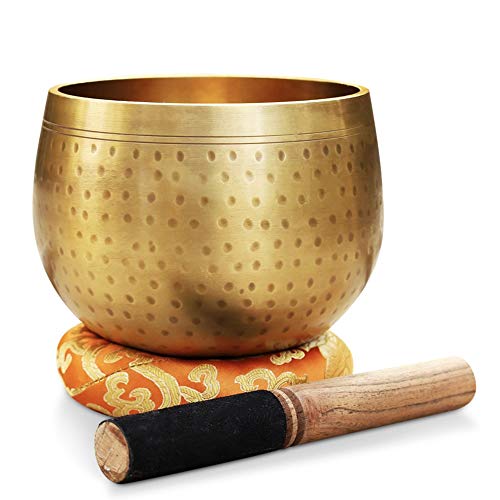
Best Singing Bowl (2026): Size Decides the Note
Singing bowls are sold with a great deal of claim attached, and almost none of it helps you choose one. The things that actually differ between bowls are acoustic and checkable: how big it is, how thick the wall is, whether it was hammered or spun, and how long it rings. Those decide the note you get and whether you enjoy playing it.

Best Beginner Meditation Cushions (2026): 3 Zafus
A zafu is the round cushion you sit on to meditate. It lifts your hips above your knees, which lets your back stack up straight so you can sit still without slumping or going numb. You can start free by folding a firm blanket, and honestly that works fine for a while. The one real choice here is the fill: buckwheat hulls (heavy, firm, adjustable) or foam (lighter, softer, holds its shape). Most people should get buckwheat.

Best Pottery Tool Set (2026): Six of the Twelve Do Nearly Everything
Open a twelve-piece pottery set and six tools will do nearly all your work: the wire cutter, a wooden rib, a metal rib, a loop trimming tool, a sponge and a needle tool. The rest get picked up once, found to duplicate something, and left in the canister for years.

Long Blade Freediving Fins (2026): Stiffness Is Matched to Your Legs, Not Your Ambition
Long blades are not about speed. A long blade moves a large volume of water per kick, so you cover distance at a slow, unhurried cadence instead of a fast one, and on a breath-hold the thing you are conserving is oxygen. A stiff blade you cannot load properly burns more of it than a soft blade you can.