Best Beginner Meditation Cushions (2026): 3 Zafus
A zafu is the round cushion you sit on to meditate. It lifts your hips above your knees, which lets your back stack up straight so you can sit still without slumping or going numb. You can start free by folding a firm blanket, and honestly that works fine for a while. The one real choice here is the fill: buckwheat hulls (heavy, firm, adjustable) or foam (lighter, softer, holds its shape). Most people should get buckwheat.
HobbyStack may earn a commission from links on this page at no extra cost to you. Our picks are chosen on merit; the commission helps fund the research.
- You can start free on a folded wool blanket or firm couch cushion. A zafu just makes sitting up straight easier so you stop fidgeting.
- Get buckwheat hull fill, not foam. It's firm, it doesn't flatten, and you can unzip it to add or remove hulls to set your height.
- Height matters more than looks. Most people want 5 to 7 inches so hips sit above the knees. Taller or stiffer hips want more.
- A zabuton (the flat mat underneath) is optional. Add one only if your ankles or knees dig into a hard floor.
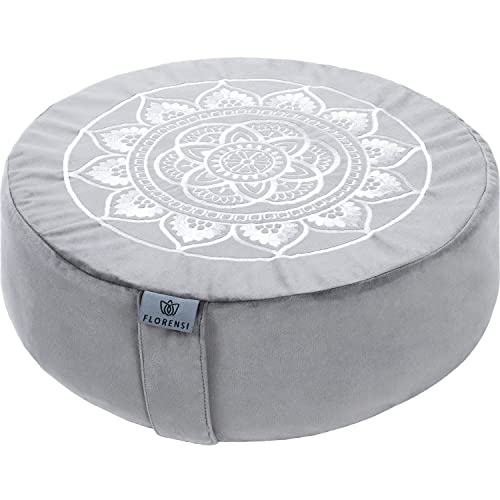 Florensi Meditation CushionSomeone who wants a real buckwheat zafu without overthinking it$45Check price
 Our pickWaterglider International ZafuThe all-rounder most people should buy and keep$30Check price
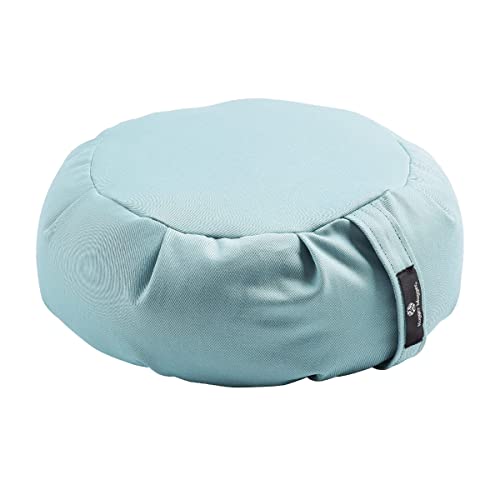 Hugger Mugger Zafu Meditation CushionSomeone who wants a durable, handmade cushion for years of daily sitting$84Check price
The whole point of a zafu is height under your butt. When your hips sit higher than your knees, your pelvis tips forward a little and your spine stacks up on its own. That's why sitting on a cushion feels less like work than sitting flat on the floor. If you're tall, stiff, or your knees float way up when you cross your legs, get a taller cushion or one you can pack full of buckwheat.
On fill: buckwheat hulls are the standard for a reason. They're firm, they don't compress into a flat pancake over time, and the good ones have a zipper so you can pour some out (lower and softer) or add more (taller and firmer). The tradeoff is weight. A buckwheat zafu runs 5 to 7 pounds, so it's not something you'll toss in a bag every day. Foam or kapok cushions are lighter and softer, but they slowly flatten and you can't tune the height. For a daily sit at home, buckwheat wins.
Common beginner mistake: buying a cushion that's too short because it looks tidy, then wondering why your back aches. Err taller and remove hulls if it's too much. The other mistake is overthinking the zabuton, the flat mat that goes under the cushion. It only cushions your ankles and knees against a hard floor. On carpet or a rug you probably don't need one. Sit on your cushion for a week first, and add a zabuton only if your legs are the thing that hurts.
 Best budget pick
Florensi Meditation Cushion
An affordable crescent zafu: buckwheat fill, soft velvet cover, unzips to adjust.
What's good
- Real buckwheat hull fill at a low price
- Crescent shape cradles the thighs, comfy for cross-legged sitting
- Cover unzips so you can add or remove hulls to tune height
- Machine-washable velvet cover
What's not
- At about 5 inches it can sit low for taller or stiff-hipped people
- Velvet looks nice but shows lint and pet hair
- Not as densely packed as pricier zafus out of the box
 Best for most beginners
Waterglider International Zafu
The reliable pick: firm USA buckwheat fill, organic cotton cover, easy to adjust.
What's good
- Packed with about 4.75 lb of USA-grown buckwheat, firm and supportive
- Removable, washable organic cotton cover
- Comes in round, crescent, and pleated shapes and several heights
- Zips open so you can dial in the fill amount
What's not
- Heavy, around 6 to 7 lb, so not a grab-and-go travel cushion
- Firm out of the box, some people remove a handful of hulls to soften it
- Costs more than a bare-bones foam cushion
 Best to grow into
Hugger Mugger Zafu Meditation Cushion
A well-built, handmade buckwheat zafu with a handle, made in the USA to last.
What's good
- Organic buckwheat fill in a tough, handmade cotton shell
- Traditional round tuffet shape gives solid height under the pelvis
- Built-in handle makes it easy to move room to room
- Made in the USA, built to hold up to daily use
What's not
- Most expensive of the three
- At 15 by 15 by 5 in it may still sit low for very stiff hips
- Heavy at about 6.75 lb
HobbyStack has a full Meditation overview with starter costs, the gear you actually need, and an honest take on what it's like to begin.
Before you buy
Sit on a folded blanket first to find your ideal height before buying.
Choose buckwheat fill if you want to adjust the height later.
Add a zabuton mat if your floor is hard on your knees and ankles.
Common questions
Do I really need a meditation cushion?
What fill is best for a meditation cushion?
What is a zabuton and do I need one?
You don't need to overthink your first cushion. The recommended pick suits most beginners. Go budget to spend less, or premium to grow into.
Ready to actually do it?
The first meditation quest takes an evening, and it tells you whether the gear was worth it better than any review can.
Start MeditationThe HobbyStack editorial team researches each guide against manufacturer specifications, published resources and practitioner sources. Every product is checked for availability and described against its current listing before publication, and prices are re-checked when guides are updated.
About our editorial process →More gear guides
All guides
Best Yoga Mat for Beginners 2026: Gaiam vs JadeYoga vs Manduka
The only thing that really matters in a beginner yoga mat is grip, a mat that slides turns downward dog into a battle. Thickness and material are the next decisions. Here are three mats that nail it, from an inexpensive Gaiam to a buy-it-for-life Manduka.
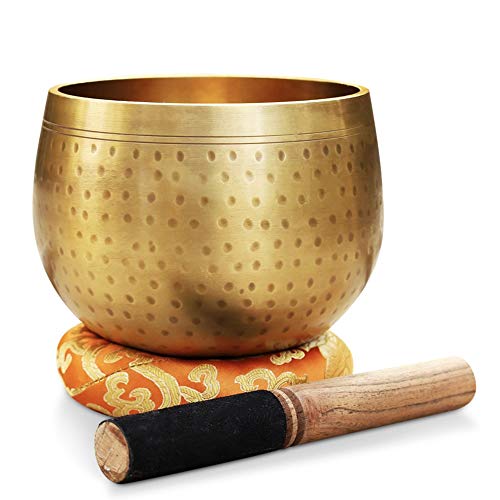
Best Singing Bowl (2026): Size Decides the Note
Singing bowls are sold with a great deal of claim attached, and almost none of it helps you choose one. The things that actually differ between bowls are acoustic and checkable: how big it is, how thick the wall is, whether it was hammered or spun, and how long it rings. Those decide the note you get and whether you enjoy playing it.

Best Beginner Pilates Mats (2026): 3 Picks
A Pilates mat is just a thicker exercise mat, usually 6mm to 12mm, so your spine, hips, and tailbone are not grinding into the floor during roll-ups and bridges. The one spec that actually matters is thickness plus a surface that does not slide when you push into it. Everything else is a nice-to-have.
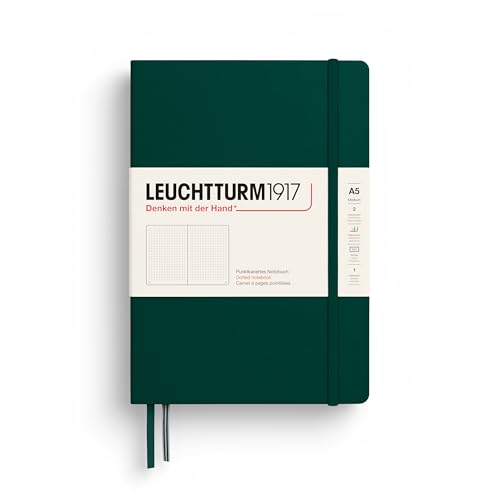
Best Beginner Journal 2026: value 3-pack vs Leuchtturm1917 vs Rhodia
Here is the honest truth about starting a journal: the notebook barely matters. People have filled beautiful journals with a 3 dollar spiral pad, and people have let a 200 dollar leather one sit empty out of fear of ruining it. What keeps you journaling is showing up, not the paper. That said, a notebook that lies flat and does not bleed ink can make the habit feel a little more inviting, and a bad one can quietly annoy you into quitting. So this guide keeps it simple: three real journals people actually buy, from cheap-but-good to a treat you can grow into. Pick one, start writing, and do not overthink it.

Best Pen for Journaling (2026): Gel, Ballpoint or Fountain
The pen is the only piece of journaling gear that can actually stop you writing. A pen that skips makes you reluctant to start, and ink that bleeds through ruins the other side of the page, which quietly halves the notebook you just bought. None of the fixes are expensive. They mostly come down to matching ink to paper.

Best Pottery Tool Set (2026): Six of the Twelve Do Nearly Everything
Open a twelve-piece pottery set and six tools will do nearly all your work: the wire cutter, a wooden rib, a metal rib, a loop trimming tool, a sponge and a needle tool. The rest get picked up once, found to duplicate something, and left in the canister for years.