Best Mortar and Pestle (2026): Rough Granite Beats Polished Marble
A mortar and pestle grinds by friction, so the single most important property is that the inside is rough. The beautiful polished marble sets sold as kitchen ornaments fail at this completely — spices skate around the bowl instead of breaking down. It is the most common way people buy the wrong one, and the difference is visible before you get it home.
HobbyStack may earn a commission from links on this page at no extra cost to you. Our picks are chosen on merit; the commission helps fund the research.
- The interior must be rough. A polished bowl lets spices slide instead of grinding.
- Unpolished granite is the best all-round material: heavy, rough, non-porous and cheap.
- Heavy is good. A light mortar walks across the worktop while you work.
- Season a new stone one before use — grind rice until the grit stops coming off.
- Crush and roll, do not pound. Pounding chips stone and throws seeds out of the bowl.
 Our pickPriorityChef Granite (1.5 cup)Most kitchens$22Check price
 ChefSofi Granite (3.5 cup)Batch grinding and pastes$50Check price
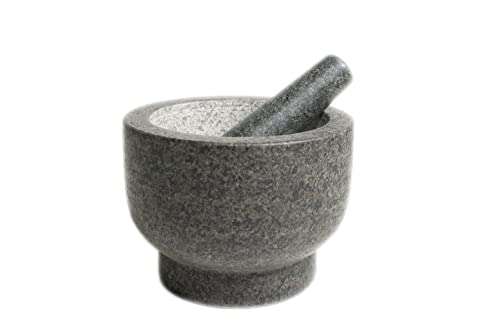 Frieling Goliath GraniteHeavy regular use$66Check price
Why texture beats everything
Grinding works by trapping material between two rough surfaces and applying pressure. If either surface is smooth, whole peppercorns and cumin seeds simply roll out from under the pestle and skate round the bowl.
That is why polished marble sets — the elegant white ones that photograph well — are largely decorative. They are also softer than granite, so the surface that little texture they have wears smooth quickly.
Unpolished granite is the practical answer: hard, naturally rough, non-porous once seasoned, and heavy enough to stay put. It is also cheap, because granite is cheap.
Other materials have their places. Ceramic is smoother and better suited to soft ingredients and wet pastes than to hard spices. Brass and cast iron are traditional in South Asian cooking and excellent, but they react with acid and need drying carefully. Wood is for soft herbs and garlic and absorbs flavours permanently.
If you buy one, buy unpolished granite.
Seasoning a new stone mortar
A new granite mortar sheds grit. Grind anything in it unseasoned and you will find stone dust in your food, which is unpleasant and slightly alarming.
The standard method: put a couple of tablespoons of uncooked white rice in the bowl and grind it to a powder. It will come out grey. Discard it, rinse, and repeat until the powder comes out white — usually three or four rounds, sometimes more on a very rough new stone.
Finish by grinding a little garlic, salt and cumin together and discarding that too. It removes any remaining stone taste and starts the seasoning.
After that, wash with water only. Detergent soaks into the stone and comes back out in your next batch of spices, which is a genuinely horrible way to ruin a curry paste. Rinse, scrub with a brush if needed, and dry it properly.
 Best for most kitchens
PriorityChef Mortar and Pestle Set
Unpolished granite at a price that makes the decorative marble sets look silly, and it does the thing that actually matters: the interior is rough enough to break seeds down rather than letting them skate. A cup and a half is the right size for most home cooking — enough for a spice blend or a small paste, small enough that a pinch of peppercorns does not vanish across a wide floor. Heavy enough to stay put on a worktop while you work one-handed. It needs seasoning with rice before first use, like any stone mortar, and the outside is rough enough to mark a delicate surface, so keep it on a mat or a board.
What's good
- Genuinely rough interior — it grinds
- Right size for everyday spice work
- Heavy enough not to walk
- Cheap for what it does
What's not
- Needs seasoning before first use
- Rough base can mark worktops
- Small for large paste batches
- Heavy to lift and store
 Best for pastes and batches
ChefSofi Mortar and Pestle Set
The same unpolished granite in a considerably bigger bowl, and capacity is the whole reason to step up. A cup and a half is fine for grinding a spice blend; it is cramped for making a curry paste or a pesto, where you need room for the ingredients to move under the pestle without climbing over the rim. Three and a half cups gives that room. It is also heavier, which is an advantage while grinding and a nuisance when storing it. If you mostly crack peppercorns and toast-and-grind small quantities, the smaller bowl is the more pleasant tool to use day to day — a big mortar makes small jobs awkward, because a pinch of seeds spreads too thin to catch.
What's good
- Room for pastes and pesto
- Same rough granite interior
- Very stable while working
- Wide bowl keeps ingredients contained
What's not
- Awkward for very small quantities
- Heavy to lift and wash
- Takes real cupboard space
- Still needs seasoning
 Best for heavy use
Frieling Goliath Granite Mortar and Pestle
A serious lump of granite with a wide, deep bowl and a pestle heavy enough that its own weight does much of the work — which is the real difference at this level. With a light pestle you supply the force; with a heavy one you guide it, and over a long grinding session that is noticeably less tiring on the wrist. The finish is better than the cheaper sets and the bowl walls are shaped to keep material returning to the centre rather than riding up the sides. It is expensive for what remains a stone bowl, and it is genuinely heavy to move and to wash. Buy it if you grind often enough that the wrist saving is real, not because it grinds finer.
What's good
- Pestle weight does the work for you
- Wide, well-shaped bowl returns material to centre
- Excellent finish
- Effectively indestructible
What's not
- Three times the entry set
- Very heavy to move and wash
- No finer grind than cheaper granite
- Overkill for occasional use
Stone is porous enough to absorb detergent, and it comes back out into whatever you grind next — which will taste of washing-up liquid. Rinse with hot water, scrub with a stiff brush if something is stuck, and dry it thoroughly. For stubborn residue, grind a little coarse salt and rice and discard it.
Technique: crush, then roll
The instinct is to pound, and pounding is the least effective thing you can do. Whole seeds bounce, hard spices fly out of the bowl, and repeated impact chips stone over time.
Start by pressing and crushing — put the pestle on a few seeds and lean, cracking them open. Then switch to a rolling, grinding motion, working the material against the wall of the bowl rather than the base.
Work in small batches. A bowl half full grinds unevenly because the material on top never meets the stone. It is faster to do three small batches than to fight one large one.
And add salt as an abrasive when grinding something soft or wet — garlic, herbs, chillies. The crystals give the pestle something to work against, which is why so many traditional pastes start with salt.
Before you buy
Run a finger inside. If it feels smooth, it will not grind.
Unpolished granite unless you have a specific reason otherwise.
Heavier is better — a light mortar walks while you work.
Season with rice until the powder comes out white.
Wash with water only, and dry it properly.
Mortar and pestle questions
What is the best material for a mortar and pestle?
How do I season a new mortar and pestle?
Why should I not use soap on a mortar?
Should I pound or grind?
Run a finger round the inside before you buy: if it feels smooth, it will not grind. Unpolished granite is the right material, and the PriorityChef set is the right size and price for most kitchens. Go bigger with the ChefSofi if you make pastes and pesto rather than spice blends. The Frieling is worth it only if you grind often enough that a heavier pestle saves your wrist. Season with rice first, and never use soap.
Ready to actually do it?
The first historical cooking quest takes an evening, and it tells you whether the gear was worth it better than any review can.
Start Historical CookingThe HobbyStack editorial team researches each guide against manufacturer specifications, published resources and practitioner sources. Every product is checked for availability and described against its current listing before publication, and prices are re-checked when guides are updated.
About our editorial process →More gear guides
All guides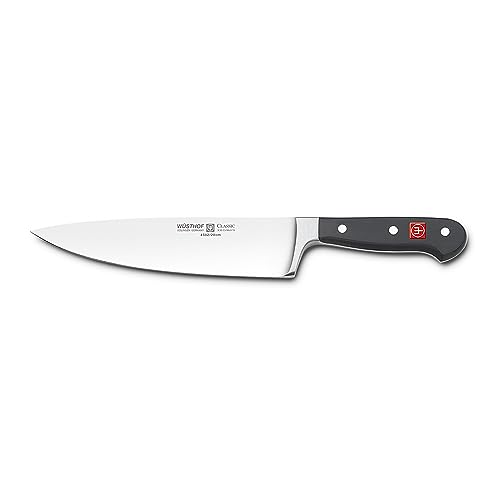
Best Chef's Knife (2026): The Only Knife Most Kitchens Need
A chef's knife does perhaps ninety percent of the cutting in a kitchen, which is why it is the one knife worth thinking about and why a block of ten is mostly storage. The choice comes down to a single trade that nobody explains at the counter: harder steel holds an edge longer and chips more easily, softer steel dulls faster and forgives almost everything.

Best Dutch Oven (2026): A Camp Oven and a Kitchen Pot Are Not the Same Thing
Two very different pots share the name. One has three legs and a flanged lid built to hold burning coals on top, and it is what historical recipes assume. The other is a smooth enamelled casserole for a hob and an oven. Buy the second and try to cook over a fire with it and nothing will work the way the recipe says.

Best Historical Cookbooks (2026): Cooking From Sources That Give No Quantities
Medieval recipes assume you already know how to cook. They rarely give quantities, almost never give times or temperatures, and end when the writer thought the point was obvious. The whole value of a good historical cookbook is the bridge across that gap, and books differ enormously in how much bridge they build.

Best Pot for Cheese Making (2026): Milk Scorches Where the Pan Is Thin
Milk is unforgiving in two specific ways. It reacts with bare aluminium and copper, which taints the curd and discolours the pan, and it scorches wherever the base has a hot spot — and once a batch has caught, the whole thing tastes of it. Both problems are solved by the same purchase, and neither is solved by watching more carefully.
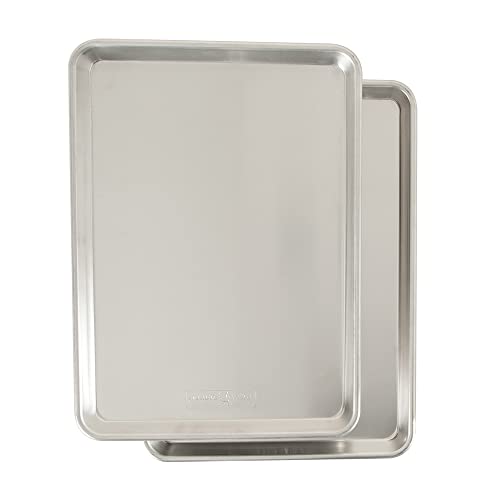
Best Baking Sheet for Beginners (2026): Why Half-Sheet Aluminium Wins
A baking sheet is the most-used pan in most kitchens and the one people spend least time choosing. The cheap ones warp with a bang the first time they hit a hot oven, and a warped sheet cooks unevenly forever after. The fix is not expensive: a heavy half sheet in bare aluminium with a rolled rim, which is what professional kitchens have used for decades.

Best Beginner Stand Mixer 2026: KitchenAid Artisan vs Classic vs Pro 600
Stand mixers are a one-time purchase that lasts decades. Pick the right KitchenAid (it's almost always going to be a KitchenAid) and you'll never need to think about it again. Pick wrong and you'll end up reselling and rebuying within 5 years.