Best Phono Preamp (2026): A Cartridge Puts Out a Thousandth of Line Level
Plug a turntable straight into a normal input and you get something thin, quiet and strangely trebly. That is not a fault. A cartridge outputs a few thousandths of a volt against the one or two volts a line input expects, and records are deliberately cut with the bass reduced, so something has to put both back.
HobbyStack may earn a commission from links on this page at no extra cost to you. Our picks are chosen on merit; the commission helps fund the research.
- Check first. Many turntables and most older receivers already have one built in.
- It does two jobs: huge gain, and RIAA equalisation to restore the bass.
- Moving magnet cartridges need about 40dB. Moving coil needs around 60dB.
- A PHONO input with a ground screw means the preamp is already there.
- Two preamps in series sounds terrible. Use one, not both.

The two jobs it does
Gain. A moving magnet cartridge produces roughly 5 millivolts. A line input, the kind marked CD or AUX, expects something closer to 1 to 2 volts. That is a factor of several hundred. Plug a turntable into an aux input and you hear a faint, distant version of the record even with the volume up.
RIAA equalisation, which is the part most people have never heard of. When a record is cut, the bass is deliberately reduced and the treble boosted, following a standard curve agreed across the industry. There are good physical reasons: large bass excursions would need impractically wide grooves, and boosting treble at the cutting stage means surface noise is relatively quieter when you reverse it.
Playback has to apply the exact inverse: boost the bass back up and cut the treble back down. That is RIAA equalisation, and it is why a turntable through a line input sounds not just quiet but thin and harsh. You are hearing the record as cut, not as intended.
So a phono preamp is not an optional upgrade. It is a required part of the chain, and the only question is where it lives.
Check what you already have, because buying a second one is the common mistake:
- An input marked PHONO, usually with a small ground screw next to it, means your amplifier has one built in
- Many modern turntables have a switchable built-in preamp, often a LINE/PHONO switch on the back
- Any turntable with a USB output or Bluetooth certainly has one inside
Never run two in series. The result is enormous gain, wildly wrong equalisation and heavy distortion. If your turntable has a switch, set it to PHONO when using an external preamp.
MM, MC, and the practical details
Cartridge type sets the gain you need.
Moving magnet (MM) is what almost every turntable under a few hundred pounds uses. Output around 5mV, needing roughly 40dB of gain. The stylus is usually user-replaceable, which is a real practical advantage.
Moving coil (MC) cartridges are lower mass and widely considered better, with output around 0.5mV — a tenth of MM — so they need about 60dB. An MM-only preamp will not drive one properly, and all three preamps here are MM. If you ever fit an MC cartridge you need a preamp that supports it.
Then the details that matter in a real room.
Grounding. A turntable has a thin ground wire, and connecting it to the preamp's ground post is what removes the loud hum people assume is a broken cable. If you hear hum, check this first.
A rumble filter cuts very low frequencies below the music, which is where motor noise, footfalls and warped-record wobble live. On a suspended floor it is genuinely useful, and the ART here has one.
Placement matters. A phono stage is amplifying millivolts, so it picks up interference easily. Keep it away from power supplies, wall-wart transformers and anything with a motor, and keep the short cartridge cable away from mains leads.
Cheap wall-wart power supplies are a common noise source. A preamp with a better supply is often quieter for reasons unrelated to its circuitry.
 Best for getting sound out
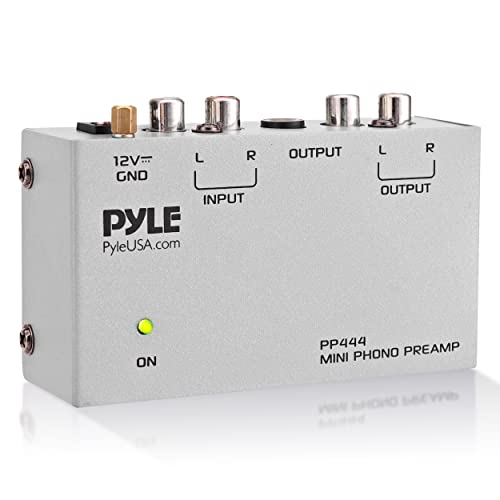
Pyle Ultra Compact Phono Preamp - Mini Turntable Preamp for Audio - Guitar, Microphone - RCA Input/Output for
A minimal compact box that does the two required jobs, gain and RIAA equalisation, for about the price of a single record. If your amplifier has no phono input and your turntable has no built-in stage, this makes the system work, and it is a far better outcome than running a turntable into an aux input. No rumble filter, no adjustment, and the supplied power adapter is the usual source of faint hum.
What's good
- Makes a turntable work for the price of one record
- Does both gain and RIAA equalisation properly
- Small enough to hide behind the system
- Nothing to set up or adjust
What's not
- No rumble filter for suspended floors
- Cheap power supply can introduce hum
- MM only, no moving coil support
- Plastic case picks up interference more easily
 Best for most setups
Art Pro Audio DJPRE II - Phono Preamplifier
A longstanding favourite in a metal case, and the rumble filter is the reason to pick it: cutting the very low frequencies below the music removes motor noise, footfall thump and warped-record wobble, which on a suspended wooden floor is the difference between a usable system and one that booms whenever someone walks past. Metal casework also shields a circuit amplifying millivolts. Moving magnet only.
What's good
- Rumble filter genuinely helps on suspended floors
- Metal case shields against interference
- Long track record with DJs and home users
- Quieter than the budget box
What's not
- Moving magnet only
- Utilitarian looks
- Still uses an external power adapter
- No gain adjustment
 Best for a real system
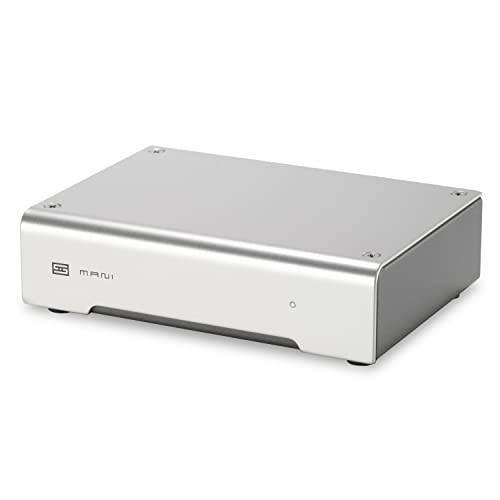
Pro-Ject Audio - Phono Box MM - MM Phono Pre-amplifier - Black
Pro-Ject make turntables, so their phono stage is designed around the problem rather than adapted to it, and the gain structure and loading are matched to the moving magnet cartridges their own decks carry. Proper casework and a better power supply matter more here than specifications suggest, because the circuit is amplifying millivolts and most audible noise comes from interference and supply rather than the amplification itself. MM only.
What's good
- Designed by a turntable maker around MM cartridges
- Better power supply means a quieter noise floor
- Solid casework shields the circuit properly
- Matches the Pro-Ject decks many people own
What's not
- Over three times the Pyle
- Moving magnet only, no MC option
- No rumble filter unlike the ART
- Gains are subtle on a modest system
Buying a second phono stage is the commonest mistake in vinyl, and running two in series sounds dreadful: enormous gain, wrong equalisation and heavy distortion. Look for an input marked PHONO with a small ground screw beside it, which means your amplifier has one. Check the back of the turntable for a LINE/PHONO switch. Any deck with USB or Bluetooth output definitely has one inside. If both have one, use only one.
Getting the rest of the chain right
Fix hum at the ground wire first. The thin single wire from the turntable goes to the ground post on the preamp or amplifier. A disconnected ground is the cause of most loud hum, and people replace cables for weeks before checking it.
Set tracking force properly. The downforce on the stylus is specified by the cartridge maker, usually between 1.5 and 2.5 grams, and a cheap stylus gauge costs very little. Too light causes mistracking and distortion on loud passages and damages records; too heavy wears both faster.
Level the turntable. A spirit level on the platter. An off-level deck puts uneven side pressure on the groove walls.
Replace the stylus. Styli wear out, typically somewhere between 500 and 1000 hours, and a worn one damages records permanently. This is the most neglected maintenance in vinyl.
Keep records clean. Surface noise that people attribute to the preamp or the cartridge is very often dust in the groove.
Mind the speaker placement before upgrading electronics. Moving speakers away from a wall changes the bass far more than a phono stage does, and it is free.
Before you buy
Check your amp for a PHONO input with a ground screw first.
Check the turntable for a LINE/PHONO switch.
Moving magnet needs ~40dB, moving coil ~60dB. Know which you have.
A rumble filter is worth it on a suspended wooden floor.
Keep it away from power supplies and motors.
Phono preamp questions
Why does a turntable need a phono preamp?
How do I know if I already have one?
What is the difference between MM and MC?
Why is there a loud hum?
Check whether you already have one before buying anything. If you need one, the ART DJPRE II is the pick: metal cased, quiet, and with a rumble filter that genuinely earns its place on a suspended floor. The Pyle gets a system working for the price of a record. The Pro-Ject Phono Box is worth it on a system where the rest of the chain is good. Then sort out your tracking force.
Ready to actually do it?
The first collecting vinyl records quest takes an evening, and it tells you whether the gear was worth it better than any review can.
Start Collecting Vinyl RecordsThe HobbyStack editorial team researches each guide using practitioner communities, published resources, and direct input from active hobbyists. Every guide is reviewed for accuracy before publication and updated when practices change.
About our editorial process →More gear guides
All guides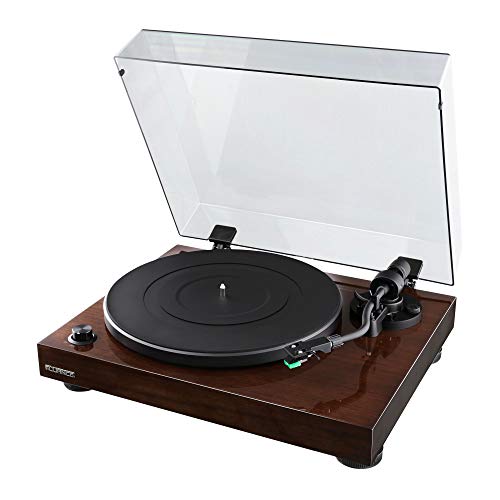
Best Beginner Turntable (2026): 3 Picks That Won’t Wreck Your Records
The cute all-in-one suitcase players are exactly what you should not buy, their heavy tonearms and cheap needles quietly grind down the records you are paying for. A real beginner turntable protects your vinyl and sounds dramatically better. Here are three that do it right, from a true budget pick to an audiophile deck.
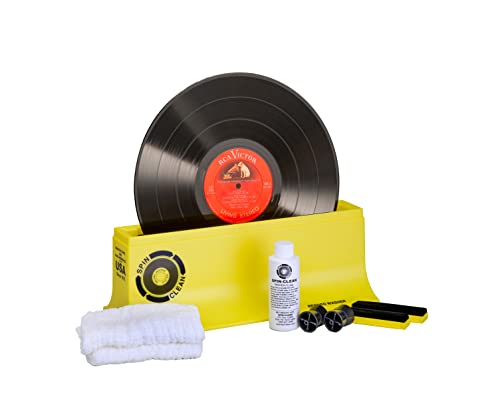
Best Record Cleaning Kit for Beginners (2026): 3 Real Picks
Clean records sound better and last longer, full stop: dust and grime in the grooves cause the crackle and pop people blame on vinyl itself, and they grind against your stylus over time. The question is how deep you want to go. A simple brush-and-fluid kit handles everyday dust; a wet-bath washer deep-cleans thrift finds and neglected records; a cleaning machine does it fastest and best. Here are three good options across the range, plus the one habit that matters more than any of them.

Best Beginner Fountain Pen (2026): A Japanese Fine Is Not a European Fine
The most common first disappointment with a fountain pen is a line that comes out narrower than expected, and it is not a fault. Japanese nibs are ground finer than European ones at the same letter, so a Pilot Fine is roughly a Lamy Extra Fine. Knowing that before you order decides whether the pen feels right.

Best Fountain Pen Ink (2026): Almost Everything Is Safe, and a Few Things Are Not
The pleasant surprise about fountain pen ink is that a bottle costs less than a decent lunch and lasts a year or more, so this is a hobby where experimenting is genuinely cheap. The unpleasant surprise is that two categories of ink will wreck a pen permanently, and one of them is sold in the same shop aisle.

Best Fountain Pen Paper (2026): Feathering Is a Paper Problem, Not a Pen Problem
A new fountain pen that writes a furry, spreading line on office paper is not faulty. Copier paper is barely sized, so wet ink wicks along the fibres and spreads outward from the stroke. The same pen on properly sized paper lays a crisp line, and nothing about the pen changed.

Best Archival Document Boxes (2026): Ordinary Cardboard Destroys Paper
Paper stored in an ordinary cardboard box browns at the edges and goes brittle, and the box is the cause. Wood pulp cardboard carries acid and lignin, both of which migrate into whatever they touch and keep working for decades. The damage is slow, invisible for years, and completely preventable for about the price of the box you were going to use.