Best Recovery Traction Boards (2026): Low Revs, and Never Stand Behind One
A traction board only works if the tyre bites it rather than polishing it. Spin a wheel on a nylon board and you melt the lugs flat in seconds, which is the single most common way people destroy a set on their first recovery. Low revs, and let the tyre walk up onto the board.
HobbyStack may earn a commission from links on this page at no extra cost to you. Our picks are chosen on merit; the commission helps fund the research.
- Lowest gear, lowest revs. Wheelspin melts nylon lugs flat in seconds.
- Never stand in front of or behind a board. They can fire out at speed.
- Dig in front of the tyre and wedge the board under it. Do not just lay it down.
- Tether them. A buried board in sand is genuinely hard to find.
- Metal spikes grip ice better and chew tyres. Nylon is kinder and melts.


Using them, which is where sets get destroyed
A traction board is a ramp with aggressive lugs on top. The tyre climbs onto it, the lugs give it something to grip that is not sand or mud, and the vehicle drives itself out.
The procedure matters.
- Clear the sand or mud from in front of the tyre. A board laid flat on the surface in front of a buried wheel does almost nothing.
- Wedge the board hard under the leading edge of the tyre, angled down into the hole, so the tyre is already touching it.
- Lowest gear, lowest revs. Ease onto it. Let the tyre walk up.
- Keep going once you are moving. Stopping on the board puts you back where you started, so drive to firm ground before you stop.
- Then collect the boards, which is often the hardest part.
Wheelspin is what kills them. Nylon and polypropylene lugs melt under a spinning tyre, and once they are polished smooth the board is a plastic sledge. This happens in seconds, not minutes. If the wheel spins, stop, re-seat the board, and use fewer revs.
Airing down first does more than the boards do. Dropping tyre pressure lengthens the contact patch dramatically and is the single most effective sand technique there is. Boards are what you reach for when airing down was not enough.
Two boards is a minimum and four is better, because you generally need to help both wheels on an axle at once.
Safety, material and the losing problem
This is the part people skip. A traction board under a loaded tyre is a compressed spring. If the tyre slips rather than climbs, the board can be fired out backwards at speed. People have been seriously injured by them.
So: nobody stands in front of or behind a board while the vehicle is moving. Spotters stand to the side, well clear, where they can see the wheel and signal. This is not an abundance of caution, it is the known failure mode.
Then the material question.
- Fibre-reinforced nylon, as on the X-BULL and the MAXTRAX, is the normal choice. Tough, light, works from hard freeze to desert heat, and the lugs melt if you spin. Kind to tyres.
- Metal spikes, as on the MAXSA Escaper Buddy, bite into ice and hardpack where plastic lugs skate. They also chew tyre rubber, and they do not care about wheelspin in the way nylon does.
For sand and mud, nylon. For ice, snow and frozen hardpack, spikes earn their place.
Tether them. A board that goes under the vehicle, or gets buried by a spinning wheel in soft sand, is remarkably hard to find. Most boards have holes in the ends for exactly this, and a length of cord with a bright flag costs nothing.
Mount them where UV cannot get at them long-term. Roof racks are the normal place and sunlight embrittles plastic over years, so a cover is worth having if they live up there permanently.
Bright colours. Orange and yellow are not styling. They are so you can find a board in mud and so other traffic can see one lying in a track.
 Best for a first set
X-BULL New Recovery Traction Tracks Sand Mud Snow Track Tire Ladder 4WD (Black,3gen)
A pair of fibre-reinforced nylon boards at 41.7 inches long and 12.2 inches wide, weighing 11.2 pounds for both, which is a sensible size and a genuinely light set to carry. Cross-shaped teeth are positioned to bite the tyre, and the maker rates them from -20°C to desert heat. Ergonomic handles and roof-rack mounting holes are built in. The lugs will melt if you spin a wheel, like all nylon boards.
What's good
- A full pair at a third of the MAXTRAX price
- 11.2 lb for both, so easy to carry and stow
- Rated from -20°C to desert heat
- Mounts to most roof racks and has carry handles
What's not
- Lugs melt flat under wheelspin
- Less stiff than a MAXTRAX under heavy loads
- No tether cord included
- Generic brand with limited support
 Best for ice and hardpack
MAXSA 20333 Escaper Buddy Largest Heavy-Duty Traction Boards, 2-PK Orange
A two-pack fitted with durable metal spikes rather than moulded plastic lugs, which is the reason to choose them: metal bites into ice and frozen hardpack where nylon teeth simply skate across the surface. The maker rates them to hold up to ten tons, so they suit heavier vehicles. The trade is real though, because metal spikes chew tyre rubber in a way plastic does not, and they are heavier to handle.
What's good
- Metal spikes bite ice and frozen hardpack
- Rated to hold up to 10 tons
- Spikes do not melt under wheelspin
- Supplied as a pair
What's not
- Metal spikes chew tyre rubber
- Heavier to handle and stow than nylon
- Overkill for sand and mud
- Spikes can damage a driveway or decking
 Best for doing it properly
MAXTRAX MKII Black Vehicle Recovery Board
The board everything else is compared against, and the reason it holds that position is stiffness under load: it flexes far less than cheaper nylon, so it transfers force into the ground instead of bending into the hole you are trying to climb out of. That stiffness is what you are paying for, along with lugs that survive more abuse and a shape designed to stack and mount cleanly. It is sold singly.
What's good
- Stiff under load, so it does not bow into the hole
- The reference board the category is judged against
- Lugs survive more abuse than cheap nylon
- Stacks and mounts cleanly
What's not
- Sold as a single board, so a pair is double
- Over three times the X-BULL pair
- Still nylon, so wheelspin still melts lugs
- Heavier per board than budget sets
A board under a loaded tyre stores energy, and if the tyre slips instead of climbing it can launch the board backwards hard enough to cause serious injury. Spotters stand well to the side where they can see the wheel and signal the driver. Keep children and dogs in the vehicle. This is the known failure mode of traction boards rather than a remote possibility, and it is the one rule worth being rigid about.
The rest of a recovery kit
Air down before anything else. Lowering tyre pressure lengthens the contact patch and is the most effective single thing you can do in sand. Carry a gauge and a compressor to air back up, because driving at road speed on low pressure wrecks tyres.
A shovel is not optional. Boards work because you dug a path for the tyre. A folding spade lives alongside them.
Momentum beats power. Most bogging happens because someone slowed down in soft ground. Keeping steady momentum through sand avoids the recovery entirely.
Know when to stop digging in. Three attempts that end in wheelspin means the approach is wrong, not that you need more throttle. Reassess, dig more, re-seat the boards.
Travel with someone. Solo recovery in remote country is how a stuck vehicle becomes a serious situation. A second vehicle is worth more than any amount of kit.
Rinse and dry them. Salt and grit in the lugs wears them, and boards left caked in mud are both heavier and less grippy next time.
Check your recovery points. Boards avoid the need for a snatch strap, which is good, because recovery straps attached to the wrong point are responsible for most serious off-road injuries.
Before you buy
Buy a pair at minimum. One board rarely solves a recovery.
Nylon for sand and mud, metal spikes for ice and hardpack.
Check whether the price is for one board or two.
Look for tether holes, and add bright cord.
Carry a shovel and a compressor alongside them.
Recovery board questions
Why did my traction board lugs go smooth?
How do I actually use a recovery board?
Are metal spikes better than plastic lugs?
Is it safe to stand behind the vehicle during a recovery?
The MAXTRAX MKII is the one to buy if you are equipping properly, because stiffness under load is the thing cheaper boards give up and it is what stops a board bowing into the hole. The X-BULL pair is a genuinely sensible first set and two boards beat one expensive one. Choose the spiked MAXSA if you drive on ice. Then air down, dig, and use low revs.
Ready to actually do it?
The first overlanding quest takes an evening, and it tells you whether the gear was worth it better than any review can.
Start OverlandingThe HobbyStack editorial team researches each guide using practitioner communities, published resources, and direct input from active hobbyists. Every guide is reviewed for accuracy before publication and updated when practices change.
About our editorial process →More gear guides
All guides
Best Air Compressor for Overlanding (2026): Airing Down Is Free, Airing Up Is Not
Dropping tyre pressure is the single most effective thing you can do off road and it costs nothing. Putting the air back before you rejoin a highway is the part that needs equipment, and it is where the cheap compressors fail — not dramatically, but by taking forty minutes per tyre and overheating halfway through.

Best Beginner Camping Tent 2026: Coleman Sundome vs REI Wonderland vs Big Agnes Big House
The first tent makes or breaks whether you stick with camping. Buy a cheap pop-up and you'll quit by the second wet weekend. Buy a real tent for $100-450 and you'll camp for decades.

Best Headlamp for Camping (2026): The Lumen Number Is the First 30 Seconds
The lumen figure on a headlamp box is measured at the moment you switch it on with a fresh battery. Most lamps cannot hold it, and many are down to a third of it within the hour. What you actually care about is how bright it still is at 11pm when you are looking for the tent, which is a number almost nobody prints.

Best Sleeping Pad for Beginners (2026): R-Value Is the Number That Matters
People buy a warm sleeping bag, sleep badly, and blame the bag. Almost always it was the pad. You compress the insulation underneath you to nothing, so the only thing between your body and the ground is the pad, and cold ground pulls heat out of you far faster than cold air. The number that describes this is R-value, and it is the one specification worth understanding before you spend anything.

Best Beginner Fishing Rod and Reel Combo 2026: Spinning Setups That Just Work
For your first setup, a matched spinning rod-and-reel combo is the right call: it's pre-balanced, forgiving to cast, and gets you fishing without choosing parts you don't understand yet. Here are three combos that punch above their price, from a near-indestructible classic to a saltwater-ready upgrade.
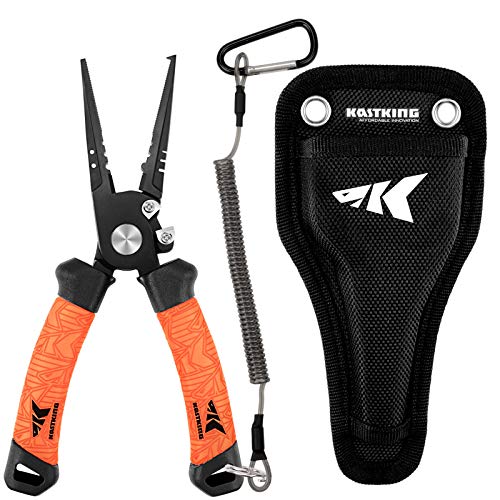
Best Fishing Pliers (2026): Braid Destroys Ordinary Cutters
Braided line is woven from the same fibre used in body armour, and it does not cut so much as fray under a normal blade. A pair of pliers that handles mono perfectly well will chew braid into a fuzzy mess, and the fix is a specific material rather than a sharper edge.