Best Backpacking Stove (2026): Boil Water Fast or Actually Cook
Almost every thru-hiker eats food that only needs boiling water, which makes "how fast does it boil and how little fuel does it use" the question that matters. But if you cook rather than rehydrate, the fastest stove here is also the one that cannot hold a simmer, and that trade is the whole decision.
HobbyStack may earn a commission from links on this page at no extra cost to you. Our picks are chosen on merit; the commission helps fund the research.
- Rehydrating meals? Buy an integrated system. Actually cooking? Buy a burner you can simmer.
- Fuel canisters are almost never included. Budget for them and you cannot fly with them.
- A built-in igniter is a convenience, not a plan. Carry a lighter regardless.
- Canister stoves lose performance in real cold. Below freezing they need help.
- Wind costs more fuel than anything else. Shelter the stove, do not just turn it up.
 MSR PocketRocket 2Ultralight and simmering$50Check price
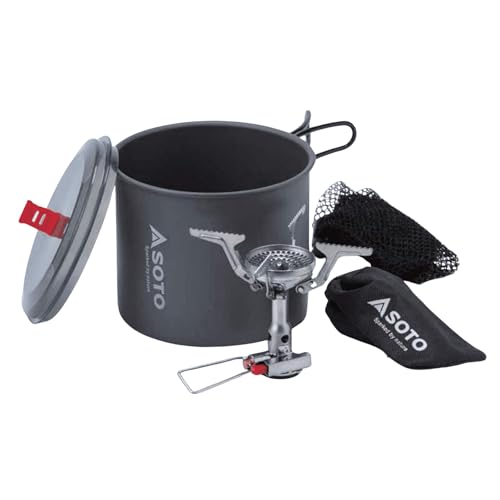 Our pickSOTO Amicus + PotMost people$58Check price
 Jetboil FlashBoiling water, fast$159Check price
Burner or integrated system
These are two different products and the marketing rarely separates them.
A canister burner is just the burner. It screws onto a fuel canister and you put any pot on top. It is small, very light, cheap, and it will simmer, so you can genuinely cook — fry an egg, hold a sauce, cook rice without welding it to the pan.
An integrated system is a burner permanently matched to its own pot, usually with a heat-exchanger ring on the base that grabs far more of the flame's energy. That is where the speed and fuel efficiency come from: the Jetboil boils in about 100 seconds against roughly three and a half minutes for a burner.
What you lose is control and versatility. Integrated systems run hot and struggle to simmer, the pot is the pot, and the whole thing is bulkier and heavier than a bare burner even before you count a pot for the burner.
If you eat rehydrated meals and instant coffee, the system wins on fuel and time. If you cook, the burner wins on everything that matters.
Cold, wind, and why your stove got worse
Canister stoves run on isobutane-propane, and both facts about that mix matter.
Cold kills pressure. The fuel has to vaporise to burn, and as the canister cools — from the weather, and from the evaporation itself as you use it — pressure drops and the flame weakens. Around and below freezing this becomes obvious. Sleeping with the canister in your bag, or keeping it inside your jacket before use, genuinely helps. So does standing it in a shallow tray of water, which sounds wrong and works because water is warmer than winter air.
A canister also runs down in composition: propane boils off first, so a half-used canister is more butane and performs worse in cold than a fresh one.
Wind is the bigger thief. An unshielded burner in a breeze can use several times the fuel for the same boil, because most of the heat goes past the pot. Cook behind a rock, a pack or a wall. Never fully enclose a canister stove with a windscreen, though — trapped heat can overheat the canister, which is genuinely dangerous.
A lid on the pot is free and cuts boil times noticeably.
 Best ultralight
MSR PocketRocket 2 Ultralight Camping and Backpacking Stove
Two and a half ounces, folding down to roughly two by two by three inches, which is small enough that carrying it is not a decision. It boils a litre in about three and a half minutes and — the reason to choose it over a system — the flame genuinely adjusts down to a simmer, so you can cook rather than only rehydrate. No priming, no preheating, no pressurising: screw it on and light it. Serrated pot supports take a wide range of pot sizes, so it works with whatever cookware you already have. A protective case is included, bringing it to 4.2 ounces packed. The fuel canister is not included, and there is no igniter, so carry a lighter. The lightest sensible option here.
What's good
- 2.6 oz — carrying it is not a decision
- Adjusts down to a real simmer, so you can cook
- Works with any pot you already own
- No priming or preheating, just light it
What's not
- No igniter — you must carry a lighter
- No pot included, so add one to the price
- Less wind-resistant than a shielded burner
- Fuel canister not included
 Best for most people
SOTO Amicus Backpacking Stove & Pot
A burner that solves the two things the ultralight option leaves you to sort out: it has a built-in piezo igniter, and it comes with a hard-anodised aluminium pot with a translucent lid so you can see the boil without losing heat. That means it is a complete cooking setup rather than a component. 11,000 BTU, burning up to an hour and a half on a 250g canister. The raised crown burner design is genuinely better in wind than a flat burner, which matters more than the headline numbers on any real trip. It still simmers, so you keep the ability to cook. Heavier than the PocketRocket and slower than the Jetboil, and it is the one that needs the fewest other purchases.
What's good
- Piezo igniter built in — no fumbling with a lighter
- Pot included, so it is a complete setup
- Raised crown burner handles wind better than flat burners
- Still simmers, so you can genuinely cook
What's not
- Heavier than a bare ultralight burner
- Piezo igniters fail eventually — still carry a lighter
- Slower to boil than an integrated system
- Fuel canister not included
 Best for boiling water fast
Jetboil Flash Camping and Backpacking Stove Cooking System
An integrated system, and the numbers are the argument: 100 seconds to boil, against three and a half minutes for a burner. The one-litre cup carries a FluxRing heat exchanger on its base that captures far more of the flame, which is where both the speed and the fuel efficiency come from — you carry less gas for the same trip. A pushbutton igniter, an insulating cozy so it stays warm, and a colour-change heat indicator on the outside that tells you it is ready without lifting the lid. The bottom cup doubles as a measuring cup and a bowl. The honest limits: it runs hot and does not really simmer, the pot is the only pot, and it is three times the PocketRocket.
What's good
- 100-second boil — twice as fast as a burner
- FluxRing efficiency means carrying less fuel
- Colour-change indicator shows when it is ready
- Bottom cup doubles as a measuring cup and bowl
What's not
- Does not really simmer, so it boils rather than cooks
- The pot is the only pot it works with
- Three times the PocketRocket and much bulkier
- Accessories all sold separately
Isobutane canisters are banned from both hold and cabin baggage on every airline, with no exceptions and no way to declare them. Plan to buy fuel at the destination, and check before you travel that somewhere near the trailhead stocks the threaded canisters your stove takes — plenty of remote places do not, and a stove without fuel is dead weight for a week.
Working out how much fuel to carry
Fuel is the one consumable you cannot improvise, and most people either carry far too much or run dry on the last morning.
A rough working figure: a 100g canister boils somewhere around ten to twelve litres of water in fair conditions. Two boils a day — coffee and a meal — puts a 100g canister at roughly five days for one person.
Things that wreck that estimate: wind more than anything, cold water and cold air, altitude, and melting snow, which is enormously expensive in fuel and roughly triples consumption.
Weighing is the only honest gauge. Note the empty weight printed on the canister, weigh it at home, and the difference is what is left. Shaking tells you almost nothing.
Carry a fresh canister for a long trip rather than several part-used ones, because a part-used canister is propane-depleted and works worse in cold. And take a spare when the trip is longer than four or five days, because the failure mode is not inconvenient, it is cold food for the rest of the walk.
Before you buy
Rehydrating: integrated system. Cooking: a burner that simmers.
Budget for canisters separately, and check they are sold near your trailhead.
Carry a lighter even if the stove has an igniter.
Shelter the stove from wind. It is the biggest fuel drain there is.
Never fully enclose a canister stove with a windscreen.
Backpacking stove questions
Should I buy a Jetboil or a normal canister stove?
Why does my canister stove get weaker in the cold?
How much fuel do I need for a backpacking trip?
Can I take a fuel canister on a plane?
The SOTO Amicus is the sensible buy for most people because it is a complete setup — burner, pot and igniter — that still simmers, so it covers both rehydrating and cooking without a second purchase. Take the MSR PocketRocket 2 if grams matter more than convenience and you already own a pot. The Jetboil Flash is the right call only if you exclusively boil water and want to carry less fuel doing it. Buy canisters at the destination.
Ready to actually do it?
The first thru-hiking quest takes an evening, and it tells you whether the gear was worth it better than any review can.
Start Thru-hikingThe HobbyStack editorial team researches each guide against manufacturer specifications, published resources and practitioner sources. Every product is checked for availability and described against its current listing before publication, and prices are re-checked when guides are updated.
About our editorial process →More gear guides
All guides
Best Backpacking Sleeping Pad (2026): R-Value Decides This, Not Thickness
The ground takes more heat off you overnight than the air does, which is why people in expensive sleeping bags still wake up cold. The number that fixes it is R-value, and since 2020 it has been a standardised measurement, so for the first time you can compare one brand against another honestly.

Long Blade Freediving Fins (2026): Stiffness Is Matched to Your Legs, Not Your Ambition
Long blades are not about speed. A long blade moves a large volume of water per kick, so you cover distance at a slow, unhurried cadence instead of a fast one, and on a breath-hold the thing you are conserving is oxygen. A stiff blade you cannot load properly burns more of it than a soft blade you can.

Best Spearfishing Mask (2026): Low Volume Is the Whole Point
On a breath-hold dive every bit of air you own is in your lungs, and a mask takes some of it away from you. The deeper you go the harder the mask squeezes onto your face, and the only way to relieve it is to blow air out of your nose into the mask. A smaller mask asks for less of that air.

Best Spearfishing Wetsuit (2026): Open Cell Seals to Skin and Hates Fingernails
A spearfishing wetsuit is not a surfing wetsuit in camouflage. The good ones are open cell, meaning the inside is raw neoprene that seals directly against your skin with no lining at all. That makes them far warmer and considerably more fragile, and it means you cannot get into one without lubricant.

Best Beginner Fishing Rod and Reel Combo 2026: Spinning Setups That Just Work
For your first setup, a matched spinning rod-and-reel combo is the right call: it's pre-balanced, forgiving to cast, and gets you fishing without choosing parts you don't understand yet. Here are three combos that punch above their price, from a near-indestructible classic to a saltwater-ready upgrade.
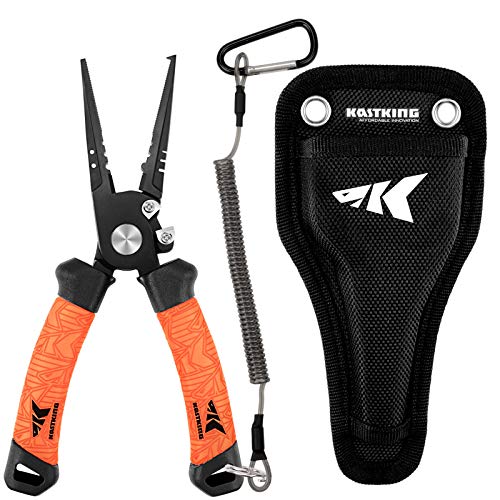
Best Fishing Pliers (2026): Braid Destroys Ordinary Cutters
Braided line is woven from the same fibre used in body armour, and it does not cut so much as fray under a normal blade. A pair of pliers that handles mono perfectly well will chew braid into a fuzzy mess, and the fix is a specific material rather than a sharper edge.