Best Skate Pads (2026): Wrists Break First
The most common serious injury in skating is a broken wrist, because falling forward is instinctive and putting your hands out is more instinctive still. Wrist guards are the piece people skip and the piece that changes outcomes most, and on every set here they are the part that determines your size.
HobbyStack may earn a commission from links on this page at no extra cost to you. Our picks are chosen on merit; the commission helps fund the research.
- Wrist guards matter most. A broken wrist is the classic skating injury.
- Sizing is usually set by the wrist guards. Measure around your hand at the knuckles.
- Hard caps slide on impact; soft pads grip and jar the joint. Hard caps for concrete.
- A helmet is separate from a pad set unless the listing says otherwise.
- Pads only protect if worn. Comfortable pads you keep on beat perfect pads in a bag.
 Our pickTriple Eight Saver SeriesMost skaters$45Check price
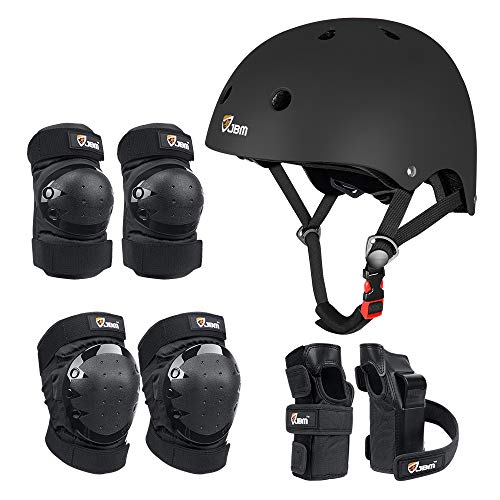 JBM Set with HelmetStarting from nothing$47Check price
 187 Killer Pads Six PackHard falls$83Check price
Why wrist guards come first
Falling forward, you put your hands out. It is a reflex, it happens faster than thought, and the force of your body arrives at a joint that is not built to take it — usually with your wrist extended, which is the worst possible position.
A wrist guard works by splinting. A rigid plastic or ABS plate runs along the palm and often the back of the hand, so the joint physically cannot bend past a safe angle, and the plate slides across the ground rather than gripping it. The energy goes into sliding and into your forearm rather than into the wrist.
That is also why the palm plate is smooth and slightly curved: grip is the enemy in a fall. A padded glove that grabs the concrete stops your hand while the rest of you keeps going.
The same logic applies to knees and elbows. A hard plastic cap slides, spreading the impact over time and distance. A soft foam pad grips and stops you dead, transmitting everything into the joint. Soft pads are fine on wooden rink floors and the wrong choice on outdoor concrete.
If you buy one thing, buy wrist guards.
Sizing, which is not done by your clothes size
Skate pad sets are almost always sized by the wrist guards, and Triple Eight publish exactly how: measure around your hand at the knuckles, then match the number.
On their scale, Junior fits roughly 6.0-7.0 inches around, X-Small 6.5-7.5, Small 7.0-8.0, Medium 8.0-9.0 and Large 9.0-10.0. Brands differ, so check the specific chart rather than assuming.
Get a tape measure rather than guessing from your glove or shirt size, because those correlate poorly.
Knee pads have their own failure mode. Too loose and they rotate on impact, so the cap ends up beside your knee rather than on it, and you land on fabric. Too tight and they cut circulation and get taken off after twenty minutes. Straps should be firm enough that you can hop without the pad moving.
Check the cap covers the whole kneecap when your leg is bent, since that is the position you land in. A pad that looks well placed standing up can slide clear when you kneel.
And wear them over thin clothing, not thick jeans, or the geometry changes.
 Best for most skaters
Triple Eight Saver Series Pad Set
The three-piece set most skate shops recommend, and the construction is the reason: EVA foam padding under full-coverage polycarbonate caps on the knees and elbows, so they slide across concrete instead of gripping, and wrist guards with high-density moulded ABS splints that stop the joint bending past a safe angle. The straps are wide reinforced elastic with hook and loop, and the sleeveless design means they go on and off without taking your shoes off — which sounds trivial and is the difference between wearing them and not. Sizing is set by the wrist guards, measured around the knuckles, with five sizes from Junior to Large. Comfortable enough to forget, which is the property that actually protects you.
What's good
- Full-coverage polycarbonate caps slide rather than grip
- Moulded ABS wrist splints, not just padding
- Sleeveless design — on and off without removing shoes
- Five sizes from Junior to Large
What's not
- No helmet included
- Elastic straps loosen over a season and need replacing
- Bulkier under jeans than low-profile pads
- Caps scuff quickly and look worn fast
 Best from nothing
JBM Adult & Kid Skating Protective Gear Set
The reason this costs more than a three-piece set is that it is a four-piece one: it includes a helmet, which the others do not. That matters, because a helmet bought separately is rarely less than the difference, and it is the piece nobody should skate without. The helmet has multiple vents, an adjustable dial at the back and an adjustable strap, so it can be fitted properly rather than approximately. The pads are EVA foam with tough plastic plates on knees, elbows and wrists. It is specified for age 14 and up, so it is not the set for a younger child. The pads themselves are decent rather than exceptional, and if you already own a helmet you like, one of the dedicated pad sets is the better buy.
What's good
- Includes a helmet, which the other two do not
- Dial adjuster and strap allow a proper helmet fit
- Multiple vents, so it is bearable in warm weather
- One purchase covers everything you need to start
What's not
- Age 14+ — not the set for a younger child
- Pads are decent rather than exceptional
- Wrong buy if you already own a helmet
- Helmet certification is not specified in the listing
 Best for hard falls
187 Killer Pads Six Pack Pad Set
The pads skate parks are full of, and what you are paying for is fit and foam rather than more plastic. The knee and elbow pads are contoured to cradle the joint instead of sitting flat against it, so they stay put through a fall rather than rotating — which is the failure mode that leaves you landing on fabric beside your kneecap. The foam system is built for genuinely hard impacts, and the caps are size-specific rather than one cap across every size, which reduces bulk on smaller skaters instead of making them wear an adult cap on a smaller sleeve. Industrial-weight fabric and reinforced stitching, with a smooth interior for all-day wear. Sizes run from Pre-K to adult. Half again the price of the Triple Eight set.
What's good
- Contoured pads stay on the joint through a fall
- Foam system built for genuinely hard impacts
- Size-specific caps reduce bulk on smaller skaters
- Sizes from Pre-K through adult
What's not
- Half again the Triple Eight set
- No helmet included
- Streamlined shape means slightly less coverage area
- More than a cautious rink skater needs
Most three-piece sets cover knees, elbows and wrists and stop there, and people assume the helmet is included because the photograph shows one. Check the contents. A head injury is the one that does not heal, and a helmet is the cheapest insurance in the sport — buy one that fits properly and replace it after any impact, even if it looks fine, because the foam crushes once by design.
Learning to fall, which is free and works
Pads reduce injuries. Knowing how to fall reduces them further, and skating instructors teach this in the first lesson for good reason.
Fall forward, not backward. Backward falls put your tailbone and the back of your head at risk, which is much worse. If you feel yourself going, get low and rotate to land forward.
Get low first. Most of the energy in a fall comes from height. Dropping into a crouch before you land converts a fall from standing into a fall from a foot or two.
Land on the pads. Knees and forearms, in that order, sliding rather than stopping. That is what the plastic caps are for.
Do not stiff-arm. The instinct to catch yourself on a straight arm is what breaks wrists — even with guards on, a locked elbow sends the force straight to your shoulder.
Practise on grass or carpet. Falling deliberately a few times, in pads, at low speed, replaces panic with something like a reflex. Ten minutes of that is worth more than the difference between any two pad sets.
Before you buy
Check whether a helmet is included. Usually it is not.
Measure around your hand at the knuckles — that sets the size.
Hard caps for concrete, soft pads only for wooden rink floors.
Knee pads should not rotate when you hop.
Practise falling on grass. It is free and it works.
Skate pad questions
Which pads matter most for skating?
How do I size skate pads?
Do skate pad sets include a helmet?
Are hard caps better than soft pads?
The Triple Eight Saver Series is the set to buy: polycarbonate caps that slide instead of gripping, proper moulded ABS wrist splints, and a sleeveless design that means you actually keep them on. Take the JBM set instead if you own nothing at all, since it includes a helmet and that is not a piece to skip. The 187 pads are worth it if you fall hard and often. Then spend ten minutes practising falling on grass.
Ready to actually do it?
The first roller skating quest takes an evening, and it tells you whether the gear was worth it better than any review can.
Start Roller SkatingThe HobbyStack editorial team researches each guide against manufacturer specifications, published resources and practitioner sources. Every product is checked for availability and described against its current listing before publication, and prices are re-checked when guides are updated.
About our editorial process →More gear guides
All guides
Best Beginner Quad Skates (2026): 3 Pairs for Every Budget
Quad skates (the classic four-wheel, two-by-two kind) are the friendliest way to start roller skating, and the trick is buying a real skate rather than a toy. A supportive boot, a stable plate, and decent wheels make learning feel steady instead of scary. Here are three good pairs, from a solid budget skate to a cult-favourite premium one.

Best Beginner Pickleball Paddle (2026): 3 Picks for Every Budget
The paddle is the one piece of gear that actually changes how you play, and the wall of look-alike options hides a few real differences that matter on day one. Here are three we'd hand a new player: a no-regrets budget pick, an all-around upgrade, and a control paddle worth growing into.

Best Pickleballs (2026): Indoor and Outdoor Are Not the Same Ball
Turning up with the wrong ball is the most common equipment mistake in pickleball, and it is invisible until you play. Outdoor balls are hard, heavy and drilled with many small holes so wind cannot push them around. Indoor balls are softer and lighter with fewer, larger holes. Play one where the other belongs and the game feels wrong for reasons nobody can name.

Best Slackline Kit (2026): Wider Webbing Is Easier, and Trees Need Protecting
Two things decide whether a first session is fun or demoralising. Webbing width, because a 2-inch line is markedly more stable underfoot than a 1-inch one, and height, because a line set at knee height is something you can step off rather than fall from. Neither is about the ratchet everyone compares.

Best Beginner Ice Skates (2026): 3 Figure Skates from First Steps to Lessons
For your first pair of figure skates, the thing that matters most is fit, not looks or the brand on the boot. A skate that is too big or too soft lets your ankle fold inward, which makes skating harder and scarier than it needs to be. All three picks here are from Jackson Ultima, the brand most learn-to-skate programs point beginners toward, and they climb a clear ladder: a recreational skate for casual outings, a proper lessons skate with real ankle support, and a comfortable step-up boot for when you are hooked and skating every week.
Best Beginner Disc Golf Set (2026): 3 Starter Packs Compared
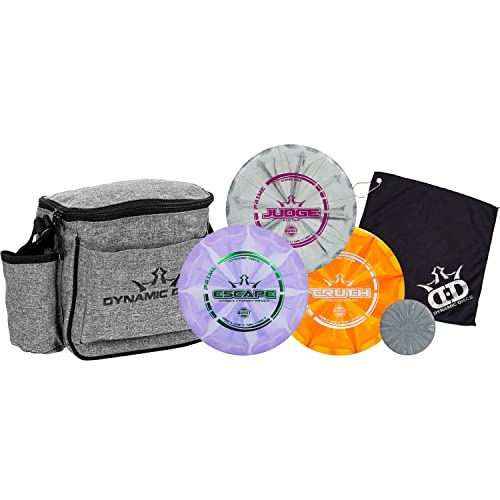
A beginner disc golf set gives you the three discs you actually need (a putter, a mid-range, and a driver) chosen to fly straight and forgiving rather than fast and hard to control. That is the whole trick as a beginner: understable, slow discs are easier to throw well than the pro-speed drivers that just fade into the ground. Here are three good sets, from a bare-bones three-pack to a fuller kit.