Sport & Fitness ›
Bouldering
Bouldering
The further from centre, the more strongly this hobby leans that way. Your quiz answers are scored against exactly these fifteen.
- RestfulPhysical
- IndoorsOutdoors
- SolitarySocial
- PracticalCreative
- InstinctiveTechnical
- Hands-offHands-on
- RelaxedCompetitive
- CautiousDaring
- Quick winsPatient
- PrivatePerformer
- MinimalistCollector
- Just do itStudious
- Low-kitGear-heavy
- AnalogDigital
- ObjectsLiving things
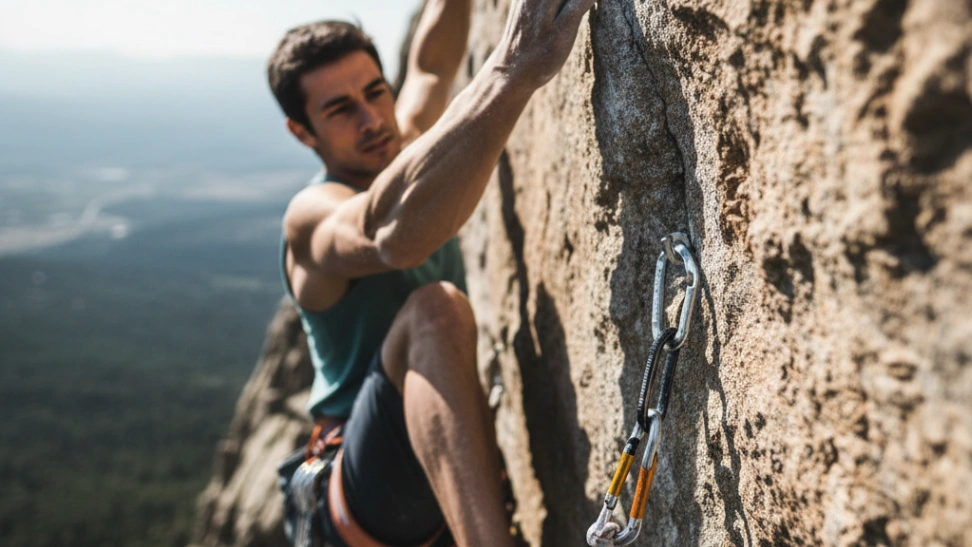
Climbing problems a few metres high over thick mats, indoors or on real rock. No rope or partner needed.
This weekendTime to first win
A few hoursA session
Indoors or outWhere
Step 1: Find a climbing gym with a bouldering wall.
Is it you?
What you need
3 thingsThe honest floor, taking the cheapest option in each$241
How we make money: if you buy through one of these we take a small cut, and the price is the same either way. The cheapest option that works is always listed first.
The path
15 questsASetting up2 things to sort, in any order$95
BThen the quests
- Try a session at a bouldering gym
- Climb five easy problems end to end
- Fall from height onto the mat and roll out of it
More on Bouldering
Everything else we have written about it. Free to read, no account needed.
Guides3
How to Use Your Feet When Bouldering (So Your Arms Stop Burning Out)If your forearms are screaming three moves in and you are basically hauling yourself up by your hands, the fix is almost never more pull-ups. It is your feet. Bouldering is far more of a leg exercise than it looks, and learning to actually stand on your feet is the single biggest jump most beginners make. The good news is footwork is a skill, not a strength, so you can start fixing it this session.How to Belay a Climber (the First Skill to Learn)Before you climb tall walls with a rope, you have to learn to belay, managing the rope that keeps your partner safe. It is the responsibility that makes roped climbing possible. Here is how belaying works.How to Ollie on a Skateboard (When the Board Just Won't Leave the Ground)The ollie is the trick that unlocks skateboarding. Once the board comes off the ground with you, curbs, cracks, ledges, and most other tricks open up. It is also the one that humbles almost everyone for a few weeks, because nothing about it is intuitive at first. Here is exactly what your feet are doing, why the board leaves the ground at all, and how to spot what is going wrong when it doesn't.
What to buy2
Best Bouldering Crash Pad 2026: Mad Rock Mad Pad vs Metolius Session II vs Black Diamond MondoA crash pad is bouldering's defining purchase, the thing that turns a fall into a survivable landing, and the first decision is fold and size: a hinged pad carries easily but has a seam to mind, a taco pad has no weak spot but is bulkier, and bigger is safer but heavier. Here are three honest picks, and the blunt truth that there's no good cheap one.Best Climbing Shoes for Bouldering (2026): Leather Stretches, Synthetic Does NotThe advice everyone gets is to size climbing shoes painfully tight. It is bad advice for a beginner, and it is bad advice partly because it ignores the one fact that actually decides your size: leather shoes stretch as much as a full size, and synthetic ones barely move at all. Buy the same number in both and one of them will be wrong.
From the blog11
15 Active Hobbies That Get You Fit (No Gym Required)The best workout is the one you actually want to do, and a gym membership you dread isn't it. These 15 hobbies get you genuinely fit as a side effect of having fun: you'll build cardio, strength, and coordination while chasing a wave, a summit, a belt, or a win. Pick the one that doesn't feel like exercise.Dopamine Hobbies: 15 That Reset Your Brain (Without a Screen)Not all dopamine is created equal. The kind you get from a screen is fast, free, and leaves you flat. The kind you earn from a hobby comes after a bit of effort, which is exactly why it sticks. Here are 15 hobbies built around that second, better kind of reward, grouped by whether you want a fast hit or a slow burn.17 Hobbies That Actually Make You More ConfidentConfidence isn't a personality trait you're born with, it's a by-product of doing hard things and getting better at them. These 17 hobbies build it on purpose: by putting you on a stage, in a sparring ring, on a wall, or simply in front of a skill you slowly master. Pick the kind of brave you want to get.Best Hobbies for ISTPs: What Actually Holds a Maker MindIf you are an ISTP, most "hobbies for your type" lists are useless to you inside the first paragraph. They read like they were written by someone who has never taken anything apart to see why it stopped working. So here is the version that respects how you actually operate. You do not want to talk about a hobby, plan a hobby, or join a club about a hobby. You want your hands on a real object, a real machine, a real problem you can figure out by doing, and you want to be left alone while you do it. The wrong hobby for you is anything abstract, anything committee-driven, anything with a script. The right one puts a physical system in front of you and lets you master it. This is the honest list of what fits that, whether or not it shows up on the usual roundups.
Read the blogHobbies like Bouldering
Same shape of evening, different thing to hold at the end. Or follow a tag sideways.