Best Air Pump for Hydroponics (2026): Roots Drown Before They Starve
A plant in soil gets oxygen to its roots through air pockets between particles. A plant with its roots in a bucket of water has none of that, and roots without oxygen suffocate and rot within days. In deep water culture the air pump is not an accessory, it is the thing standing between your plants and root rot.
HobbyStack may earn a commission from links on this page at no extra cost to you. Our picks are chosen on merit; the commission helps fund the research.
- Roots need oxygen. In deep water culture the pump is life support, not an accessory.
- Warm water holds less dissolved oxygen, so summer is when systems fail.
- Aim for roughly one litre per minute per gallon of reservoir as a starting point.
- Outlets matter as much as flow. One big pump plus a manifold beats several small ones.
- Fit a check valve. Water siphons back into a pump that sits below the reservoir.
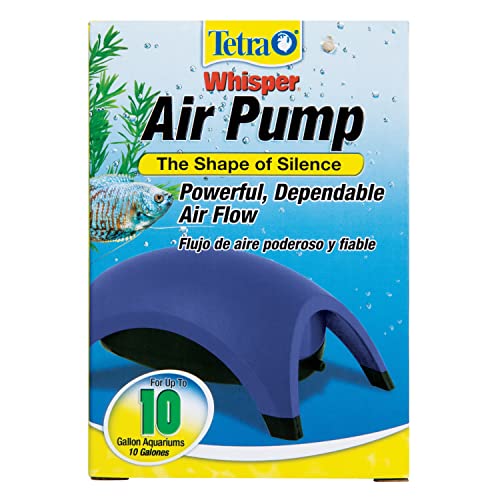 Tetra Whisper (to 10 gal)One small bucket$17Check price
 Our pickActive Aqua 15 L/minMost growers$41Check price
 EcoPlus ECOair 1, 793 GPHMultiple sites$55Check price
Why water needs air at all
Roots respire. They take in oxygen and release carbon dioxide exactly as leaves do in reverse, and they need a continuous supply to drive the energy-hungry business of pulling nutrients out of solution against a concentration gradient.
In soil, oxygen arrives through air pockets between particles. That is most of what "well-drained" means, and it is why overwatering kills plants — the pockets fill and the roots suffocate.
In deep water culture the roots are permanently submerged, so the only oxygen available is what is dissolved in the water, and that is a small and rapidly depleted supply. An air pump forces it back in continuously.
Two things make this harder than it sounds.
Warm water holds less dissolved oxygen. The relationship is steep, and it is why hydroponic systems fail in summer rather than winter — the reservoir warms, oxygen capacity drops, root demand rises with temperature, and Pythium takes hold. Keeping a reservoir below about 22°C matters as much as the pump.
Bubble size matters more than bubble volume. Fine bubbles have far more surface area per volume, so they transfer oxygen much better and rise slowly enough to do it. That is the airstone's job, not the pump's.
Sizing a pump, and what the numbers mean
Two units, quoted inconsistently, and it is worth being able to convert.
LPM is litres per minute of air. GPH is gallons per hour, and manufacturers use both — the Active Aqua here is quoted at 15 L/min and 240 GPH, which are the same figure.
A workable starting rule for deep water culture is roughly one litre per minute per gallon of reservoir, so a 5-gallon bucket wants around 5 L/min and a 20-gallon reservoir wants around 20. That is a floor rather than a target: over-aerating is essentially harmless, while under-aerating kills plants.
Outlets are a separate question from flow. A pump with four outlets can run four buckets, but the total air is divided between them — so four buckets on a 15 L/min pump get under 4 L/min each. Count your sites and multiply.
A manifold with adjustable valves, which the EcoPlus includes, lets one larger pump feed several stones and lets you balance them, which is more efficient and quieter than several small pumps.
Wattage tells you running cost, and these are small: 6 watts for the Active Aqua, 18 for the EcoPlus. Running continuously, that is pennies.
 Best for one small bucket
Tetra Whisper Air Pump for Up to 10 Gallon Aquariums, Non-UL
An aquarium pump rated for tanks up to ten gallons, and within that limit it does the job for very little — enough air for a single small deep water culture bucket, and genuinely quiet, which matters if the grow is in a room you use. Tetra have made these for decades and they run for years. The limitation is straightforward: it is a single outlet sized for a small tank, so one bucket is its ceiling, and a second site or a larger reservoir will leave it under-aerating, which is the failure that kills plants rather than merely underperforming. Note the listing specifies this is the non-UL version. Buy it for one bucket, or as a cheap backup pump to have on the shelf.
What's good
- Genuinely quiet — bearable in a living space
- Reliable, and they run for years
- Cheap enough to keep a spare on the shelf
- Right for a single small bucket
What's not
- Single outlet — one site only
- Under-aerates anything above about 10 gallons
- Non-UL version
- No manifold or valves included
 Best for most growers
AAPA15L Active Aqua, 4 Outlets, 6W, 15 L/min Air Pump
15 litres per minute across four outlets, which is the specification that makes it the sensible default: enough total air for a decent reservoir, and enough outlets to run several buckets or several stones in one larger tank. Flow is adjustable, so you can balance sites rather than accepting whatever each one takes. It runs at 6 watts and a maximum of 45 decibels with a multi-level muffler, which is roughly a quiet library and genuinely liveable in a room — the usual complaint about grow-room air pumps is the drone, and this is the one that addresses it. Remember the arithmetic: four outlets divide the 15 L/min between them, so four buckets get under 4 each. That is fine for 5-gallon buckets and thin for anything larger.
What's good
- 15 L/min across four adjustable outlets
- 45 dB with a multi-level muffler — genuinely quiet
- Only 6 watts running continuously
- Enough for several buckets or one good reservoir
What's not
- Four outlets divide the same 15 L/min between them
- Thin for four large reservoirs
- No manifold included beyond the outlets
- Rubber diaphragms are the eventual wear part
 Best for multiple sites
EcoPlus ECOair 1 Commercial Grade Air Pump 793 GPH
A commercial-grade piston pump at 793 GPH from 18 watts, which is over three times the air of the Active Aqua, supplied through a chrome manifold with six independently adjustable valves. That combination is the right architecture once you have more than a few sites: one strong pump feeding a manifold is quieter, cheaper to run and easier to balance than four small pumps humming out of phase with each other. The cylinders and pistons are built for continuous duty rather than aquarium use, so it tolerates running permanently. Two output fittings, 1/4 inch and 3/8 inch. The honest caveat is that a piston pump this size is not quiet in the way the Active Aqua is, so it wants a garage or a dedicated space rather than a bedroom.
What's good
- 793 GPH — over three times the Active Aqua
- Six independently adjustable manifold valves
- Built for continuous commercial duty
- One strong pump beats several small ones
What's not
- Noticeably louder than the Active Aqua
- Wants a garage rather than a living space
- Far more air than a single bucket needs
- 18 W rather than 6, though still cheap to run
If the pump sits lower than the water line and the power cuts — or you unplug it — water siphons back down the airline into the pump and out onto the floor, and it destroys the pump on the way. A one-way check valve in the line costs almost nothing and prevents it entirely. Either that or mount the pump above the reservoir, and preferably both.
Airstones, and why they are the consumable
The pump moves air. The airstone decides how much of that air actually dissolves, and it is the part that degrades.
Finer bubbles transfer far more oxygen for the same volume of air, because surface area scales against the square of radius while volume scales against the cube — halve the bubble size and you roughly double the transfer. A stone producing a lazy stream of large bubbles is wasting most of the pump.
Stones clog. Mineral scale and biofilm block the pores, back-pressure rises, bubbles get bigger and fewer, and the pump works harder. This happens over weeks, gradually, so people do not notice.
Clean them: soak in a weak acid solution to dissolve the scale, rinse thoroughly, and dry. Some growers boil them. Replace them once cleaning stops restoring the bubble pattern — they are cheap, and a clogged stone is a slow suffocation.
Weight them down. Airstones float until saturated and wander around a reservoir, which puts the aeration where the roots are not.
Disc stones over cylinders for wide reservoirs, because they spread bubbles across a broader area rather than sending a column up one spot.
Before you buy
Roughly 1 L/min per gallon of reservoir as a starting point.
Remember outlets divide the flow. Four buckets on 15 L/min get under 4 each.
Fit a check valve, or mount the pump above the water line.
Keep the reservoir below about 22°C. Warm water holds less oxygen.
Buy spare airstones. They clog and they are the actual consumable.
Air pump questions
Why do hydroponic systems need an air pump?
What size air pump do I need?
Why do hydroponic systems fail in summer?
Do I need a check valve on an air pump?
The Active Aqua is the right pump for most growers: 15 litres a minute across four adjustable outlets, 6 watts, and quiet enough at 45 decibels to live in a room you use. The Tetra Whisper is fine for a single small bucket and nothing more. Step up to the EcoPlus once you have several sites, because one strong pump on a manifold beats four small ones — but put it somewhere you do not sleep. Fit a check valve, and buy spare airstones.
Ready to actually do it?
The first hydroponics quest takes an evening, and it tells you whether the gear was worth it better than any review can.
Start HydroponicsThe HobbyStack editorial team researches each guide against manufacturer specifications, published resources and practitioner sources. Every product is checked for availability and described against its current listing before publication, and prices are re-checked when guides are updated.
About our editorial process →More gear guides
All guides
Best Grow Light for Hydroponics (2026): Coverage, Not Watts
Grow lights are sold on wattage, which is the one number that tells you almost nothing about whether plants will grow. Watts measure electricity consumed; what a plant responds to is how much usable light actually lands on its leaves. Two lights drawing the same power can differ enormously on that, and the specification that describes it is on the datasheet rather than the box.

Best Hydroponic Grow Kit for Beginners (2026): 3 Countertop Systems
A countertop hydroponic garden is the easiest way into growing without soil: you drop seed pods into a water reservoir, the built-in LED light and pump do the work, and you get fresh herbs and greens in a few weeks. The two things that matter most are the number of pods (how many plants) and whether you want to tend it yourself or let it automate. Here are three good ones, from a simple herb garden to a large app-controlled system.

Best Hydroponic Nutrients (2026): Why Soil Feed Will Not Do
In soil, the soil itself is a buffer and a pantry — it holds trace elements, releases them slowly, and resists sudden pH swings. Hydroponics removes all of that. Everything the plant eats has to be in the water you mix, in the right proportions, at a pH where the roots can actually absorb it. That is why hydroponic nutrients are a different product from plant food, not a fancier one.

Best pH and EC Meter for Hydroponics (2026): Calibration Is the Whole Job
A pH meter is the only way to know whether the nutrients in your reservoir are actually available to your plants. Outside roughly 5.5 to 6.5 they are present but chemically locked out, which looks exactly like a deficiency — so people add more feed and make it worse. The catch is that a meter is only as good as its last calibration, and an uncalibrated meter gives you a confident number that is wrong.

Best Aquarium Filter for Beginners 2026: Sponge vs HOB vs Canister
A filter is the lungs of an aquarium: it keeps the water clear and, more importantly, houses the bacteria that keep your fish alive. The first decision is the type, and it's driven by your tank size: a sponge filter for small tanks, a hang-on-back for most beginner tanks, or a canister for big and planted ones. Here are three picks across that divide.

Best Aquarium Heater (2026): The One Component That Fails Dangerously
Every other piece of aquarium equipment fails by stopping. A heater can fail by staying on, and a stuck-on heater will cook a tank of fish in a day. That is why the interesting question is not which heater warms water — they all do — but which one fails safely and lets you check that it is telling the truth.