Best Fabric Shears for Beginners (2026): 3 Real Picks
There is one rule that matters more than which shears you buy: they never touch paper. Paper dulls a fabric blade fast, and a dull blade stops cutting cloth and starts pushing it, so your line wanders and the edge frays. That single habit separates shears that stay sharp for years from a pair that feels cheap within a month, and it is why sewers guard their fabric scissors and label them. Beyond that, the choices are simple: length, weight, and whether the handle suits your hand. Here are three good pairs and who each is actually for.
HobbyStack may earn a commission from links on this page at no extra cost to you. Our picks are chosen on merit; the commission helps fund the research.
- Never cut paper with them. It is the single biggest reason fabric shears go dull, and it happens faster than people expect.
- 8 inches suits most hands. Longer blades cut smoother lines on big pieces; shorter ones are easier to control on curves.
- Weight is a real trade-off. Heavier shears cut thick fabric beautifully and tire your hand on a long session.
- Sharpening is worth it. A good pair is a multi-year tool, not a consumable, so get them serviced rather than replaced.
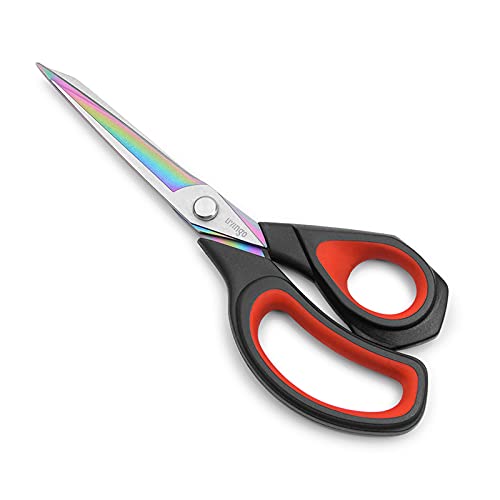 LIVINGO 9.5" Heavy Duty Fabric ScissorsLearning to cut without worrying about the tool$13Check price
 Our pickKAI 5210 8-inch Dressmaking ShearsSewing regularly, especially long sessions$18Check price
 Gingher 8" Professional Dressmaker ShearsThe pair you keep and get sharpened rather than replaced$55Check price
What makes a shear good at fabric is not sharpness alone, it is the geometry. Dressmaker's shears are bent so the lower blade lies flat along the table while your hand stays above it, which means the fabric is not lifted as you cut. Lifting is what causes a wobbly line, because cloth shifts the moment it comes off the surface, so that bent handle is doing real work rather than being a style. The blades themselves are ground to shear past each other cleanly along their whole length, which is why a good pair cuts right to the tip instead of chewing and stopping an inch short. Cutting paper wrecks exactly this: paper is abrasive and rounds the fine edge, and once rounded the blades push the weave instead of slicing it, which shows up as fraying and a line that drifts off your chalk mark.
So choose by what you sew and how long you sew for. If you are starting out and mostly working with cotton, an inexpensive heavy-duty pair cuts perfectly well and removes the fear of ruining something expensive while you learn, which matters more than people admit. If you sew regularly, a shear from a company that only makes sewing tools is a genuine step up, because the blade grind and the balance are tuned for cloth rather than general workshop use, and the difference shows on long cuts and slippery fabric. And if you want the pair you keep, the classic forged dressmaker's shear is a lifetime tool that can be sharpened again and again. Whichever you choose, keep them for fabric only, and hand them to nobody who might open a parcel with them.
 Best cheap start
LIVINGO 9.5" Heavy Duty Fabric Scissors
The pair to buy if you are starting out and would rather spend on fabric than tools. At 9.5 inches these are long enough to cut smooth lines on big pattern pieces, which is where beginners most often go wobbly, and they handle cotton, linen and mid-weight fabric without complaint. The value is that they remove a specific beginner anxiety: with a cheap pair you cut confidently, and confident cutting produces straighter lines than careful, hesitant cutting with something you are frightened of blunting. The honest limits are what you would expect. The steel does not hold an edge as long as a forged sewing-brand shear, the balance is less refined so your hand tires sooner on a long session, and the length is a lot of blade if you are mostly doing small curved work like necklines. But they cut properly out of the box, they are cheap enough to replace, and they will not be the reason your seams look wrong. Keep them for fabric only from day one and they will last far longer than the price suggests.
What's good
- Cheap enough to buy without hesitation
- Long blades cut smooth lines on large pieces
- Handles cotton and mid-weight fabric easily
- No fear of ruining an expensive tool while learning
What's not
- Edge does not last as long as a forged sewing shear
- A lot of blade for small, curved work
 Best for most people
KAI 5210 8-inch Dressmaking Shears
This is the pair most people should buy, and the reason is weight. KAI makes blades for a living, and the 5210 is noticeably lighter than a traditional forged dressmaker's shear while cutting just as cleanly, which changes what a two-hour cutting session feels like. Hand fatigue is a real and underrated thing in sewing: tired hands close the blades unevenly, and uneven closing is where a line starts to wander near the end of a long cut. The blades are ground specifically for fabric, so they shear cleanly right to the tip and handle slippery synthetics and fine cottons that a general-purpose scissor tends to push rather than cut. At 8 inches they are the length most hands find natural, long enough for straight runs and controllable enough for curves. The trade-offs are minor: they feel less substantial than a heavy forged pair, which some people read as less quality even though it is the point, and they still need proper sharpening rather than a kitchen gadget. For anyone sewing regularly, this is the sensible pair to own.
What's good
- Much lighter, so long cutting sessions do not tire your hand
- Blades ground specifically for fabric, clean to the tip
- Handles fine and slippery fabric that general scissors push
- 8 inches suits most hands for both straight runs and curves
What's not
- Feels less substantial than a heavy forged shear
- Still wants proper sharpening, not a kitchen sharpener
 Best for life
Gingher 8" Professional Dressmaker Shears
The pair people inherit. Gingher shears are forged rather than stamped, which means the steel is denser and the blades can be re-ground many times over, so this is genuinely a buy-once tool in a way the cheaper options are not. The weight is the character: it is heavier in the hand, and that mass does the work for you through denim, wool, canvas and multiple layers, where a light shear makes you push. On thick fabric the difference is obvious immediately. The bent handle sits your hand above the table so the lower blade stays flat and the cloth is never lifted, which is the geometry that keeps a long cut honest. The trade-offs are the flip side of the same coin: the weight that helps on heavy fabric tires your hand faster on a long session with lightweight cotton, and the price is several times a basic pair. It is also the pair most worth protecting, because dulling these on paper is an expensive mistake rather than an annoying one. If you know you are staying with sewing, buy these once and have them sharpened.
What's good
- Forged steel, can be re-sharpened for decades
- Weight powers through denim, wool and layers
- Bent handle keeps fabric flat for honest long cuts
- The classic pair, genuinely a lifetime tool
What's not
- Heavier, so more tiring on long lightweight sessions
- Several times the price of a basic pair
Cutting paper, card or tape with fabric shears rounds the fine edge that lets them slice cloth instead of pushing it. It happens in a few cuts, not a few years, and a dulled shear frays edges and wanders off your chalk line. Keep them somewhere separate, label them if anyone else uses your table, and keep a cheap pair of craft scissors nearby so nobody is tempted.
Before you buy
Label them and keep them away from the paper scissors. This is the whole game.
Cut with long strokes and never close the blades fully at the end, which leaves a notch in the line.
Keep the fabric flat on the table and move the fabric, not the shears, on curves.
Have good shears sharpened by a proper service rather than replacing them.
Common questions
What size fabric shears should a beginner buy?
Why do my fabric scissors chew the fabric instead of cutting it?
Are expensive fabric shears worth it for a beginner?
Can fabric shears be sharpened?
If you are just starting, the LIVINGO pair cuts cotton properly and lets you learn without worrying about the tool, which is worth more early on than blade quality. If you sew regularly, the KAI 5210 is the one to own, because it is light enough that a long cutting session does not tire your hand into a wandering line. The Gingher is the pair you keep and get sharpened for decades, and it earns its weight on denim and layers. Whichever you buy, they never touch paper.
Ready to actually do it?
The first garment construction quest takes an evening, and it tells you whether the gear was worth it better than any review can.
Start Garment ConstructionThe HobbyStack editorial team researches each guide against manufacturer specifications, published resources and practitioner sources. Every product is checked for availability and described against its current listing before publication, and prices are re-checked when guides are updated.
About our editorial process →More gear guides
All guides
Best Beginner Sewing Machine 2026: Brother vs Janome vs Singer
The first sewing machine is the difference between sewing as a satisfying hobby and sewing as the thing you tried for a month. Here's how to pick a beginner machine that actually works, plus the brands and models to skip.

Best Fabric Marking Tools (2026): Marks That Come Out Again
Every marking tool is a trade between two failure modes: a mark that disappears before you have sewn it, and a mark that will not come out afterwards. There is no tool that avoids both on every fabric, which is why experienced sewers own several and always test on a scrap first. The one that ruins a garment is usually the one nobody tested.

Best Seam Ripper (2026): The Tool That Saves the Garment
Unpicking is not a sign of failure; it is most of sewing. Every fitted garment involves stitching something, trying it, and taking it apart again, and the tool that does that badly will put a hole in fabric you have already cut and cannot replace. A seam ripper is two pounds of insurance on a project worth considerably more.

Best Sewing Machine Needles (2026): The Cheapest Fix for Bad Stitching
Skipped stitches, puckering, snapping thread and a machine that suddenly sounds wrong are almost always the needle, and almost never the machine. Needles are consumable — they blunt, bend a fraction and develop burrs long before they look damaged — and most people sewing badly are sewing with a needle that should have been binned months ago.

Best Thread Snips (2026): The Scissors You Keep Beside the Machine
Trimming a thread with dressmaking shears means picking up something heavy, opening it wide, and getting a blade near fabric you have just spent an hour sewing. Small scissors live beside the machine, open barely at all, and cut the thread where it leaves the seam. It is a tiny tool that changes the rhythm of sewing more than its price suggests.

Best Beginner Weaving Loom (2026): 3 Rigid-Heddle Looms to Start On
For learning to weave, the loom to start on is a rigid-heddle loom. It is simple, affordable, and quick to set up compared to a big floor loom, and you can weave real scarves, towels, and cloth on it within a day. The main choices are size, brand, and whether it folds. All three picks here are proper rigid-heddle looms from the two names weavers trust, from a complete starter kit to a folding loom you grow into.