Best Beginner Climbing Helmet 2026: BD Half Dome vs Petzl Boreo vs Sirocco
Helmets are required for outdoor climbing and strongly recommended for any gym climbing near the top of routes. The primary protection is against rockfall and hitting the wall on a fall, not against ground falls (rope catches those). Here are three picks: a well-priced foam helmet, the consensus hybrid hardshell/foam option, and Petzl's ultralight helmet for climbers who count grams.
HobbyStack may earn a commission from links on this page at no extra cost to you. Our picks are chosen on merit; the commission helps fund the research.
- Wear a helmet outdoors, always. The most common climbing head injury isn't from a lead fall — it's from a rock dislodged by another climber or party above you. A helmet makes this survivable. Never climb outdoors without one.
- Our pick: Petzl Boreo (~$75). Hybrid foam + hardshell construction. Better impact protection than pure foam, longer service life, and comfortable enough for full-day climbing. The consensus beginner outdoor helmet.
- Budget pick: Black Diamond Half Dome (~$70). Pure foam construction. Lighter than a hardshell and protective enough for most beginner outdoor use. A solid first helmet if you'll climb outdoors occasionally.
- Ultralight: Petzl Sirocco (~$170). Petzl's minimalist foam-shell construction weighs ~170g — noticeably lighter than the Boreo on long alpine days. The pick for alpinists and frequent sport climbers who wear a helmet for hours.
- Gym climbing doesn't require a helmet but benefits from one near the top of routes. Most gym routes don't require a helmet; sport lead climbing near the ceiling does — falling and swinging into the wall can cause head impact even on gym routes.
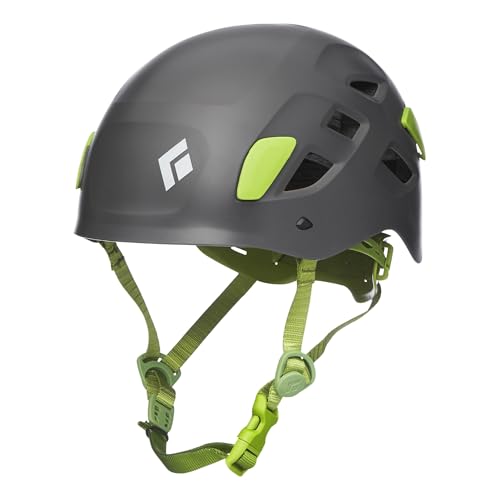 Black Diamond Half Dome Helmet$70EPP foam · adjustable headband · ventilatedOccasional outdoor climbing
 Petzl Boreo Climbing HelmetPick$75Hybrid hardshell + EPP foam · ventilatedMost outdoor climbing
 Petzl Sirocco Climbing Helmet$170EPP foam + EPS crown · 170g ultralightAlpine and frequent sport climbing
What a climbing helmet actually protects against
Climbing helmets are UIAA/EN 12492 rated against two impact scenarios:
- Top impact (EN A1 test): a 5kg mass dropped from height — simulates rockfall
- Side impact (EN A2 test): lower force from the side — simulates hitting the wall on a fall or swing
The tests represent the real injury scenarios: rockfall above (most common outdoor hazard), and head impact against the wall during a fall. Helmets do not protect against ground falls — that's what the rope and correct lead technique are for.
Hardshell and hybrid helmets generally perform better on repeated top impacts (the shell distributes the load); foam helmets can absorb impact energy but don't spread it as effectively and may be more deformed after a single significant impact.
How we picked
We filtered on: UIAA/EN 12492 certification (non-negotiable), construction type (foam vs hybrid foam+hardshell vs carbon — each trades weight, protection, and price differently), ventilation (climbing is physical; a hot helmet gets taken off, which defeats the purpose), fit system (adjustable headband vs fixed sizing — adjustable is more forgiving of hair and hats), weight (matters for long approaches and alpine climbing; less so for single-pitch gym days), and service life (foam helmets degrade faster than hardshell; all helmets should be replaced after any significant impact, regardless of visible damage). We excluded unbranded or uncertified helmets.
 Best budget outdoor helmet
Black Diamond Half Dome Helmet
The Black Diamond Half Dome is the right first helmet if you'll be climbing outdoors occasionally and want protection without paying for the Boreo's hybrid construction. EPP foam absorbs impact energy well on the first hit — the trade-off vs hardshell helmets is that the foam can deform after a significant impact (replace immediately after any serious strike, even if the helmet looks fine externally). The adjustable headband lets you dial in the fit over different hair volumes and can accommodate a thin beanie in cold conditions. At ~11 oz it's light enough that you'll actually wear it all day. 14 vents provide airflow on warm climbing days. Certified to both UIAA and CE EN 12492. Note: ASIN is size-specific — verify the size from the BD size chart before ordering.
What's good
- ~$70 — the lowest cost UIAA/CE certified helmet from a major brand
- EPP foam construction absorbs impact well without the weight of a full hardshell
- Adjustable headband fits a range of head circumferences
- 14 vents for airflow on warm climbing days
- UIAA and CE EN 12492 certified
What's not
- Foam deforms on significant impact — replace after any serious strike even if visually undamaged
- No outer hardshell — less protection on repeated glancing impacts than the Boreo
- ASIN is size-specific — confirm size before ordering
 Best all-around beginner helmet
Petzl Boreo Climbing Helmet
The Petzl Boreo is the consensus beginner outdoor climbing helmet for one reason: the hybrid construction (ABS hardshell + EPP foam + EPS rigid crown) gives better repeated-impact performance than pure foam at nearly the same price as the Half Dome. The hardshell outer distributes the force of a rockfall impact across a larger area before the foam absorbs it — this means the foam is more likely to survive an impact undamaged and protect a second impact, while a foam-only helmet may deform on the first hit. The Boreo is slightly heavier than the Half Dome at this price range, but the protection trade-off is worth it for outdoor climbing where rockfall from other parties is a real and unpredictable hazard. The headband fit system is comfortable over a range of head sizes and hair volumes. ASIN is color/size specific — confirm your size.
What's good
- Hybrid hardshell + foam: better repeated-impact protection than pure foam
- ABS outer distributes rockfall impact before the foam liner absorbs it
- Headband fit system adjusts across a wide range — fits most adult heads
- UIAA and CE EN 12492 certified
- The consensus recommendation from most climbing instructors for beginner outdoor helmets
What's not
- Slightly heavier than the Half Dome (~13 oz)
- ASIN is color/size-specific — confirm size before ordering
- Not as ventilated as some foam-only helmets
 Best ultralight pick
Petzl Sirocco Climbing Helmet
The Petzl Sirocco is for climbers who wear their helmet for hours — alpine approaches, long sport routes, all-day crags — and for whom 7 oz of weight difference from the Boreo is real and cumulative. The construction uses EPP foam as the primary impact layer with a thin EPS crown, removing most of the outer shell material that makes heavier helmets heavier. At 170g it's among the lightest certified helmets available at any price. The protection meets the same UIAA/EN 12492 standard as the Boreo — lighter doesn't mean less safe, it means less material and more engineering cost, which is why the price is higher. The Sirocco is overkill for occasional beginner outdoor climbing — its value is in scenarios where you wear the helmet for 8+ hours and weight compounds. For climbers in that category, the weight difference becomes meaningful.
What's good
- ~170g — among the lightest UIAA/CE certified climbing helmets available
- Same UIAA + CE EN 12492 certification as heavier helmets
- Weight difference compounds on all-day alpine and multi-pitch routes
- Injection-molded shell: precise fit around a minimal construction
- Petzl brand — trusted globally for head protection equipment
What's not
- $170 — more than double the Boreo for a weight saving most beginners won't notice
- Pure foam construction — same replacement-after-significant-impact caveat as the Half Dome
- No outer hardshell — less protection on repeated glancing impacts than the Boreo
A climbing helmet that has taken a significant impact — rockfall, a hard swing into the wall, a ground near-miss — may look undamaged externally but have compromised internal structure. The EPP foam that absorbs impacts can deform on the first hit and provide less protection on the second. If your helmet has been in a serious incident, replace it. Don't inspect and continue. The same applies to helmets with cracks, dents, or discoloration in the shell.
Before you buy
Adjust the headband so the helmet sits level on your head (not tilted back) with the front edge two finger-widths above your eyebrows. A tilted helmet leaves your forehead exposed to rockfall.
The chin strap should be snug — you should be able to fit only one or two fingers between the strap and your chin. A loose chin strap lets the helmet shift or fall off on impact.
Helmets expire: 10 years from manufacture date (printed on the inside) regardless of use, and immediately after any significant impact. Date is on the label inside the helmet.
Don't paint or apply stickers to the helmet shell — some adhesives and solvents degrade ABS and EPP foam. Petzl and BD specifically warn against this.
In cold conditions, a thin merino hat under the helmet adds warmth without affecting fit significantly — the headband adjustment can accommodate it on most helmets.
Common questions about climbing helmets
Do I need a helmet for gym climbing?
Foam vs hybrid hardshell — which is better?
Can I use a cycling or ski helmet for climbing?
How do I know my helmet fits?
When should I replace a climbing helmet?
The Petzl Boreo is the right first helmet for most outdoor climbers — hybrid construction handles rockfall better than pure foam, it's nearly the same price as the Half Dome, and Petzl helmets are trusted by instructors and guides globally. Get the BD Half Dome if you're budget-constrained and climbing outdoors occasionally. Move to the Sirocco once you're doing alpine routes or multi-day crags where weight compounds over hours.
Ready to actually do it?
The first rock climbing quest takes an evening, and it tells you whether the gear was worth it better than any review can.
Start Rock ClimbingThe HobbyStack editorial team researches each guide using practitioner communities, published resources, and direct input from active hobbyists. Every guide is reviewed for accuracy before publication and updated when practices change.
About our editorial process →More gear guides
All guides
Best Beginner Belay Device 2026: BD ATC-XP vs Petzl GRIGRI vs GRIGRI+
A belay device is the friction tool that lets you manage the rope, catching your climber's falls and lowering them safely. Every climber needs to own one once they're belay certified. Here are three picks across the two fundamental categories: the standard tube device every beginner learns on, and the two versions of Petzl's cam-assisted GRIGRI that most serious gym climbers eventually upgrade to.

Best Beginner Climbing Harness 2026: Black Diamond vs Petzl Corax vs Solution
Your harness is the connection between you and the rope: it needs to fit, hold falls safely, and stay comfortable during long sessions at the wall. The good news: any UIAA/CE-certified harness from a major brand is safe. The choice is about comfort, padding, and how much you climb. Here are three picks that cover beginner gym use through regular sport climbing.
Best Beginner Climbing Rope 2026: Mammut 9.9mm vs 9.5mm Crag Classic vs We Care
A climbing rope is the most critical piece of gear you will own, the last thing between you and the ground. The good news: any modern UIAA/CE-certified single dynamic rope from a reputable brand is safe by design. The real choices are diameter (thicker is more durable and easier to belay, thinner is lighter), length (60m covers the gym and most single-pitch crags, 70m reaches longer routes), and brand. Here are three in-stock, certified dynamic ropes that cover gym to crag.

Best Beginner Climbing Shoes (2026): 3 Comfy, Flat Picks to Start In
Your first pair of climbing shoes really only needs to do one thing: help you learn without wrecking your feet. That means a flat, comfortable shoe that fits snug but not painful, not the aggressive downturned models the strong folks wear on steep overhangs. For gym bouldering, top-rope, and your first trips outside, you want grip and comfort, not a race car you can barely stand to wear for one climb. Here are three good beginner shoes, from a comfy budget pick to a moderate all-rounder you can grow into.

Best Dry Bag (2026): Three Rolls Minimum, and Abrasion Beats Waterproofing
A dry bag does not fail because water gets through the fabric. It fails because the top was rolled twice instead of three times, or because the bag was dragged down a sandstone slot until the coating wore off. Both are avoidable and neither is about how waterproof the material was when you bought it.

Best Snowboard Goggles for Beginners (2026): 3 Real Picks
Goggles are not optional on a snowboard: wind, glare, cold, and blowing snow make riding without them miserable and unsafe, and unlike sunglasses they seal to your face and stay put. The good news is you do not need to spend much. Any decent pair blocks UV and wind; what more money buys is better anti-fog, optics that read terrain in flat light, and quick lens swaps for changing conditions. Here are three good ones, plus the one spec that actually matters.